
# Sticky Garlic Butter Glazed Beef Roast
## Description
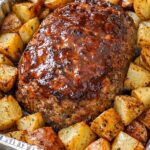
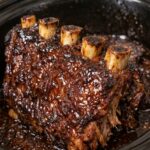
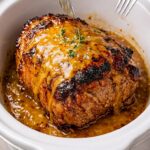
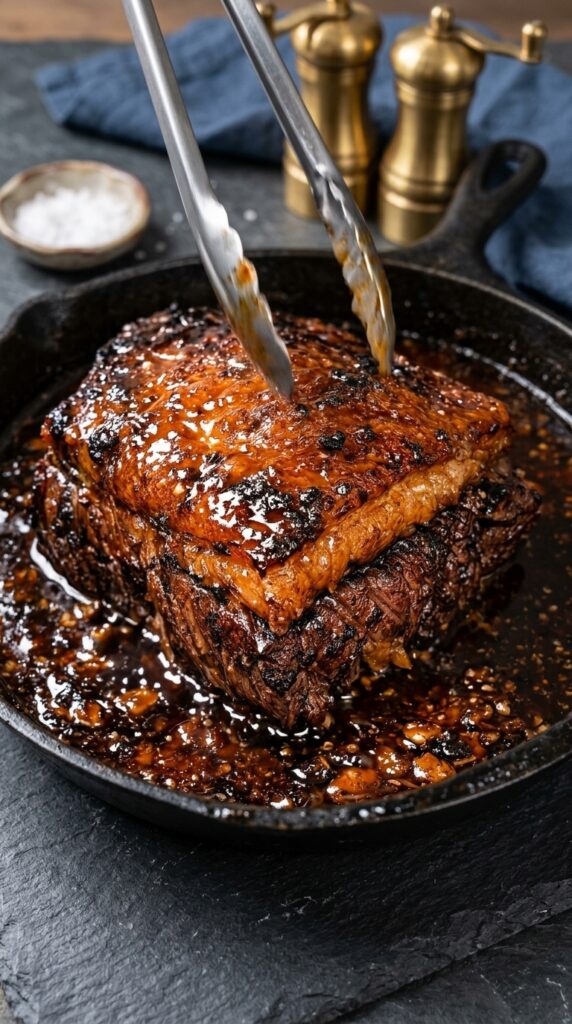
Sticky Garlic Butter Glazed Beef Roast is a rich, savory beef dinner featuring a beautifully browned roast coated in a glossy garlic-butter sauce. The outside develops a deeply caramelized crust while the inside stays tender and juicy. A combination of fresh garlic, butter, beef broth, Worcestershire sauce, balsamic vinegar, Dijon mustard, and a little honey creates the dark, shiny glaze that makes this roast especially appetizing.
The beef is first seasoned generously and seared in a hot cast-iron skillet. Searing develops the dark crust and leaves flavorful browned bits in the pan. Those bits become the foundation of the sauce, so none of that flavor goes to waste. The roast then finishes gently in the oven while being basted with the garlic glaze.
This is an excellent centerpiece for a Sunday dinner, holiday meal, family gathering, or special occasion. Serve thick slices with creamy mashed potatoes, roasted vegetables, green beans, buttered carrots, or crusty bread to catch every spoonful of sauce.
Prep Time: 20 minutes
Cook Time: 1 hour 30 minutes–2 hours
Resting Time: 15 minutes
Servings: 6–8
## Ingredients
### For the Beef Roast
* 3½–4 lb beef chuck roast
* 2 tablespoons olive oil
* 1½ teaspoons salt
* 1 teaspoon freshly ground black pepper
* 1 teaspoon garlic powder
* 1 teaspoon onion powder
* 1 teaspoon smoked paprika
* 1 teaspoon dried thyme
* ½ teaspoon dried rosemary
### For the Sticky Garlic Butter Glaze
* 4 tablespoons unsalted butter
* 7 garlic cloves, finely minced
* 1½ cups beef broth
* 3 tablespoons Worcestershire sauce
* 2 tablespoons balsamic vinegar
* 2 tablespoons honey
* 1 tablespoon Dijon mustard
* 1 tablespoon tomato paste
* 1 teaspoon smoked paprika
* ½ teaspoon dried thyme
* ½ teaspoon freshly ground black pepper
* ¼ teaspoon red pepper flakes, optional
### For Thickening the Sauce
* 1 tablespoon cornstarch
* 2 tablespoons cold water
### For Finishing
* 1 tablespoon butter
* 2 tablespoons freshly chopped parsley
* Freshly ground black pepper, as needed
## Instructions
### 1. Prepare the Beef
Remove the beef roast from the refrigerator about 30 minutes before cooking. Allowing the chill to come off slightly can help it cook more evenly.
Preheat your oven to 325°F (165°C).
Pat the beef thoroughly dry with paper towels. This step is important because a wet surface will steam instead of developing a good brown crust.
Combine the salt, black pepper, garlic powder, onion powder, smoked paprika, thyme, and rosemary in a small bowl.
Rub this seasoning mixture over the entire roast. Press it gently into the meat so the seasoning stays attached during searing.
### 2. Sear the Roast
Place a large cast-iron skillet or heavy oven-safe pan over medium-high heat.
Add the olive oil and allow it to become hot.
Carefully place the seasoned beef in the skillet. Let it sear without moving for about 4 minutes.
Turn the roast and brown the opposite side for another 4 minutes.
Continue turning the beef until all major surfaces have developed a dark golden-brown crust.
Don’t worry about cooking the center at this stage. The purpose is simply to develop a flavorful exterior.
Transfer the seared roast temporarily to a plate.
### 3. Start the Garlic Butter Sauce
Reduce the heat to medium-low.
Add 4 tablespoons of butter to the same skillet.
Once melted, add the minced garlic and stir continuously for approximately 30–45 seconds. The garlic should become fragrant but should not turn dark brown.
Add the tomato paste and cook for another 30 seconds.
Pour in approximately ½ cup of the beef broth.
Use a wooden spoon to scrape the bottom of the skillet. This releases the flavorful browned pieces left behind from searing the beef.
### 4. Build the Sticky Glaze
Add the remaining beef broth, Worcestershire sauce, balsamic vinegar, honey, Dijon mustard, smoked paprika, dried thyme, black pepper, and optional red pepper flakes.
Whisk everything together until smooth.
Allow the sauce to simmer gently for approximately 3–4 minutes.
Taste it carefully. The sauce should have a balanced savory, garlicky, slightly sweet, and tangy flavor.
Remember that the sauce will become stronger and more concentrated during roasting.
### 5. Return the Beef to the Pan
Place the seared roast back into the center of the skillet.
Spoon several tablespoons of the garlic butter sauce over the top and sides.
The liquid should surround the lower portion of the beef without completely covering it. Leaving the top exposed allows the crust to remain beautifully browned.
### 6. Slowly Roast the Beef
Cover the skillet tightly with a lid or aluminum foil.
Transfer it to the preheated oven.
Cook for approximately 1½–2 hours initially.
Every 30–40 minutes, carefully remove the pan from the oven, uncover it, and spoon some of the sauce over the beef.
Return the cover and continue cooking.
Chuck roast becomes tender through prolonged cooking because its connective tissue needs time to soften. Depending on the thickness and shape of your roast, additional cooking time may be necessary.
### 7. Check for Tenderness
After approximately 2 hours, insert a fork into the thickest section.
If the meat still feels firm or resistant, cover it again and continue roasting.
Check every 30 minutes until the beef is tender.
For a very soft chuck roast, total cooking time can approach 2½–3½ hours depending on the size and shape of the meat and your oven.
Don’t rely entirely on the clock. The texture of the beef is a better indicator.
### 8. Caramelize the Exterior
Once the roast is tender, remove the cover.
Spoon plenty of sauce over the top.
Increase the oven temperature to 425°F (220°C) and roast uncovered for approximately 8–12 minutes.
Baste the roast once more halfway through.
This short blast of higher heat helps concentrate the glaze and gives the beef a dark, glossy finish.
Watch carefully because the honey in the sauce can caramelize quickly.
### 9. Rest the Beef
Transfer the finished roast to a cutting board or serving platter.
Tent loosely with foil.
Let it rest for approximately 15 minutes.
This resting period allows the juices inside the beef to redistribute before slicing.
### 10. Thicken the Garlic Sauce
While the roast rests, place the skillet over medium heat.
In a small bowl, combine the cornstarch with 2 tablespoons of cold water. Stir until completely smooth.
Gradually whisk the slurry into the simmering sauce.
Cook for approximately 2–3 minutes, stirring frequently, until the sauce becomes glossy and thick enough to lightly coat a spoon.
Stir in the final tablespoon of butter.
Taste and adjust the seasoning if necessary.
### 11. Slice and Serve
For a roast that remains sliceable, use a sharp carving knife to cut it across the grain.
For an especially tender chuck roast, you can also separate it into large pieces with two forks.
Arrange the beef on a warm serving platter.
Spoon the sticky garlic butter glaze generously over the top.
Finish with chopped fresh parsley and a little freshly ground black pepper.
Serve immediately with your favorite sides.
## Recipe Notes
Chuck roast is particularly good for this recipe because its marbling and connective tissue respond well to long, gentle cooking. If you want perfectly neat, medium-style roast beef slices instead, choose a traditional roasting cut such as top sirloin and use a meat thermometer rather than following the long chuck-roast cooking method.
The honey helps create the glossy, caramelized appearance, but the finished sauce shouldn’t taste like a sweet barbecue sauce. Worcestershire sauce, beef broth, Dijon, garlic, and balsamic vinegar keep the flavor predominantly savory.
If you prefer less sweetness, reduce the honey to 1 tablespoon.
Balsamic vinegar contributes both acidity and subtle sweetness. It also complements the deeply browned beef and gives the sauce a darker appearance.
Fresh garlic works much better than garlic powder alone in the glaze. Garlic powder is useful for seasoning the meat, while fresh garlic provides the sauce with its distinctive flavor.
## Tips for the Best Garlic Beef Roast
Use a well-marbled roast. Visible marbling melts during cooking and contributes flavor and moisture.
Dry the beef thoroughly before searing. Moisture on the surface interferes with browning.
Don’t overcrowd the skillet. The beef needs direct contact with the hot surface to develop a proper crust.
Avoid burning the garlic. Garlic cooks quickly, so add the broth shortly after the garlic becomes fragrant.
Keep the roast covered during most of the slow cooking process. This prevents excessive moisture loss and creates a moist environment that helps tenderize chuck roast.
Baste several times while cooking. Each layer of sauce adds flavor to the exterior.
If the sauce becomes too concentrated during roasting, add ¼–½ cup additional beef broth.
Don’t add too much cornstarch at once. The sauce will continue thickening as it cools.
For an especially glossy finish, stir cold butter into the finished sauce immediately before serving.
Always slice across the grain when serving the roast in slices.
## Serving Suggestions
Creamy mashed potatoes are one of the best accompaniments because they absorb the garlic butter sauce.
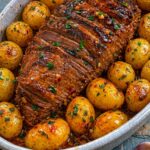
You can also serve the roast with roasted baby potatoes, garlic Parmesan potatoes, steamed green beans, honey-glazed carrots, roasted broccoli, Brussels sprouts, cauliflower mash, buttered noodles, or rice.
For a lighter meal, pair the beef with a large green salad and roasted vegetables.
Warm dinner rolls or crusty bread are excellent for soaking up any sauce left on the plate.
## Storage
Allow leftover beef to cool before placing it in an airtight container.
Store the roast with some of the garlic sauce rather than storing the meat completely dry. The extra moisture helps protect the beef during reheating.
Refrigerate for up to 3–4 days.
For freezing, slice or portion the beef and place it in freezer-safe containers with some sauce. Freeze for up to 2–3 months for best quality.
Thaw overnight in the refrigerator.
For reheating, place the beef and sauce in a covered baking dish and warm at 300°F (150°C) until heated through.
You can also reheat individual portions in a skillet over low heat with a splash of beef broth.
Avoid repeatedly reheating the entire roast because this can gradually dry out the meat.
## Nutritional Information
Approximate nutrition per serving based on 8 servings:
Calories: 450–520 kcal
Protein: 38–43 g
Carbohydrates: 10–14 g
Fat: 27–32 g
Saturated Fat: 11–14 g
Fiber: Less than 1 g
Sugar: 6–9 g
Sodium: 700–900 mg
Iron: approximately 4–5 mg
Potassium: approximately 550–700 mg
These values are estimates and will vary depending on the beef cut, amount of visible fat, ingredient brands, serving size, and how much sauce is consumed.
## Benefits
Beef provides complete protein containing all nine essential amino acids. Protein contributes to the maintenance and repair of muscles and other body tissues and can help make meals more satisfying.
Beef is also naturally rich in vitamin B12, zinc, iron, selenium, and several other B vitamins. Vitamin B12 contributes to normal nervous-system function and red blood cell formation, while iron is necessary for normal oxygen transport in the body.
Garlic adds significant flavor without requiring large quantities of additional salt or sugar. Fresh parsley provides freshness and small amounts of micronutrients and plant compounds.
Another practical advantage is that the roast can provide several portions from a single cooking session. Leftovers can easily become sandwiches, wraps, beef bowls, tacos, or another dinner the following day.
For a more balanced plate, serve a moderate portion of beef with plenty of vegetables and a fiber-rich side.
## Questions and Answers
### What is the best beef cut for this recipe?
Chuck roast is an excellent choice when you want rich flavor and very tender meat. For a more traditional sliceable roast cooked to a specific doneness, top sirloin or another roasting cut is preferable.
### Why is my chuck roast still tough?
It probably needs additional cooking time. Chuck roast contains considerable connective tissue. Even after the meat is technically cooked, it can remain tough until enough collagen has softened during prolonged cooking.
### Can I make this without honey?
Yes. Leave it out for a more savory sauce or substitute 1 tablespoon of brown sugar or maple syrup.
### Can I use a Dutch oven instead of cast iron?
Absolutely. A Dutch oven is ideal because you can sear the meat, prepare the sauce, and roast everything in the same pot.
### Can I make this in a slow cooker?
Yes. Sear the seasoned roast first, then place it in the slow cooker with the prepared sauce. Cook on LOW for approximately 8–9 hours or until fork-tender. Thicken the sauce separately at the end.
### Why do I need Worcestershire sauce?
It contributes savory depth and complements the beef. If you don’t have it, the recipe can still be prepared, although the sauce will have a slightly different flavor.
### Can I add vegetables?
Yes. Carrots, mushrooms, onions, or baby potatoes work especially well. Add sturdy vegetables early enough to become tender without completely breaking down.
### How do I prevent the glaze from burning?
Keep the roast covered during the long cooking stage and use the higher-temperature caramelization step only near the end. Because honey can burn, watch the roast closely during those final minutes.
### How can I make the sauce thicker?
Use the cornstarch slurry after removing the roast. Simmer the sauce gently until it reaches your desired consistency.
### What should I do if the sauce becomes too thick?
Whisk in warm beef broth a few tablespoons at a time until it becomes pourable again.
### What sides pair best with this roast?
Mashed potatoes, roasted potatoes, green beans, carrots, broccoli, Brussels sprouts, rice, buttered noodles, or crusty bread are all excellent choices.
### What can I do with leftover beef?
Thinly slice it for sandwiches, shred it for tacos, serve it over mashed potatoes, add it to rice bowls, or combine chopped beef with potatoes and onions for a hearty breakfast hash.