
recipe in 1500 words and remove all under line
Table of Contents
ToggleChatGPT said:
Slow Cooker Glazed Beef Short Ribs
Recipe Description
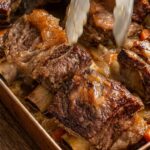
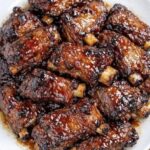
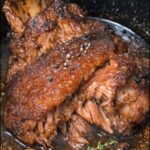
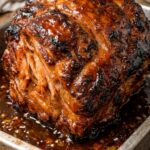
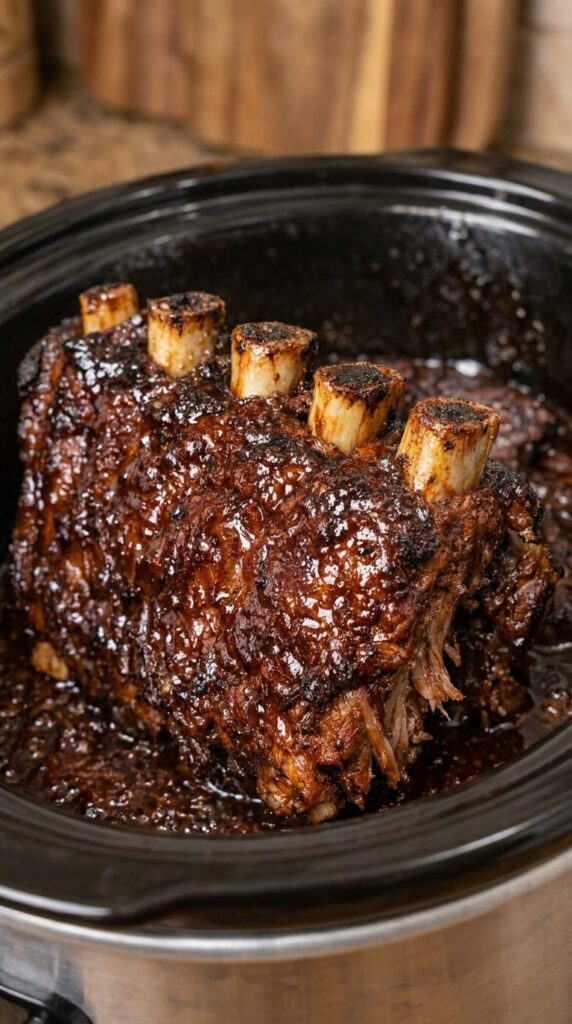
Slow Cooker Glazed Beef Short Ribs are an incredibly rich, tender, and flavorful comfort-food meal inspired by the dish shown in the image. Meaty beef short ribs are seasoned generously, slowly cooked until fork-tender, and finished with a glossy, deeply savory glaze. The result is succulent beef that practically falls away from the bone, coated in a dark, caramelized sauce.
This recipe combines beef broth, garlic, onions, Worcestershire sauce, soy sauce, brown sugar, tomato paste, and aromatic herbs to create a sauce that is savory, slightly sweet, smoky, and intensely flavorful. Slow cooking gives the connective tissue in the ribs plenty of time to break down, producing exceptionally tender meat.
The ribs are ideal for Sunday dinner, family gatherings, holidays, or any occasion when you want a restaurant-style meal with relatively little hands-on work.
Servings
Serves: 6
Prep time: 25 minutes
Cooking time: 7–8 hours on LOW or 4–5 hours on HIGH
Total time: About 8 hours
Ingredients
For the Short Ribs
- 2.5–3 kg bone-in beef short ribs
- 2 tablespoons olive oil
- 2 teaspoons salt
- 1½ teaspoons freshly ground black pepper
- 2 teaspoons smoked paprika
- 1 teaspoon garlic powder
- 1 teaspoon onion powder
- 1 teaspoon dried thyme
- ½ teaspoon dried rosemary
For the Slow Cooker Sauce
- 1 large onion, finely chopped
- 5 cloves garlic, minced
- 2 tablespoons tomato paste
- 2 cups beef broth
- ½ cup red wine, optional
- 3 tablespoons Worcestershire sauce
- 2 tablespoons soy sauce
- 3 tablespoons brown sugar
- 1 tablespoon Dijon mustard
- 1 tablespoon balsamic vinegar
- 1 teaspoon smoked paprika
- 1 teaspoon dried thyme
- 2 bay leaves
- ½ teaspoon black pepper
For the Finishing Glaze
- ½ cup of the strained cooking liquid
- 2 tablespoons brown sugar
- 1 tablespoon honey
- 1 tablespoon Worcestershire sauce
- 1 tablespoon butter
- 1 teaspoon Dijon mustard
- 1 teaspoon balsamic vinegar
Optional Garnish
- Fresh parsley
- Fresh rosemary
- Flaky sea salt
- Freshly cracked black pepper
Instructions
1. Prepare the Beef Ribs
Pat the short ribs completely dry with paper towels. Removing surface moisture helps the meat brown properly.
Trim away any extremely thick pieces of surface fat, but do not remove all the fat. Some fat contributes flavor and moisture during slow cooking.
In a small bowl, combine salt, black pepper, smoked paprika, garlic powder, onion powder, thyme, and rosemary.
Rub the seasoning mixture thoroughly over every short rib.
For maximum flavor, allow the seasoned ribs to rest for 20–30 minutes before cooking.
2. Sear the Ribs
Heat olive oil in a large heavy skillet over medium-high heat.
Working in batches, place the ribs into the hot skillet without overcrowding them.
Sear each side for approximately 2–3 minutes, turning until the ribs develop a deep brown crust.
Do not rush this step. Proper browning creates a rich roasted flavor that carries through to the finished sauce.
Transfer the browned ribs to the slow cooker.
3. Cook the Aromatics
Reduce the skillet heat to medium.
Add the chopped onion and cook for approximately 3–4 minutes until softened.
Add the minced garlic and cook for 30–60 seconds.
Stir in the tomato paste and cook for another 1–2 minutes.
Cooking the tomato paste briefly deepens its flavor and removes some of its raw acidity.
Pour in the beef broth and red wine if using.
Use a wooden spoon to scrape up the browned bits from the bottom of the skillet.
Those browned bits contain concentrated flavor and should be incorporated into the sauce.
4. Build the Slow Cooker Sauce
Pour the onion and broth mixture over the ribs.
Add Worcestershire sauce, soy sauce, brown sugar, Dijon mustard, balsamic vinegar, smoked paprika, thyme, black pepper, and bay leaves.
Gently stir the liquid around the ribs.
The ribs do not need to be completely submerged. During slow cooking, the meat releases additional juices and becomes surrounded by flavorful liquid.
5. Slow Cook
Cover the slow cooker with its lid.
Cook on LOW for approximately 7–8 hours.
Alternatively, cook on HIGH for approximately 4–5 hours.
The ribs are ready when the meat is extremely tender and a fork slides into the meat easily.
For the best texture, avoid opening the slow cooker repeatedly. Every time the lid is removed, heat escapes and cooking time increases.
6. Check the Beef
When the cooking period is complete, carefully remove one rib with tongs.
The meat should be very tender and beginning to pull away from the bone.
If it still feels firm or resistant, return the lid and continue cooking for another 30–60 minutes.
Short ribs can vary considerably in size, so tenderness is a better indicator than time alone.
7. Remove Excess Fat
Transfer the cooked ribs carefully to a plate or baking dish.
Strain the cooking liquid through a fine-mesh strainer if desired.
Allow the liquid to sit for a few minutes. Excess fat will rise to the surface and can be spooned away.
For an even easier method, refrigerate the strained cooking liquid until the fat solidifies, then remove the hardened layer.
8. Prepare the Glaze
Measure approximately ½ cup of the flavorful cooking liquid and pour it into a small saucepan.
Add brown sugar, honey, Worcestershire sauce, butter, Dijon mustard, and balsamic vinegar.
Bring the mixture to a gentle simmer over medium heat.
Cook for approximately 5–8 minutes, stirring frequently.
The liquid should reduce and become thicker, darker, and glossy.
Do not boil the glaze too aggressively because the sugars can burn.
Taste and adjust the seasoning. Add a little black pepper for more bite or a small amount of vinegar if the glaze tastes too sweet.
9. Glaze the Short Ribs
Preheat the oven to 220°C (425°F).
Place the tender short ribs on a foil-lined baking sheet or oven-safe dish.
Brush each rib generously with the glaze.
Place them in the oven for approximately 5–8 minutes.
Remove the ribs, brush them with another layer of glaze, and return them to the oven for another 3–5 minutes.
This creates the glossy, caramelized exterior seen in the image.
Watch them carefully because the sugar in the glaze can darken quickly.
For an even more caramelized finish, briefly use the broiler/grill function, watching continuously.
10. Rest and Serve
Remove the ribs from the oven and let them rest for approximately 5 minutes.
Transfer them to a serving platter.
Servepoon a little of the remaining glaze over the top.
Garnish with fresh parsley, rosemary, freshly cracked black pepper, or a small sprinkle of flaky salt.
Serve immediately.
Recipe Notes
Bone-in short ribs are particularly suitable for this preparation because slow cooking allows collagen and connective tissue to soften, resulting in tender meat.
The ribs may release a considerable amount of fat during cooking. Removing excess fat before making the final glaze prevents the sauce from becoming greasy.
Red wine is optional. It adds complexity and depth, but beef broth alone works perfectly well.
If you prefer a sweeter glaze, add another tablespoon of honey or brown sugar. For a more savory glaze, increase Worcestershire sauce slightly.
The final glaze should be concentrated and glossy rather than watery. If it remains thin, continue simmering it until reduced.
Tips for Perfect Short Ribs
- Pat the ribs dry: A dry surface browns much better.
- Sear thoroughly: Deep browning provides much of the dish’s savory flavor.
- Don’t overcrowd the skillet: Cook the ribs in batches if necessary.
- Use LOW for maximum tenderness: Slow cooking on LOW generally produces an exceptionally tender result.
- Don’t add too much liquid: The ribs will release their own juices during cooking.
- Remove excess fat: This produces a cleaner, richer sauce.
- Reduce the glaze separately: Concentrating the sauce gives the ribs their beautiful glossy coating.
- Glaze near the end: Adding sugary glaze too early can cause it to burn.
- Handle the cooked ribs carefully: Once tender, the meat can easily separate from the bones.
- Rest before serving: A short rest helps the meat retain its juices.
Serving Suggestions
These rich short ribs pair especially well with creamy mashed potatoes because the potatoes absorb the flavorful glaze.
Other excellent sides include:
- Garlic mashed potatoes
- Buttered egg noodles
- Steamed rice
- Creamy polenta
- Roasted potatoes
- Macaroni and cheese
- Mashed sweet potatoes
- Roasted carrots
- Green beans
- Steamed broccoli
- Creamed spinach
- Fresh green salad
- Crusty bread
For a complete dinner, serve one or two short ribs per person with mashed potatoes and a generous spoonful of sauce.
Approximate Nutritional Information
Nutritional values vary according to the size of the ribs, amount of fat trimmed, ingredients used, and serving size.
Approximate nutrition per serving, assuming 6 servings:
- Calories: Using trimmed ribs, reduced-sodium broth, reduced-sodium soy sauce, and plenty 650–800 kcal
- Protein: 50–60 g
- Total fat: 45–55 g
- Saturated fat: 17–22 g
- Carbohydrates: 15–22 g
- Fiber: 1–2 g
- Sugars: 10–15 g
- Sodium: 1,000–1,400 mg
- Iron: 5–7 mg
- Potassium: 700–900 mg
These are estimates rather than laboratory-tested values.
Potential Benefits
Beef short ribs provide a substantial amount of protein, which is important for maintaining muscle and supporting normal body functions.
Beef also provides nutrients such as vitamin B12, iron, zinc, selenium, and other micronutrients. Iron plays an important role in oxygen transport, while vitamin B12 contributes to normal blood-cell and nervous-system function.
Garlic and onions contribute flavorful plant compounds as well as small amounts of vitamins and minerals.
Serving the ribs with vegetables can add dietary fiber, potassium, vitamin C, folate, and other nutrients to the overall meal.
Because short ribs are naturally rich in fat and this recipe contains soy sauce and Worcestershire sauce, it can be relatively high in saturated fat and sodium. Using trimmed ribs, reduced-sodium broth, reduced-sodium soy sauce, and plenty of vegetables can make the meal more balanced.
Frequently Asked Questions
Can I make these short ribs without wine?
Yes. Simply replace the red wine with additional beef broth. The dish will still be rich and flavorful.
Can I use boneless short ribs?
Yes. Boneless short ribs work well, although are excellent when prepared a day ahead. Refrigerate the cooked ribs and sauce separately or ribs and some sauce in a covered baking dish and reheat cooking time may vary depending on their size. Start checking for tenderness before the suggested finishing time.
Can I make this recipe in the oven?
Yes. Place the seared ribs and sauce in a covered Dutch oven and cook at approximately 160°C (325°F) until fork-tender, usually around 2½–3½ hours depending on the size of the ribs.
Can I make the ribs ahead of time?
Absolutely. Short ribs are excellent when prepared a day ahead. Refrigerate the cooked ribs and sauce separately or together. Remove the solidified fat from the surface before reheating.
Why are my short ribs tough?
Usually, they simply need more cooking time. Short ribs become tender when enough connective tissue has broken down. Continue slow cooking until a fork slides into the meat easily.
Can I skip searing?
You can, but searing is strongly recommended. It creates browned flavors that you cannot achieve from slow cooking alone.
How do I make the sauce thicker?
Simmer the sauce uncovered in a saucepan until reduced. For a faster method, a small cornstarch slurry can be added, but reduction generally produces a more concentrated flavor.
Can I make the glaze less sweet?
Yes. Reduce the brown sugar and honey and increase the balsamic vinegar, Dijon mustard, or Worcestershire sauce slightly.
What if my glaze becomes too thick?
Add a tablespoon or two of beef broth or water and gently warm it until the desired consistency is reached.
Can I freeze the short ribs?
Yes. Allow the cooked ribs and sauce to cool, then place them in airtight freezer-safe containers. Freeze for approximately 2–3 months for best quality. Thaw in the refrigerator before reheating.
How should I reheat leftovers?
Place the ribs and some sauce in a covered baking dish and reheat gently at approximately 160°C (325°F) until thoroughly warmed. Adding a little beef broth prevents the meat from drying out.
Can I make this recipe spicy?
Yes. Add ½–1 teaspoon crushed red pepper flakes, cayenne pepper, chipotle powder, or your favorite hot sauce to the sauce.
What is the best way to serve the ribs?
Serve them hot over mashed potatoes, creamy polenta, rice, or egg noodles. Spoon the reduced glaze over the meat just before serving.
Final Recipe Summary
Slow Cooker Glazed Beef Short Ribs are the ultimate comfort-food centerpiece: deeply seasoned beef, slow-cooked until exceptionally tender and finished with a sweet, savory, glossy glaze.
The secret to achieving the rich appearance and flavor is a combination of proper browning, slow cooking, fat removal, and a separately reduced finishing glaze. Searing develops a flavorful crust, while several hours in the slow cooker transform the ribs into tender, succulent meat. Finishing them under high heat with the honey-brown sugar glaze creates the dark, shiny caramelized coating.
Serve these impressive ribs with creamy mashed potatoes, roasted vegetables, rice, or crusty bread for a satisfying meal that is perfect for family dinners, weekends, holidays, and special occasions.
ChatG