
Slow Cooker Brown Sugar Balsamic Glazed Beef Roast Recipe
Description
Slow Cooker Brown Sugar Balsamic Glazed Beef Roast is a comforting, flavorful dinner that combines tender, juicy beef with a deliciously sweet and tangy glaze. The combination of brown sugar, balsamic vinegar, garlic, Worcestershire sauce, and savory seasonings creates a rich coating that caramelizes beautifully around the roast.
This recipe is perfect for Sunday family dinners, holiday gatherings, special occasions, or an easy weekend meal. The slow cooker does most of the work, gently cooking the beef until it becomes tender while allowing the flavors to develop.
One of the best things about this recipe is its simplicity. You don’t need expensive ingredients or complicated cooking techniques to prepare an impressive beef roast. A handful of pantry staples transforms an affordable cut of beef into a restaurant-style meal.
The brown sugar adds sweetness, while balsamic vinegar creates a deep, tangy flavor that balances the richness of the meat. Garlic and Worcestershire sauce bring savory depth, and slow cooking allows the beef to absorb the aromatic flavors.
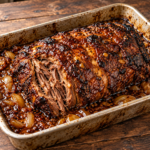
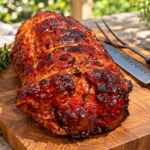
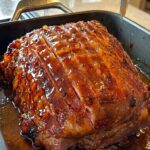
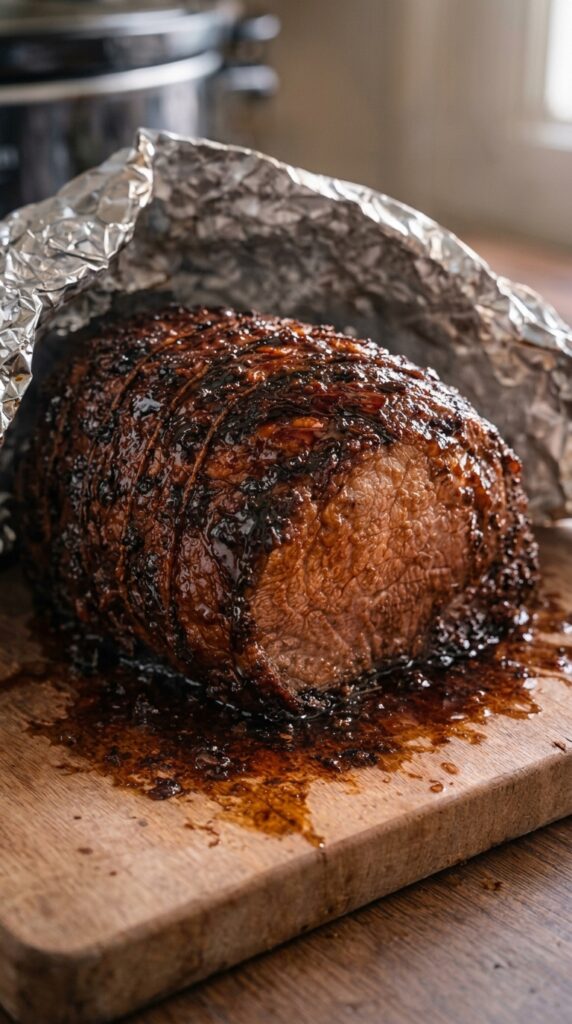
For a beautiful presentation like the roast pictured, the finished beef is brushed with a thick glaze and briefly broiled to create a dark, glossy, caramelized exterior.
Serve this roast with creamy mashed potatoes, roasted carrots, green beans, buttery dinner rolls, or a fresh garden salad. It’s a satisfying meal that brings warmth and comfort to the dinner table.
Ingredients
For the Beef Roast
3–4 lbs beef chuck roast
2 tablespoons olive oil
1 teaspoon salt
1 teaspoon black pepper
1 teaspoon garlic powder
1 teaspoon onion powder
1 teaspoon smoked paprika
1 large onion, sliced
4 garlic cloves, minced
1 cup beef broth
2 tablespoons Worcestershire sauce
For the Brown Sugar Balsamic Glaze
½ cup brown sugar, packed
⅓ cup balsamic vinegar
3 tablespoons soy sauce
2 tablespoons honey
2 tablespoons Dijon mustard
1 tablespoon tomato paste
½ teaspoon dried thyme
½ teaspoon black pepper
1 tablespoon cornstarch
2 tablespoons cold water
Optional Garnish
Fresh parsley
Fresh thyme
Cracked black pepper
Instructions
Step 1: Prepare the Beef Roast
Remove the beef roast from the refrigerator approximately 20 minutes before cooking while you prepare the remaining ingredients.
Pat the beef dry with paper towels. Removing surface moisture helps create a beautifully browned crust when searing.
In a small bowl, combine salt, black pepper, garlic powder, onion powder, and smoked paprika.
Rub the seasoning mixture evenly over the entire beef roast, making sure all sides are coated.
Step 2: Sear the Beef
Heat olive oil in a large skillet over medium-high heat.
Carefully place the seasoned beef roast into the hot skillet.
Sear for approximately 3–4 minutes on each major side until a rich, golden-brown crust forms.
This step adds a deeper flavor to the finished roast.
Although searing is optional, it is highly recommended for the best taste and appearance.
Transfer the browned beef to a plate.
Step 3: Prepare the Slow Cooker
Arrange the sliced onions across the bottom of a 6-quart slow cooker.
Sprinkle minced garlic over the onions.
Place the seared beef roast directly on top.
Pour the beef broth and Worcestershire sauce around the meat.
The onions will soften during cooking, adding sweetness and flavor to the cooking juices.
Step 4: Make the Brown Sugar Balsamic Sauce
In a medium mixing bowl, combine brown sugar, balsamic vinegar, soy sauce, honey, Dijon mustard, tomato paste, dried thyme, and black pepper.
Whisk until the brown sugar begins dissolving and the ingredients are well combined.
The mixture should have a smooth consistency with a balance of sweet, tangy, and savory flavors.
Reserve approximately ⅓ cup of this sauce in a separate covered container in the refrigerator for the final glaze. Make sure it has not touched the raw beef.
Pour the remaining sauce evenly over the roast in the slow cooker.
Step 5: Slow Cook the Beef
Cover the slow cooker with its lid.
Cook on LOW for 8–9 hours or HIGH for approximately 5–6 hours, depending on the size and thickness of the roast.
For the most tender results, the LOW setting is recommended.
The beef is ready when it can easily be pierced with a fork and the connective tissues have softened.
Chuck roast typically becomes fall-apart tender when its internal temperature reaches approximately 195–205°F (90–96°C), although tenderness matters more than the exact temperature.
Avoid frequently lifting the slow cooker lid because this releases heat and can increase cooking time.
Step 6: Prepare the Thick Glaze
Once the roast is tender, carefully remove it from the slow cooker and place it on a foil-lined oven-safe roasting pan.
Pour the reserved, unused sauce into a small saucepan.
Add approximately ½ cup of the hot cooking liquid from the slow cooker.
Bring the mixture to a gentle simmer over medium heat.
In a separate bowl, combine cornstarch with cold water until smooth.
Slowly stir the cornstarch mixture into the simmering sauce.
Continue stirring for approximately 2–4 minutes until the glaze becomes thick, glossy, and slightly sticky.
The finished glaze should coat the back of a spoon.
Step 7: Create the Caramelized Crust
Preheat your oven broiler.
Using a pastry brush, generously coat the cooked beef roast with the thick brown sugar balsamic glaze.
Place the roast approximately 6–8 inches away from the broiler heating element.
Broil for 2–4 minutes, watching continuously, until the glaze bubbles and develops a dark caramelized finish.
Remove the roast immediately if the glaze begins to burn.
For an extra glossy appearance, brush another thin layer of glaze over the roast after broiling.
This finishing step creates the beautiful sticky exterior while keeping the inside tender and juicy.
Step 8: Rest and Slice
Transfer the glazed beef roast to a clean cutting board.
Allow it to rest for approximately 10–15 minutes before slicing.
Use a sharp carving knife to slice the beef against the grain.
For very tender chuck roast, the meat may separate into larger pieces instead of neat slices. This is completely normal.
Arrange the sliced beef on a serving platter.
Drizzle warm glaze over the top and garnish with fresh parsley or thyme.
Serve immediately with your favorite side dishes.
Recipe Notes
Choosing the Best Beef
Beef chuck roast works especially well for this recipe because it contains connective tissue and marbling that soften during long, gentle cooking.
Other suitable options include beef brisket and certain pot-roast cuts.
If you prefer uniform, firm slices, choose a cut suited to slicing and adjust cooking accordingly. Chuck roast is more likely to become fork-tender and pull apart.
Understanding the Glaze
Brown sugar gives the glaze its sweetness and helps it caramelize.
Balsamic vinegar provides acidity, while honey adds shine and thickness.
Soy sauce and Worcestershire sauce contribute savory depth.
Dijon mustard balances the sweetness without making the finished roast taste strongly of mustard.
Slow Cooker Size
A 6-quart slow cooker is generally suitable for a 3–4 lb beef roast.
Choose a slow cooker that allows the lid to close properly without pressing against the meat.
Adjusting the Sweetness
For a less sweet glaze, reduce the brown sugar from ½ cup to ⅓ cup.
For a sweeter holiday-style finish, keep the original amount and apply a second coating during the final broiling stage.
Tips for the Best Brown Sugar Beef Roast
1. Sear before slow cooking. Browning the meat develops a deeper roasted flavor that complements the sweet balsamic glaze.
2. Cook low and slow. Gentle cooking helps transform a tough chuck roast into tender, juicy beef.
3. Don’t add too much liquid. The beef releases natural juices during cooking, so one cup of broth is usually sufficient.
4. Keep the glaze separate until finishing. Reserving unused sauce makes it easier to create a clean, glossy finishing glaze without relying entirely on the cooking liquid.
5. Watch the broiler carefully. Brown sugar and honey can burn quickly under high heat.
6. Slice against the grain. Cutting across the meat fibers makes each bite easier to chew.
7. Allow the roast to rest. Resting gives the juices time to settle before carving.
8. Save the cooking juices. The flavorful liquid can be strained and served as gravy or used to reheat leftovers.
Serving Suggestions
This brown sugar balsamic beef roast pairs beautifully with many traditional American side dishes.
Creamy garlic mashed potatoes are one of the best choices because they absorb the rich glaze and beef juices.
Roasted carrots bring natural sweetness, while steamed green beans provide a fresh contrast to the flavorful meat.
Other excellent options include buttery mashed sweet potatoes, roasted Brussels sprouts, corn on the cob, and homemade dinner rolls.
For a special dinner, arrange the sliced beef on a large white serving platter with roasted vegetables around the edges.
Spoon additional warm glaze over the beef just before serving for a glossy, restaurant-style presentation.
Storage and Reheating
Refrigerator
Allow leftovers to cool slightly and refrigerate promptly in an airtight container with some cooking juices.
Store in the refrigerator for up to 3–4 days at 40°F (4°C) or below.
Freezer
Place cooled beef slices or shredded beef into freezer-safe containers.
Add a small amount of sauce to help prevent dryness.
Freeze for approximately 2–3 months for the best quality.
Reheating
Place leftover beef in an oven-safe dish with a few tablespoons of cooking liquid.
Cover with aluminum foil and heat at 300°F (150°C) until warmed throughout to 165°F (74°C).
You can also reheat individual portions in the microwave.
Avoid overheating because it can dry out the meat.
Nutritional Information
Estimated per serving, based on 8 servings using a 3½ lb chuck roast. Actual values vary with trimming, meat fat content, and the amount of glaze consumed.
| Nutrient | Approximate amount |
|---|---|
| Calories | 490 kcal |
| Protein | 43 g |
| Total Fat | 26 g |
| Saturated Fat | 10 g |
| Carbohydrates | 20 g |
| Sugar | 17 g |
| Fiber | 0.5 g |
| Sodium | 850 mg |
| Iron | 4 mg |
Nutritional Benefits
Excellent Source of Protein
Beef contains high-quality protein, which supports muscle maintenance, tissue repair, and normal body functions.
A serving of this roast provides a substantial amount of protein, making it a satisfying main dish.
Contains Important Minerals
Beef naturally provides iron and zinc.
Iron supports the transport of oxygen throughout the body, while zinc contributes to normal immune function.
Provides Vitamin B12
Beef is an excellent dietary source of vitamin B12, an essential nutrient involved in nerve function and red blood cell formation.
Satisfying Family Meal
The combination of protein and fat can help make this meal filling.
Pairing the beef with vegetables and whole grains creates a more balanced dinner.
Keep in mind that the glaze contains added sugar and sodium, so portion size and the choice of side dishes are important.
Frequently Asked Questions (Q&A)
Q1. Can I make this recipe without searing the beef?
Yes. You can place the seasoned beef directly into the slow cooker. However, searing develops additional flavor and creates a richer exterior.
Q2. Can I cook this beef roast in the oven instead?
Yes. Place the beef in a covered Dutch oven with the onions, broth, and sauce. Cook at approximately 300°F (150°C) for 3½–4½ hours, or until fork-tender. Finish with the glaze under the broiler.
Q3. Can I prepare this recipe ahead of time?
Absolutely. You can cook the beef one day in advance, refrigerate it with its cooking juices, and reheat it before serving. Apply the final glaze just before serving for the best appearance.
Q4. Why is my beef roast still tough?
A chuck roast may still be tough if the connective tissue hasn’t fully broken down. Continue cooking gently and check its tenderness periodically. Toughness does not always mean the meat is overcooked.
Q5. Can I use white sugar instead of brown sugar?
Yes, but brown sugar provides a deeper caramel flavor. White sugar will create sweetness without quite the same richness.
Q6. What if my balsamic glaze is too thin?
Simmer it for several additional minutes or add a little more cornstarch mixed with cold water.
Q7. Can I make this recipe without honey?
Yes. Simply omit the honey or replace it with a small amount of maple syrup. The brown sugar will still provide plenty of sweetness.
Q8. What vegetables can I cook with the roast?
Carrots, potatoes, and onions work well. Add firm vegetables early enough to become tender, or roast them separately for better control over texture.
Q9. How do I prevent the beef from drying out?
Use a well-marbled roast, avoid unnecessary lid opening, and serve the meat with its cooking juices. Do not leave the beef on high heat after it becomes tender.
Q10. Is this recipe suitable for holidays?
Yes. The shiny brown sugar balsamic glaze gives the roast an attractive presentation, making it suitable for Christmas dinners, Thanksgiving alternatives, Sunday gatherings, and other family celebrations.
Conclusion
Slow Cooker Brown Sugar Balsamic Glazed Beef Roast is a flavorful, comforting meal that combines tender beef with a sticky, sweet-and-tangy caramelized glaze.
With simple ingredients, minimal preparation, and an easy slow-cooking method, this recipe delivers a satisfying dinner without complicated cooking techniques.
Whether you’re preparing a relaxed Sunday family meal or a special holiday dinner, this roast pairs beautifully with classic sides and makes delicious leftovers.
The combination of juicy beef, savory seasonings, and rich balsamic glaze makes this a recipe worth adding to your family dinner collection.