
Prep Time: 2 minutes
Cook Time: 75–90 seconds
Servings: 1 small loaf
This mug bread is a quick option when you want a warm slice of bread without wheat flour, yeast, or added sugar. It uses just three ingredients: almond flour, an egg, and baking powder. Mix them in a mug, microwave until set, then turn out the bread and slice it. Toasting the slices gives them a firmer surface that holds butter or sandwich fillings well.
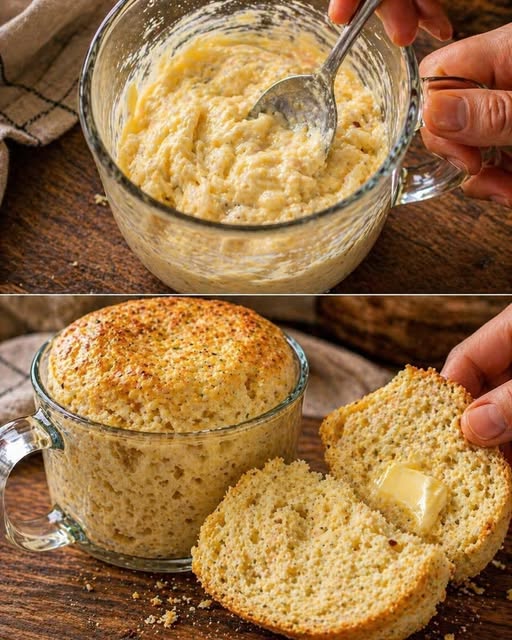
The photo shows a soft, golden bread with a slightly textured crumb. Fine almond flour helps produce that look. This recipe is low-carb, not zero-carb: both almond flour and egg contain small amounts of carbohydrate. Check the labels on your ingredients if you need a precise carb count.
Ingredients
- 3 tablespoons fine almond flour
- 1 large egg
- ¼ teaspoon baking powder
Optional for serving: Butter, cream cheese, avocado, or your favorite sandwich filling. These are not needed to make the bread.
Instructions
- Choose a mug. Use a microwave-safe mug that holds at least 12 oz. The batter rises as it cooks, so a small cup may overflow. A straight-sided mug makes the finished bread easier to remove and slice.
- Beat the egg. Crack the egg into the mug. Beat it thoroughly with a fork until the yolk and white are combined. Run the fork around the bottom edge of the mug, where unmixed egg white can hide.
- Add the dry ingredients. Add the almond flour and baking powder. Stir until you have a uniform batter with no dry pockets of flour. Scrape down the inside of the mug as you mix. The batter should be thick enough to coat the fork but still easy to stir.
- Cook the bread. Microwave on high for 75 seconds. Check the center. If it still looks wet, continue cooking in 10–15-second intervals, up to about 90 seconds total for most microwaves. The top should look set and spring back lightly when touched. Microwave ovens vary in power, so use the appearance of the bread as your guide.
- Let it rest. Leave the bread in the mug for 1 minute after cooking. The mug and bread will be hot. This short rest helps the center finish setting and makes the loaf easier to handle.
- Remove and slice. Run a butter knife around the inside edge of the mug. Tip the bread onto a plate or small cutting board. Cut it horizontally into two or three slices with a serrated knife. Serve warm, or toast the slices for a more bread-like surface.
For a toasted finish
Heat a dry nonstick skillet over medium-low heat. Add the sliced bread and cook for about 1–2 minutes per side, until lightly golden. Toasting is especially useful if you plan to add a moist topping, such as avocado or a fried egg. You can also use a toaster oven, keeping an eye on the small slices because they brown quickly.
Tips
Use fine almond flour. Fine, blanched almond flour gives the bread a more even crumb. Coarse almond meal will still work, but the loaf may feel grainier and look darker.
Measure the flour level. Spoon almond flour into the tablespoon and level it off. Packing in too much can make the batter dry and dense. If you use a very small egg and the mixture seems difficult to stir, add a few drops of water before cooking.
Mix the egg thoroughly. A streak of egg white that has not been mixed into the batter can cook into a separate, rubbery patch. Take a few extra seconds to beat the egg before adding the almond flour.
Stop cooking when the center sets. Microwaving for too long is the most common reason mug bread becomes tough. Start with 75 seconds, then add time only if the middle still looks wet. A little steam when you cut the warm bread is normal.
Let it cool slightly before slicing. Freshly cooked mug bread is delicate. Resting it for a minute helps it hold together, and a serrated knife cuts it without pressing it flat.
Expect a small loaf. This is a single serving designed for a mug. It will not have the chewy texture of yeast bread, but it should be soft enough to slice and sturdy enough to toast.
Storage
Mug bread has its best texture just after cooking, especially when the slices are lightly toasted. If you make it ahead, allow it to cool completely, then place it in an airtight container. Refrigerate for up to 2 days.
For the best reheated texture, slice the bread while cool and toast it in a skillet or toaster oven. You can warm it briefly in the microwave, but additional microwaving may make it rubbery. Start with a few seconds and check it before heating further.
You can also freeze cooled slices in a sealed freezer bag for up to 1 month. Separate the slices with small pieces of parchment paper so you can remove one at a time. Toast them from frozen or thaw them in the refrigerator before warming.
Do not store mixed, uncooked batter at room temperature. Since it contains raw egg and baking powder, it is simpler to mix the three ingredients when you are ready to cook.
Serving Ideas
For a simple breakfast, spread the warm slices with butter. A spoonful of cream cheese makes them more filling, while avocado and a little black pepper turn them into quick toast. Toasting the bread first helps these toppings stay in place.
To make a small breakfast sandwich, cut the loaf into two thicker slices and add a cooked egg and cheese. You can also fill it with sliced turkey, cucumber, and lettuce for a quick lunch. Keep wet fillings modest so the bread does not become soggy.
The plain recipe works with savory or sweet toppings. For a sweet serving, add a few berries and a spoonful of unsweetened yogurt after cooking. Toppings change the nutrition and carb count, so include them if you are tracking either.
If you want the slices to look more golden, use the skillet-toasting method. It gives the outside some color while leaving the middle soft. Let the slices sit for a moment after toasting before adding a cold topping.
Nutrition Benefits
Almond flour and egg provide protein and fat, and almond flour also contributes some fiber. Because the recipe contains no wheat flour or added sugar, it may suit someone looking for a lower-carb bread option. It contains almonds and egg, so it is unsuitable for anyone allergic to either ingredient.
The exact nutrition depends on the almond flour and baking powder brands and the size of the egg. Low-carb does not mean carb-free. For a reliable count, add the values from your ingredient labels for the full mug bread, then include any toppings you use.
Questions and Answers
Is this really ready in 90 seconds?
The microwave cooking step takes about 75–90 seconds. Mixing the batter, resting the bread, and slicing it take a few additional minutes.
Is it zero-carb?
No. Almond flour and egg naturally contain small amounts of carbohydrate. “Low-carb mug bread” is the more accurate name for this three-ingredient recipe.
Can I make it without a microwave?
Yes. Transfer the mixed batter to a small greased oven-safe ramekin. Bake at 350°F (175°C) for approximately 12–15 minutes, until the center is set. The oven version will take longer but uses the same ingredients.
Why did my bread collapse after cooking?
A little settling is normal as the steam escapes. If it sinks dramatically or feels wet in the middle, it may need another 10–15 seconds in the microwave. Also check that your baking powder is fresh.
Why is my bread rubbery?
It was likely cooked too long, or some egg white was left unmixed. Beat the egg fully and check the bread at 75 seconds next time.
Can I double the recipe in one mug?
A double batch may cook unevenly or overflow. For two servings, mix and cook each loaf in its own mug.