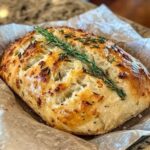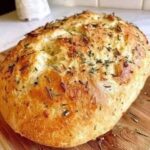

Vegan Herb and Garlic Bread Loaf
Prep time: 25 minutes
Rise time: 1½–2 hours
Cook time: 35–40 minutes
Total time: Approximately 2½–3 hours, plus cooling
Servings: 12 slices
Yield: 1 loaf
Diet: Vegan, dairy-free, egg-free
Description for Vegan Herb and Garlic Bread Loaf
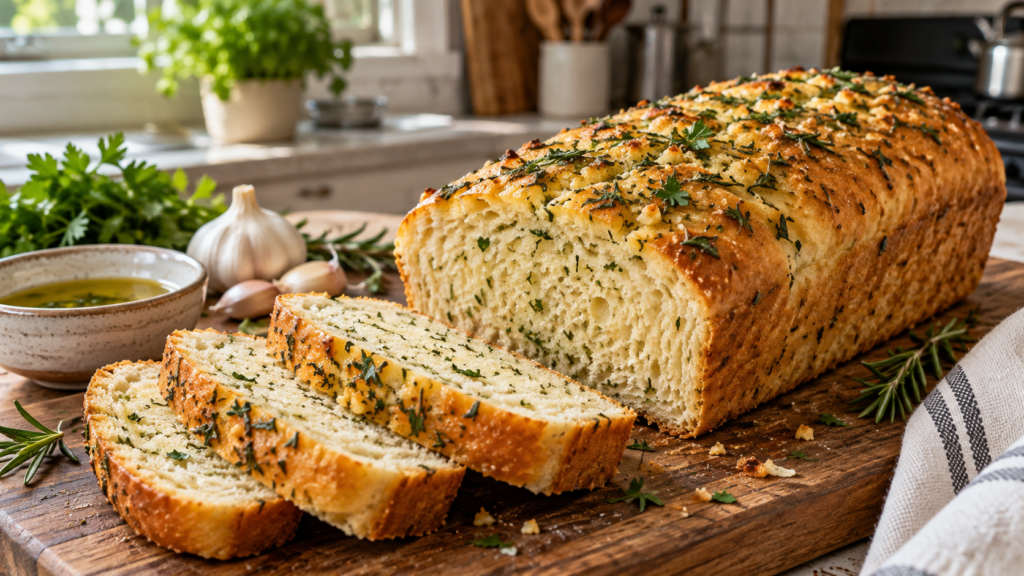
This Vegan Herb and Garlic Bread Loaf has a golden crust, a soft center, and savory flavor in every slice. Olive oil enriches the dough, while parsley, rosemary, and garlic give it the comforting aroma of homemade garlic bread. A warm garlic and olive oil topping adds extra flavor after baking.
Unlike garlic bread made by spreading a topping onto an existing loaf, this recipe starts with a simple yeast dough. The herbs are mixed directly into the bread, so their flavor runs throughout the crumb. You do not need eggs, dairy milk, or butter to create a tender, satisfying loaf.
Serve it beside tomato soup, pasta, roasted vegetables, or a hearty bean stew. It also makes delicious toast and savory sandwiches. Most of the preparation time is hands-off while the dough rises, making this a manageable baking project even if you are relatively new to homemade bread.
Ingredients for Vegan Herb and Garlic Bread Loaf
For the bread dough:
- 3¼ cups all-purpose flour, approximately 390 g, plus a little for kneading
- 1 cup warm water, 240 ml
- 2¼ teaspoons active dry yeast, 7 g
- 1 tablespoon granulated sugar
- 2 tablespoons olive oil
- 1¼ teaspoons fine salt
- 1 teaspoon garlic powder
- 2 tablespoons finely chopped fresh parsley
- 1 teaspoon finely chopped fresh rosemary
For the garlic herb topping:
- 2 tablespoons olive oil
- 3 garlic cloves, finely minced
- 1 tablespoon finely chopped fresh parsley
- A pinch of black pepper
Use a little additional oil to grease the bowl and loaf pan.
Instructions for Vegan Herb and Garlic Bread Loaf
- Prepare the yeast mixture.
Pour the warm water into a large mixing bowl. Aim for approximately 105–110°F (40–43°C). Stir in the sugar and active dry yeast, then leave for 5–10 minutes. The mixture should develop a foamy surface. If it remains completely inactive, check your yeast before continuing. - Combine the dough ingredients.
Add the olive oil, salt, garlic powder, parsley, and rosemary to the yeast mixture. Stir in about 3 cups of flour, then gradually add the remaining flour until a shaggy dough forms. It should feel soft and slightly tacky rather than dry or stiff. - Knead until smooth.
Turn the dough onto a lightly floured surface. Knead for 8–10 minutes, folding and pushing it away with the heel of your hand. Add flour sparingly if needed. The finished dough should become smooth, elastic, and able to stretch a little before tearing. - Let the dough rise.
Place it in a lightly oiled bowl and turn once to coat. Cover with a clean towel or reusable cover. Leave in a warm, draft-free place for 60–90 minutes, until approximately doubled in size. A cool kitchen may require more time. - Prepare the pan and shape.
Lightly grease an 8½ × 4½-inch loaf pan. Gently press the risen dough to release large air bubbles. Pat it into a rectangle about as wide as the pan is long. Roll it into a snug log, pinch the seam closed, and place seam-side down. - Allow the second rise.
Cover loosely and let the loaf rise for 30–45 minutes. The dough should become puffy and rise approximately 1 inch above the rim at its center. Meanwhile, preheat the oven to 375°F (190°C) so it is ready when the dough finishes rising. - Bake the loaf.
Bake on the middle rack for 35–40 minutes, until the top is golden brown. If it browns too quickly, loosely cover with foil for the remaining time. A thermometer inserted into the center should read approximately 195–200°F (91–93°C) when the bread is baked. - Prepare the garlic topping.
During the final few minutes of baking, warm the topping’s olive oil in a small saucepan over low heat. Add the minced garlic and cook gently for 1–2 minutes, stirring until fragrant. Do not let it brown deeply. Remove from the heat and stir in parsley and pepper. - Brush the warm bread.
Let the loaf sit in its pan for 5 minutes, then carefully transfer it to a wire rack. Brush the warm garlic herb oil evenly over the top. Spoon the softened garlic across the crust so the flavor is distributed rather than concentrated in one spot. - Cool before slicing.
Allow the loaf to cool for at least 45–60 minutes, preferably until barely warm. Slice with a serrated bread knife using a gentle sawing motion. Cooling helps the crumb finish setting and makes the slices easier to cut without compressing the soft center.
Recipe Notes for Vegan Herb and Garlic Bread Loaf
Flour measurements matter. Weighing the flour gives the most consistent result. If using cups, fluff the flour, spoon it into the measuring cup, and level the top. Scooping directly from the bag can pack in too much flour.
Watch the dough, not only the clock. Yeast activity changes with room temperature. The first rise is complete when the dough has roughly doubled. During the second rise, look for a puffy loaf rather than waiting for an exact number of minutes.
Fresh and dried herbs behave differently. Fresh herbs provide bright flavor and green flecks. You can replace the dough’s fresh parsley with 2 teaspoons dried parsley and the fresh rosemary with about ⅓ teaspoon dried rosemary.
Keep the topping freshly prepared. Make the garlic oil shortly before brushing the loaf. This recipe does not require storing garlic-infused oil. The topping should smell fragrant and savory, without the bitterness that comes from burned garlic.
Tips for a Soft, Flavorful Loaf
- Avoid adding excess flour. A slightly tacky dough usually produces a softer loaf than a very firm dough.
- Chop rosemary finely. Large pieces can feel woody and overwhelm individual bites.
- Keep the rising dough covered. A dry surface can restrict expansion and create an uneven crust.
- Shape with gentle tension. A snug log helps the loaf rise evenly, but aggressive pulling can tear the dough.
- Preheat thoroughly. Putting the loaf into a properly heated oven helps it expand during the first part of baking.
- Check the center. Crust color alone cannot confirm that the inside has finished baking.
- Cool on a rack. Air circulation prevents trapped steam from making the bottom damp.
Serving Suggestions for Vegan Herb and Garlic Bread Loaf
Serve a slice with vegetable soup, lentil stew, or tomato-based pasta. The garlic and herbs also complement roasted mushrooms, white beans, and grilled vegetables.
For a simple lunch, toast two slices and fill them with hummus, cucumber, tomato, and leafy greens. For an appetizer, cut slices into smaller pieces and serve with olive oil and balsamic vinegar for dipping.
Day-old bread makes flavorful croutons. Cut it into cubes and toast until crisp, checking frequently because the garlic topping can brown quickly. Scatter the croutons over salads or soups just before serving.
Storage and Freezing for Vegan Herb and Garlic Bread Loaf
Because this loaf has a moist fresh garlic topping, refrigerate cooled leftovers in a sealed container and use within 3–4 days. Toast individual slices to restore their texture.
For longer storage, freeze the cooled loaf in slices for up to 2 months. Separate slices with parchment if desired, then place in a freezer-safe bag. Toast directly from frozen or thaw only the portion you need.
Make Everyday Cooking Easier
Discover 60+ high-protein, low-carb recipes with simple instructions and everyday ingredients. Explore breakfasts, lunches, dinners, salads, and snacks—plus a 30-day meal plan to help you plan ahead.
Get the Elite Protein Kitchen Cookbook
Estimated Nutritional Information for Vegan Herb and Garlic Bread Loaf
Per slice, based on 12 equal slices and all the topping:
- Calories: Approximately 170
- Protein: 4 g
- Carbohydrates: 27 g
- Fat: 5 g
- Saturated fat: Less than 1 g
- Fiber: 1 g
- Total sugars: Approximately 1 g
- Sodium: Approximately 245 mg
Values are estimates and will vary with flour brands, slice size, and additional oil used for greasing.
Nutritional Benefits for Vegan Herb and Garlic Bread Loaf
Made without dairy or eggs. This recipe suits a vegan eating pattern and provides an alternative to traditional butter-based garlic bread. It still contains wheat and is unsuitable for someone who needs to avoid gluten.
Olive oil contributes unsaturated fats. It also keeps the crumb tender and carries the garlic and herb flavors throughout the loaf.
Bread supplies carbohydrates for energy. Pairing a slice with beans, lentils, tofu, or hummus adds protein and makes the overall meal more substantial.
Herbs add flavor and variety. Parsley, rosemary, and garlic create a savory loaf without requiring cheese. Their quantities here are small, so enjoy them primarily for their flavor rather than expecting major nutritional effects.
Questions and Answers for Vegan Herb and Garlic Bread Loaf
Can I use instant yeast?
Yes. Use the same quantity and mix it directly with the flour. Add the warm water and remaining dough ingredients, then proceed with kneading. Rising may be slightly faster, so check the dough regularly.
Can I use bread flour?
Yes. Substitute the same weight of bread flour for a slightly chewier loaf. If the dough feels unusually firm, add water a teaspoon at a time until it is soft and workable.
Can I make it with whole wheat flour?
Start by replacing about one-quarter of the all-purpose flour with whole wheat flour. You may need a little additional water. A larger substitution will produce a denser loaf and may require further recipe adjustments.
Why did my bread turn out dense?
Common causes include inactive yeast, too much flour, insufficient kneading, or a short rise. Let the dough become visibly airy before baking, and avoid adding flour simply to eliminate every trace of stickiness.
Why did the top sink?
The loaf may have risen too long before baking or may have been underbaked. Follow the dough’s appearance during proofing and check the internal temperature before removing it from the oven.
Can I prepare the dough overnight?
Yes. After kneading, cover and refrigerate it overnight in a lightly oiled bowl with room to expand. The next day, shape it and allow a longer second rise because cold dough warms slowly.
Can I leave out the sugar?
Yes, although the yeast mixture may show less obvious foaming and the dough may rise more slowly. The small amount in this recipe supports fermentation without making the bread taste sweet.
Can I make the loaf without the topping?
Absolutely. The garlic powder and herbs already flavor the dough. Leaving off the topping gives a simpler crust and reduces the oil per serving.https://ketosl.com/slow-cooker-bacon-wrapped-meatloaf/