
Vegan Garlic and Butter Flatbread
Prep Time: 15 minutes
Cook Time: 25–30 minutes
Servings: 8 flatbreads
These soft skillet flatbreads are made from a pourable batter, then brushed with warm garlic and herb vegan butter. They have golden spots on the outside and remain flexible enough to fold or roll. There is no yeast, kneading, or rising time, so you can make them shortly before a meal.
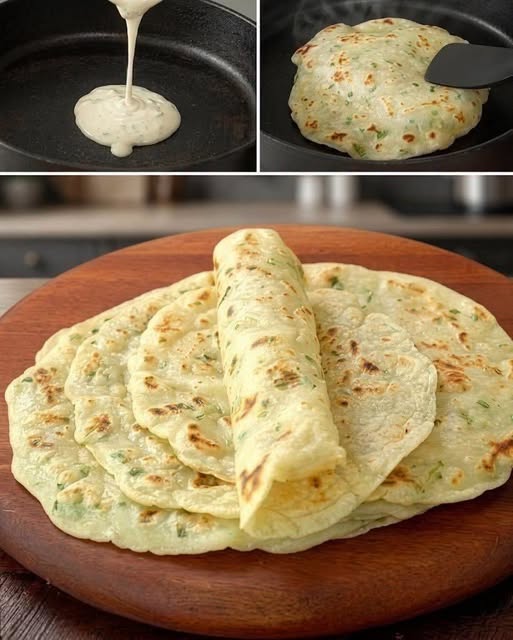
The photo shows batter poured into a skillet, a flatbread puffing as it cooks, and a stack of finished breads. To get a similar result, spread each portion of batter thinly as soon as it reaches the hot pan. Keep the cooked flatbreads covered with a clean towel while you finish the batch; the trapped warmth helps them stay soft.
Ingredients
For the flatbreads
- 1½ cups all-purpose flour
- 1 teaspoon baking powder
- ½ teaspoon salt
- 1½ cups unsweetened plant milk
- 2 tablespoons olive oil
- 2 tablespoons finely chopped fresh parsley
- 1–3 tablespoons water, if needed to thin the batter
- A little oil for the skillet
For the garlic butter
- 3 tablespoons vegan butter
- 2 garlic cloves, finely minced
- 1 tablespoon finely chopped fresh parsley
- Pinch of salt
Instructions
- Mix the dry ingredients. Add the flour, baking powder, and salt to a medium bowl. Whisk them together so the baking powder is evenly distributed. This helps the flatbreads cook with a consistent texture rather than developing dense spots.
- Make the batter. Pour in the plant milk and olive oil. Whisk until no dry flour remains, then stir in the chopped parsley. The batter should be smooth and thick but still pour from a measuring cup. A few tiny lumps are fine. If it seems too thick to spread in a skillet, add water 1 tablespoon at a time.
- Rest briefly. Let the batter stand for about 5 minutes while you heat the skillet. This gives the flour time to absorb some liquid. Stir once more before cooking. If the batter has thickened noticeably, add a small splash of water.
- Heat the skillet. Set a nonstick skillet over medium heat. Lightly wipe the surface with oil. The pan should be hot enough that a small drop of batter begins to cook promptly, but not so hot that it browns before you can spread it.
- Cook the first flatbread. Pour about ⅓ cup batter into the skillet. Immediately use the back of a spoon to spread it into a thin round, approximately 7 inches wide. Cook for 2–3 minutes, until the top is mostly set and the underside has golden-brown spots.
- Flip and finish. Slide a spatula underneath the flatbread and flip it carefully. Cook for another 1–2 minutes, until the second side has golden spots and no wet batter remains in the center. The bread may puff in places as it cooks; that is normal.
- Keep the breads soft. Transfer the cooked flatbread to a plate and cover it with a clean kitchen towel. Repeat with the remaining batter, adding a thin film of oil to the skillet only when needed. Stir the batter occasionally so the parsley stays evenly distributed.
- Prepare the garlic butter. Melt the vegan butter in a small pan over low heat. Add the minced garlic and cook for 30–60 seconds, stirring constantly, just until fragrant. Keep the heat low so the garlic does not brown or turn bitter. Remove from the heat and stir in the parsley and a small pinch of salt.
- Brush and serve. Brush the warm flatbreads with the garlic butter. You can brush one side only or use a little on both sides, depending on how rich you want them. Serve immediately, or keep the stack loosely covered until mealtime.
Tips
Spread the batter right away. It starts setting as soon as it touches the hot skillet. Pour one portion and spread it before doing anything else. A thin layer cooks through more evenly and makes a flatbread that bends without breaking.
Adjust the heat between batches. If the first bread becomes dark before its top sets, lower the heat slightly. If it stays pale after several minutes, raise the heat a little. Allow the skillet a moment to adjust before cooking the next one.
Use unsweetened plant milk. Sweetened or flavored varieties can change the taste of a savory garlic flatbread. Unsweetened soy, oat, or almond milk can all be used. Their thickness varies, so adjust the batter with a little water if necessary.
Cover the cooked breads. Leaving each flatbread uncovered can dry its surface and make it harder to roll. Stack them on a plate under a towel while the rest cook. Their gentle warmth will help keep the stack flexible.
Add the garlic butter after cooking. Raw minced garlic in a hot skillet can burn. Warming it briefly in vegan butter gives it flavor without scorching, and brushing it on at the end keeps the garlic taste fresh.
Make them the size you need. For smaller appetizer flatbreads, use less batter per piece and shorten the cooking time slightly. For wraps, make larger rounds only if your skillet has enough room for you to spread and flip them easily.
Storage
Let the flatbreads cool completely before storing them. Place them in an airtight container or sealed bag, with a piece of parchment between breads if they tend to stick. Refrigerate for up to 3 days.
Keep any extra garlic butter in a separate covered container in the refrigerator for up to 3 days. If you plan to store the flatbreads, brush them just before serving for the best texture. Already brushed flatbreads can still be refrigerated, but they may feel softer when reheated.
To reheat, warm one flatbread at a time in a dry skillet over medium-low heat for about 30–60 seconds per side. Cover the skillet briefly if the bread needs extra warmth without more browning. You can also wrap a stack in foil and warm it in a 300°F (150°C) oven until heated through.
For longer storage, freeze the cooled flatbreads for up to 1 month. Place parchment between them so you can take out only what you need. Thaw in the refrigerator or reheat directly in a covered skillet over low heat, then brush with fresh garlic butter.
Serving Ideas
Serve these flatbreads warm beside lentil soup, vegetable curry, or a bean stew. Their soft texture makes them useful for scooping up a thick sauce. Add a crisp cucumber and tomato salad if you want a fresh side alongside the meal.
For a quick wrap, fill a flatbread with roasted vegetables, chickpeas, lettuce, and a spoonful of hummus. Roll it while it is warm and flexible. If your filling is especially moist, place a layer of lettuce on the bread first to help keep it from becoming soggy.
They also work as an appetizer. Cut each flatbread into wedges and serve with hummus, baba ghanoush, or a creamy vegetable dip. Warm the wedges briefly before serving and brush them with a little more garlic butter if desired.
For a simple lunch, top a warm flatbread with sliced tomatoes, fresh herbs, and cooked white beans. Fold it in half and eat it like a soft sandwich.
Nutrition Benefits
These flatbreads provide carbohydrates for energy. The olive oil and vegan butter add fat, while the garlic and parsley give them flavor without dairy ingredients. The exact nutritional content depends on the plant milk and vegan butter you choose, as well as how much garlic butter you brush onto each bread.
To make them part of a more filling meal, serve them with a protein source such as lentils, chickpeas, tofu, or beans and add vegetables on the side. If you need precise nutrition information, use the labels on your ingredients and divide the total by the number of flatbreads you make.
Questions and Answers
Can I use water instead of plant milk?
Yes. Replace the plant milk with water, starting with a little less than the full amount and adding more until the batter is pourable. The flatbreads will taste a little less rich, but they will still cook in the skillet.
Why are my flatbreads stiff?
They may have been spread too thickly, cooked too long, or left uncovered after cooking. Spread each portion thinly, remove it when both sides are cooked, and place it under a towel immediately.
Can I make the batter ahead?
Yes. Cover and refrigerate the batter for up to 24 hours. Stir well before cooking. The flour may absorb more liquid as it sits, so add a splash of water if the batter is too thick to spread.
Can I use dried parsley?
Yes. Use about 2 teaspoons dried parsley in the batter and 1 teaspoon in the garlic butter. Fresh parsley gives the breads brighter green flecks like those in the photo.
Do I need a nonstick skillet?
It makes thin batter flatbreads easier to flip. A well-seasoned cast-iron skillet can also work. Keep it lightly oiled and make sure the first side has set before you try to turn the bread.
Can I make these gluten-free?
The recipe is written for all-purpose wheat flour. A gluten-free flour blend may need a different amount of liquid and can produce a less flexible flatbread, so it would need some adjustment.