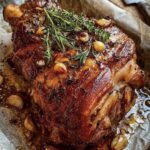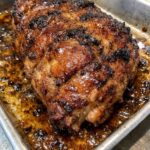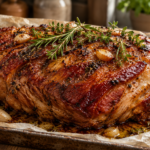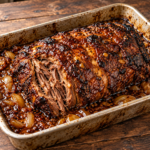

Honey Garlic Glazed Pork Shoulder Roast
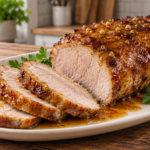
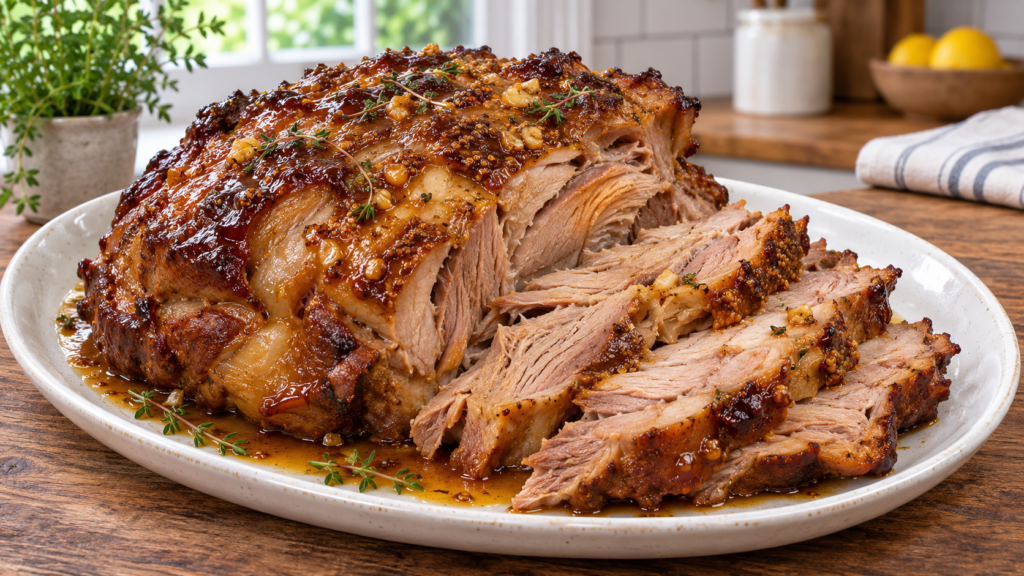
This Honey Garlic Glazed Pork Shoulder Roast cooks slowly in chicken broth until a fork slides easily into the meat. It then goes back into a hotter oven with a glaze made from honey, Dijon mustard, minced garlic, and thyme. The glaze turns glossy and deeply browned, while the pan juices give you a savory sauce to spoon over the carved pork.
Pork shoulder has seams of fat and connective tissue that soften during the long roast. The finished meat is tender enough to pull apart at the edges, with thick slices or large pieces that soak up the pan juices. Serve it with mashed potatoes and green beans for Sunday dinner, or with roasted carrots and a crisp apple slaw for a holiday meal.
Prep Time — 10 minutes
Cook Time — About 3–4 hours
Rest Time — 15 minutes
Servings — 6
Cooking Method — Covered oven roasting followed by uncovered glazing
Ingredients
For the pork shoulder roast
1 boneless pork shoulder roast, about 3 pounds
1 tablespoon olive oil
1 teaspoon salt
½ teaspoon black pepper
1 teaspoon smoked paprika
½ cup chicken broth
For the honey garlic glaze
¼ cup honey
2 tablespoons Dijon mustard
4 garlic cloves, minced
1 teaspoon dried thyme
Instructions
Preheat the oven and season the pork. Set the oven to 325°F (165°C). Pat the pork shoulder dry with paper towels. Rub it all over with the olive oil, then season the top, bottom, and sides with the salt, black pepper, and smoked paprika. If the roast came tied with oven-safe butcher’s twine, leave it tied while it cooks so it holds its shape.
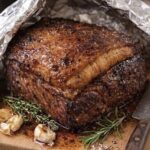
Set up the roasting pan. Place the pork fat-side up in a roasting pan or oven-safe baking dish. Pour the chicken broth into the pan around the meat so the seasoning stays on the surface. Cover the pan tightly with foil. Use a dish that fits the roast with a little space around it so the half cup of broth stays close to the meat.
Roast until fork-tender. Cook the covered pork for 2½–3½ hours. Start checking at 2½ hours by inserting a fork into the thickest part. It should slide in easily and turn with little resistance. If the meat still feels firm, cover it again and check every 20–30 minutes. A compact roast can take longer. Whole pork roasts have a safe minimum internal temperature of 145°F (63°C) with a three-minute rest. Keep cooking this shoulder past that minimum until it reaches the fork-tender texture you want.
Make the glaze. Stir the honey, Dijon mustard, minced garlic, and dried thyme together in a small bowl. If the honey is too thick to stir easily, set the bowl in warm water for a minute. Finely mince the garlic so it spreads evenly across the surface of the pork.
Glaze and brown the roast. Once the pork is fork-tender, remove the pan from the oven and raise the temperature to 425°F (220°C). Carefully lift the foil away from you. Brush the glaze over the top and exposed sides of the roast. Return the pan to the oven uncovered and roast for 10–15 minutes, until the glaze bubbles and turns glossy and deep golden brown. Check it near the 10-minute mark, since honey and garlic can darken quickly.
Rest, carve, and serve. Transfer the roast to a cutting board and rest it for 15 minutes. Remove the twine if you used it. Carve the pork across the grain into thick slices, or separate it into large pieces if it pulls apart easily. Skim excess fat from the pan juices and spoon the juices over the pork just before serving.
Helpful Cooking Tips
Give the roast enough time to soften. Shoulder roasts vary in shape and thickness, even at the same weight. If the pork feels firm when you insert a fork, keep it covered and give it more time at 325°F before glazing.
Keep a tight seal over the pan. Crimp the foil around the rim to hold in moisture. If the pan looks nearly dry when you check the meat, add a small splash of warm broth and reseal it.
Glaze right before the hot finish. Adding the honey after the covered roast gives it time to brown during the final 10–15 minutes. If the edges darken early, take the roast out as soon as the rest of the coating looks set and glossy.
Carve the shoulder in sections if needed. The grain can change direction across a shoulder roast. If the meat separates along a natural seam, turn each section as needed and slice across its grain.
Taste the pan juices before serving. Spoon off the surface fat, then taste the juices. If they taste concentrated, stir in a splash of warm unsalted broth. You can serve the juices on the side so the glaze stays visible on the platter.
Recipe Notes
Which pork shoulder should I buy? Look for a boneless pork shoulder roast around 3 pounds. It may be labeled Boston butt or pork butt. Choose a compact roast if you want a centerpiece you can carve at the table. If one side has a thick slab of surface fat, trim the excess and leave a thin layer for roasting.
Can I change the glaze? Dijon blends smoothly into the honey and gives the glaze a tangy finish. Whole-grain mustard works in the same amount if you like visible mustard seeds. You can also replace the dried thyme with about 1 tablespoon of chopped fresh thyme. Regular sweet paprika works in place of smoked paprika for a milder seasoning.
What should I serve with it? Mashed potatoes or creamy polenta make a good base for the pan juices. Roasted carrots bring out the sweetness of the glaze, while green beans, sautéed cabbage, or apple slaw add a fresh bite. For a casual dinner, serve thick pieces in soft rolls with a little slaw and a spoonful of the cooking juices.
Questions and Answers
Why is my pork shoulder still tough after three hours?
The center may need more time to soften, especially if the roast is thick or tightly tied. Cover it again and continue cooking at 325°F. Check it every 20–30 minutes and add the glaze once a fork slides in easily.
Can I use a bone-in pork shoulder?
Yes. A bone-in roast can take a different amount of time depending on its size and shape. Check the thickest part of the meat, away from the bone, and use the fork test before glazing. A 3-pound bone-in roast will also yield less meat than a boneless roast of the same weight.
Can I make the glaze ahead of time?
Yes. Mix the glaze up to one day ahead, cover it, and refrigerate it. Stir before brushing it onto the pork. If it has thickened in the refrigerator, warm the bowl briefly in warm water.
Can I shred the pork instead of slicing it?
Yes. For shredded pork, keep roasting it covered until two forks can pull the meat apart easily. Glaze and brown the outside, rest the roast, then shred it and toss it with a few spoonfuls of the skimmed pan juices.
Storage and Reheating Instructions
Refrigerate leftovers in shallow, airtight containers within two hours of cooking, or within one hour if the surrounding temperature is above 90°F (32°C). Use refrigerated pork within 3–4 days. Store it with a little pan juice so you have liquid to add when reheating. For longer storage, freeze individual portions with some of the juices and thaw them in the refrigerator.
Reheat slices or large pieces in a covered baking dish at 325°F (165°C) with a splash of broth or reserved pan juices. Heat leftovers to 165°F (74°C). Extra pork works well in sandwiches, rice bowls, or tacos with shredded cabbage and a squeeze of lime.
Nutritional Information
Approximate values per serving, based on six servings and excluding sides. The amount of fat you trim, the broth you use, and how much glaze and pan juice you serve will change the numbers.
Calories — 420–500
Protein — 35–43 g
Total fat — 25–32 g
Carbohydrates — 12–14 g
Total sugars — 11–12 g
Sodium — 500–700 mg
Nutrition Benefits
Pork shoulder provides protein, which supports muscle maintenance and repair. Pork also supplies thiamin and other B vitamins that help the body use energy from food. The honey contributes most of the recipe’s sugar, and pork shoulder supplies most of its fat. Serve it with green beans, broccoli, or cabbage slaw to add fiber to the mea