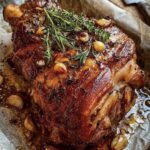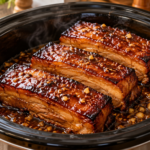

Honey Garlic Glazed Roasted Pork Shoulder – Juicy, Tender & Caramelized
Honey Garlic Glazed Roasted Pork Shoulder is a delicious, slow-roasted dinner featuring incredibly tender pork coated in a rich, sticky honey garlic glaze. With its golden-brown caramelized crust, juicy meat, and perfect combination of sweet and savory flavors, this homemade pork roast is ideal for family dinners, Sunday gatherings, holidays, and special occasions.
⏱️ Recipe Information
Prep Time: 15 minutes
Cook Time: 3–4 hours, plus 10–15 minutes for caramelizing
Resting Time: 15–20 minutes
Total Time: Approximately 3½–4½ hours
Servings: 6–8 people
Cooking Method: Oven Roasting / Slow Roasting
Cooking Temperature: 325°F (165°C), then 425°F (220°C)
Difficulty Level: Easy
Cuisine: American-Inspired
🛒 Ingredients
🍖 For the Pork Shoulder
3–4 lb boneless pork shoulder roast
3 tbsp olive oil
1 tsp smoked paprika
1 tsp garlic powder
1 tsp dried rosemary
1 tsp freshly ground black pepper
1 tsp salt
½ cup chicken broth
🍯 For the Honey Garlic Glaze
¼ cup honey
¼ cup brown sugar, packed
4 garlic cloves, finely minced
3 tbsp soy sauce
2 tbsp Dijon mustard
2 tbsp apple cider vinegar
2 tbsp melted butter
🌿 Optional Garnishes
Fresh rosemary sprigs
Fresh thyme leaves
Fresh parsley, chopped
Roasted garlic cloves
Freshly cracked black pepper
👩🍳 Step-by-Step Cooking Instructions
1. 🍖 Prepare the Pork Shoulder
Preheat your oven to 325°F (165°C).
Remove the pork shoulder from its packaging and place it on a clean cutting board.
Pat the entire roast dry using paper towels. Removing excess moisture helps create a beautiful golden-brown crust when the pork is seared.
Trim away any unusually thick pieces of excess fat, but leave a thin layer of fat to help keep the meat juicy during roasting.
In a small mixing bowl, combine the smoked paprika, garlic powder, dried rosemary, salt, and black pepper.
Rub the seasoning mixture evenly over the pork shoulder, making sure all sides are well coated.
Allow the seasoned pork to rest for approximately 10 minutes while you prepare the skillet.
2. 🔥 Sear the Pork Until Golden Brown
Place a large heavy-bottomed skillet over medium-high heat.
Add 3 tablespoons of olive oil and allow it to become hot.
Carefully place the seasoned pork shoulder into the skillet.
Sear the pork for approximately 2–3 minutes on each side until a beautiful golden-brown crust develops.
Use kitchen tongs to turn the roast carefully, ensuring the top, bottom, and sides become nicely browned.
Searing adds extra flavor and improves the appearance of the finished pork roast.
Once browned, remove the pork from the skillet and transfer it to a large roasting pan or oven-safe Dutch oven.
3. 🍯 Prepare the Honey Garlic Glaze
In a medium mixing bowl, add the honey, brown sugar, minced garlic, soy sauce, Dijon mustard, apple cider vinegar, and melted butter.
Whisk all the ingredients together until the mixture becomes smooth, glossy, and well combined.
The honey and brown sugar provide sweetness, while the soy sauce and garlic create a rich savory flavor.
Dijon mustard adds a gentle tanginess, and apple cider vinegar balances the sweetness.
If the brown sugar does not dissolve completely, warm the mixture gently in a small saucepan over low heat for 1–2 minutes while stirring.
Divide the glaze into two separate portions.
Use approximately two-thirds for the initial roasting process and reserve the remaining one-third in a clean container for the final caramelizing step.
4. 🥘 Arrange the Pork for Roasting
Place the seared pork shoulder in the center of a deep roasting pan, with the fat side facing upward if possible.
Pour ½ cup of chicken broth around the pork.
Avoid pouring the broth directly over the top because it may wash away the seasoning.
Using a pastry brush, generously coat the pork shoulder with the larger portion of the honey garlic glaze.
Make sure the top and exposed sides are evenly covered.
Cover the roasting pan tightly with aluminum foil.
The foil helps trap moisture and prevents the honey glaze from burning during the slow roasting process.
5. 🔥 Slow Roast Until Tender
Place the covered roasting pan into the preheated oven.
Roast at 325°F (165°C) for approximately 3–4 hours.
The exact cooking time depends on the size, thickness, and fat content of the pork shoulder.
During slow roasting, the connective tissue gradually breaks down, making the meat tender and juicy.
Begin checking the pork after approximately 2½–3 hours.
Insert a meat thermometer into the thickest part of the roast.
For pork that is tender enough to shred easily, the internal temperature should generally reach approximately 195–205°F (90–96°C).
The pork should feel soft and tender when pierced with a fork.
If the meat still feels firm, cover the pan again and continue roasting, checking every 20–30 minutes.
Some larger pork shoulders may require additional cooking time.
6. 🍯 Caramelize the Honey Garlic Glaze
Once the pork is fully tender, carefully remove the roasting pan from the oven.
Increase the oven temperature to 425°F (220°C).
Remove the aluminum foil and brush the pork generously with the reserved clean honey garlic glaze.
Return the uncovered pork shoulder to the oven.
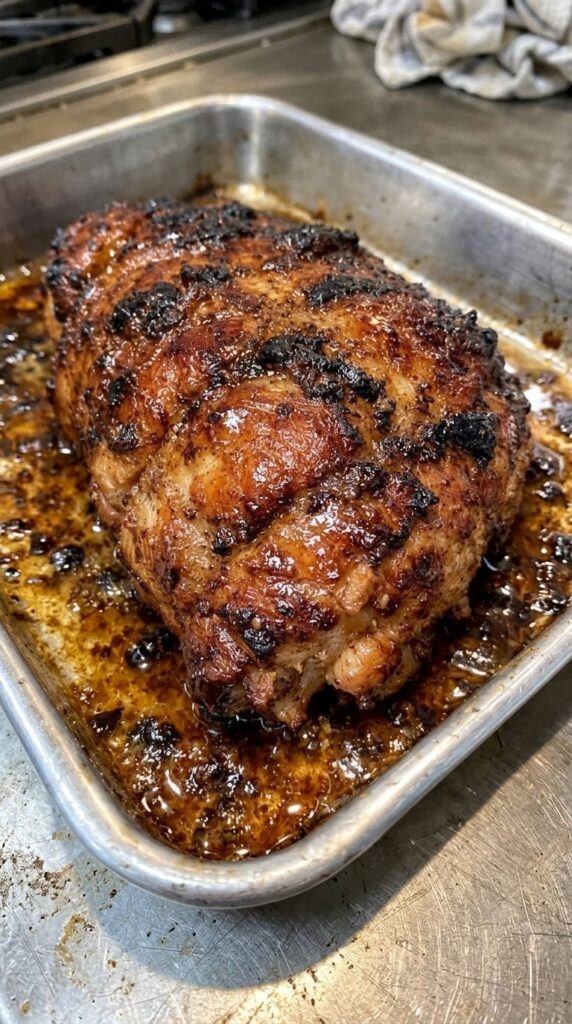
Roast for another 10–15 minutes, or until the glaze becomes beautifully glossy, sticky, and caramelized.
Watch the pork carefully during this stage because honey and brown sugar can burn quickly at high temperatures.
The finished pork should have a deep golden-brown exterior with slightly darker caramelized edges.
If the glaze begins to darken too quickly, remove the roast from the oven.
7. 🍽️ Rest, Slice & Serve
Remove the roasted pork shoulder from the oven.
Carefully transfer it to a large serving platter.
Allow the pork to rest for approximately 15–20 minutes before slicing or shredding.
Resting helps retain the natural juices and keeps the meat moist.
For sliced pork, use a sharp carving knife and slice across the grain.
For pulled pork, use two forks to gently shred the meat into tender pieces.
Skim excess fat from the roasting juices. If desired, simmer the juices briefly in a saucepan to make a flavorful finishing sauce.
Spoon the warm sauce over the sliced or shredded pork.
Garnish with fresh rosemary, thyme, or chopped parsley.
Serve warm with mashed potatoes, roasted vegetables, rice, or your favorite side dishes.
💡 Helpful Cooking Tips
1. Choose the Right Pork Cut
Pork shoulder is the best choice for this recipe because it contains enough fat and connective tissue to become tender during slow roasting.
Avoid substituting lean pork loin without adjusting the cooking method because it can become dry when cooked for several hours.
2. Always Pat the Pork Dry
Drying the pork before seasoning helps create a better crust during searing.
Excess moisture can cause the meat to steam instead of brown.
3. Don’t Skip the Searing Step
Searing develops a rich, savory flavor and gives the finished pork roast an attractive golden-brown appearance.
Although optional, this step makes a noticeable difference.
4. Cook at a Low Temperature
Slow roasting at 325°F (165°C) allows the connective tissue to soften gradually.
Cooking pork shoulder too quickly at a high temperature may leave it tough.
5. Use a Meat Thermometer
A meat thermometer is the most reliable way to monitor doneness.
Although whole cuts of pork are food-safe at 145°F (63°C) followed by a 3-minute rest, pork shoulder generally needs to reach approximately 195–205°F (90–96°C) for a shreddable texture.
6. Prevent the Honey Glaze From Burning
Honey and brown sugar caramelize quickly.
Keep the roasting pan covered during the slow cooking stage and apply the reserved glaze near the end.
7. Let the Pork Rest
Allowing the pork to rest before slicing helps retain moisture.
Cutting immediately after roasting may cause more juices to escape.
8. Save the Pan Juices
The roasting juices contain delicious garlic, pork, and seasoning flavors.
Remove excess fat and use the remaining liquid as a sauce.
📝 Recipe Notes
Boneless vs. Bone-In Pork Shoulder
Both boneless and bone-in pork shoulder work well.
Boneless pork shoulder is easier to slice and serve, while bone-in pork shoulder may require a slightly longer cooking time.
Always check tenderness rather than relying only on the clock.
Adjusting the Sweetness
If you prefer a less sweet glaze, reduce the brown sugar from ¼ cup to 2 tablespoons.
The honey will still provide sweetness and help create a glossy coating.
Adding More Garlic Flavor
For stronger garlic flavor, increase the minced garlic from four cloves to six cloves.
You can also add roasted garlic to the pan juices before serving.
Making the Glaze Spicy
For a sweet and spicy variation, add ½ teaspoon of crushed red pepper flakes or 1 teaspoon of hot sauce.
This creates a delicious contrast with the honey.
Preparing the Pork Ahead of Time
Season the pork shoulder up to 24 hours before cooking.
Store it covered in the refrigerator until ready to roast.
The honey garlic glaze can also be prepared ahead and refrigerated separately.
Best Side Dishes
This pork roast pairs beautifully with creamy mashed potatoes, roasted carrots, garlic butter green beans, roasted sweet potatoes, steamed rice, coleslaw, and dinner rolls.
For a holiday dinner, serve it with roasted vegetables and a fresh seasonal salad.
❓ Frequently Asked Questions
Q1. Can I make honey garlic pork shoulder in a slow cooker?
Yes. Sear the pork shoulder first, then transfer it to a slow cooker.
Add the chicken broth and honey garlic glaze.
Cook on LOW for approximately 8–10 hours or HIGH for 5–6 hours, until the pork becomes fork-tender.
For a caramelized finish, transfer the cooked pork to an oven-safe dish, brush with reserved glaze, and broil briefly.
Q2. Why is my roasted pork shoulder tough?
Pork shoulder can remain tough when the connective tissue has not fully broken down.
Continue cooking it gently until the meat becomes fork-tender.
Q3. Can I make this recipe without searing the pork?
Yes. You can skip the searing step if you are short on time.
However, searing improves the flavor and appearance of the finished roast.
Q4. Can I replace honey with maple syrup?
Yes. Pure maple syrup can replace honey in equal amounts.
It will create a slightly different flavor while still producing a delicious sweet and savory glaze.
Q5. How do I keep the pork shoulder juicy?
Keep the roasting pan tightly covered during slow roasting.
Use chicken broth to maintain moisture in the pan and avoid exposing the pork to excessively high temperatures for long periods.
Q6. Can I prepare this pork roast for Christmas or Thanksgiving?
Absolutely. Honey Garlic Glazed Roasted Pork Shoulder is an excellent main course for holiday celebrations and family gatherings.
It can be prepared ahead and reheated before serving.
Q7. Can I shred the pork instead of slicing it?
Yes. Once the pork reaches approximately 195–205°F (90–96°C) and becomes fork-tender, it can easily be shredded using two forks.
Q8. What if my honey garlic glaze becomes too thick?
Add 1–2 tablespoons of warm chicken broth or water.
Stir gently until the glaze reaches your desired consistency.
Q9. Can I use pork butt instead of pork shoulder?
Yes. Pork butt, also called Boston butt, comes from the shoulder area and works very well for this recipe.
It becomes especially tender during slow roasting.
Q10. How do I know when the pork is ready to serve?
The pork should have a beautifully caramelized exterior and tender interior.
A fork should slide into the meat easily, and the pork should slice or shred without resistance.
🧊 Storage & Reheating Instructions
Refrigerator Storage
Allow the cooked pork to cool slightly before transferring it to an airtight container.
Refrigerate within 2 hours of cooking.
Store in the refrigerator for up to 3–4 days.
Add a small amount of the cooking juices to help maintain moisture.
Freezer Storage
Slice or shred the cooled pork into individual portions.
Place the portions in freezer-safe containers or resealable freezer bags.
Add a little of the pan sauce before sealing.
Freeze for up to 2–3 months for the best quality.
Label each container with the preparation date.
Reheating in the Oven
Preheat your oven to 300°F (150°C).
Place the pork in an oven-safe dish.
Add a few tablespoons of chicken broth or reserved pan juices.
Cover tightly with aluminum foil.
Heat for approximately 15–25 minutes, depending on the portion size, until the internal temperature reaches 165°F (74°C).
Reheating in the Microwave
Place individual portions in a microwave-safe dish.
Add a tablespoon of broth or sauce to prevent dryness.
Cover loosely and microwave in short intervals, stirring or turning between intervals.
Continue until the pork reaches 165°F (74°C).
Reheating on the Stovetop
Place shredded pork in a skillet over medium-low heat.
Add a small amount of chicken broth or reserved cooking juices.
Cover and heat gently, stirring occasionally, until thoroughly reheated.
Thawing Frozen Pork
Transfer frozen pork to the refrigerator and allow it to thaw overnight.
For larger portions, thawing may take 24 hours or longer.
Avoid thawing cooked pork at room temperature.
🥗 Nutritional Information
Approximate nutritional values per serving, based on 8 servings. Actual values vary depending on the cut of pork, fat content, portion size, and amount of glaze consumed.
Calories: Approximately 540 kcal
Protein: 38 g
Total Fat: 34 g
Saturated Fat: 11 g
Carbohydrates: 20 g
Sugar: 17 g
Fiber: 0.5 g
Sodium: 850 mg
Cholesterol: 140 mg