
Garlic Butter Herb Roasted Pork Shoulder
Description
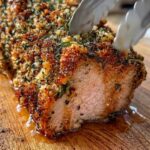
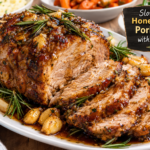
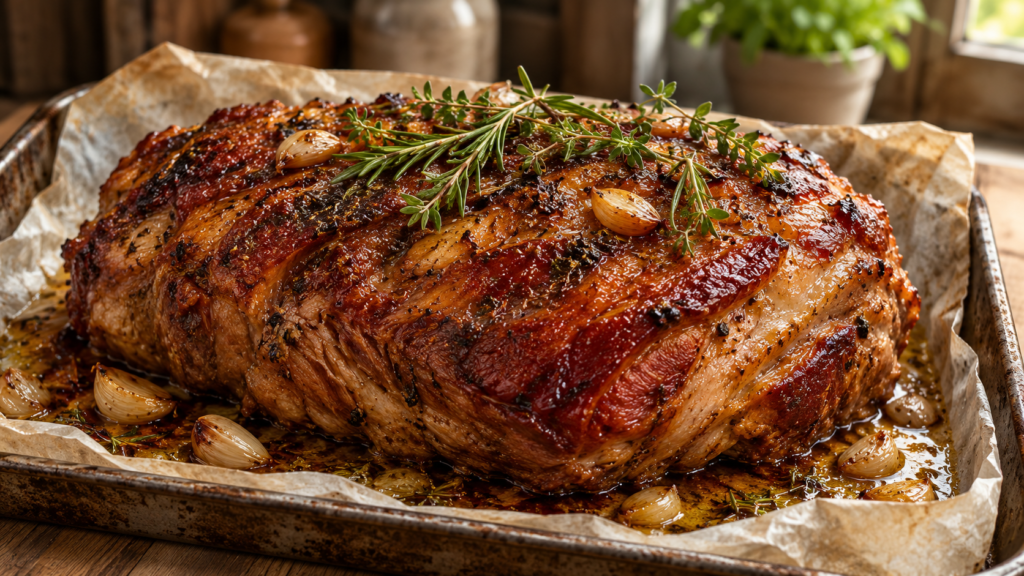
Garlic Butter Herb Roasted Pork Shoulder is a comforting centerpiece with a deeply golden crust, tender meat, roasted garlic, and rich pan juices. Fresh rosemary and thyme add a fragrant finish, while a simple garlic butter coating seasons the pork as it slowly roasts.
Inspired by your photograph, this recipe creates a beautifully browned roast without a complicated marinade. The oven does most of the work, gradually softening the connective tissue in the shoulder until the meat becomes tender and easy to carve or pull apart.
Pork shoulder is especially suitable for slow roasting because its marbling helps keep the meat moist during a long cooking time. A covered roasting stage develops tenderness, followed by an uncovered finish that gives the outside its appetizing color.
Serve this roast for Sunday dinner, a family gathering, or a special weekend meal. Leftovers are equally useful in sandwiches, rice bowls, wraps, and hearty lunches.
Prep time: 20 minutes
Cook time: Approximately 4–6 hours
Resting time: 25–30 minutes
Total time: Approximately 4 hours 45 minutes–6 hours 50 minutes
Servings: 8
Main ingredient: Boneless pork shoulder
Cooking method: Slow oven roasting
Ingredients for Garlic Butter Herb Roasted Pork Shoulder
For the Pork
- 4–5 pounds boneless, skinless pork shoulder
- 2 tablespoons unsalted butter, softened
- 1 tablespoon olive oil
- 6 garlic cloves, minced
- 1 tablespoon chopped fresh rosemary
- 1 tablespoon fresh thyme leaves
- 1 tablespoon Dijon mustard
- 1 teaspoon smoked paprika
- 2 teaspoons fine sea salt
- 1 teaspoon freshly ground black pepper
For the Roasting Pan
- 1 cup low-sodium chicken broth, plus extra if needed
- 8 whole garlic cloves, peeled
- 2 small rosemary sprigs
- 3 thyme sprigs
Optional Finishing Glaze
- 1 tablespoon honey
- 1 tablespoon warm pan juices
Step-by-Step Instructions for Garlic Butter Herb Roasted Pork Shoulder
1. Prepare the Oven and Pan
Preheat your oven to 325°F (165°C).
Choose a deep roasting pan or large oven-safe casserole that holds the pork comfortably. Avoid an oversized pan, which can allow the broth to evaporate too quickly.
You do not need parchment for this recipe. Cooking directly in the pan makes it easier to collect the flavorful juices afterward.
2. Dry and Trim the Pork
Pat the pork shoulder thoroughly dry with paper towels.
Trim away any unusually thick or hard pieces of exterior fat, leaving approximately ¼ inch where a fat cap is present. A moderate layer adds flavor, but excessive fat can make the finished pan juices greasy.
If the roast is loosely shaped, secure it with kitchen twine so it cooks more evenly.
3. Make the Garlic Herb Butter
Combine the softened butter, olive oil, minced garlic, chopped rosemary, thyme leaves, Dijon mustard, smoked paprika, salt, and black pepper.
Mix until you have a thick, spreadable paste.
The mustard helps the seasoning cling to the pork, while the butter and oil carry the garlic and herb flavors across the surface.
4. Season the Shoulder
Rub the garlic herb mixture over the entire roast, working it into natural folds and crevices.
Place the pork in the roasting pan with the fattier side facing upward.
For deeper seasoning, you may complete this step the evening before. Cover and refrigerate the seasoned roast, then proceed with the recipe the next day.
5. Add the Roasting Liquid
Pour the chicken broth into the bottom of the pan, around the pork rather than directly over it.
Scatter the whole garlic cloves and herb sprigs around the roast.
The broth helps prevent the drippings from burning and provides moisture during the covered cooking stage. It should sit shallowly in the pan without submerging the meat.
6. Cover and Slow Roast
Cover the pan tightly with a lid or foil.
Roast for approximately 3½–5 hours, beginning your tenderness checks at the earlier end of that range.
Cooking time varies with the roast’s thickness, shape, and starting temperature. A compact shoulder may take longer than a flatter piece of the same weight.
7. Check the Liquid and Tenderness
Check the pan after approximately 2½ hours. If it looks nearly dry, carefully add ½ cup hot broth or water.
Continue cooking until a skewer or thermometer probe enters the meat with little resistance.
For tender pieces that can still be carved, the internal temperature often approaches 190–195°F (88–91°C). For meat that pulls apart easily, it commonly reaches 200–205°F (93–96°C).
Tenderness matters more than reaching one exact number.
8. Brown the Outside
Once the shoulder is approaching your preferred tenderness, remove the cover and increase the oven temperature to 425°F (220°C).
Roast uncovered for approximately 15–25 minutes, watching closely as the surface darkens.
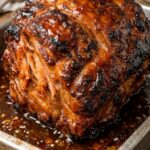
The existing garlic butter coating should develop a rich golden-brown finish. If the garlic begins looking too dark, loosely cover that area with foil.
9. Add the Optional Glaze
For a slightly sweeter, glossy finish, mix the honey with 1 tablespoon of warm pan juices.
Brush a thin layer over the roast during the final 5–10 minutes.
Adding honey near the end reduces the chance of burning. You can leave it out entirely and still achieve a flavorful, beautifully browned roast.
10. Rest the Pork
Transfer the shoulder to a carving board or serving platter. Cover loosely with foil and rest for 25–30 minutes.
Resting makes the meat easier to handle and helps reduce the amount of juice lost during carving.
Do not wrap it tightly, because trapped steam can soften the browned exterior.
11. Finish the Pan Juices
Remove the woody herb stems from the roasting pan.
Let the liquid settle briefly, then spoon excess fat from the surface. Mash several roasted garlic cloves into the juices for extra flavor.
If the liquid tastes weak, simmer it in a saucepan until slightly concentrated. If it tastes too salty or strong, add a splash of water.
12. Carve and Serve
Remove any kitchen twine.
Slice the pork across the grain where possible, or separate it into tender chunks with two forks. Discard large pockets of unrendered fat.
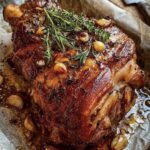
Spoon the garlic pan juices over the meat and serve with the roasted garlic cloves. Add a few fresh herb leaves for a presentation similar to the photograph.
Tips for the Best Results for Garlic Butter Herb Roasted Pork Shoulder
- Choose shoulder rather than loin. These cuts require different cooking methods.
- Dry the surface thoroughly. This helps the seasoning adhere and encourages browning.
- Keep the pan covered initially. The covered stage supports tender, moist results.
- Maintain some liquid. Add hot broth if the pan becomes nearly dry.
- Use a thermometer and a probe test. Temperature guides you, while resistance reveals tenderness.
- Brown only near the end. This protects the garlic during the long roasting stage.
- Rest before carving. Give the roast time to settle.
- Skim the juices. Removing excess rendered fat produces a more balanced sauce.
Recipe Notes and Substitutions Garlic Butter Herb Roasted Pork Shoulder
Bone-in shoulder: You can use a bone-in roast, but the cooking time and edible yield will differ. Keep the thermometer away from the bone.
Dried herbs: Replace each tablespoon of chopped fresh herbs with approximately 1 teaspoon dried herbs.
Butter-free option: Replace the butter with 2 additional tablespoons of olive oil.
Broth choice: Vegetable broth or water can replace chicken broth. Adjust the final seasoning accordingly.
Skin-on pork: This recipe is designed for skinless shoulder. Skin-on pork requires a different approach if you want crisp crackling.
Seasoning ahead: Refrigerating the seasoned roast overnight is convenient and gives the salt more time to penetrate the meat.
Serving Suggestions for Garlic Butter Herb Roasted Pork Shoulder
Serve garlic butter pork shoulder with mashed potatoes, roasted carrots, green beans, or sautéed cabbage.
Roasted baby potatoes also pair beautifully with the garlic juices. Cook them separately for a crisp finish.
For a fresher contrast, add a green salad or crunchy slaw with a light vinegar dressing.
Leftover pork makes delicious sandwiches with mustard and pickles. You can also serve it over rice with roasted vegetables, using a spoonful of the reserved juices to keep everything moist.
Storage and Reheating for Garlic Butter Herb Roasted Pork Shoulder
Refrigerate leftovers within 2 hours of cooking. Divide large amounts into smaller, shallow containers so they cool promptly.
Store covered in the refrigerator for 3–4 days.
For longer storage, freeze portions with a little cooking liquid for up to 2–3 months for best quality.
Thaw overnight in the refrigerator. Reheat covered with a splash of broth until the center reaches 165°F (74°C). Gentle reheating helps prevent the edges from drying out.
Estimated Nutritional Information for Garlic Butter Herb Roasted Pork Shoulder
Per serving, based on eight servings and excluding sides:
- Calories: Approximately 480
- Protein: 43 grams
- Carbohydrates: 4 grams
- Total fat: 32 grams
- Saturated fat: 12 grams
- Fiber: Less than 1 gram
- Sodium: Approximately 750 milligrams
These are broad estimates. Pork shoulder varies considerably in fat content, and trimming, serving size, discarded drippings, and the optional honey affect the final values.
Discover 60+ high-protein, low-carb recipes with simple instructions and everyday ingredients. Find breakfast, lunch, dinner, salad, and snack ideas—plus a 30-day meal plan to help you plan ahead.
Explore the Elite Protein Kitchen Cookbook
Nutritional Benefits for Garlic Butter Herb Roasted Pork Shoulder
Provides protein: Pork supplies protein that supports normal muscle maintenance and makes the meal satisfying.
Contains B vitamins: Pork contributes thiamin and other B vitamins involved in normal energy metabolism.
Supplies minerals: Pork provides zinc and selenium.
Offers flexible meal planning: One roast can provide several meals when divided into suitable portions.
Because shoulder is a fatty cut, pairing moderate portions with vegetables adds variety and balance to the plate.
Frequently Asked Questions for Garlic Butter Herb Roasted Pork Shoulder
Why is my pork shoulder still tough?
It usually needs more time. Shoulder can be cooked through yet remain chewy until its connective tissue softens. Cover again and continue roasting.
Can I substitute pork loin?
Not with these cooking instructions. Loin is much leaner and will dry out during a long shoulder roast.
Do I need to sear it first?
No. The uncovered finishing stage develops color without requiring you to handle a large roast in a hot skillet.
Can I cook it ahead?
Yes. Cook, rest, portion, and refrigerate promptly with some juices. Reheat covered until thoroughly hot.https://ketosl.com/mediterranean-baked-cod/