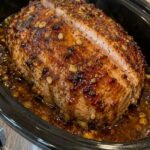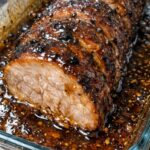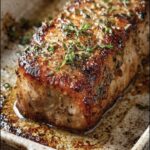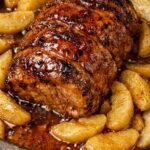

Sticky Honey Garlic Glazed Pork Roast
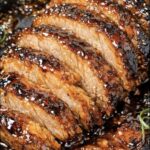
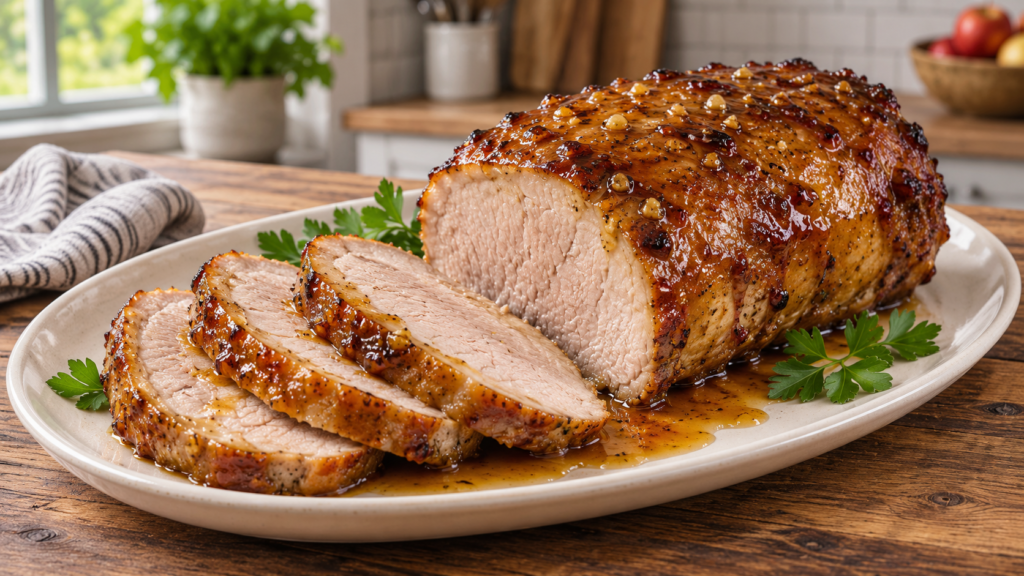
This Sticky Honey Garlic Glazed Pork Roast has tender slices of boneless pork loin and a glossy glaze made with honey, garlic, low-sodium soy sauce, and apple cider vinegar. The honey gives the roast its sticky finish, while the soy sauce adds savory depth and the vinegar keeps the glaze from tasting too sweet. Serve it with mashed potatoes and green beans for a Sunday dinner, or put it on a platter with roasted carrots for a holiday meal.
The glaze goes on in two stages. Half is brushed over the pork near the end of roasting, so it has time to cling to the surface without spending the entire cook in the oven. The other half is set aside for spooning over the finished slices. That final spoonful gives each serving some of the sweet garlic flavor, even if it comes from the middle of the roast.
Prep Time — 10 minutes
Cook Time — About 50–65 minutes
Rest Time — 10 minutes
Total Time — About 1 hour 10 minutes to 1 hour 25 minutes
Servings — 6
Cooking Method — Oven-roasted
Ingredients
For the pork roast
- 1 boneless pork loin roast, 2½–3 pounds
- 1 tablespoon olive oil
- 1 teaspoon paprika
- ½ teaspoon salt
- ½ teaspoon ground black pepper
For the honey garlic glaze
- ⅓ cup honey
- 3 tablespoons low-sodium soy sauce
- 4 garlic cloves, minced
- 1 tablespoon apple cider vinegar
Instructions
- Preheat the oven and season the pork. Set the oven to 350°F (177°C). Pat the roast dry with paper towels, then rub the olive oil over the top, bottom, and sides. Mix the paprika, salt, and black pepper in a small bowl and sprinkle the seasoning evenly over the pork. Set the roast fat side up in a shallow roasting pan.
- Start roasting. Place the pan on the middle oven rack and roast the pork uncovered for 35 minutes. If your roast is especially narrow, start checking its temperature a little earlier. The thickness of the roast affects how quickly the center cooks.
- Make the honey garlic glaze. While the pork roasts, combine the honey, low-sodium soy sauce, minced garlic, and apple cider vinegar in a small saucepan. Bring the mixture to a gentle simmer over medium-low heat. Cook for 3–4 minutes, stirring often, until it lightly coats the back of a spoon. It will thicken a little more as it cools.
- Divide the glaze and brush the roast. Before the brush touches the pork, pour half the glaze into a clean bowl and set it aside for serving. After the initial 35 minutes, brush the other half over the top and exposed sides of the roast. A thin, even coat helps the glaze cling to the meat.
- Finish roasting. Return the pork to the oven and roast for another 15–30 minutes, or until an instant-read thermometer registers 145°F (63°C) in the thickest part. Start checking at the low end of the time range, or sooner if the roast was already close to temperature when you glazed it. Insert the probe from the side toward the center and avoid touching the pan. The USDA recommends a minimum three-minute rest for whole cuts of pork cooked to 145°F.
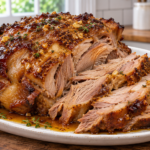
- Rest, slice, and serve. Transfer the pork to a cutting board and let it rest for 10 minutes. If you want to keep it warm, tent it loosely with foil. Use a sharp carving knife to slice across the grain. Arrange the slices on a platter and spoon the reserved honey garlic glaze over them. Serve any extra glaze at the table.
Helpful Cooking Tips
- Choose a roast with an even shape. A pork loin with a fairly uniform thickness cooks more evenly from end to end. If one end tapers sharply, expect it to cook faster. Check the temperature in the thickest part before removing the roast from the oven.
- Simmer the glaze gently. Honey can bubble up quickly over high heat. Keep the mixture at a quiet simmer and stir along the bottom of the pan. If the glaze gets too thick to brush on, stir in a teaspoon of warm water at a time until it spreads easily.
- Watch for browning after glazing. If the top darkens before the center is ready, loosely cover the roast with foil for the rest of the cooking time. Leave a little room between the foil and the surface so the sticky glaze stays on the meat.
- Slice just before serving. Slices about ½ inch thick work well for dinner and hold up when you spoon glaze over them. If you plan to make sandwiches the next day, save a larger piece of the roast and cut it into thinner slices after chilling.
Recipe Notes
Use boneless pork loin roast. Pork loin gives you broad, even slices for a serving platter. Pork tenderloin is smaller and thinner, so it cooks much faster and needs a different roasting schedule. If you’re shopping for this recipe, look for a package labeled boneless pork loin roast.
Adjust the flavor with paprika or vinegar. Sweet paprika has a mild flavor, while smoked paprika gives the roast a smoky edge. Apple cider vinegar adds a light fruity tang to the glaze. If you’re out, use the same amount of unseasoned rice vinegar for a milder finish.
Choose sides that balance the glaze. Creamy mashed potatoes work well because they soak up the extra sauce. Roasted Brussels sprouts or a crisp cabbage slaw add some bite to the meal. For a simple dinner, serve the sliced pork with steamed rice and green beans and drizzle a little of the glaze over the rice.
Questions and Answers
Can I make the glaze ahead of time?
Yes. Simmer the glaze a day ahead and refrigerate it in a covered container. Warm it gently before using it, since the honey mixture thickens when chilled. Divide it into two portions before brushing the roast.
Why is my glaze runny?
The glaze should look slightly thickened while warm and will become stickier as it cools. If it still looks watery after simmering for 3–4 minutes, let it bubble gently for another minute and check whether it coats the back of a spoon. Stop once you can brush it on easily.
Can I make this with a smaller pork loin?
Yes. A smaller or thinner roast may reach 145°F sooner, so start checking before the 35-minute mark and brush on the glaze earlier. You can keep the full glaze recipe if you want extra sauce for potatoes, rice, or leftovers.
Can pork loin still look slightly pink in the center?
Yes. A slight pink color can remain in cooked pork loin. Use a food thermometer to confirm the thickest part reaches 145°F (63°C), then let the roast rest before slicing. The 10-minute rest in this recipe exceeds the USDA’s three-minute minimum.
Storage and Reheating Instructions
Refrigerate. Store leftover pork and glaze in separate covered containers. Place the cooked pork in a shallow container and refrigerate within two hours of cooking, or within one hour if the temperature is above 90°F (32°C). Use refrigerated leftovers within 3–4 days.
Freeze. Wrap meal-sized portions tightly and place them in freezer bags or airtight freezer containers. Freeze the glaze separately so you can thaw only what you need. Thaw overnight in the refrigerator before reheating.
Reheat. Put sliced pork in a covered baking dish with a splash of water or unsalted broth. Warm at 325°F (163°C) until the leftovers reach 165°F (74°C). Heat the reserved glaze separately and spoon it over the pork just before serving.
Nutritional Information
Estimates are for one serving, or one-sixth of the roast and glaze, without side dishes. Values vary with the size and trimming of the roast, the soy sauce brand, and how much glaze you serve.
- Calories — Approximately 330–410
- Protein — Approximately 38–47 grams
- Carbohydrates — Approximately 16 grams
- Total fat — Approximately 12–18 grams
- Total sugars — Approximately 15 grams
- Sodium — Approximately 450–600 milligrams
Nutrition Benefits
Pork loin provides protein, which helps maintain and repair muscle, along with B vitamins such as thiamin and niacin, which help the body use energy from food. Most of the sugars in this recipe come from the honey glaze. Serving the reserved glaze at the table lets each person choose how much they want. Add green beans, roasted broccoli, or a cabbage slaw to bring fiber to the meal.