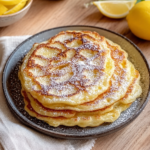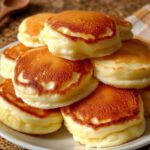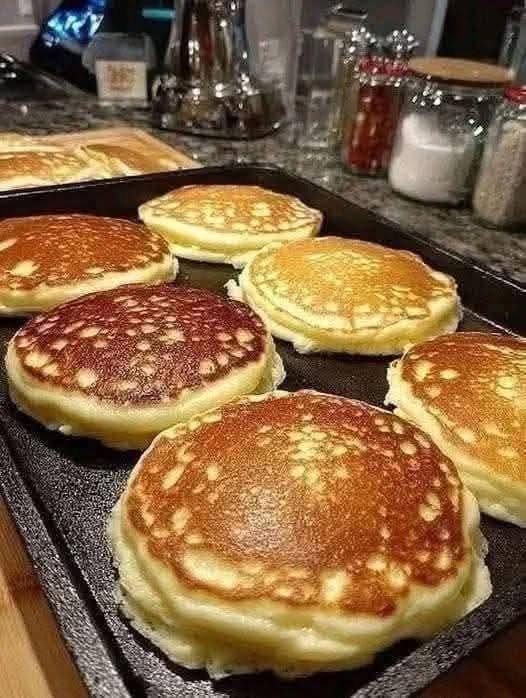

Fluffy Golden Pancakes Drizzled with Syrup
Prep Time: 10 minutes
Cook Time: 15–20 minutes
Servings: 4
Yield: About 12 medium pancakes
These fluffy golden pancakes have soft centers, lightly crisp edges, and a delicious maple syrup finish. Made with everyday ingredients, they are an easy breakfast for relaxed weekends, family brunches, or mornings when you want something warm and homemade.
The batter comes together in one bowl for the dry ingredients and another for the wet ingredients. You do not need a mixer or any special equipment. A gentle stir, a short rest, and a moderately heated skillet help create pancakes that rise well and cook evenly.
Why You’ll Love This Recipe
Uses simple ingredients you may already have.
Takes about 30 minutes from start to finish.
Makes tender pancakes without a mixer.
Works with fruit, yogurt, nuts, or classic maple syrup.
Freezes well for convenient breakfasts later.
Ingredients
For the pancakes
1½ cups all-purpose flour (180 g)
2 tablespoons granulated sugar
1 tablespoon baking powder
½ teaspoon salt
1¼ cups milk (300 ml)
1 large egg
3 tablespoons unsalted butter, melted and slightly cooled
1 teaspoon vanilla extract
Butter or neutral oil, for greasing the skillet
For serving
¼ cup maple syrup
Extra butter, optional
Fresh berries or sliced bananas, optional
Ingredient Notes
Flour: All-purpose flour produces a soft, familiar pancake texture. Weigh it for consistency, or spoon it into your measuring cup and level the top.
Baking powder: This gives the pancakes their lift. Use baking powder rather than baking soda; they are not interchangeable in this recipe.
Milk: Whole milk adds richness, but reduced-fat milk also works. Unsweetened plant-based milk can be substituted, although flavor and browning may change slightly.
Butter: Melted butter adds flavor and tenderness. Let it cool slightly before mixing it with the egg.
Maple syrup: Add syrup when serving so the pancakes retain their texture.
How to Make Fluffy Golden Pancakes
Step 1: Mix the Dry Ingredients
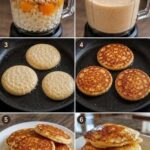
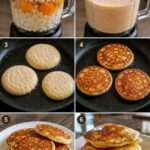
Whisk the flour, sugar, baking powder, and salt together in a large mixing bowl. Break up any visible lumps and distribute the baking powder evenly.
Step 2: Combine the Wet Ingredients
In another bowl, whisk the milk, egg, melted butter, and vanilla extract until combined. The butter should be warm, not hot, so it does not cook the egg.
Step 3: Make the Batter
Pour the wet ingredients into the dry ingredients. Stir gently with a whisk or spatula until no large patches of dry flour remain.
Stop while the batter still has a few small lumps. Mixing until completely smooth can develop too much gluten and make the pancakes chewy.
Step 4: Rest the Batter
Let the batter stand for about 5 minutes while you heat the skillet. This gives the flour time to absorb the liquid.
The batter should be thick but pourable. If it becomes too thick to spread slightly in the skillet, fold in an additional tablespoon of milk.
Step 5: Heat the Skillet
Warm a nonstick skillet or griddle over medium heat. Add a thin coating of butter or neutral oil, wiping away any excess.
If the butter immediately turns dark, lower the heat. A moderately heated pan creates a golden surface while allowing the center to cook through.
Step 6: Cook the First Side
Pour approximately ¼ cup of batter into the skillet for each pancake. Leave enough space between pancakes to slide a spatula underneath.
Cook for 2–3 minutes, until bubbles appear on top, some begin to burst, and the edges look set. The underside should be golden brown.
Step 7: Flip and Finish
Flip each pancake gently and cook for another 1–2 minutes. The center should be set with no wet batter remaining.
Do not press the pancakes with the spatula. Pressing flattens them and reduces their light texture.
Step 8: Repeat and Serve
Cook the remaining batter, lightly greasing the skillet between batches as needed. Reduce the heat if later batches brown too quickly.
Stack the warm pancakes on plates, add butter if desired, and drizzle with maple syrup. Serve immediately.
Tips for Perfect Pancakes
Measure carefully. Extra flour thickens the batter and can make the pancakes dry. A kitchen scale is useful for consistent results.
Use fresh baking powder. If your pancakes barely rise, your baking powder may have lost its strength.
Avoid overmixing. Small lumps are normal. A few gentle strokes are better than vigorous beating.
Treat the first pancake as a heat check. If it darkens before bubbles form, lower the heat. If it stays pale for several minutes, increase the heat slightly.
Keep cooked pancakes warm briefly. Place them on a baking sheet in a 200°F (95°C) oven while finishing the batch. Avoid leaving them there too long, which can dry them out.
Easy Variations
Blueberry pancakes: Sprinkle a few blueberries over each pancake immediately after pouring the batter into the skillet.
Chocolate chip pancakes: Add a small scattering of chocolate chips to the uncooked surface before flipping.
Cinnamon pancakes: Whisk ½ teaspoon ground cinnamon into the dry ingredients.
Partly whole-wheat pancakes: Replace half the all-purpose flour with whole-wheat flour. Add a little more milk if necessary; the pancakes will have a slightly heartier texture.
Storage and Reheating
Allow leftover pancakes to cool, then refrigerate in an airtight container within 2 hours. Keep for 3–4 days, storing syrup and toppings separately.
For freezing, separate pancakes with parchment paper and place them in a freezer-safe bag. Freeze for up to 2 months for best quality.
Reheat in a toaster for slightly crisp edges or in the microwave for a softer texture. Heat larger batches in a covered baking dish until hot throughout.
Serving Ideas
Maple syrup and butter are classic toppings, but fresh strawberries, blueberries, or bananas also work beautifully. Add Greek yogurt for a creamy contrast or chopped walnuts for crunch.
For a more substantial breakfast, serve the pancakes with scrambled eggs. Peanut butter and banana are another satisfying combination.
Estimated Nutrition Per Serving
Based on three pancakes and 1 tablespoon maple syrup, excluding extra butter and skillet grease:
Calories: Approximately 355
Protein: 9 g
Carbohydrates: 54 g
Fat: 12 g
Fiber: 1 g
Nutrition varies with ingredient brands and portion sizes.
Nutrition Benefits
Flour provides carbohydrates for energy, while eggs and milk contribute protein. Milk also supplies calcium. Fruit adds fiber, and pairing pancakes with eggs or Greek yogurt increases the protein content of the meal.
Frequently Asked Questions
Why are my pancakes flat?
Common causes include inactive baking powder, overly thin batter, or excessive mixing. Measure the ingredients carefully and cook shortly after the batter rests.
Why are my pancakes raw in the middle?
The skillet may be too hot, or the pancakes may be too large. Lower the heat and use approximately ¼ cup batter per pancake.
Can I make the batter the night before?
For the best rise, combine the batter shortly before cooking. Prepare the dry and wet mixtures separately ahead of time, refrigerating the wet ingredients.
Can I make these pancakes without butter?
Yes. Replace the melted butter with 3 tablespoons of neutral oil. The texture will remain tender, although the flavor will be less buttery.
Can I double the recipe?
Yes. Double the ingredients and cook in batches. Fold the batter gently and avoid repeatedly stirring it while you cook.