
Table of Contents
ToggleFluffy Cottage Cheese Oat Pancakes
These Cottage Cheese Oat Pancakes are the kind of breakfast that feels indulgent while being made with simple, wholesome ingredients. The batter comes together in a blender, giving you beautifully smooth, tender pancakes with lightly crisp golden edges and a soft, fluffy centre.
The secret is the combination of old-fashioned oats, cottage cheese, and eggs. The oats provide hearty texture and fibre, cottage cheese adds protein and creaminess, while the eggs help the pancakes set and become wonderfully fluffy. A touch of baking powder gives them their lift.
They are especially delicious in the fall with cinnamon, vanilla, maple syrup, apples, or a pinch of pumpkin spice. Serve them warm in a stack with butter and maple syrup, and you have a cosy breakfast everyone will love.
Recipe Name
Fluffy Cottage Cheese Oat Pancakes
Prep Time: 5 minutes
Blending Time: 1–2 minutes
Cook Time: 10–15 minutes
Total Time: About 20 minutes
Servings: 4 servings
Yield: Approximately 12 small pancakes
Ingredients
For the Pancakes
- 1 cup old-fashioned rolled oats
- 1 cup cottage cheese
- 2 large eggs
- 1 teaspoon baking powder
- 1 teaspoon vanilla extract
- 1/2 teaspoon ground cinnamon
- 1–2 tablespoons milk, only if needed to thin the batter
- 1 tablespoon maple syrup or honey, optional
- Pinch of salt
- Butter or neutral cooking oil for the pan
For Serving
- Pure maple syrup
- Fresh berries
- Sliced banana or apple
- Greek yogurt
- Chopped pecans or walnuts
- A sprinkle of cinnamon
- Powdered sugar, optional
Optional Fall Twist
For an extra cosy autumn flavour, add:
- 1/2 teaspoon pumpkin pie spice
- 2 tablespoons pumpkin purée
- 1–2 tablespoons finely chopped pecans
- A little extra cinnamon
How to Make Cottage Cheese Oat Pancakes
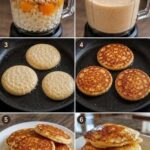
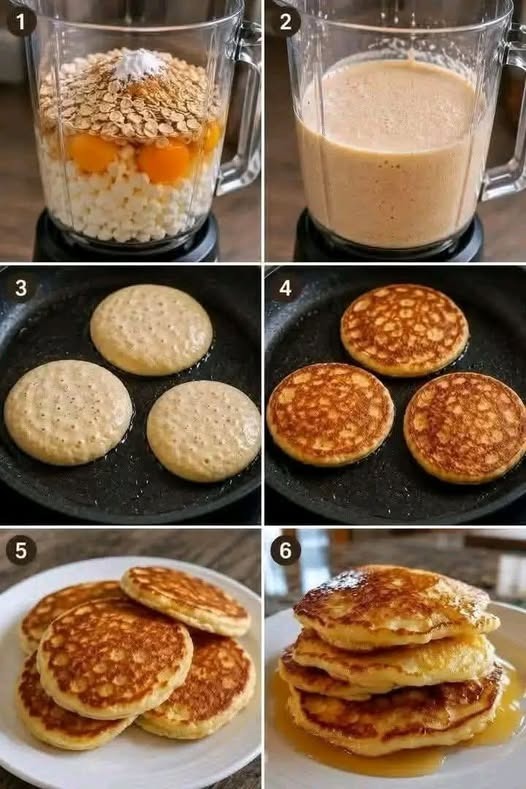
1. Add the ingredients to the blender.
Place the rolled oats, cottage cheese, eggs, baking powder, vanilla, cinnamon, and salt into a blender.
If you’re using maple syrup or honey, add it now as well.
Blend until the mixture is mostly smooth and creamy. Depending on your blender, this should take about 30–60 seconds.
You don’t necessarily need the batter to be completely silky. A few tiny flecks of oats are perfectly fine and can actually give the pancakes a pleasant texture.
2. Check the batter consistency.
The batter should be thick but pourable.
If it looks excessively thick, add milk one tablespoon at a time, blending briefly after each addition.
Avoid adding too much liquid. A thick batter is one of the secrets to getting substantial, fluffy pancakes rather than thin, floppy ones.
After blending, let the batter sit for 2–3 minutes. The oats will absorb some of the moisture, and the batter will thicken slightly.
3. Heat your skillet.
Place a nonstick skillet or well-seasoned griddle over medium-low to medium heat.
Lightly grease it with butter or a little cooking oil.
The pan shouldn’t be smoking hot. These pancakes contain cottage cheese and oats, so they can brown relatively quickly. Moderate heat allows the centre to cook before the outside becomes too dark.
A good test is to sprinkle a tiny drop of water onto the pan. It should gently sizzle.
4. Cook the pancakes.
Pour approximately 2–3 tablespoons of batter onto the hot skillet for each pancake.
You can make them larger if desired, but smaller pancakes are generally easier to flip.
Cook for approximately 2–3 minutes, or until the surface begins to show bubbles and the edges look set.
The bottom should be golden brown.
5. Flip carefully.
Slide a spatula underneath the pancake and flip it gently.
Cook the second side for another 1–2 minutes, until golden brown and cooked through.
Don’t press down on the pancakes with your spatula. Pressing them can force out the air that makes them fluffy.
Transfer the finished pancakes to a plate and continue with the remaining batter.
Serving Ideas
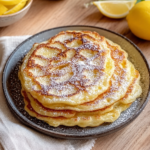
For the ultimate cosy fall breakfast, stack several warm pancakes and top them with:
Butter + maple syrup + cinnamon + chopped pecans.
You can also add sautéed cinnamon apples. Simply cook sliced apples in a skillet with a little butter, cinnamon, and maple syrup until tender.
For a higher-protein breakfast, add a spoonful of Greek yoghurt on top.
Fresh blueberries, strawberries, raspberries, bananas, or sliced peaches also work beautifully.
For a dessert-like version, add a few dark chocolate chips to the batter before cooking.
Recipe Notes
Cottage cheese
You can use either full-fat or low-fat cottage cheese. Small-curd cottage cheese works especially well.
Don’t worry if you’re not a big cottage cheese fan. Once blended, its texture becomes creamy, and its flavour is surprisingly subtle.
Oats
Old-fashioned rolled oats are ideal. Quick oats can also work, but the texture may be slightly different.
If you only have steel-cut oats, they aren’t recommended for this particular quick-blender recipe because they require considerably more cooking.
Blender
A high-powered blender creates the smoothest batter. If your blender struggles with thick mixtures, add a splash of milk and blend in short pulses.
Batter thickness
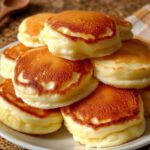
Don’t be tempted to make the batter extremely thin. Thick batter produces the characteristic puffy, substantial pancakes shown in the finished stack.
Heat
Medium-low heat is your friend. If the outside is becoming dark before the middle is cooked, turn the heat down.
Pancake size
Small pancakes are easier to flip and tend to cook more evenly. About 3–4 inches across is ideal.
Helpful Tips for Perfect Pancakes
1. Let the batter rest.
A short rest gives the oats time to absorb liquid and helps create a thicker batter.
2. Don’t overblend.
Blend until the ingredients are combined and creamy. Excessive blending isn’t necessary.
3. Cook one test pancake first.
Your first pancake can tell you whether the batter needs a little more milk or whether the skillet is too hot.
4. Don’t overcrowd the pan.
Leave enough room to comfortably slide your spatula underneath each pancake.
5. Wait for bubbles.
Flip when bubbles appear across the surface and the edges begin to look firm.
6. Keep finished pancakes warm.
Place them on a plate and loosely cover with foil, or keep them in a low-temperature oven while you finish the batch.
7. Don’t flatten them.
Let the pancakes naturally rise and cook. Pressing them down removes some of their fluffy structure.
Storage & Make-Ahead Instructions
These pancakes are excellent for meal prep.
Allow them to cool completely, then place them in an airtight container and refrigerate for up to 3–4 days.
For longer storage, place the pancakes in a freezer-safe container or bag, separating them with pieces of parchment paper. Freeze for up to 2–3 months for best quality.
To reheat, warm them in:
- A toaster
- Toaster oven
- Microwave
- Skillet over low heat
Frozen pancakes can generally be reheated directly from frozen.
For a quick weekday breakfast, make a double batch on the weekend and freeze individual portions.
Nutritional Information
Approximate nutrition per serving, assuming 3 pancakes per serving and without toppings:
| Nutrient | Approximate Amount |
|---|---|
| Calories | 270–300 kcal |
| Protein | 17–20 g |
| Carbohydrates | 28–32 g |
| Fat | 9–11 g |
| Fiber | 3–4 g |
| Sugar | 3–5 g |
| Calcium | 100–150 mg |
| Sodium | 400–500 mg |
Nutrition varies depending on the cottage cheese, oats, eggs, cooking fat, and optional sweetener used. Maple syrup, butter, fruit, and other toppings will increase the calories and carbohydrates.
Benefits of These Pancakes
Good source of protein
Eggs and cottage cheese make these considerably more protein-rich than many traditional pancake recipes. Protein can also make breakfast more satisfying.
Oats provide fibre.
Rolled oats contribute fibre and complex carbohydrates, helping make these pancakes more substantial.
Naturally filling
The combination of protein, carbohydrates, and fat makes these pancakes a satisfying breakfast rather than simply a sweet treat.
Easy to customise
The basic batter is a blank canvas. You can add cinnamon, pumpkin spice, berries, bananas, apples, nuts, or chocolate chips.
Simple ingredients
There is no need for a complicated list of speciality ingredients. The main components are pantry and refrigerator staples.
❓ Frequently Asked Questions
Can I taste the cottage cheese?
Not strongly. Once blended with the oats, eggs, vanilla, and cinnamon, the cottage cheese becomes creamy and mild. This is one reason the recipe is especially good for people who don’t normally enjoy cottage cheese.
Can I make these without a blender?
Yes, although the texture will be different. You can use oat flour instead of whole oats and whisk the ingredients together by hand. If using oat flour, mix just until combined.
Can I use Greek yoghurt instead of cottage cheese?
You can experiment with substituting some or all of the cottage cheese with thick Greek yoghurt, but the texture and moisture level will change. You may need to adjust the amount of milk.
Can I make them gluten-free?
Yes. Oats are naturally gluten-free, but if you need to strictly avoid gluten, use certified gluten-free oats to reduce the risk of cross-contact.
Why are my pancakes too dense?
The most common reasons are batter that is too thick, an inactive or insufficient amount of baking powder, overmixing, or cooking at excessively low heat. Make sure your baking powder is fresh and add a small splash of milk if the batter is extremely thick.
Why did they burn?
The skillet was probably too hot. Reduce the heat and give the pancakes more time to cook gently. Because of the natural sugars and proteins in the batter, they can brown faster than you might expect.
Can I add pumpkin?
Absolutely! Add about 2 tablespoons of pumpkin purée along with 1/2 teaspoon of pumpkin pie spice. You may need a tiny splash of milk if the batter becomes too thick.
Can I add blueberries?
Yes. Fold fresh blueberries into the batter after blending rather than blending them into the batter. This keeps the pancakes from turning purple and gives you juicy pockets of fruit.
Can I make these dairy-free?
The cottage cheese is an important part of the original recipe, so replacing it will change the result. A thick dairy-free yoghurt can be tested as an alternative, but expect some texture differences.
Final Recipe Card
Fluffy Cottage Cheese Oat Pancakes
Blend together 1 cup rolled oats + 1 cup cottage cheese + 2 eggs + 1 teaspoon baking powder + 1 teaspoon vanilla + 1/2 teaspoon cinnamon + a pinch of salt. Add 1–2 tablespoons milk only if necessary.
Rest the batter for a few minutes, then cook small pancakes in a lightly buttered skillet over medium-low to medium heat. Cook until bubbles form and the edges set, flip, and cook until golden.
Stack them high and serve warm with butter, maple syrup, cinnamon, berries, apples, nuts, or Greek yoghurt.