
Cottage Cheese Oatmeal Blender Pancakes
Prep time: 10 minutes
Cook time: 15 minutes
Total time: 25 minutes
Servings: 3
Yield: Approximately 9 small pancakes
Description for Cottage Cheese Oatmeal Pancakes
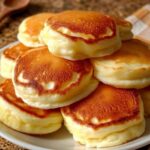
These cottage cheese oatmeal pancakes have golden edges, tender centers, and a mild, creamy flavor. Everything comes together in a blender, making them an easy breakfast with very little preparation or cleanup. Rolled oats replace regular flour, while cottage cheese and eggs give the pancakes structure and protein.
Blending transforms the cottage cheese curds into a smooth batter, so the finished pancakes do not have noticeable chunks of cheese. Their texture is slightly heartier and more delicate than traditional flour pancakes, with a pleasant oat flavor that works beautifully with maple syrup, fresh berries, or a spoonful of yogurt.
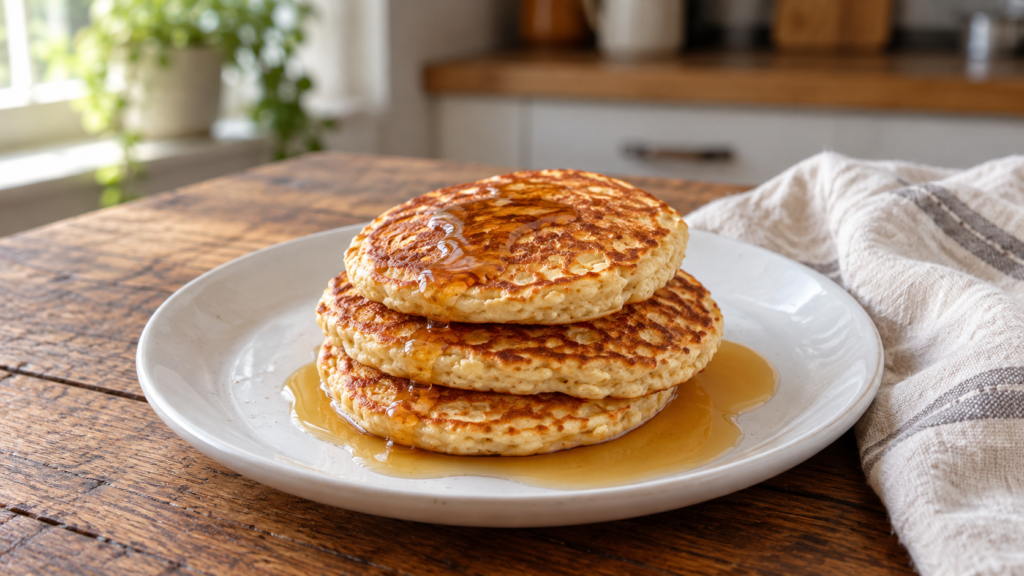
This recipe is inspired by the pancakes shown in your photo; exact ingredient amounts cannot be determined from the image alone. The version below uses a practical balance of oats, cottage cheese, and eggs to create small pancakes that are easy to cook and flip.
Serve them fresh for a relaxed weekend breakfast, or prepare a batch ahead for busy mornings.
Ingredients for Cottage Cheese Oatmeal Pancakes
For the pancakes:
1 cup old-fashioned rolled oats, approximately 90 g
1 cup cottage cheese, approximately 225 g
3 large eggs
1 teaspoon baking powder
1 teaspoon vanilla extract
½ teaspoon ground cinnamon, optional
1–2 teaspoons maple syrup, optional
A small pinch of salt, optional
1–3 tablespoons milk, only if needed
2 teaspoons neutral oil or melted butter, for cooking
Optional toppings:
Maple syrup
Fresh strawberries, blueberries, or raspberries
Sliced banana
Plain Greek yogurt
Chopped walnuts or pecans
A light dusting of cinnamon
Instructions for Cottage Cheese Oatmeal Pancakes
1. Prepare your ingredients
Measure the oats, cottage cheese, eggs, baking powder, vanilla, and any optional flavorings. Stir the cottage cheese in its container before measuring so the curds and liquid are evenly distributed.
Use the cottage cheese as it comes unless it has an unusually large amount of loose liquid. Draining it heavily can make the batter too thick. Keep the milk nearby, but wait until after blending and resting before deciding whether you need it.
2. Blend the batter
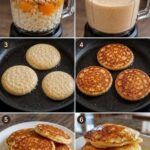
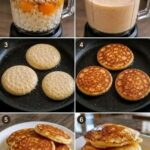
Place the eggs and cottage cheese in the blender first, followed by the oats, baking powder, vanilla, cinnamon, and optional maple syrup.
Blend for approximately 30–60 seconds, stopping to scrape down the sides if necessary. The mixture should look mostly smooth, with no large cottage cheese curds or whole oat flakes remaining.
Depending on your blender, a little fine oat texture may remain. That is perfectly fine and will give the pancakes a slightly rustic finish.
3. Rest the mixture
Let the batter stand for 5 minutes. This gives the blended oats time to absorb moisture, making the batter easier to portion.
After resting, check its consistency. It should pour slowly from a spoon and spread gently in the pan. If it is too thick to pour, blend in milk one tablespoon at a time. If it seems very thin, add a tablespoon of oats, blend again, and let it rest briefly.
4. Heat the pan
Place a large nonstick skillet or griddle over medium-low heat. Allow it to warm evenly, then brush with a thin layer of oil or butter.
Avoid a very hot pan. Cottage cheese and eggs brown readily, so high heat can darken the outside before the center has cooked. A test pancake is useful for checking both the temperature and batter thickness.
5. Portion the pancakes
Pour approximately 3 tablespoons of batter into the pan for each pancake. Aim for pancakes about 3–4 inches across, leaving enough room between them for a spatula.
Cook in batches rather than crowding the skillet. Smaller pancakes are easier to turn because this batter does not have the same elasticity as wheat-flour batter. If necessary, use the back of a spoon to gently spread a thick portion into an even circle.
6. Cook the first side
Cook for approximately 2–3 minutes, watching for the edges to become set and the underside to turn golden brown.
A few bubbles may appear on the surface, although these pancakes may not bubble as much as regular pancakes. The most useful sign is that a thin spatula can slide underneath without the batter folding or tearing.
If the bottom browns too quickly, reduce the heat before continuing.
7. Flip carefully
Slide a wide, thin spatula fully underneath each pancake and turn it in one confident movement.
Cook the second side for another 1–2 minutes, or until golden and the center is set. The finished pancake should feel gently springy rather than wet or loose.
Do not press down firmly with the spatula. Pressing compresses the tender center and can make the pancakes feel dense.
8. Finish the remaining batches
Transfer cooked pancakes to a plate and continue with the remaining batter, lightly greasing the skillet as needed.
The batter may thicken while it stands. Stir in a small splash of milk if later batches become difficult to pour. Adjust the heat between batches if the pan starts browning the pancakes more quickly.
Serve promptly, or keep them briefly in a single layer in a low oven while finishing breakfast.
Serving Suggestions
For a presentation similar to the photo, stack three pancakes on a white plate and drizzle with a little maple syrup. Their lightly toasted surfaces and soft centers need very little decoration.
For a fruitier breakfast, add sliced strawberries or warm blueberries. A spoonful of plain Greek yogurt adds a creamy topping, while chopped nuts provide crunch.
You can also spread a thin layer of peanut butter between pancakes and finish with banana slices. Keep toppings separate when serving several people so everyone can adjust the sweetness and portion size.
Discover 60+ high-protein, low-carb recipes with simple instructions and everyday ingredients. Find breakfast, lunch, dinner, salad, and snack ideas—plus a 30-day meal plan to help you plan ahead.
Explore the Elite Protein Kitchen Cookbook
Notes for Cottage Cheese Oatmeal Pancake
Choosing cottage cheese: Both small-curd and large-curd cottage cheese work because the batter is blended. Two-percent or full-fat varieties generally produce a tender result. Salt levels vary by brand, so additional salt is optional.
Choosing oats: Old-fashioned rolled oats give reliable results. Quick oats can also work, though the batter may thicken differently. Steel-cut oats are unsuitable as a direct substitute because they do not soften or blend in the same way.
Sweetness: The pancake batter is intentionally only lightly sweetened. Omit the optional maple syrup if you prefer to add sweetness entirely through toppings.
Gluten considerations: The recipe contains no wheat flour. If you need to avoid gluten, use oats specifically labeled gluten-free and check the remaining ingredients.
Tips for the Best Pancakes
Blend thoroughly. A smooth batter helps the pancakes cook evenly and removes the cottage cheese’s curd texture.
Allow the resting time. Oats absorb liquid gradually, so judging the batter immediately after blending can lead to unnecessary adjustments.
Make small pancakes. Large pancakes are more likely to bend or break during flipping.
Use moderate heat. A slower cook gives the middle time to set before the surface becomes too dark.
Wait before turning. If the pancake resists the spatula or wrinkles underneath, give it a little more time.
Grease lightly. A thin coating encourages an evenly browned surface without making the pancakes oily.
Storage and Reheating
Let leftover pancakes cool, then place them in an airtight container in the refrigerator for up to 3 days. Separate layers with parchment paper to keep them from sticking.
For longer storage, freeze cooled pancakes in a single layer, then transfer them to a freezer bag for up to 2 months.
Reheat in a skillet over low heat or microwave in short intervals until hot throughout. A toaster oven also works well and can restore a little crispness around the edges. Store fruit, yogurt, and syrup separately.
Nutritional Information for Cottage Cheese Oatmeal Pancakes
Estimated per serving: three pancakes, without toppings or optional maple syrup
Nutrient Approximate amount
Calories 290
Protein 22 g
Carbohydrates 24 g
Fat 12 g
Fiber 3 g
Total sugars 3 g
Estimates assume 2% cottage cheese and approximately 2 teaspoons of cooking oil across the batch. Actual values depend on brands, pancake size, and how much cooking fat is absorbed.
Nutritional Benefits for Cottage Cheese Oatmeal Pancakes
Cottage cheese and eggs contribute protein, making these pancakes a more substantial breakfast than a simple stack made mainly with flour and syrup.
Oats provide whole-grain carbohydrates and fiber, while cottage cheese contributes calcium. Eggs also supply choline and several vitamins and minerals.
Toppings let you add variety: berries contribute fruit and fiber, nuts supply unsaturated fats, and yogurt adds more protein. Adjust syrup and other toppings to suit your preferences.
Questions and Answers for Cottage Cheese Oatmeal Pancakes
Can I taste the cottage cheese?
The flavor is mild and slightly creamy. Once blended and cooked, it is much less noticeable, particularly with vanilla, cinnamon, or fruit.
Why are my pancakes falling apart?
They may be too large, too wet, or flipped too early. Make smaller portions, let the batter rest, and wait until the underside is set before turning.
Why are they dark outside but wet inside?
The heat is probably too high. Lower it and allow a longer, gentler cook so the center sets without burning the surface.
Can I add blueberries or chocolate chips?
Yes. Sprinkle a few onto each pancake after pouring the batter into the skillet. This distributes them evenly without blending them into the mixture.
Can I make the batter ahead?
Fresh batter gives the most predictable result. Refrigerated batter thickens as the oats absorb moisture, so stir well and adjust with a little milk before cooking.
Do I need protein powder?
No. Cottage cheese and eggs already provide protein. Adding powder changes how much liquid the batter needs and can make the pancakes dry.https://ketosl.com/pizza-grilled-cheese-sandwich/