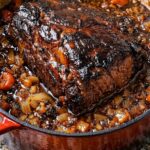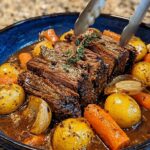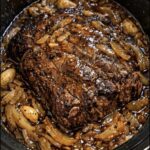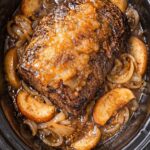

Slow-Braised Balsamic Garlic Beef Pot Roast
Prep Time: 20 minutes
Cook Time: 3½–4 hours
Servings: 6–8
Description
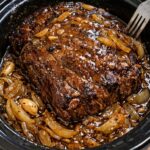
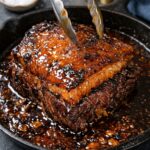
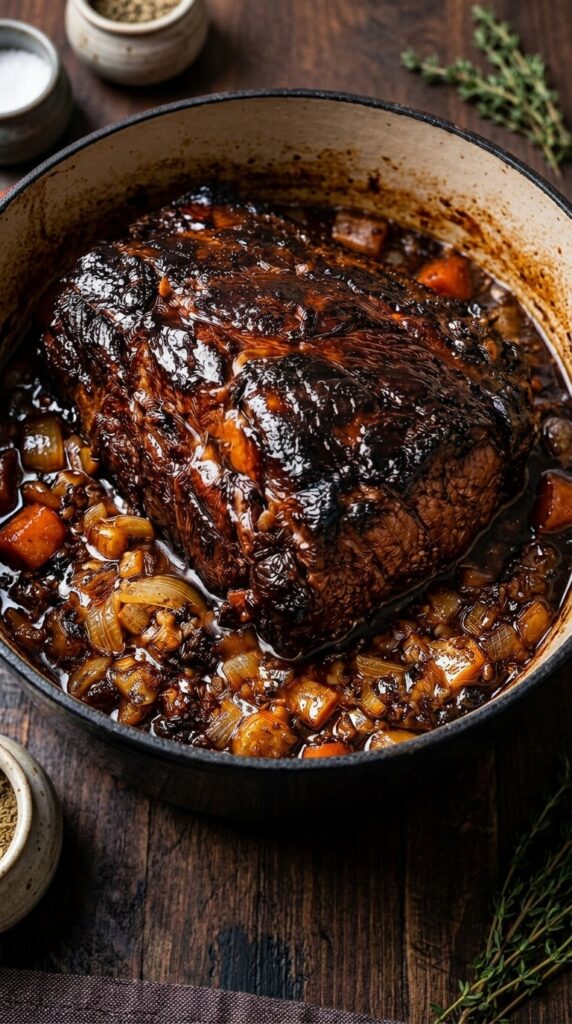
Slow-Braised Balsamic Garlic Beef Pot Roast is a rich, comforting dinner featuring a tender beef chuck roast slowly cooked with onions, carrots, garlic, herbs, beef broth, and a deeply flavored balsamic sauce. Long, gentle cooking transforms an economical cut of beef into meat that is succulent and fork-tender.
The balsamic vinegar adds a pleasant tang that balances the richness of the beef, while a small amount of brown sugar adds sweetness and helps create the dark, glossy sauce. Worcestershire sauce, tomato paste, and beef broth provide savory depth. As the roast cooks, the onions and carrots soften and absorb the flavorful braising liquid.
This recipe is especially good for a Sunday dinner, family gathering, holiday meal, or cold-weather comfort food. Everything cooks primarily in one Dutch oven, and the leftover beef is excellent in sandwiches, mashed-potato bowls, or alongside roasted vegetables.
Ingredients
For the Beef
- 4–5 lb beef chuck roast
- 2 teaspoons kosher salt
- 1 teaspoon freshly ground black pepper
- 1 teaspoon garlic powder
- 1 teaspoon smoked paprika
- 2 tablespoons olive oil
For the Vegetables
- 1 large yellow onion, roughly chopped
- 3 medium carrots, cut into large chunks
- 6 garlic cloves, minced
- 8 oz mushrooms, quartered, optional
For the Balsamic Braising Sauce
- 2 cups low-sodium beef broth
- ½ cup balsamic vinegar
- 2 tablespoons Worcestershire sauce
- 2 tablespoons tomato paste
- 2 tablespoons brown sugar
- 1 teaspoon dried thyme
- 1 teaspoon dried rosemary
- 2 bay leaves
For Thickening the Sauce
- 1½ tablespoons cornstarch
- 2 tablespoons cold water
For Serving
- Fresh parsley or thyme
- Mashed potatoes, roasted potatoes, or crusty bread, optional
Instructions
1. Prepare the Beef
Remove the chuck roast from the refrigerator about 20–30 minutes before cooking. Pat it thoroughly dry with paper towels. Removing excess surface moisture helps the beef develop a deeper brown crust when seared.
Season all sides evenly with salt, black pepper, garlic powder, and smoked paprika.
2. Preheat the Oven
Preheat the oven to 325°F (165°C).
Use a large, heavy Dutch oven with a tight-fitting lid. A heavy pot holds heat evenly and works particularly well for slow braising.
3. Sear the Roast
Heat the olive oil in the Dutch oven over medium-high heat.
Once hot, carefully add the seasoned chuck roast. Sear it without moving for approximately 4–5 minutes, or until a dark golden-brown crust develops.
Turn the roast and brown the opposite side for another 4–5 minutes. Briefly sear the edges as well.
Transfer the roast to a plate.
Do not skip this step if possible. Searing doesn’t seal in juices, but it does create browned flavors that make the finished braising liquid much richer.
4. Sauté the Vegetables
Reduce the heat to medium.
Add the chopped onion and carrots to the same Dutch oven. Cook for approximately 4–5 minutes, stirring occasionally and scraping up some of the browned bits from the bottom.
If using mushrooms, add them now and cook for another 2–3 minutes.
Add the minced garlic and cook for about 30–60 seconds, just until fragrant. Avoid browning the garlic heavily because burnt garlic can become bitter.
5. Build the Balsamic Sauce
Add the tomato paste and cook for approximately 1 minute.
Pour in a small amount of the beef broth and scrape the bottom of the Dutch oven with a wooden spoon to release the flavorful browned bits.
Add the remaining broth, balsamic vinegar, Worcestershire sauce, brown sugar, thyme, rosemary, and bay leaves.
Stir everything together and bring the liquid to a gentle simmer.
Taste the liquid carefully. It should taste savory, slightly tangy, and mildly sweet. Remember that the flavors will become more concentrated during cooking.
6. Add the Roast
Return the seared chuck roast to the Dutch oven, nestling it among the vegetables.
The braising liquid should come approximately one-third to halfway up the sides of the beef. The roast does not need to be completely submerged.
Spoon some of the sauce over the top.
7. Slow-Braise
Cover the Dutch oven tightly and transfer it to the preheated oven.
Cook for approximately 3½–4 hours.
After about 3 hours, begin checking the roast. It is ready when a fork slides easily into the meat and the beef can be pulled apart with very little resistance.
A particularly thick roast may require an additional 30–60 minutes.
For food safety, whole beef roasts have a lower minimum safe temperature, but chuck roast intended to become pull-apart tender generally needs considerably more cooking; tenderness, rather than merely reaching the minimum safe temperature, is the useful endpoint for this braise.
8. Rest the Beef
Carefully transfer the finished roast to a large serving platter.
Loosely cover it with foil and allow it to rest for about 15 minutes.
Remove and discard the bay leaves from the sauce.
9. Thicken the Sauce
Place the Dutch oven on the stovetop over medium heat.
In a small bowl, mix the cornstarch with cold water until completely smooth.
Bring the braising liquid to a gentle simmer and slowly stir in the cornstarch slurry. Simmer for 2–4 minutes, stirring frequently, until the sauce becomes glossy and lightly thickened.
For a thicker gravy, simmer it slightly longer rather than immediately adding more cornstarch.
Taste and adjust the salt and black pepper as needed.
10. Serve
Keep the roast whole for an impressive presentation or gently pull it into large chunks with two forks.
Spoon the cooked carrots, onions, mushrooms, and plenty of glossy balsamic gravy around and over the beef.
Finish with chopped parsley or fresh thyme.
Serve hot with creamy mashed potatoes, roasted potatoes, green beans, steamed vegetables, or crusty bread.
Notes
Chuck roast is one of the best choices for this recipe because its connective tissue gradually breaks down during long, moist cooking. This is what produces the tender texture associated with classic pot roast.
The balsamic vinegar is intended to balance the richness rather than make the roast taste strongly acidic. As it cooks with broth, beef juices, aromatics, and brown sugar, its flavor becomes mellower and more complex.
The sauce may appear somewhat thin immediately after braising. This is normal. Reducing it briefly and adding the cornstarch slurry creates the glossy consistency seen on richly glazed pot roasts.
Recipe Tips
Choose a well-marbled chuck roast. Thin streaks of fat throughout the meat help keep the beef succulent during the long cooking process.
Sear the beef in a properly heated pan and avoid repeatedly moving it. Leaving each side undisturbed gives the surface enough time to develop good browning.
Use low-sodium beef broth because Worcestershire sauce and the seasoned beef already contribute salt. You can always add additional salt at the end.
Cut the carrots into relatively large pieces. Small pieces can become excessively soft after several hours of braising.
If the roast still feels tough after the expected cooking time, it often needs more time rather than less. Continue cooking covered and check again after 20–30 minutes.
For an even deeper flavor, prepare the pot roast one day ahead. Refrigerating it overnight also makes it easy to remove hardened excess fat from the surface before gently reheating.
Storage
Allow leftovers to cool, but refrigerate them within 2 hours. Place the beef and some of its braising liquid in an airtight container to prevent the meat from drying out.
Refrigerated pot roast will keep for approximately 3–4 days.
For longer storage, portion the cooled beef and sauce into freezer-safe containers. Freeze for up to about 3 months for best quality.
Thaw frozen pot roast overnight in the refrigerator.
To reheat, place the beef and sauce in a covered saucepan or baking dish and warm gently until thoroughly heated. Adding a splash of beef broth can loosen sauce that has become particularly thick in the refrigerator.
Nutritional Information
Approximate nutrition per serving, based on 8 servings:
Calories: 490–550
Protein: 45–50 g
Carbohydrates: 14–18 g
Fat: 27–32 g
Saturated Fat: 10–12 g
Fiber: 2–3 g
Sugar: 8–11 g
Sodium: 650–800 mg
These values are estimates. The exact nutrition will vary according to the size and fat content of the roast, brands of broth and sauces, portion size, and how much gravy is consumed.
Benefits
One of the main nutritional advantages of this meal is its substantial protein content. Beef provides complete protein containing all essential amino acids and contributes nutrients such as iron, zinc, selenium, and vitamin B12.
Carrots add beta-carotene and fiber, while onions, garlic, mushrooms, and herbs contribute additional plant compounds and flavor without requiring large quantities of extra fat.
The recipe can also be adapted to different eating preferences. Serving it with steamed vegetables or a large green salad creates a lower-carbohydrate meal, while mashed potatoes or whole grains can turn it into a more substantial comfort-food dinner.
Using low-sodium broth and controlling the amount of added salt can help reduce sodium compared with heavily processed pot-roast seasoning packets.
Frequently Asked Questions
What is the best beef cut for pot roast?
Beef chuck roast is an excellent option. It contains enough marbling and connective tissue to become tender and flavorful during slow braising. Brisket and some round roasts can also be used, although their final texture can differ.
Why is my pot roast still tough?
If chuck roast has been cooking slowly but remains tough, the connective tissue may not have had enough time to break down. Keep the pot covered and continue braising, checking every 20–30 minutes.
Can I make this recipe in a slow cooker?
Yes. Sear the seasoned beef first and sauté the aromatics for the best flavor. Transfer everything to the slow cooker and cook approximately 8–9 hours on LOW or 5–6 hours on HIGH, until the roast is fork-tender. Exact cooking time depends on the size and shape of the roast and the slow cooker.
Can I leave out the brown sugar?
Yes. The roast will have a sharper balsamic flavor without it. You can reduce the sugar to 1 tablespoon or omit it completely if you prefer a more savory sauce.
Can I add potatoes?
Absolutely. Add small whole potatoes or large chunks of Yukon Gold potatoes to the Dutch oven. Avoid cutting them too small because they will cook for several hours.
Can I use balsamic glaze instead of balsamic vinegar?
Regular balsamic vinegar is preferable because commercial balsamic glaze is already concentrated and often contains added sweeteners. If glaze is all you have, use considerably less and adjust the sweetness to taste.
How do I prevent dry pot roast?
Use a well-marbled chuck roast, keep the Dutch oven covered, maintain a low oven temperature, and cook until tender. Store and reheat leftover beef with some of its braising sauce rather than storing the meat dry.
What should I serve with balsamic pot roast?
Creamy mashed potatoes are a classic pairing because they absorb the rich sauce. Roasted potatoes, buttered noodles, rice, green beans, glazed carrots, Brussels sprouts, or crusty bread also work well.
Can I make it ahead?
Yes. Pot roast is particularly suitable for make-ahead meals. Cook it completely, cool and refrigerate it in its sauce, then reheat gently the following day. The flavor often becomes even richer overnight.
How can I make the gravy richer?
After removing the beef, simmer the braising liquid for several minutes to concentrate it before adding the cornstarch slurry. For an extra-rich finish, stir a tablespoon of unsalted butter into the finished sauce just before serving.
Can I freeze the leftovers?
Yes. Freeze the beef together with enough gravy to keep it moist. Divide it into meal-sized portions so you only need to thaw what you intend to eat. For the best texture and flavor, use within about 3 months.