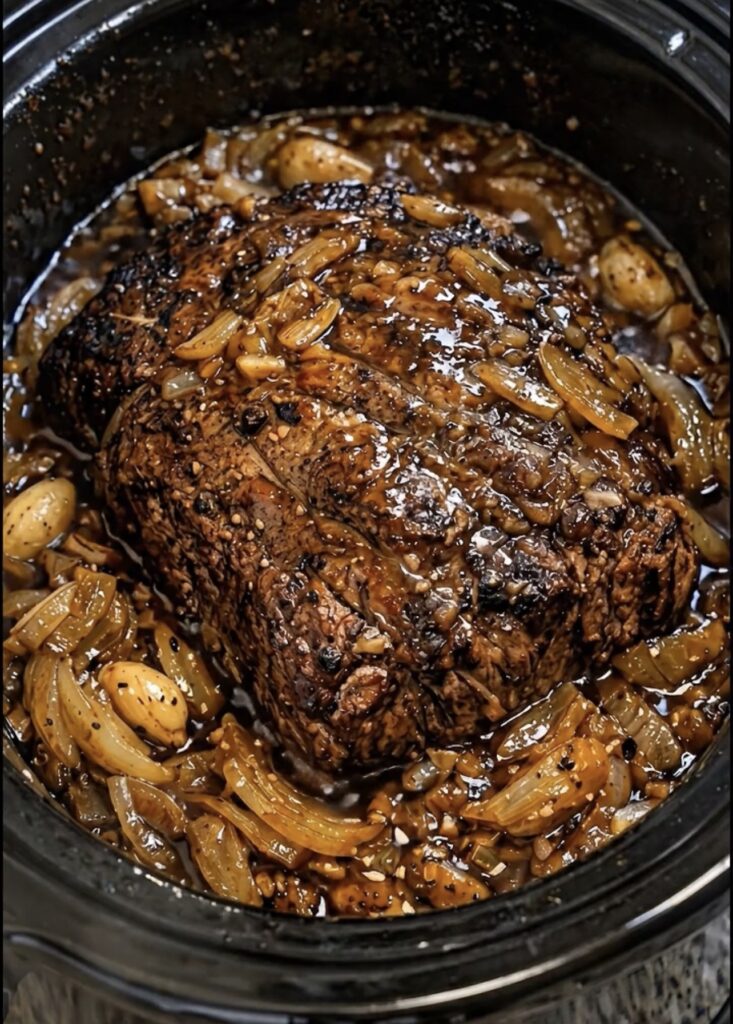

JUICY SLOW-COOKER GARLIC & ONION BEEF ROAST 🥩🧄🧅
Prep Time
20 minutes
Cook Time
8–9 hours
Servings
6–8
🛒 Ingredients
- 1.5–2 kg beef chuck roast
- 2 large onions, thickly sliced
- 8–10 garlic cloves, whole
- 2 tbsp olive oil
- 2 cups beef broth
- 2 tbsp Worcestershire sauce
- 2 tbsp soy sauce
- 1 tbsp tomato paste
- 1 tbsp brown sugar
- 1 tsp smoked paprika
- 1 tsp garlic powder
- 1 tsp onion powder
- 1 tsp dried thyme
- 1 tsp dried rosemary
- 1 tsp black pepper
- 1½ tsp salt
- 1 tbsp butter
- (Optional) 1 tbsp flour or cornstarch, for thickening
- (Optional) Fresh parsley, for garnish
👨🍳 Detailed Instructions
1. Prepare the Beef
Start by preparing the beef chuck roast. Pat the roast dry with paper towels.
Drying the surface helps the seasoning stick properly and allows the beef to develop a deeper brown crust during searing.
Season the beef generously on all sides with salt, black pepper, smoked paprika, garlic powder, onion powder, dried thyme, and dried rosemary.
Make sure the seasoning covers the entire surface of the roast. These seasonings create the flavorful base that will carry through the slow-cooking process.
2. Sear the Beef
Heat 2 tablespoons of olive oil in a large skillet over high heat.
Once the skillet and oil are hot, carefully place the seasoned beef chuck roast into the skillet.
Sear the roast for approximately 2–3 minutes per side, turning it carefully so that the sides become deeply browned and caramelized.
The goal at this stage is not to cook the beef completely. Instead, the high heat develops a deeply browned exterior that adds extra savory flavor to the finished roast.
Try to avoid moving the roast constantly while it is searing. Give each side enough time to develop a rich brown color.
Once the roast is deeply browned on all sides, remove it from the skillet.
3. Prepare the Slow Cooker
Place the 2 large thickly sliced onions into the bottom of the slow cooker.
Add the 8–10 whole garlic cloves over and around the onions.
The onions and garlic form a flavorful base underneath the beef. During the long cooking process, they become soft and tender while absorbing the juices and seasonings from the roast.
Place the seared beef roast directly on top of the onions and garlic.
This arrangement allows the beef juices to flow into the onion and garlic mixture as everything cooks.
4. Prepare the Sauce
In a separate bowl, whisk together:
- 2 cups beef broth
- 2 tbsp Worcestershire sauce
- 2 tbsp soy sauce
- 1 tbsp tomato paste
- 1 tbsp brown sugar
Whisk thoroughly until the tomato paste is incorporated into the liquid.
The beef broth creates the savory liquid base, Worcestershire sauce adds depth, soy sauce contributes a rich savory flavor, tomato paste adds body, and brown sugar provides a subtle sweetness that balances the other ingredients.
Once the sauce is combined, pour it around the roast in the slow cooker.
5. Add the Butter
Add 1 tablespoon of butter to the slow cooker.
The butter contributes richness to the cooking juices and helps create a flavorful base for the finished gravy.
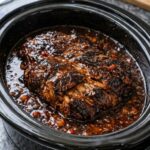
At this point, the slow cooker should contain the onions and garlic underneath the roast, the beef sitting on top, and the prepared sauce surrounding it.
6. Slow Cook
Cover the slow cooker securely with its lid.
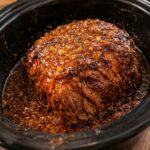
Cook the beef on LOW for 8–9 hours, or until the roast becomes extremely tender and easily pulls apart with a fork.
The long cooking process allows the beef chuck roast to soften while absorbing the flavors of the garlic, onions, herbs, broth, Worcestershire sauce, soy sauce, tomato paste, and seasonings.
For the best result, avoid opening the lid unnecessarily during cooking. Keeping the slow cooker covered helps maintain a consistent cooking environment.
7. Check the Beef for Tenderness
Near the end of the cooking time, check the roast for tenderness.
The beef should be extremely tender and should easily pull apart with a fork.
If it does not pull apart easily, continue cooking until the desired tender texture is reached.
The exact cooking time can vary depending on the size of the roast and the slow cooker, so tenderness is the most useful indicator for this recipe.
8. Rest the Roast
Once the beef is tender, carefully remove it from the slow cooker.
Place it on a cutting board or serving platter and let it rest for 10–15 minutes.
Resting the beef before slicing or pulling it apart allows the juices to settle and helps maintain a juicy texture.
Avoid immediately cutting into the roast as soon as it comes out of the slow cooker.
9. Finish the Gravy
While the beef is resting, stir the cooking juices, softened onions, and garlic together inside the slow cooker.
The onions and garlic should now be very soft from the long cooking process.
If you want a thicker gravy, use the optional 1 tablespoon of flour or cornstarch.
Mix the flour or cornstarch with a little cold water to create a smooth mixture.
Stir the mixture into the hot cooking juices and continue stirring until the gravy thickens.
The softened onions and garlic can remain in the gravy, giving it additional texture, flavor, and richness.
10. Slice or Pull Apart the Beef
After the roast has rested for 10–15 minutes, you can either slice it or pull it apart.
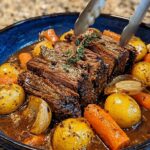
For a traditional roast presentation, slice the beef into portions.
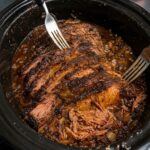
For a tender, rustic presentation, use forks to pull the beef apart into smaller pieces.
Because the roast has been slow-cooked until extremely tender, it should be easy to separate with a fork.
11. Serve with the Gravy
Transfer the beef to a serving platter or individual plates.
Spoon the caramelized onions and softened garlic over the beef.
Then generously spoon the rich gravy over the top.
If desired, finish with fresh parsley for garnish.
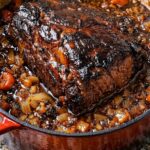
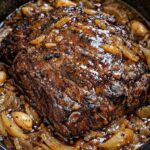
The combination of tender beef, sweet caramelized onions, softened garlic, and savory gravy makes every bite rich and comforting.
🍽️ Best Side Dishes
This beef roast pairs beautifully with classic comforting side dishes, including:
- Creamy mashed potatoes
- Roasted carrots
- Green beans
- Buttered corn
- Dinner rolls
Creamy mashed potatoes are especially useful for serving alongside the roast because they provide a perfect base for the rich gravy.
Roasted carrots add a naturally sweet vegetable component, while green beans provide a fresh contrast to the hearty beef.
Buttered corn adds another comforting side, and dinner rolls are perfect for enjoying any remaining gravy.
💡 Tips for the Best Beef Roast
Sear the Beef Properly
Deeply browning the roast before slow cooking adds important flavor. Make sure the skillet is hot before adding the beef.
Pat the Beef Dry
Removing excess moisture from the surface helps the roast brown more effectively during searing.
Don’t Rush the Slow Cooking
Beef chuck roast benefits from the long, slow cooking process. Cook it on LOW for 8–9 hours for the extremely tender texture described in the recipe.
Keep the Lid Closed
Avoid opening the slow cooker frequently. Keeping the lid closed helps maintain a consistent cooking temperature.
Check for Fork Tenderness
The roast is ready when it easily pulls apart with a fork. Tenderness is more important than relying on the exact cooking time alone.
Let the Beef Rest
Rest the roast for 10–15 minutes before slicing or pulling it apart. This helps the beef remain juicy.
Keep the Onions and Garlic in the Gravy
The softened onions and garlic contain plenty of flavor after slow cooking. Stir them into the cooking juices to create a flavorful gravy.
Thicken the Gravy Only If Desired
Flour or cornstarch is optional. If you prefer a thicker gravy, mix 1 tablespoon with a little cold water before stirring it into the hot juices.
❓ Frequently Asked Questions
What cut of beef is best for this recipe?
The recipe specifically calls for 1.5–2 kg beef chuck roast. Chuck roast is particularly suitable for long, slow cooking because it becomes very tender during the process.
Can I slice the beef instead of shredding it?
Yes. Once the beef has rested for 10–15 minutes, you can either slice it or pull it apart with a fork.
How do I know when the roast is ready?
The beef should be extremely tender and easily pull apart with a fork. If it is still firm, it needs additional cooking.
Why do I need to sear the roast?
Searing develops a deeply browned and caramelized exterior, which contributes additional savory flavor to the finished dish.
Should I drain the cooking liquid?
No. The cooking juices are used to create the rich gravy. Stir them together with the softened onions and garlic before serving.
Is the flour or cornstarch required?
No. It is completely optional and is included only if you want a thicker gravy.
Can I use either flour or cornstarch?
Yes. The recipe allows 1 tablespoon of flour or cornstarch for thickening. Mix it with a little cold water before adding it to the hot cooking juices.
Why are the garlic cloves left whole?
The whole garlic cloves slowly soften during cooking and become tender and flavorful. They blend naturally with the onions and gravy.
Why is brown sugar included in a savory beef roast?
The brown sugar adds a small amount of sweetness that balances the savory Worcestershire sauce, soy sauce, tomato paste, and seasonings.
Can I skip the fresh parsley?
Yes. Fresh parsley is optional and is simply used as a garnish.
🥩 Nutrition Benefits
This beef roast provides several important nutrients as part of a balanced meal.
Protein
Beef chuck roast provides protein, which is essential for maintaining and repairing body tissues and supporting normal muscle function. A protein-rich meal can also be satisfying and filling.
Iron
Beef is a source of dietary iron. Iron is an essential mineral involved in transporting oxygen throughout the body and supporting normal energy metabolism.
Zinc
Beef provides zinc, an essential mineral that supports normal immune function and contributes to many processes within the body.
Vitamin B12
Beef is naturally rich in vitamin B12. This vitamin is important for normal red blood cell formation and proper nervous-system function.
Garlic
The recipe contains 8–10 whole garlic cloves, providing plenty of garlic flavor. Garlic also contains naturally occurring sulfur-containing compounds and other plant compounds.
Onions
Two large onions contribute flavor along with plant compounds and dietary nutrients. During slow cooking, they become soft and blend into the savory gravy.
Olive Oil
Olive oil is used during the searing process and contributes unsaturated fats to the recipe.
Herbs and Spices
Thyme, rosemary, smoked paprika, garlic powder, onion powder, and black pepper provide significant flavor without requiring complicated ingredients. Herbs and spices can make hearty dishes flavorful and aromatic.
Balanced Meal Pairings
Serving the roast with vegetables such as roasted carrots or green beans can add additional fiber, vitamins, minerals, and plant-based nutrients to the meal. Pairing it with a suitable vegetable side creates a more balanced dinner.
❤️ Why You’ll Love This Recipe
This Juicy Slow-Cooker Garlic & Onion Beef Roast is a classic comfort-food meal that turns a simple beef chuck roast into an incredibly tender and flavorful dinner.
The combination of deeply browned beef, caramelized onions, whole softened garlic cloves, aromatic rosemary and thyme, and rich savory gravy creates layers of flavor throughout the dish.
The slow cooker also makes the recipe convenient. After the initial seasoning, searing, and sauce preparation, the beef can cook slowly for 8–9 hours until it becomes extremely tender.
When it is finally ready, the beef can be sliced or pulled apart and covered with the softened onions, garlic, and rich gravy.
Serve it with creamy mashed potatoes, roasted carrots, green beans, buttered corn, or dinner rolls for a warm and satisfying family meal.
Whether you’re preparing a Sunday dinner, a family gathering, or simply craving a hearty homemade roast, this recipe delivers tender beef and rich garlic-onion flavor with straightforward preparation.