
Garlic Herb Glazed Meatloaf with Roasted Potatoes
Prep Time: 25 minutes
Cook Time: 60–70 minutes
Rest Time: 10 minutes
Servings: 6–8
Description
Garlic Herb Glazed Meatloaf with Roasted Potatoes is a hearty, comforting family dinner featuring a juicy beef meatloaf coated with a sweet, tangy, savory glaze and surrounded by golden roasted baby potatoes.
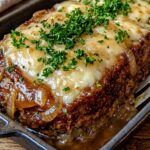
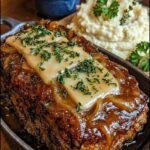
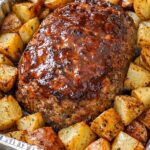
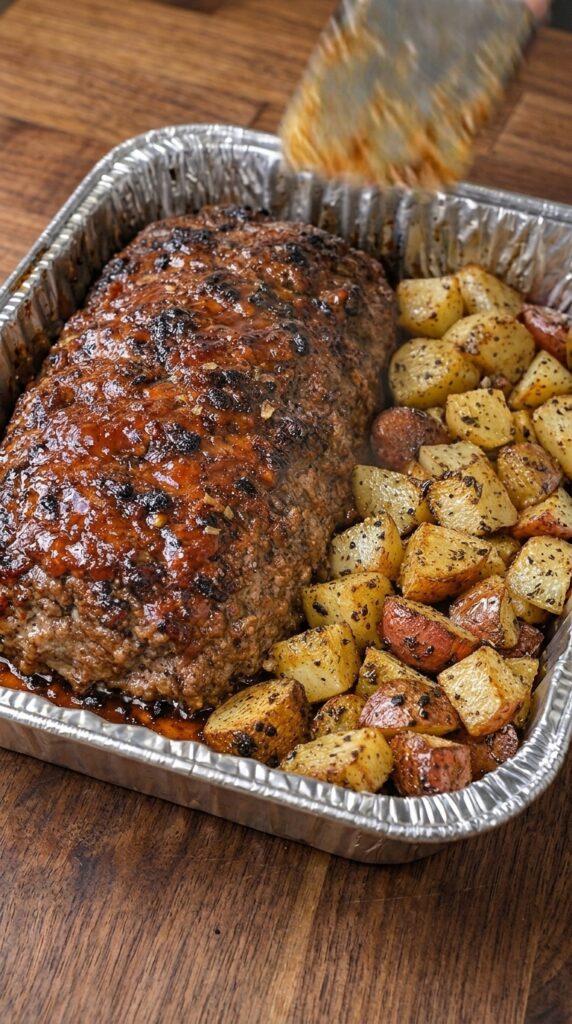
The meatloaf is made with ground beef, breadcrumbs, eggs, onion, garlic, Worcestershire sauce, herbs, and seasonings. The ingredients provide enough moisture and structure to keep the loaf tender while allowing it to hold together beautifully when sliced. A ketchup-based brown sugar glaze caramelizes over the surface during baking, giving the meatloaf the dark, glossy finish seen in the photo.
The potatoes cook alongside the meatloaf with olive oil, garlic, herbs, salt, and black pepper. They become tender inside with lightly crisp, browned edges. Because the meat and potatoes can be prepared in the same roasting pan, this is an especially convenient complete dinner for busy evenings.
Serve it with green beans, broccoli, glazed carrots, corn, or a simple salad for an easy homemade meal.
Ingredients
For the Meatloaf
- 2 lb ground beef, preferably 85–90% lean
- 1 cup plain breadcrumbs
- 2 large eggs
- ¾ cup whole milk
- 1 medium yellow onion, finely chopped
- 4 garlic cloves, minced
- 2 tablespoons Worcestershire sauce
- 2 tablespoons ketchup
- 1 tablespoon Dijon mustard
- 1 teaspoon dried parsley
- 1 teaspoon dried Italian seasoning
- 1 teaspoon smoked paprika
- 1½ teaspoons salt
- ¾ teaspoon freshly ground black pepper
- ½ teaspoon onion powder
- ½ teaspoon garlic powder
For the Glaze
- ½ cup ketchup
- 3 tablespoons brown sugar
- 1½ tablespoons Worcestershire sauce
- 1 tablespoon Dijon mustard
- 1 tablespoon apple cider vinegar
- ½ teaspoon garlic powder
- ¼ teaspoon smoked paprika
For the Roasted Potatoes
- 2 lb baby red and yellow potatoes
- 2½ tablespoons olive oil
- 3 garlic cloves, minced
- 1 teaspoon dried Italian seasoning
- ½ teaspoon dried thyme
- ½ teaspoon smoked paprika
- ¾ teaspoon salt
- ½ teaspoon black pepper
Optional Garnish
- 2 tablespoons chopped fresh parsley
- Fresh thyme leaves
Instructions
1. Preheat the Oven
Preheat your oven to 400°F (200°C).
Lightly grease a large roasting pan or a 9 x 13-inch baking dish. A rimmed metal roasting pan is particularly useful because it allows the potatoes to spread around the meatloaf and brown more effectively.
2. Prepare the Potatoes
Wash and thoroughly dry the baby potatoes.
Cut larger potatoes into approximately 1½-inch pieces. Small potatoes can simply be halved. Keeping the pieces relatively similar in size helps them cook evenly.
Place the potatoes in a large bowl and add the olive oil, minced garlic, Italian seasoning, thyme, smoked paprika, salt, and black pepper.
Toss until every piece is lightly coated.
Set aside while preparing the meatloaf.
3. Prepare the Meatloaf Mixture
Place the breadcrumbs and milk in a large mixing bowl. Stir and let the mixture sit for about 3–5 minutes. This creates a panade, which helps keep the finished meatloaf moist and tender.
Add the eggs, finely chopped onion, minced garlic, Worcestershire sauce, ketchup, Dijon mustard, parsley, Italian seasoning, smoked paprika, salt, black pepper, onion powder, and garlic powder.
Mix these ingredients together before adding the beef. This helps distribute the seasoning evenly without requiring excessive mixing later.
Add the ground beef.
Using clean hands or a large fork, gently combine everything just until evenly incorporated.
Avoid squeezing, compacting, or repeatedly kneading the mixture. Overmixing can produce a dense, firm meatloaf rather than a tender one.
4. Shape the Meatloaf
Transfer the beef mixture to the center of the prepared roasting pan.
Shape it into a free-form loaf approximately 9 inches long and 4–5 inches wide.
Try to keep the thickness relatively even so the center cooks at approximately the same rate as the ends.
Do not press the loaf too tightly.
5. Arrange the Potatoes
Arrange the seasoned potatoes around the meatloaf in a relatively even layer.
Leave a little room between some of the potato pieces when possible. Potatoes packed very tightly will steam more than roast.
If your roasting pan is small and the potatoes are overcrowded, cook some potatoes on a separate baking sheet instead.
6. Make the Glaze
In a small bowl, combine the ketchup, brown sugar, Worcestershire sauce, Dijon mustard, apple cider vinegar, garlic powder, and smoked paprika.
Stir until smooth.
The glaze should have a thick but spreadable consistency with a balance of sweetness, acidity, and savory flavor.
7. Apply the First Layer of Glaze
Spread approximately half of the glaze evenly over the top and sides of the raw meatloaf.
Reserve the remaining glaze for later.
8. Begin Baking
Place the roasting pan in the preheated oven.
Bake for approximately 35 minutes.
At this stage, the meatloaf will begin firming and the potatoes will start developing golden edges.
9. Turn the Potatoes
Carefully remove the pan from the oven.
Use a spatula to turn or stir the potatoes so different surfaces have an opportunity to brown.
Keep the potatoes arranged around the meatloaf rather than piling them against it.
10. Add the Remaining Glaze
Brush the remaining glaze generously over the top of the meatloaf.
Return the pan to the oven.
Continue baking for another 25–35 minutes, or until the meatloaf reaches an internal temperature of 160°F (71°C) in its thickest center.
Using an instant-read thermometer is the most reliable way to determine doneness.
The potatoes should also be tender when pierced with a fork and browned around their edges.
11. Caramelize the Top
For a darker, stickier surface similar to the photo, you can broil the meatloaf briefly after it is fully cooked.
Set the oven to broil and cook for approximately 1–3 minutes, watching continuously.
Glazes containing sugar can burn quickly, so do not leave the oven unattended during this step.
12. Rest the Meatloaf
Remove the pan from the oven.
Allow the meatloaf to rest for approximately 10 minutes before slicing.
Resting is important because it allows the juices to redistribute and helps the slices hold together instead of crumbling.
13. Serve
Cut the meatloaf into thick slices and serve with generous portions of the garlic herb roasted potatoes.
Spoon a little of the flavorful pan juices over the potatoes if desired.
Finish with fresh parsley or thyme and serve warm.
Notes
For the best balance of flavor and moisture, ground beef containing approximately 10–15% fat works particularly well. Extremely lean ground beef can produce a drier meatloaf.
The breadcrumb-and-milk mixture is important. Breadcrumbs absorb the milk and some of the meat juices during cooking, helping create a softer texture.
Finely chop the onion so it blends naturally into the meatloaf. Large onion pieces may prevent clean slices and can remain slightly firm.
If you prefer especially soft onion, sauté it in a teaspoon of olive oil for 4–5 minutes before adding it to the meat mixture. Allow it to cool slightly first.
Tips for the Best Meatloaf
Do not overmix the ground beef. Mix only until the ingredients are evenly combined.
Shape the loaf gently rather than packing it tightly into a dense block.
Use a meat thermometer rather than relying only on color. Ground beef should reach 160°F (71°C).
Cut the potatoes into evenly sized chunks. Pieces that are too large may not finish cooking at the same time as the meatloaf.
Dry the potatoes after washing. Excess water encourages steaming and reduces browning.
For crispier potatoes, place the roasting pan on the lower-middle oven rack or roast the potatoes separately on a large sheet pan.
Apply the glaze in two stages. The first layer flavors the meatloaf while the second creates a fresh, glossy coating.
If the glaze becomes dark before the center of the meatloaf is done, loosely cover the top with aluminum foil and continue baking.
Always allow the meatloaf to rest before slicing. Ten minutes makes a noticeable difference in both moisture and structure.
Storage
Allow leftovers to cool and refrigerate them within 2 hours of cooking.
Transfer the meatloaf and potatoes to airtight containers and refrigerate for up to 3–4 days.
For individual meals, place one or two slices of meatloaf with a serving of potatoes into separate containers. This makes reheating quick and convenient.
To freeze the meatloaf, allow it to cool completely and slice it. Wrap individual slices tightly and place them in a freezer-safe container or bag. Freeze for up to 3 months for best quality.
The potatoes can also be frozen, although their texture may become somewhat softer after thawing.
Thaw frozen meatloaf overnight in the refrigerator.
Reheat covered in a 325°F (165°C) oven until thoroughly hot, or microwave individual portions. Adding a spoonful of extra glaze or a splash of broth before reheating can help prevent the meat from drying out.
Nutritional Information
Approximate nutrition per serving based on 8 servings:
Calories: 520–580
Protein: 31–36 g
Carbohydrates: 43–48 g
Fat: 24–29 g
Saturated Fat: 8–10 g
Fiber: 4–5 g
Sugar: 11–14 g
Sodium: 800–950 mg
Iron: approximately 4 mg
Potassium: approximately 950–1,100 mg
Nutritional values are estimates and will vary depending on the ground beef, breadcrumbs, milk, ketchup, potato quantity, brands of sauces, and exact serving size.
Benefits
This meal provides a substantial amount of protein from the ground beef and eggs. Protein contributes to normal muscle maintenance and helps make the meal satisfying.
Beef also supplies several important micronutrients, particularly iron, zinc, selenium, and vitamin B12. Iron is involved in normal oxygen transport, while vitamin B12 supports normal red blood cell formation and nervous-system function.
Potatoes provide carbohydrates for energy as well as potassium, vitamin C, and some fiber, particularly when their skins are left on.
Garlic, onions, herbs, and spices add considerable flavor without requiring large quantities of additional fat.
For a more vegetable-rich meal, serve a moderate portion of meatloaf and potatoes alongside steamed broccoli, green beans, Brussels sprouts, asparagus, or a large green salad.
Frequently Asked Questions
What type of beef should I use?
Ground beef that is around 85–90% lean is a good choice. It contains enough fat to keep the meatloaf moist without creating an excessively greasy finished dish.
Why does my meatloaf fall apart?
A meatloaf may crumble if it does not contain enough binding ingredients, if it is sliced immediately after cooking, or if the ingredient proportions are significantly changed. Eggs and breadcrumbs provide structure, while resting helps the finished loaf firm before slicing.
Can I use ground turkey instead?
Yes, although the flavor and texture will be different. Ground turkey is often leaner, so take care not to overcook it. Ground poultry should reach 165°F (74°C).
Can I prepare the meatloaf ahead of time?
Yes. Assemble and shape the meatloaf, cover it tightly, and refrigerate for up to one day before baking. Prepare the potatoes closer to cooking time so they do not discolor or release excess moisture.
Can I make this without brown sugar?
Yes. The brown sugar primarily provides sweetness and helps the glaze caramelize. You can reduce it or substitute a smaller amount of honey or maple syrup.
Why are my potatoes not crispy?
Overcrowding is the most common reason. If the potatoes are packed together, moisture becomes trapped and they steam. Use a larger roasting pan or cook them separately on a sheet pan if necessary.
Should I cover the meatloaf while baking?
Generally, no. Baking it uncovered allows the exterior and glaze to caramelize. If the surface becomes too dark before the center reaches 160°F, loosely cover it with foil for the remaining cooking time.
Can I add cheese?
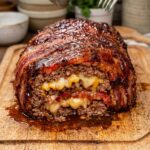
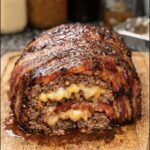
Yes. About ¾–1 cup of shredded cheddar, mozzarella, or Monterey Jack can be incorporated into the meat mixture or placed in the center as a filling.
What vegetables go well with this meal?
Green beans, roasted broccoli, asparagus, peas, corn, Brussels sprouts, glazed carrots, and a simple garden salad all pair nicely with meatloaf and potatoes.
How do I know when meatloaf is completely cooked?
Insert an instant-read thermometer into the thickest part of the center without touching the pan. The meatloaf is safely cooked when the ground beef reaches 160°F (71°C).
Can I make extra glaze for serving?
Absolutely. Prepare a second batch and simmer it separately in a small saucepan for a few minutes. Do not serve glaze that has touched raw meat unless it has subsequently been thoroughly cooked.
What can I do with leftovers?
Leftover meatloaf makes excellent sandwiches. Warm a thick slice and serve it on toasted bread with cheese, lettuce, tomato, and a little extra glaze. You can also crumble leftover meatloaf into pasta sauce or serve reheated slices with eggs for a hearty breakfast.