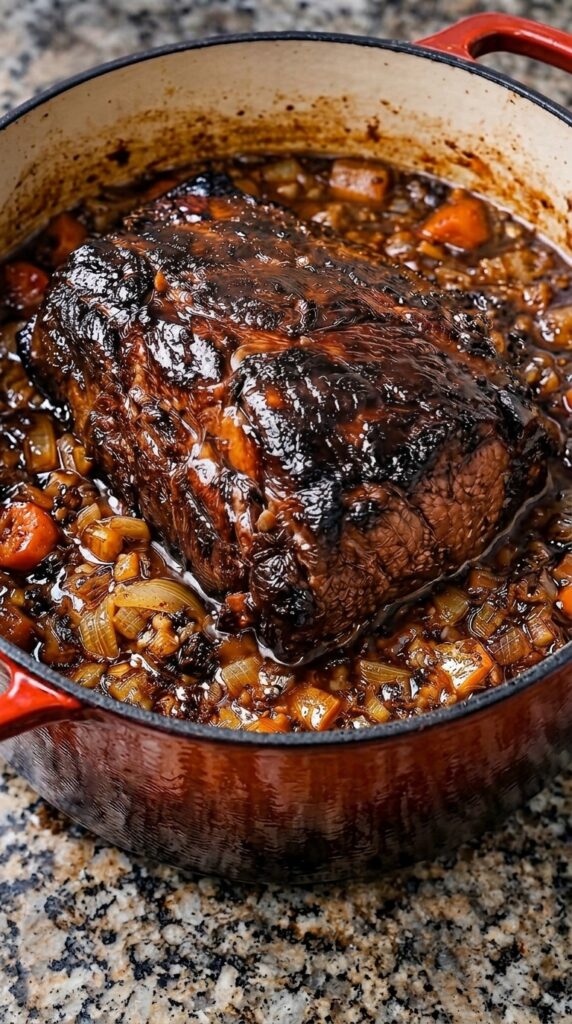

# Slow-Braised Garlic Balsamic Beef Roast
Slow-Braised Garlic Balsamic Beef Roast is a rich, comforting dinner featuring a large beef chuck roast cooked slowly with onions, carrots, garlic, herbs, and a deeply flavored balsamic beef gravy. Long, gentle cooking transforms the roast into tender, juicy beef while the onions and vegetables soften into the sauce and contribute natural sweetness.
The balsamic vinegar adds depth and a subtle tang rather than making the roast taste strongly of vinegar. Worcestershire sauce, tomato paste, beef broth, garlic, and a small amount of brown sugar balance the sauce and create the dark, glossy finish. This is an excellent recipe for Sunday dinner, holidays, family gatherings, or cold-weather comfort food.
Prep Time: 25 minutes
Cook Time: 3½–4 hours
Resting Time: 15 minutes
Total Time: About 4½ hours
Servings: 6–8
## Ingredients
### For the Beef Roast
4–5 lb beef chuck roast
2 tablespoons olive oil
1½ teaspoons salt
1 teaspoon freshly ground black pepper
1 teaspoon garlic powder
1 teaspoon onion powder
1 teaspoon smoked paprika
1 teaspoon dried thyme
½ teaspoon dried rosemary
### For the Vegetables
2 medium yellow onions, roughly chopped
4 large carrots, cut into thick pieces
6 garlic cloves, minced
2 celery stalks, roughly chopped, optional
### For the Balsamic Braising Sauce
2 tablespoons tomato paste
2 cups low-sodium beef broth
½ cup balsamic vinegar
2 tablespoons Worcestershire sauce
2 tablespoons brown sugar
1 tablespoon Dijon mustard
1 tablespoon low-sodium soy sauce
1 teaspoon dried thyme
½ teaspoon dried rosemary
2 bay leaves
2 tablespoons unsalted butter
### For Thickening the Gravy
1½ tablespoons cornstarch
2 tablespoons cold water
### For Finishing
2 tablespoons chopped fresh parsley
Freshly ground black pepper, to taste
Extra fresh thyme, optional
## Instructions
### 1. Preheat the Oven
Preheat the oven to 325°F (165°C).
Choose a large Dutch oven or another heavy oven-safe pot with a tight-fitting lid. A Dutch oven works particularly well because it retains heat and moisture during the long braising process.
### 2. Prepare the Beef
Remove the chuck roast from its packaging and pat it thoroughly dry with paper towels.
Drying the meat is important because excess surface moisture can prevent proper browning.
In a small bowl, combine salt, black pepper, garlic powder, onion powder, smoked paprika, dried thyme, and rosemary.
Rub the seasoning mixture generously over the entire roast, including the sides.
Allow the seasoned roast to stand for about 10 minutes while the Dutch oven heats.
### 3. Sear the Roast
Place the Dutch oven over medium-high heat and add the olive oil.
Once the oil is hot, carefully place the roast into the pot.
Sear for approximately 4–5 minutes on the first side without constantly moving it. Turn and brown the opposite side for another 4–5 minutes.
Sear the edges for another minute or two where possible.
The goal is to develop a deep brown crust rather than cook the center of the beef.
Transfer the seared roast to a plate.
### 4. Cook the Vegetables
Reduce the heat to medium.
Add the chopped onions and carrots to the same Dutch oven.
Cook for about 4–5 minutes, stirring occasionally, until the onions begin to soften and pick up some of the browned flavor from the bottom of the pot.
If using celery, add it at this stage.
Add the minced garlic and cook for approximately 30–60 seconds, stirring continuously.
Be careful not to burn the garlic.
### 5. Add the Tomato Paste
Stir in the tomato paste.
Cook it with the vegetables for about 1 minute. Briefly cooking tomato paste helps deepen its flavor and removes some of its raw acidity.
### 6. Deglaze the Pot
Pour in the balsamic vinegar.
Using a wooden spoon, scrape the bottom of the Dutch oven to release the flavorful browned pieces left from searing the beef.
Allow the balsamic vinegar to simmer for approximately 1–2 minutes.
### 7. Make the Braising Sauce
Pour in the beef broth.
Add Worcestershire sauce, brown sugar, Dijon mustard, soy sauce, thyme, rosemary, and bay leaves.
Stir until everything is well combined.
Bring the liquid to a gentle simmer.
Taste the sauce carefully and adjust the seasoning if necessary. Remember that the sauce will become more concentrated during the long cooking process.
### 8. Return the Roast to the Pot
Place the browned chuck roast back into the Dutch oven.
Spoon some of the onions, carrots, and braising liquid over the top of the beef.
The liquid does not need to completely cover the roast. Braising works best when the meat is partially submerged.
Cover the Dutch oven tightly with its lid.
### 9. Slowly Braise the Beef
Transfer the covered Dutch oven to the preheated oven.
Cook for approximately 3–3½ hours.
Check the roast after about 3 hours. Insert a fork into the thickest part and gently twist.
If the beef still feels firm or resistant, cover the pot again and continue cooking for another 30–60 minutes.
Chuck roast becomes tender when its connective tissue has had sufficient time to break down. A roast that is still tough often needs more cooking rather than less.
The finished beef should be extremely tender and easy to separate with a fork.
### 10. Rest the Roast
Carefully remove the Dutch oven from the oven.
Transfer the beef roast to a cutting board or large serving platter.
Loosely cover it with foil and allow it to rest for approximately 15 minutes.
Remove and discard the bay leaves from the sauce.
### 11. Finish the Balsamic Gravy
Place the Dutch oven over medium heat.
In a small bowl, combine the cornstarch and cold water until completely smooth.
Bring the braising liquid to a gentle simmer.
Slowly stir in the cornstarch mixture.
Simmer for 2–4 minutes, stirring frequently, until the sauce becomes glossy and reaches a gravy-like consistency.
Stir in 2 tablespoons of butter at the end. The butter gives the gravy a richer flavor and attractive glossy finish.
If the sauce becomes too thick, add a little additional beef broth.
If it’s still too thin, allow it to simmer for several additional minutes.
### 12. Serve
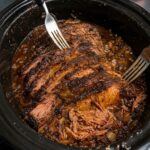
The beef can be sliced across the grain for a traditional roast presentation or gently pulled into large pieces for a more rustic presentation.
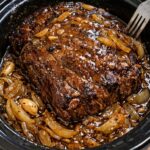
Place it on a serving platter and arrange the carrots and onions around it.
Spoon plenty of hot balsamic garlic gravy over the beef.
Finish with freshly chopped parsley and black pepper.
Serve immediately.
## Description
This roast is designed around the traditional braising technique: first browning the meat and then slowly cooking it in flavorful liquid.
Chuck roast contains connective tissue that can initially make the meat seem tough. Several hours of moist, gentle cooking allow much of that connective tissue to soften, giving properly braised chuck its characteristic tender texture.
The sauce is equally important. Balsamic vinegar brings acidity and subtle sweetness, while beef broth provides the savory foundation. Worcestershire and soy sauce increase savory depth, and tomato paste contributes richness and body.
Carrots and onions release additional sweetness as they cook. By the end, the vegetables are soft and surrounded by a concentrated beef gravy.
## Recipe Notes
Chuck roast is recommended because it is particularly well suited to braising.
The exact cooking time depends on the thickness, weight, and shape of your roast. Use tenderness rather than the clock alone to determine when it’s finished.
If your roast is closer to 3 pounds, begin checking it earlier.
Balsamic vinegar becomes considerably milder after prolonged cooking. However, if you prefer only a subtle balsamic flavor, reduce it to ⅓ cup.
Brown sugar balances the acidity. Honey or maple syrup can be substituted.
The cornstarch slurry is optional. If you prefer a thinner, more traditional braising liquid, simply omit it.
You can also blend a small portion of the cooked onions and sauce together to naturally thicken the gravy.
## Tips for the Best Beef Roast
Choose a chuck roast with visible marbling. The fat and connective tissue make it particularly suitable for long, slow cooking.
Pat the meat dry before seasoning. This encourages better browning.
Don’t rush the searing process. A dark brown crust creates additional savory flavor.
Use a heavy pot with a tight-fitting lid to prevent excessive moisture loss.
Keep the oven temperature moderate. Braising is intended to be slow and gentle.
Don’t repeatedly open the oven during cooking because this releases heat and steam.
If the beef is tough after the suggested cooking time, don’t immediately assume it is overcooked. With chuck roast, firmness frequently means the connective tissue hasn’t softened sufficiently yet.
Allow the meat to rest before slicing.
Always slice across the grain if serving the beef in slices. This shortens the muscle fibers and makes each bite easier to chew.
For even deeper flavor, prepare the roast a day ahead and refrigerate it in its braising liquid overnight.
## Serving Suggestions
This rich beef roast works particularly well with creamy mashed potatoes because they absorb the balsamic gravy beautifully.
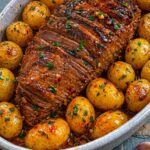
You can also serve it with roasted baby potatoes, buttered egg noodles, white rice, cauliflower mash, or crusty bread.
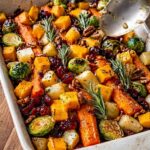
For vegetables, consider roasted green beans, asparagus, Brussels sprouts, broccoli, peas, or a simple green salad.
For a classic comfort-food dinner, serve a generous piece of beef with mashed potatoes, carrots, onions, and several spoonfuls of the glossy gravy.
## Storage
Allow leftovers to cool, but refrigerate them within 2 hours.
Transfer the beef and vegetables to an airtight container and cover them with some of the braising sauce. Keeping the meat in the sauce helps protect it from drying out.
Refrigerate for up to 3–4 days.
To reheat, place the beef and gravy in a covered saucepan over low heat. Add a small splash of beef broth if necessary and heat until thoroughly warmed.
The beef can also be reheated in a covered baking dish at 325°F (165°C).
For longer storage, freeze the beef and gravy in an airtight freezer-safe container for approximately 2–3 months for best quality.
Thaw overnight in the refrigerator before reheating.
## Nutritional Information
Approximate nutrition per serving, based on 8 servings:
Calories: 450–540
Protein: 40–47 g
Carbohydrates: 14–19 g
Fat: 25–31 g
Saturated Fat: 10–13 g
Fiber: 2–3 g
Sugar: 8–11 g
Sodium: 650–850 mg
Iron: approximately 4–5 mg
These values are estimates. Actual nutrition depends on the exact cut of beef, amount of visible fat, ingredient brands, serving size, and how much gravy is consumed.
## Benefits
### Excellent Source of Protein
Beef provides complete protein containing all nine essential amino acids. Protein contributes to the maintenance and growth of muscle mass and helps make this a substantial, filling main dish.
### Provides Iron
Beef contains heme iron, which is generally more readily absorbed than non-heme iron from plant foods. Iron contributes to normal red blood cell formation and oxygen transport.
### Source of Vitamin B12
Beef naturally provides vitamin B12, which contributes to normal nervous-system function and red blood cell formation.
### Provides Zinc
Beef is also a source of zinc, an essential mineral involved in immune function and numerous metabolic processes.
### Includes Vegetables
Carrots and onions provide additional nutrients, plant compounds, and some dietary fiber while also enhancing the flavor of the braising sauce.
### Meal-Prep Friendly
Braised beef stores and reheats particularly well. A large roast can provide several meals and can be repurposed for sandwiches, rice bowls, mashed-potato bowls, or beef wraps.
## Frequently Asked Questions
### What is the best beef cut for this recipe?
Chuck roast is the preferred choice because its marbling and connective tissue respond exceptionally well to slow braising.
### Why is my pot roast still tough?
It probably needs additional cooking. Chuck roast generally becomes tender only after enough time has passed for its connective tissue to soften. Continue braising it covered and check again after 20–30 minutes.
### Can I cook it in a slow cooker?
Yes. Sear the beef and sauté the aromatics first for maximum flavor. Transfer everything to a slow cooker and cook approximately 8–9 hours on LOW or 5–6 hours on HIGH, depending on the size of the roast and your appliance. Cook until fork-tender.
### Can I make this recipe without balsamic vinegar?
Yes. You can replace it with additional beef broth plus a smaller amount of red wine vinegar, although the finished flavor will be different.
### Does the roast taste strongly of vinegar?
It shouldn’t. The balsamic vinegar mellows considerably during several hours of cooking and combines with the broth, vegetables, brown sugar, and beef juices.
### Can I add potatoes?
Absolutely. Add baby potatoes or large chunks of Yukon Gold potatoes during the final 1½–2 hours of oven cooking so they become tender without completely falling apart.
### Can I add mushrooms?
Yes. Cremini or button mushrooms work very well with balsamic beef. Add them during approximately the final hour of cooking.
### How do I get a darker, glossy sauce?
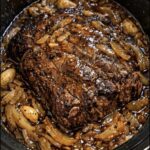
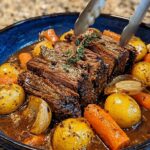
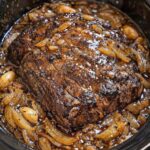
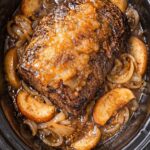
Allow the finished braising liquid to simmer uncovered after removing the roast. Once slightly reduced, thicken it with the cornstarch slurry and finish with butter. This produces a rich, shiny gravy similar to the sauce shown in the image.
### Can I prepare this roast the day before serving?
Yes. Braised beef is an excellent make-ahead dish. Refrigerate the roast in its sauce overnight, remove any hardened excess fat from the surface the following day, and gently reheat before serving.
### What should I serve with Slow-Braised Garlic Balsamic Beef Roast?
Creamy mashed potatoes are an especially good choice because they soak up the rich gravy. Roasted potatoes, rice, buttered noodles, green beans, asparagus, broccoli, or crusty bread are also excellent accompaniments.