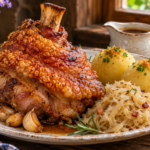
Reverse-Seared Tomahawk Ribeye Steak with Garlic Herb Butter
Description
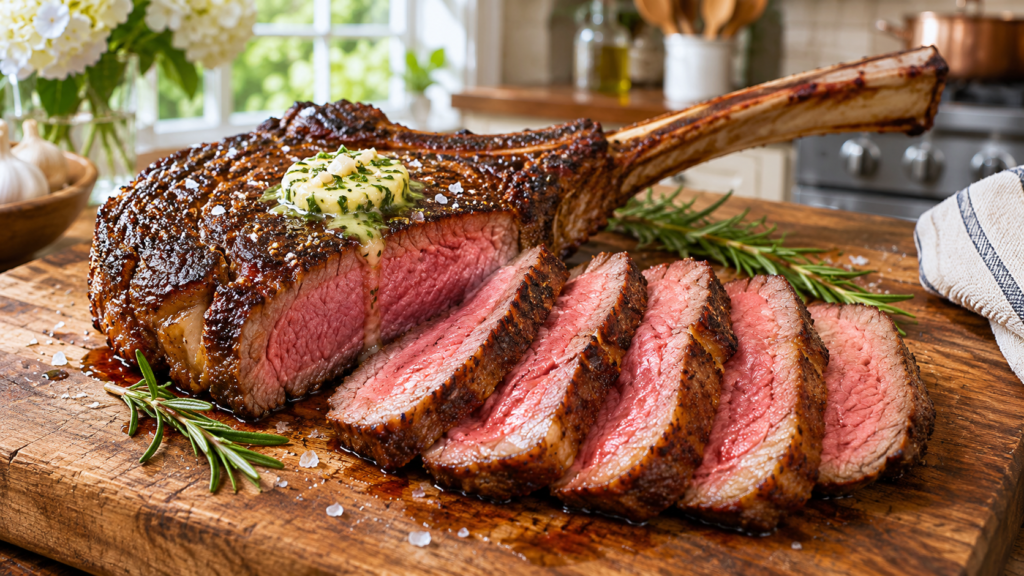
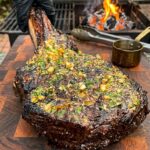
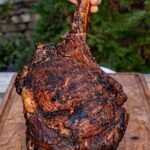
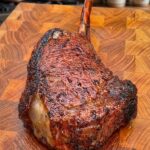
This reverse-seared tomahawk ribeye steak has a deeply browned crust, a juicy center, and a spoonful of garlic herb butter that melts over the slices. It’s a steakhouse-style centerpiece for a holiday dinner, date night, or weekend meal. One thick steak serves four when carved and shared with sides.
To reverse sear a steak, cook it gently in a low oven first, then finish it in a hot skillet. The oven brings the center up to temperature gradually and dries the surface so it browns quickly in the pan. This works especially well for a tomahawk ribeye, which is typically thicker than a standard steak. A meat thermometer makes it easy to judge when to switch from the oven to the skillet, even if your steak is a little smaller or larger than the one in this recipe.
Prep Time
15 minutes, plus optional overnight salting
Cook Time
About 50 to 85 minutes, plus 5 to 10 minutes of resting time. Start checking early because steak thickness and oven performance affect how quickly it cooks.
Servings
4 servings. The weight of a tomahawk includes the long rib bone, so the amount of meat varies from steak to steak.
Cooking Method
Low-temperature oven roasting followed by a cast-iron sear. You’ll need a rimmed baking sheet, an oven-safe wire rack, a meat thermometer, a large cast-iron skillet, and sturdy tongs.
Ingredients
For the tomahawk ribeye
– 1 bone-in tomahawk ribeye steak, about 2½ to 3 pounds and 2 to 2½ inches thick
– 8 grams kosher salt, about 1 tablespoon Diamond Crystal or 1½ teaspoons Morton
– 1 teaspoon freshly ground black pepper
– 1 tablespoon avocado oil, refined canola oil, or another high-heat cooking oil
For the garlic herb butter
– 3 tablespoons unsalted butter, softened
– 1 small garlic clove, finely grated
– 1 tablespoon finely chopped fresh parsley
– ½ teaspoon finely chopped fresh rosemary or thyme
– ½ teaspoon fresh lemon juice, optional
Instructions
1. Dry and season the steak
Pat the steak dry on both sides with paper towels. Season the broad surfaces and edges evenly with kosher salt. If you’re preparing ahead, set the steak on a wire rack over a rimmed baking sheet and refrigerate it uncovered for 8 to 24 hours. Salting ahead gives the meat time to absorb some seasoning and lets the surface dry. If you’re cooking the steak today, season it while the oven preheats.
2. Set up the oven and make the butter
Preheat the oven to 250°F (120°C). Set an oven-safe wire rack inside a rimmed baking sheet, then place the steak on the rack and season it with black pepper. Stir the softened butter, garlic, parsley, rosemary, and optional lemon juice together in a small bowl. Set it aside so it’s ready to spoon over the hot steak.
3. Roast the steak gently
Slide the baking sheet onto the middle oven rack. If you’re using a leave-in probe thermometer, insert it from the side into the thickest part of the steak. Keep the tip away from the bone and large seams of fat. Roast until the center reaches 138°F to 140°F (59°C to 60°C), usually 45 to 80 minutes. Start checking around 40 minutes if you’re using an instant-read thermometer. Have the skillet ready as the steak approaches the oven target.
4. Sear both sides and check the center
Heat a large cast-iron skillet over medium-high to high heat. Add the oil and swirl it to coat the cooking surface. When the oil shimmers, use tongs to set the steak in the skillet. Sear the first side for about 45 to 90 seconds, then flip and repeat. Hold the fat edge against the skillet briefly to brown it. Check the thickest part with an instant-read thermometer. If the steak has a good crust and the center still needs a few degrees, return it to the 250°F oven and check again after a few minutes. Cook the center to 145°F (63°C) before taking the steak off the heat, then rest it for at least 3 minutes. ask.fsis.usda.gov
5. Rest, carve, and serve
Transfer the steak to a cutting board and spoon some garlic herb butter over the top. Rest for 5 to 10 minutes before slicing. Run a sharp knife along the rib bone to release the meat, then slice it across the grain into pieces about ½ inch thick. Arrange the slices around the bone and spoon the melted butter and board juices over them. Serve the remaining herb butter at the table.
Helpful Cooking Tips
– Shop by thickness. Look for a steak that is at least 2 inches thick and fairly even from end to end. A steak with a thin end and a thick end will cook at different rates.
– Check the skillet fit before cooking. The bone can extend beyond the skillet if the entire meaty portion sits flat against the cooking surface. If the bone props up one side, use a large flat cast-iron griddle for the sear.
– Give the crust time to form. Once the steak hits the hot pan, leave it in place for the first 45 seconds before lifting a corner to check. That uninterrupted contact helps build an even crust.
– Add the garlic butter after the sear. Fresh garlic and finely chopped herbs can burn in a hot pan. Spooning the butter over the steak on the cutting board keeps the garlic fragrant and lets the herbs stay bright.
– Use temperature to plan dinner. Start the steak first and prep the sides while it roasts. Finish salads or other quick sides before heating the skillet so you can give the sear your full attention.
Recipe Notes
A tomahawk is a ribeye with a long rib bone attached. Look for fine streaks of fat throughout the meat, especially in the center. The outer ribeye cap can be particularly flavorful. When carving, you can separate the cap along its natural seam and slice it on its own, since its grain may run in a different direction from the center.
Fresh rosemary gives the butter a more pronounced, woodsy flavor. Thyme is milder, and parsley works on its own if that’s what you have. A little lemon juice brightens the butter, especially when you’re serving the steak with rich sides.
For a steakhouse dinner, serve the sliced ribeye with mashed potatoes and roasted asparagus. For a lighter plate, pair it with a lemony arugula salad, grilled vegetables, or roasted mushrooms. If you’re serving four, fan the steak slices on a platter so everyone can choose a piece with the amount of crust they like.
Questions & Answers
Can I use a boneless ribeye instead?
Yes. Choose a thick boneless ribeye and follow the same method. Start checking the temperature earlier if it’s thinner or smaller than the tomahawk specified in the recipe.
Can I reverse sear a tomahawk on a grill?
Yes. Set up the grill with an indirect side around 250°F and a hotter direct-heat side. Cook the steak over indirect heat with the lid closed, then finish it over direct heat. Use the same thermometer targets as in the oven method.
Why did my steak turn gray on the outside instead of browning?
A damp surface or a skillet that hasn’t heated enough can lead to pale patches. Dry the steak thoroughly before roasting and wait until the oil shimmers before searing. Make sure the steak lies flat so the whole surface can brown.
Can I prepare the garlic herb butter in advance?
Yes. Mix it a day ahead and refrigerate it in a covered container. Take it out while the steak roasts so it softens enough to spoon over the top.
Storage & Reheating Instructions
Refrigerate leftover steak in a covered container within 2 hours, or within 1 hour if the air temperature is above 90°F (32°C). Use refrigerated leftovers within 3 to 4 days. ask.fsis.usda.gov
To reheat, place the slices in a covered skillet over low heat with a splash of broth. Warm until the leftovers reach 165°F (74°C). The slices also work well in steak sandwiches, grain bowls, or a salad. FoodSafety.gov
Nutritional Information & Benefits
Estimated per serving, based on about 5 ounces of cooked edible steak and one-quarter of the butter and oil. Side dishes are excluded.
– Calories — about 480
– Protein — about 35 g
– Total fat — about 38 g
– Saturated fat — about 16 g
– Carbohydrates — less than 1 g
– Sodium — about 800–900 mg
Ribeye provides protein for muscle maintenance, iron that helps carry oxygen in the blood, and vitamin B12, which supports normal nerve function. A side of roasted vegetables or a bean salad adds fiber to the meal. The nutrition estimates vary with the steak’s marbling, how much fat is trimmed, and how much salt and butter ends up on each serving.