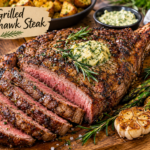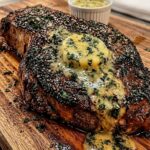

Cast-Iron Seared Tomahawk Ribeye Steak with Garlic Herb Butter
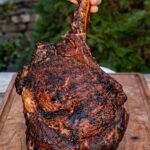
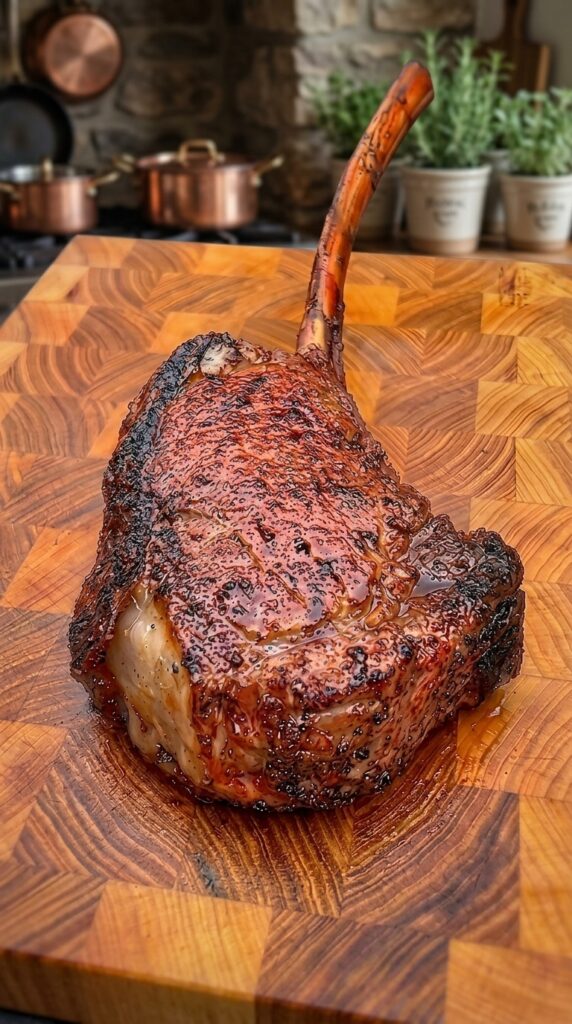
A thick, bone-in tomahawk ribeye is one of the most impressive steaks you can serve. It has the rich marbling of a ribeye with a long exposed rib bone that gives it a dramatic steakhouse-style presentation. This recipe uses a gentle oven cook followed by an extremely hot cast-iron sear, giving the steak a deeply browned, caramelized crust while keeping the center tender and juicy.
Garlic, rosemary, thyme, butter, and freshly cracked black pepper complement the natural beef flavor without overpowering it. Because tomahawk steaks are usually very thick, cooking them slowly before searing makes it much easier to achieve even doneness from edge to edge.
Prep Time: 15 minutes
Resting Time Before Cooking: 30–60 minutes
Cook Time: 45–60 minutes
Final Resting Time: 10–15 minutes
Servings: 2–4
Ingredients
For the Steak
- 1 tomahawk ribeye steak, about 2½–3½ pounds and 2–3 inches thick
- 1½ tablespoons kosher salt
- 1½ teaspoons freshly cracked black pepper
- 1 teaspoon garlic powder
- 1 teaspoon onion powder
- 1 tablespoon avocado oil or another high-heat cooking oil
For the Garlic Herb Butter
- 4 tablespoons unsalted butter
- 4 garlic cloves, lightly crushed
- 2 sprigs fresh rosemary
- 3–4 sprigs fresh thyme
- ½ teaspoon freshly cracked black pepper
Optional for Serving
- Flaky sea salt
- Fresh rosemary
- Roasted garlic
- Mashed potatoes
- Roasted vegetables
- Grilled asparagus
- Creamed spinach
Instructions
Step 1: Prepare the steak
Remove the tomahawk steak from the refrigerator about 30–60 minutes before cooking.
Pat the entire steak very dry with paper towels. Removing surface moisture is important because a dry surface browns much better than a wet one.
Season the steak generously on all sides with kosher salt, black pepper, garlic powder, and onion powder. Make sure to season the thick edges as well.
For even better flavor, you can season the steak with salt several hours or even one day ahead and refrigerate it uncovered. This dry-brining method helps season the interior while also drying the surface for a better crust.
Step 2: Preheat the oven
Preheat your oven to 250°F or 120°C.
Place a wire rack over a rimmed baking sheet.
Put the seasoned tomahawk steak on the rack. The rack allows warm air to circulate around the meat and helps it cook more evenly.
Step 3: Slowly cook the steak
Place the baking sheet in the preheated oven.
Cook for approximately 35–55 minutes, depending on the thickness of your steak and your preferred level of doneness.
Because tomahawk steaks vary considerably in size, an instant-read meat thermometer is much more reliable than cooking strictly according to time.
For a medium-rare result, remove the steak from the oven when the center reaches approximately 115–120°F.
For medium, remove it around 125–130°F.
The temperature will continue rising during the final sear and resting period.
For food-safety guidance, USDA recommends cooking whole cuts of beef to at least 145°F followed by a 3-minute rest.
Step 4: Prepare the cast-iron skillet
Once the steak is almost ready, place a large heavy cast-iron skillet over high heat.
Allow the skillet to become extremely hot.
Add the avocado oil and carefully swirl it around the pan.
You want the skillet very hot because the final searing process should be fast. A quick, high-temperature sear develops a beautiful brown crust without significantly overcooking the center.
Step 5: Sear the first side
Carefully transfer the steak into the hot skillet.
Sear the first side for approximately 60–90 seconds without moving it.
Press gently if necessary to make sure as much of the steak surface as possible is contacting the skillet.
Once a deeply browned crust develops, turn the steak over.
Step 6: Sear the second side
Sear the opposite side for another 60–90 seconds.
The steak should develop a dark, beautifully caramelized crust similar to a restaurant steak.
Use sturdy stainless-steel tongs to carefully hold the steak on its edges for about 20–30 seconds at a time so the fat and outer edges brown as well.
Step 7: Add the garlic herb butter
Reduce the heat slightly.
Add the butter, crushed garlic cloves, rosemary, thyme, and black pepper to the skillet.
As the butter melts, tilt the skillet slightly so the butter collects on one side.
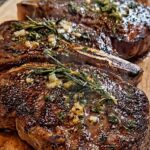
Using a large spoon, continuously spoon the hot garlic-herb butter over the steak for approximately 45–60 seconds.
The butter will foam and absorb the flavor of the garlic and herbs, creating an aromatic steakhouse-style finish.
Avoid burning the butter or garlic.
Step 8: Check the internal temperature
Insert an instant-read thermometer into the thickest part of the steak without touching the bone.
Approximate culinary temperature ranges are:
Rare: 120–125°F
Medium-Rare: 130–135°F
Medium: 135–145°F
Medium-Well: 145–150°F
Well-Done: 155°F and above
Remember that the steak may rise another few degrees while resting.
Step 9: Rest the steak
Transfer the tomahawk steak to a large cutting board.
Rest it for at least 10–15 minutes before cutting.
Do not slice immediately after cooking. Resting gives the juices time to redistribute throughout the meat, helping keep every slice juicy.
You may loosely cover it with foil, but avoid wrapping it tightly because trapped steam can soften the beautiful crust.
Step 10: Slice and serve
For an impressive presentation, first cut along the rib bone to separate the steak meat from the bone.
Then slice the ribeye across the grain into thick slices.
Arrange the slices beside the long tomahawk bone on a large serving board.
Drizzle a small amount of the garlic-herb butter from the skillet over the meat.
Finish with a light sprinkle of flaky sea salt and freshly cracked black pepper.
Serve immediately.
Recipe Notes
Tomahawk steak is essentially a thick ribeye steak with an extra-long rib bone still attached. The dramatic appearance makes it especially popular for celebrations, dinner parties, holidays, and steakhouse-style meals at home.
The steak may look enormous, but remember that part of its weight comes from the bone. A 2½–3½ pound tomahawk usually feeds about two very hungry adults or three to four people when served with substantial side dishes.
Reverse searing is particularly helpful for this cut because the steak is usually too thick to cook properly using only a skillet. If you sear a very thick steak from beginning to end, the exterior can become overcooked before the center reaches the desired temperature.
Cooking it slowly first creates much more even doneness.
Tips for the Perfect Tomahawk Steak
Use a meat thermometer
This is the most important tip. Thickness varies significantly between tomahawk steaks, so cooking time alone cannot guarantee the correct doneness.
An instant-read thermometer prevents guessing.
Dry the steak thoroughly
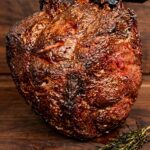
Moisture prevents browning. Patting the steak dry before seasoning helps create the deeply caramelized crust visible on a properly seared ribeye.
Season generously
Large steaks need more seasoning than thin steaks because there is much more meat underneath the surface.
Do not season only the top and bottom. Season the edges too.
Use high-heat oil
Avocado oil is excellent because it tolerates high temperatures well.
Other neutral high-heat oils can also work.
Add butter later
Do not begin the searing process with butter because butter can burn during extremely high-heat cooking.
Start with oil, then add butter, garlic, and herbs near the end.
Don’t constantly flip the steak
Allow the steak to remain in contact with the skillet long enough to form a crust before turning it.
Rest before slicing
Ten to fifteen minutes of resting makes a noticeable difference in juiciness.
Slice against the grain
Look at the direction of the muscle fibers and cut across them rather than parallel to them. This makes each bite more tender.
Serving Ideas
This rich steak pairs especially well with simple steakhouse-style side dishes.
Try serving it with creamy garlic mashed potatoes and roasted asparagus for a classic dinner.
For a lighter plate, serve sliced steak with a fresh arugula salad, roasted tomatoes, and a lemon vinaigrette.
Other delicious options include:
- Garlic butter mushrooms
- Crispy roasted potatoes
- Creamed spinach
- Grilled corn
- Roasted Brussels sprouts
- Baked sweet potatoes
- Caesar salad
- Roasted carrots
- Green beans
- Homemade steak sauce
Because ribeye is naturally rich, bright or slightly acidic sides can balance the meal beautifully.
Storage
Allow leftover steak to cool before storing.
Place sliced or whole leftover steak in an airtight container and refrigerate for up to 3–4 days.
For the best texture, keep the steak whole until you are ready to reheat it whenever possible.
To reheat, place the steak in a covered oven-safe dish at about 275°F until gently warmed.
You can also warm thin slices briefly in a skillet with a small amount of butter.
Avoid microwaving the steak for too long because it can quickly become dry and tough.
Cooked steak can also be frozen for approximately 2–3 months, although freshly cooked steak will have the best texture.
Approximate Nutritional Information
Per serving, based on approximately 4 servings and depending heavily on the amount of edible meat, trimming, and butter consumed:
Calories: 650–800
Protein: 50–60 g
Fat: 48–62 g
Saturated Fat: 20–25 g
Carbohydrates: 1–3 g
Fiber: 0 g
Sugar: Less than 1 g
Sodium: Approximately 700–1,000 mg
Iron: Approximately 4–5 mg
Zinc: Approximately 8–10 mg
Nutritional values are estimates and can vary significantly according to steak size, fat content, trimming, seasoning, and serving size.
Nutrition Benefits
Excellent source of protein
Beef provides high-quality complete protein containing all nine essential amino acids. Protein contributes to muscle maintenance, tissue repair, and normal body function.
Rich in iron
Beef contains heme iron, a form of iron that is readily absorbed by the body. Iron contributes to normal red blood cell and hemoglobin production.
Provides vitamin B12
Ribeye steak contains vitamin B12, which supports normal nervous system function and red blood cell formation.
Good source of zinc
Beef is naturally rich in zinc. Zinc contributes to normal immune function and many cellular processes in the body.
Contains selenium
Steak also provides selenium, an essential mineral involved in antioxidant defense and normal thyroid function.
Because ribeye is a relatively high-fat cut of beef, portion size and the overall balance of the meal are important. Pairing it with vegetables and other nutrient-rich side dishes creates a more balanced plate.
Frequently Asked Questions
What exactly is a tomahawk steak?
A tomahawk steak is a thick bone-in ribeye with a long section of rib bone left attached. The meat itself comes from the rib section and is known for rich marbling and tenderness.
Why is tomahawk steak so expensive?
Tomahawk steaks are generally large, heavily marbled, thick-cut steaks. Their dramatic presentation, long bone, aging, meat quality, and substantial overall size can all contribute to the higher price.
Should I cook a tomahawk steak directly in a skillet?
You can, but because it is extremely thick, cooking it entirely in a skillet can result in an overcooked exterior before the center is done. Reverse searing provides more even cooking.
Can I grill it instead?
Yes. Slowly cook the steak over indirect heat until it approaches your target internal temperature, then finish it over extremely high direct heat to create the crust.
Do I need to bring the steak completely to room temperature?
No. Allowing it to sit out briefly can help take off the refrigerator chill, but the most important factors are thickness, internal temperature, and proper cooking technique.
Should I trim the fat?
Usually only excess hard exterior fat needs trimming. The intramuscular marbling is one of the main reasons ribeye remains juicy and flavorful.
Can I prepare the steak the night before?
Yes. Season it generously with salt and refrigerate it uncovered overnight. This dry-brining technique can deepen the seasoning and improve surface browning.
Why should the steak rest after cooking?
Resting allows heat to redistribute and helps reduce the amount of juice released when the steak is sliced.
What sauce goes best with tomahawk steak?
The steak is flavorful enough to serve without sauce, but garlic herb butter, chimichurri, peppercorn sauce, mushroom sauce, horseradish cream, or red wine sauce all pair beautifully with it.
What are the best sides for this steak?
Mashed potatoes, roasted potatoes, asparagus, mushrooms, creamed spinach, Brussels sprouts, corn, salad, and roasted vegetables are all excellent choices.
This Cast-Iron Seared Tomahawk Ribeye Steak is ideal when you want a centerpiece meal with a dramatic appearance, deeply browned crust, rich buttery flavor, and tender, juicy beef inside.