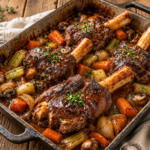

Slow-Roasted Pork Shank (Schweinshaxe) with Garlic & Rosemary
Description
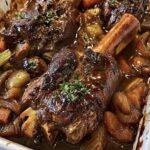
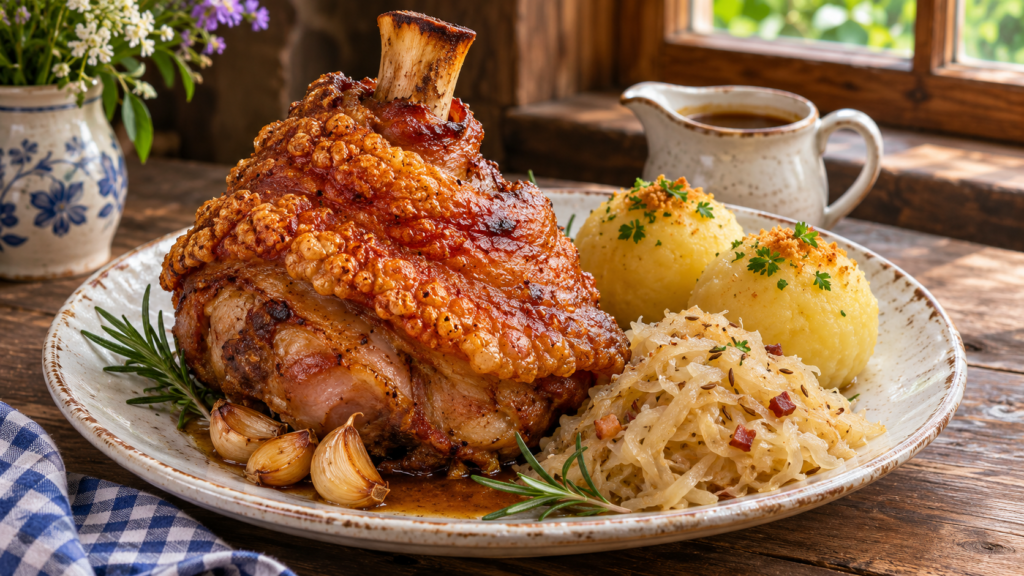
This slow-roasted pork shank has golden, blistered crackling on the outside and tender meat that pulls easily from the bone. Fresh rosemary, garlic, and onions flavor the pan juices, which simmer into a savory gravy while the pork rests. Serve it with potato dumplings and tangy sauerkraut for a Bavarian-style dinner, or use creamy mashed potatoes to catch every spoonful of gravy.
Schweinshaxe is a Bavarian roasted pork knuckle. This garlic and rosemary version cooks in two stages. First, the shanks roast slowly above a shallow layer of broth so the meat has time to soften and the exposed skin can dry. Then a short blast of high heat turns the skin into crackling. The recipe uses two shanks, which you can bring to the table whole and carve into four portions.
Prep Time
20 minutes, plus 8 to 24 hours of optional uncovered refrigeration for drier skin.
Cook Time
About 3½ to 4½ hours, plus 15 minutes to rest. Allow extra roasting time if your shanks are larger or still feel firm when pierced.
Servings
4 servings from two meaty, bone-in pork shanks. The amount of meat per serving depends on the size of the bones and how much skin and fat you serve.
Cooking Method
Slow oven roasting followed by a high-heat finish. You’ll need a sturdy roasting pan, an oven-safe roasting rack, a meat thermometer, and a small saucepan for the gravy.
Ingredients
For the pork shanks
- 2 fresh, skin-on pork hind shanks, about 2 to 2½ pounds each
- 15 grams kosher salt, about 1¾ tablespoons Diamond Crystal or 1 tablespoon Morton
- 1 teaspoon freshly ground black pepper
- 6 garlic cloves, lightly crushed
- 3 sprigs fresh rosemary
- 1 large yellow onion, cut into thick wedges
- 1½ cups unsalted chicken broth, plus more as needed
- ½ cup dark German lager or additional unsalted broth
For the pan gravy
- 1 tablespoon cornstarch
- 2 tablespoons cold water
- 1 teaspoon Dijon mustard, optional
Instructions
1. Dry and season the pork
Pat the shanks thoroughly dry with paper towels, paying special attention to the folds in the skin. If the skin is easy to score, use a sharp knife to make shallow lines about ½ inch apart. Cut through the skin and into the surface fat, stopping before you reach the meat. Scoring is optional if the skin is tough to cut.
Rub the salt over the skin and exposed meat, then season the meat with black pepper. For the best crackling, set the shanks on a rack over a rimmed pan and refrigerate uncovered overnight. If you’re roasting them the same day, pat away any beads of surface moisture just before they go into the oven.
2. Set up the roasting pan
Preheat the oven to 300°F (150°C). Scatter the onion wedges, crushed garlic, and rosemary in the roasting pan. Pour in the broth and lager, then set a rack over the aromatics. Place the shanks on the rack with the broadest areas of skin facing up and leave room between them for air to circulate.
Check that the liquid sits below the pork. The broth catches the drippings and forms the base of the gravy while the skin stays exposed to the oven’s dry heat.
3. Roast until the meat is tender
Roast uncovered for 3¼ to 4¼ hours. Check the pan occasionally and add a splash of hot broth or water if it starts to dry out. Pour it down the side of the pan to keep the skin dry.
Start checking the meat at about 3 hours. Insert a thermometer into the thickest part of each shank, away from the bone. The meat is usually ready for the next step around 195°F to 205°F (91°C to 96°C), when a thin skewer slides in with little resistance. Use tenderness to decide when to move on. If the meat still grips the skewer, keep roasting and check again in 15 to 20 minutes. The safe minimum for whole pork roasts is 145°F (63°C) with a 3-minute rest. The higher target in this recipe gives the shank’s connective tissue time to soften.
4. Crisp the skin
Transfer the shanks to a clean oven-safe rack set over a sturdy metal sheet pan. Reserve the roasting pan juices for the gravy. Increase the oven to 475°F (245°C). Once it reaches temperature, roast the shanks for 10 to 20 minutes, until the skin blisters and becomes golden and crisp. Check every few minutes toward the end because the thinnest areas can brown quickly. Rotate the pan if one side is coloring faster.
Rest the pork uncovered for 15 minutes. Leaving it uncovered lets steam escape and helps the crackling stay crisp.
5. Make the garlic and rosemary gravy
Strain the roasting liquid into a small saucepan and skim off the excess fat. If you have less than about 1 cup of liquid, add enough unsalted broth to make 1 cup. Bring it to a simmer. Stir the cornstarch and cold water together, then whisk the mixture into the simmering liquid a little at a time until the gravy coats the back of a spoon. Simmer for another minute, stir in the optional Dijon, and taste before adding any salt.
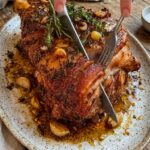
Pull the tender pork from the bones and divide it among four plates. Break the crackling into pieces and serve it on top. Spoon the gravy around the pork or serve it on the side to preserve the crunch.
Helpful Cooking Tips
- Ask the butcher for fresh hind shanks. Choose meaty, skin-on cuts of a similar size. Smoked or cured ham hocks have a different flavor and salt level.
- Keep garlic and rosemary in the pan. They flavor the drippings during the slow roast. Leaving the skin clear also makes it easier to see when the crackling is evenly browned.
- Check each shank separately. If one becomes tender sooner, set it aside while the second finishes, then crisp both together.
- Save the pan juices before turning up the heat. Moving the shanks to a clean pan preserves the gravy base and reduces the chance of the collected drippings scorching.
- Serve the crackling promptly. Keep it above the gravy and away from wet sides such as sauerkraut until everyone is ready to eat.
Recipe Notes
A dark lager gives the gravy a mild toasted flavor. An equal amount of unsalted broth makes an alcohol-free version. If the gravy tastes too concentrated, stir in a little broth and taste again before thickening it. For an onion gravy, finely chop some of the soft roasted onion and stir it back into the strained liquid.
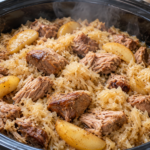
Potato dumplings, sauerkraut, and mustard are classic-style accompaniments for this dish. Mashed potatoes are an easy substitute, and braised red cabbage adds a sweet-tart side that pairs well with the rich pork. If you want to serve the shanks whole for presentation, bring them to the table on a warm platter, then carve the meat and split the crackling so each serving gets some.
Questions & Answers
Why is my pork shank still tough?
It likely needs longer in the oven. Check the thickest part with a skewer. If it meets resistance, continue roasting at 300°F and check again in 15 to 20 minutes. A larger shank may take longer than the recipe estimate.
Can I make Schweinshaxe without beer?
Yes. Replace the lager with ½ cup of unsalted chicken broth. Stir a teaspoon of Dijon into the finished gravy if you want a slightly tangier flavor.
Can I make this with a skinless pork shank?
Yes. Follow the slow-roasting method and cook until the meat is tender. Skip the high-heat crisping step, which is designed for the rind. Serve the meat with the garlic and rosemary gravy.
Why didn’t the skin crisp?
Moisture is often the reason. Dry the skin well, roast uncovered, and keep the shanks above the liquid. If the skin is still leathery after the initial high-heat finish, give it a few more minutes and watch closely for blistering or dark spots.
Storage & Reheating Instructions
Remove leftover meat from the bones and refrigerate it in a shallow, covered container within 2 hours, or within 1 hour if the air temperature is above 90°F (32°C). Store the gravy separately and use refrigerated leftovers within 3 to 4 days.
Reheat the meat in a covered skillet with a splash of broth or gravy until it reaches 165°F (74°C). Warm the crackling separately in the oven until crisp.
Nutritional Information & Benefits
Approximate per serving, based on about 6 ounces of cooked edible pork with some skin and 2 tablespoons of gravy. Side dishes are excluded.
- Calories — 460–570
- Protein — 38–46 g
- Total fat — 29–42 g
- Saturated fat — 10–15 g
- Carbohydrates — 2–5 g
- Sodium — 700–1,100 mg
Pork shank provides protein for muscle maintenance and B vitamins, including thiamin and vitamin B12. Thiamin helps the body use energy from food, while vitamin B12 supports normal nerve function. The amount of crackling and visible fat on each plate affects calories and fat, and the amount of gravy affects sodium. Braised cabbage or green beans add fiber to the meal.