
Grilled Garlic Butter Tomahawk Steak Recipe – Juicy & Tender
Recipe Description
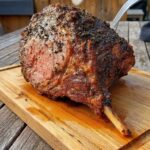
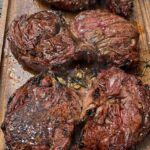
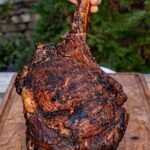
Nothing makes a backyard barbecue more impressive than a perfectly grilled Garlic Butter Tomahawk Steak. With its long, dramatic bone, thick and juicy ribeye center, beautifully caramelized crust, and glossy garlic butter finish, this steak is a true showstopper.
A tomahawk steak is essentially a thick-cut, bone-in ribeye with an extra-long, French-trimmed rib bone. It is famous for its rich marbling, tender texture, and bold beef flavor. When cooked properly, the fat melts into the meat, creating an incredibly juicy and flavorful steak.
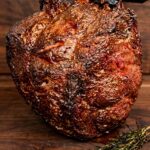
This recipe combines the smoky flavor of charcoal grilling with fresh rosemary, thyme, garlic, and melted butter. The steak develops a dark, flavorful crust while remaining tender and pink inside. A final coating of garlic herb butter adds richness and a beautiful shine.
Whether you’re preparing a special weekend dinner, celebrating a birthday, hosting a summer barbecue, or treating your family to a steakhouse-style meal, this recipe delivers an unforgettable experience.
The best part is that you don’t need professional grilling skills to prepare it. With a little patience, a reliable meat thermometer, and the right grilling technique, you can make an impressive tomahawk steak in your own backyard.
Recipe Information
Prep Time: 15 minutes
Seasoning Time: 30 minutes (optional)
Cook Time: 35–55 minutes, depending on thickness and grill temperature
Resting Time: 10–15 minutes
Total Time: Approximately 1 hour 15 minutes
Servings: 3–4
Course: Main Course
Cuisine: American Steakhouse
Cooking Method: Charcoal Grill or Gas Grill
Difficulty: Medium
Ingredients
For the Tomahawk Steak
1 large tomahawk ribeye steak (2½–3 pounds, approximately 2 inches thick)
2 tablespoons olive oil
2 teaspoons kosher salt, or to taste
1 teaspoon freshly cracked black pepper
1 teaspoon garlic powder
½ teaspoon smoked paprika
1 teaspoon chopped fresh rosemary
1 teaspoon fresh thyme leaves
For the Garlic Herb Butter
5 tablespoons unsalted butter
5 garlic cloves, finely minced
1 tablespoon fresh rosemary, chopped
1 tablespoon fresh thyme, chopped
1 tablespoon fresh parsley, chopped
½ teaspoon freshly cracked black pepper
1 teaspoon fresh lemon juice (optional)
Optional Garnish
Fresh rosemary sprigs
Fresh parsley
Flaky sea salt
Roasted garlic cloves
Step-by-Step Instructions
Step 1: Prepare the Tomahawk Steak
Remove the tomahawk steak from its packaging and pat it thoroughly dry with paper towels. Removing excess moisture is important because it helps create a beautiful, flavorful crust during grilling.
Trim away any loose surface pieces of fat if necessary, but leave most of the marbling and exterior fat intact. These natural fats contribute flavor and moisture during cooking.
Lightly rub the steak with olive oil on both sides.
Step 2: Season the Steak
In a small bowl, combine kosher salt, black pepper, garlic powder, smoked paprika, chopped rosemary, and thyme.
Sprinkle the seasoning evenly over both sides of the steak. Don’t forget to season the thick edges.
Press the mixture gently into the meat so it sticks properly.
For better flavor, season the steak and refrigerate it uncovered for several hours or overnight. Alternatively, let it sit for approximately 30 minutes while you prepare the grill.
If refrigerating overnight, keep the steak chilled until you’re ready to cook.
Step 3: Prepare the Grill
Preheat your charcoal or gas grill for two-zone cooking.
Two-zone grilling means creating one hot area for direct grilling and one cooler area for gentle, indirect cooking.
For a charcoal grill, arrange the hot coals on one side and leave the other side without direct heat.
For a gas grill, turn on the burners on one side and leave the burners on the other side off.
Aim for an indirect cooking temperature of approximately 250–275°F (121–135°C).
This method allows the thick tomahawk steak to cook evenly without burning the outside.
Step 4: Cook the Steak Using Indirect Heat
Place the seasoned tomahawk steak on the cooler side of the grill, away from direct flames.
Close the grill lid and allow the steak to cook slowly.
Insert a meat thermometer into the thickest part of the steak, avoiding the bone.
Cook until the internal temperature reaches approximately 110–115°F (43–46°C) for a medium-rare finish after searing.
Depending on the thickness of your steak and the grill temperature, this process may take 25–45 minutes or longer.
Always use internal temperature rather than cooking time alone to judge doneness.
Step 5: Prepare the Garlic Herb Butter
While the steak cooks, melt the unsalted butter in a small saucepan over low heat.
Add the minced garlic and cook gently for approximately 1–2 minutes until fragrant.
Be careful not to burn the garlic because burned garlic can taste bitter.
Stir in the chopped rosemary, thyme, parsley, and freshly cracked black pepper.
If desired, add a teaspoon of fresh lemon juice to balance the richness of the butter.
Remove the saucepan from the heat and keep the mixture warm.
The butter should smell fragrant, buttery, and full of fresh herbs.
Step 6: Sear the Tomahawk Steak
Once the steak reaches its target pre-sear temperature, carefully move it to a plate.
Increase the heat on the direct cooking side of the grill until it becomes very hot.
Place the steak directly over the hot cooking grates.
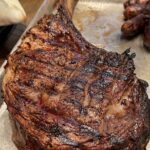
Sear each side for approximately 1–2 minutes, flipping as needed, until the surface becomes deeply browned and slightly charred.
Also briefly sear the thick fatty edges if possible.
Watch carefully for flare-ups caused by dripping fat.
For medium-rare steak, aim for a final internal temperature of approximately 130–135°F (54–57°C). Remove the steak before it exceeds your desired temperature, allowing for additional temperature rise during resting.
Step 7: Add the Garlic Herb Butter
Transfer the grilled tomahawk steak to a large wooden cutting board or heatproof serving platter.
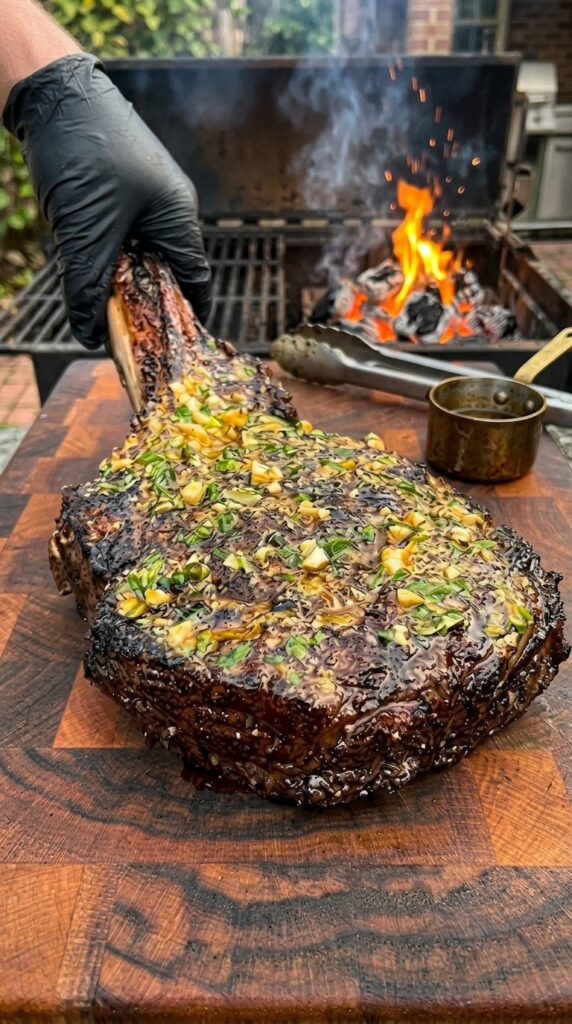
Immediately spoon the warm garlic herb butter over the entire steak.
Allow the melted butter to flow across the crust and settle into the natural grooves of the meat.
Sprinkle additional chopped parsley, rosemary, and a small pinch of flaky sea salt over the top.
The combination of golden garlic pieces, green herbs, and glossy butter creates an irresistible steakhouse-style finish.
Step 8: Rest the Steak
Allow the steak to rest for approximately 10–15 minutes before slicing.
Resting helps reduce the amount of juice lost when the meat is cut.
Loosely cover the steak with foil if necessary, but avoid wrapping it tightly because trapped steam can soften the crust.
While resting, the internal temperature may rise slightly.
Step 9: Slice and Serve
Use a sharp knife to carefully separate the steak meat from the long rib bone.
Slice the ribeye against the grain into thick, even slices.
Arrange the sliced steak beside the bone on a large serving board.
Drizzle any remaining garlic herb butter over the slices and garnish with fresh herbs.
Serve immediately while the steak is warm, juicy, and flavorful.
Steak Doneness Temperature Guide
The following temperatures are approximate final internal temperatures after resting.
| Doneness | Internal Temperature |
|---|---|
| Rare | 120–125°F (49–52°C) |
| Medium Rare | 130–135°F (54–57°C) |
| Medium | 140–145°F (60–63°C) |
| Medium Well | 150–155°F (66–68°C) |
| Well Done | 160°F+ (71°C+) |
Food Safety Note: The USDA recommends cooking whole cuts of beef to a minimum internal temperature of 145°F (63°C), followed by at least 3 minutes of resting. Lower doneness temperatures are common steakhouse preferences but carry additional food safety risk.
Expert Tips for the Perfect Tomahawk Steak
Choose a well-marbled steak. Look for visible streaks of fat throughout the meat. Good marbling contributes tenderness, juiciness, and rich flavor.
Use a meat thermometer. A tomahawk steak is much thicker than an ordinary steak. A digital thermometer is the most reliable way to avoid overcooking.
Try the reverse-sear method. Cooking the steak slowly before finishing it over high heat gives you better control over the interior temperature and creates a flavorful crust.
Dry the steak before seasoning. Excess surface moisture creates steam and prevents proper browning.
Avoid constant butter basting over flames. Butter can burn quickly over direct heat. Add most of the garlic herb butter after removing the steak from the grill.
Rest before slicing. Cutting into the steak immediately can cause more juices to escape.
Use fresh herbs. Rosemary and thyme complement the deep flavor of grilled beef particularly well.
Recipe Notes
A tomahawk steak is ideal for sharing because one large steak can provide several generous portions.
If your steak is especially thick, it may need additional time over indirect heat. Larger steaks also experience more carryover cooking after removal from the grill.
For a smokier flavor, add a small amount of oak, hickory, or cherry wood to your charcoal grill.
If you prefer a stronger garlic flavor, add a few roasted garlic cloves to the finished butter.
You can also prepare the garlic herb butter one day ahead and store it in the refrigerator. Warm it gently before serving.
For the best texture, avoid overheating the butter or allowing the garlic to become dark brown.
Best Side Dishes to Serve
This grilled tomahawk steak pairs beautifully with classic steakhouse favorites.
Creamy garlic mashed potatoes are excellent for soaking up the rich herb butter. Roasted asparagus, grilled corn on the cob, sautéed mushrooms, and crispy potato wedges are equally delicious choices.
For a lighter option, serve the steak with a fresh garden salad, roasted broccoli, or grilled zucchini.
If you’re hosting a barbecue, consider adding baked potatoes, homemade coleslaw, and garlic bread to create a complete American steakhouse-style dinner.
Nutritional Information
Approximate values per serving, based on four servings from one 2½–3-pound bone-in steak with the garlic butter divided equally. Actual values vary significantly with bone weight, fat trimming, meat yield, and butter consumed.
| Nutrient | Estimated Amount |
|---|---|
| Calories | 650–850 kcal |
| Protein | 45–60 g |
| Total Fat | 50–70 g |
| Saturated Fat | 20–30 g |
| Carbohydrates | 1–3 g |
| Fiber | 0–1 g |
| Sodium | 650–950 mg |
| Iron | 3–5 mg |
| Zinc | 7–11 mg |
These are estimates rather than laboratory-tested nutritional values.
Nutritional Benefits
1. Excellent Source of Protein
Tomahawk steak provides high-quality protein that supports muscle maintenance, tissue repair, and everyday body functions.
2. Rich in Iron
Beef contains heme iron, a form of iron that the body generally absorbs more easily than the non-heme iron found in plant foods. Iron supports healthy red blood cells and oxygen transport.
3. Provides Vitamin B12
Vitamin B12 is essential for healthy nerve function, red blood cell production, and normal energy metabolism.
4. Contains Zinc
Beef is a natural source of zinc, an important mineral that supports immune function, wound healing, and normal cellular activity.
5. Low in Carbohydrates
This recipe is naturally low in carbohydrates when prepared without sugary marinades or sauces, making it suitable for many low-carbohydrate eating patterns.
However, tomahawk steak and butter can be high in saturated fat, so portion size and overall dietary balance remain important.
Storage and Reheating Instructions
Refrigeration
Store leftover steak in an airtight container in the refrigerator for 3–4 days.
Refrigerate leftovers within two hours of cooking, or within one hour if the surrounding temperature is above 90°F (32°C).
Freezing
Wrap cooled steak tightly in freezer-safe packaging and freeze for approximately 2–3 months for the best quality.
Reheating
For the best texture, place the leftover steak in an oven preheated to 250°F (121°C).
Warm it gently until heated through. Avoid prolonged reheating because it can dry out the meat.
For food safety, reheat leftovers to 165°F (74°C).
Leftover steak is also delicious when sliced thinly and served in sandwiches, salads, wraps, or steak bowls.
Frequently Asked Questions (FAQs)
1. What is a tomahawk steak?
A tomahawk steak is a thick, bone-in ribeye with a long, French-trimmed rib bone. Its distinctive shape resembles a tomahawk axe.
2. Is tomahawk steak better than regular ribeye?
Both cuts come from the rib section and offer similar flavor and tenderness. The tomahawk is usually thicker and provides a more dramatic presentation.
3. How long does it take to grill a tomahawk steak?
Most thick tomahawk steaks take approximately 35–55 minutes or longer using the reverse-sear method. Cooking time depends on thickness, grill temperature, and preferred doneness.
4. Should I cook tomahawk steak over direct or indirect heat?
Using both methods produces excellent results. Start over indirect heat for gentle cooking, then finish over direct high heat for a caramelized crust.
5. Why should I rest the steak?
Resting helps reduce moisture loss during slicing and allows carryover heat to finish the cooking process.
6. Can I make this recipe without a charcoal grill?
Yes. A gas grill with two cooking zones works well. You can also reverse-sear a thick steak using a low-temperature oven followed by a very hot skillet.
7. Can I use salted butter?
Yes, but reduce the additional salt in the seasoning or final garnish to prevent the steak from becoming overly salty.
8. What herbs taste best with grilled steak?
Rosemary, thyme, parsley, and garlic are excellent choices because they complement beef without overpowering its natural flavor.
9. How many people does one tomahawk steak serve?
A large 2½–3-pound bone-in tomahawk steak generally serves 2–4 people, depending on the edible meat yield, appetites, and side dishes.
10. Can I prepare the steak ahead of time?
You can season the steak several hours or one day ahead and prepare the garlic herb butter in advance. For the best eating experience, grill the steak shortly before serving.
Final Thoughts
Grilled Garlic Butter Tomahawk Steak is the perfect combination of smoky flavor, tender beef, caramelized crust, and rich herb-infused butter. Its impressive appearance makes it ideal for celebrations, family gatherings, holiday dinners, and weekend grilling.
By using the reverse-sear technique, fresh herbs, and a reliable meat thermometer, you can create a beautiful steakhouse-style dinner with excellent flavor and texture.
Serve it with your favorite sides, drizzle with extra garlic butter, and enjoy a spectacular homemade steak.
http://Recipe. https://ketosl.com/garlic-butter-glazed-pork-tenderloin-juicy-easy-recipe/