Maple Balsamic Roasted Vegetable Medley with Cranberries, Pecans & Feta
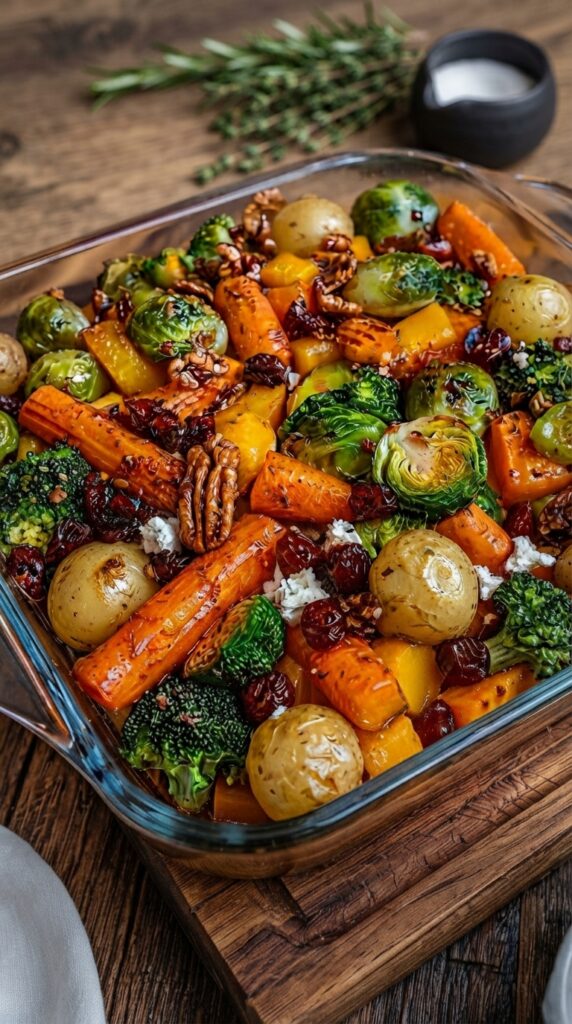
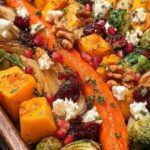
This colorful roasted vegetable medley is inspired by the dish in your image. It combines tender baby potatoes, caramelized carrots, Brussels sprouts, broccoli, and sweet butternut squash with dried cranberries, crunchy pecans, and creamy feta cheese. Everything is finished with a lightly sweet maple-balsamic glaze that gives the vegetables a glossy, savory-sweet coating.
The combination of textures makes this dish especially satisfying: the carrots and squash become naturally sweet and caramelized, the Brussels sprouts develop crisp golden edges, the potatoes turn buttery and tender, and the broccoli adds freshness and color. Dried cranberries provide little bursts of sweetness, while toasted pecans add crunch.
This recipe works beautifully as a holiday side dish, a colorful vegetarian dinner, or a make-ahead vegetable dish for family gatherings. It looks impressive on the table but is actually very simple to prepare.
4 medium carrots, peeled and cut into thick pieces
2 cups Brussels sprouts, trimmed and halved
2 cups broccoli florets
2 cups peeled butternut squash, cut into 1-inch cubes
3 tablespoons olive oil
1 teaspoon salt
1/2 teaspoon freshly ground black pepper
1 teaspoon dried thyme
1 teaspoon dried rosemary
1/2 teaspoon garlic powder
For the Maple Balsamic Glaze
3 tablespoons balsamic vinegar
2 tablespoons pure maple syrup
1 tablespoon olive oil
1 teaspoon Dijon mustard
1 small garlic clove, finely minced
Pinch of salt
Pinch of black pepper
For Finishing
1/2 cup dried cranberries
1/2 cup pecan halves
1/2 cup crumbled feta cheese
1 tablespoon chopped fresh parsley or thyme, optional
Instructions
Step 1: Preheat the Oven
Preheat your oven to 425°F (220°C). Lightly grease a large roasting pan or rimmed baking sheet with olive oil, or line it with parchment paper for easier cleanup.
A high oven temperature is important because it helps the vegetables become caramelized and golden rather than simply steaming.
Step 2: Prepare the Vegetables
Wash and dry all the vegetables thoroughly.
Cut the baby potatoes in half if they are larger than bite-size. Peel the carrots and cut them into thick pieces. Trim the ends from the Brussels sprouts and slice them in half. Cut the broccoli into medium florets.
Peel and cube the butternut squash into approximately 1-inch pieces.
Try to keep vegetables of the same type similar in size so they cook evenly.
Step 3: Season the Potatoes and Carrots
Place the baby potatoes and carrots in a large mixing bowl. Add about 1 tablespoon of olive oil, a little salt, black pepper, thyme, rosemary, and garlic powder.
Toss until everything is evenly coated.
Because potatoes and carrots generally need a little longer to cook than broccoli, they will begin roasting first.
Step 4: Begin Roasting
Spread the potatoes and carrots in a single layer on the prepared roasting pan.
Roast for approximately 15 minutes.
Leaving enough room between the vegetables allows hot air to circulate around them, helping their edges become nicely browned.
Step 5: Add the Brussels Sprouts and Squash
Meanwhile, place the Brussels sprouts and butternut squash in the same mixing bowl.
Add another tablespoon of olive oil and season lightly with salt and pepper.
After the potatoes and carrots have roasted for 15 minutes, remove the pan from the oven.
Add the Brussels sprouts and butternut squash and gently toss everything together.
Return the pan to the oven and roast for another 15 minutes.
Step 6: Add the Broccoli
Toss the broccoli florets with the remaining tablespoon of olive oil and a small pinch of salt.
Remove the pan from the oven and add the broccoli.
Gently mix the vegetables, then spread them back into an even layer.
Roast for another 10–15 minutes, or until the potatoes are fork-tender and the carrots, squash, broccoli, and Brussels sprouts have lightly caramelized edges.
Step 7: Prepare the Maple Balsamic Glaze
While the vegetables are roasting, combine the balsamic vinegar, maple syrup, olive oil, Dijon mustard, minced garlic, salt, and black pepper in a small bowl.
Whisk until smooth and well combined.
Taste the glaze. If you prefer it slightly sweeter, add another teaspoon of maple syrup. For a sharper flavor, add a little extra balsamic vinegar.
Step 8: Toast the Pecans
Place the pecans in a dry skillet over medium-low heat.
Toast for approximately 2–4 minutes, stirring frequently, until fragrant.
Watch them carefully because nuts can burn quickly.
Remove them from the heat immediately once toasted.
Step 9: Glaze the Vegetables
When the vegetables are tender and caramelized, remove the roasting pan from the oven.
Drizzle the maple balsamic mixture over the hot vegetables.
Gently toss everything together so the vegetables are lightly coated with the glaze without breaking apart the softer potatoes and squash.
Step 10: Add Cranberries and Pecans
Sprinkle the dried cranberries and toasted pecans throughout the roasted vegetables.
The warmth of the vegetables will soften the cranberries slightly while keeping the pecans crunchy.
Step 11: Add the Feta
Allow the vegetables to cool for about 2–3 minutes.
Sprinkle the crumbled feta cheese over the top. Add fresh parsley or thyme if desired.
Avoid stirring too aggressively after adding the feta so you still have visible creamy pieces throughout the dish.
Step 12: Serve
Transfer the roasted vegetables to a large serving dish or serve them directly from the roasting pan.
For the best flavor and texture, serve while still warm.
Notes
You can easily customize this recipe depending on the vegetables you have available. Sweet potatoes can replace butternut squash, cauliflower can replace broccoli, and walnuts can be used instead of pecans.
If your Brussels sprouts are especially large, quarter them rather than halving them so they cook at approximately the same rate as the other vegetables.
For a vegan version, simply leave out the feta cheese or replace it with your preferred dairy-free feta.
If you prefer a more savory vegetable dish, reduce the maple syrup to 1 tablespoon.
The vegetables should be roasted in a relatively large pan. Overcrowding traps moisture and can make vegetables soft rather than caramelized.
Tips
For the best browning, dry the vegetables thoroughly after washing them. Excess moisture prevents proper caramelization.
Cut vegetables into fairly even pieces. Large potato pieces may still be firm when smaller vegetables are already cooked.
Do not add the broccoli at the beginning. Broccoli cooks faster than potatoes and carrots and may become overly browned if roasted for the entire cooking time.
Toast the pecans separately for stronger nutty flavor and better crunch.
Add the dried cranberries near the end instead of roasting them for the entire cooking time. Long exposure to high heat can make them overly chewy or burnt.
Add the feta after roasting. This keeps its creamy texture and gives the finished dish a beautiful contrast.
For extra glaze, prepare one-and-a-half batches of the maple balsamic mixture and reserve a small amount for drizzling over individual portions.
Storage
Allow leftovers to cool completely before placing them in an airtight container.
Store them in the refrigerator for up to 4 days.
For best results, reheat the vegetables in a 375°F (190°C) oven for approximately 10–12 minutes. This helps restore some of their roasted texture.
You can also reheat individual servings in the microwave for approximately 1–2 minutes, although the vegetables will be softer.
If you know you will have leftovers, consider storing the feta and pecans separately and adding them after reheating. This keeps the cheese fresh and the nuts crunchy.
Freezing is possible, but it is not ideal because potatoes, broccoli, and Brussels sprouts may become softer after thawing.
Serving Ideas
This roasted vegetable medley works well alongside roasted chicken, turkey, grilled steak, baked salmon, pork tenderloin, or meatloaf.
For a vegetarian meal, serve it over quinoa, brown rice, couscous, or farro. A spoonful of hummus or a simple yogurt sauce also pairs nicely with the roasted vegetables.
It makes an especially attractive side dish for Thanksgiving, Christmas, Sunday dinner, or other family gatherings because of the green vegetables, bright orange carrots and squash, red cranberries, golden potatoes, and white feta.
You can also turn leftovers into a grain bowl by adding cooked quinoa, chickpeas, avocado, and extra balsamic dressing.
Nutritional Information
Approximate nutrition per serving, based on 8 servings:
Calories: 280–320
Protein: 6–8 g
Carbohydrates: 38–43 g
Fat: 13–16 g
Fiber: 7–9 g
Sugar: 13–16 g
Sodium: 350–450 mg
Nutrition will vary depending on the exact amount of feta, pecans, maple syrup, oil, and vegetables used.
Nutrition Benefits
This recipe provides a wide variety of vegetables, which means it naturally contains several vitamins, minerals, antioxidants, and fiber.
Brussels sprouts and broccoli are cruciferous vegetables and provide vitamin C, vitamin K, folate, and fiber.
Carrots are especially well known for beta-carotene, which the body can convert into vitamin A.
Butternut squash also provides beta-carotene along with vitamin C and potassium.
Potatoes contribute potassium, carbohydrates, and vitamin C and help make the dish more filling.
Pecans contain unsaturated fats and provide minerals such as manganese and copper.
Dried cranberries add sweetness and texture, while feta adds protein, calcium, and savory flavor.
Using several vegetables in one dish is also an easy way to increase dietary variety without preparing multiple separate side dishes.
Recipe Q&A
Can I make this recipe ahead of time?
Yes. You can cut the potatoes, carrots, Brussels sprouts, and squash several hours ahead and refrigerate them separately. Roast the vegetables closer to serving time for the best texture.
Can I use sweet potatoes instead of butternut squash?
Yes. Sweet potatoes are an excellent substitute. Cut them into approximately 1-inch cubes so they cook evenly.
Can I replace the pecans?
Absolutely. Walnuts, sliced almonds, pumpkin seeds, or sunflower seeds can all work well.
What can I substitute for feta?
Goat cheese is a particularly good alternative because its creamy, tangy flavor pairs beautifully with maple and balsamic. Parmesan can also be used for a more savory finish.
Can I make it without maple syrup?
Yes. Honey can replace maple syrup in the same quantity. You can also leave out the sweetener for a more savory balsamic vegetable medley.
Why are my roasted vegetables soggy?
The most common reasons are overcrowding the pan, using wet vegetables, or roasting at too low a temperature. Spread the vegetables out so they have enough space to roast and caramelize.
Can I add onions?
Yes. Red onion wedges or small pearl onions would work especially well. Add them when you add the Brussels sprouts and squash.
Can this be served cold?
It can, although it tastes best warm or at room temperature. Chilled leftovers can also be turned into a roasted vegetable salad with spinach or mixed greens.
Is this suitable for a holiday dinner?
Yes. The combination of roasted vegetables, cranberries, pecans, maple-balsamic glaze, and feta makes it especially suitable for fall and winter gatherings. Its colorful appearance also makes it an attractive centerpiece-style side dish.