
4-Ingredient Beef, Potato and Carrot Foil Packet Dinners
Prep Time: 20 minutes
Cook Time: 45–55 minutes
Servings: 4 individual meals
Total Time: Approximately 1 hour 15 minutes
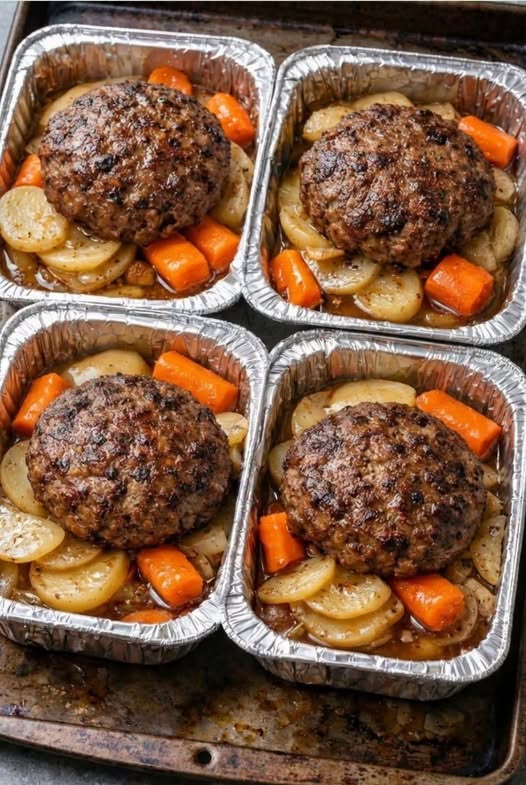
Easy Beef foil packet dinners. These comforting beef foil packet dinners combine juicy hamburger patties, tender sliced potatoes, and sweet carrots in individual foil packets or small aluminum trays. Everything cooks together, allowing the vegetables to absorb the seasoned beef juices.
The covered cooking method produces tender vegetables and moist patties. A brief, optional broil at the end adds a more deeply browned surface like the one pictured. It is a practical family dinner with simple preparation, individual portions, and minimal washing up.
Ingredients for beef foil packet dinners
1½ pounds ground beef, preferably 85% lean (680 g)
1½ pounds Yukon Gold potatoes (680 g)
4 medium carrots, about 300 g
1 envelope dry onion soup mix, approximately 1 ounce (28 g)
4 tablespoons water, divided — a cooking aid, not counted among the four ingredients
You will also need four small oven-safe aluminum trays with foil covers, or heavy-duty aluminum foil for making packets.
Ingredient note: Onion soup mixes vary in saltiness and packet size. Use approximately 28 g, and avoid adding extra salt before tasting the finished meal. Check the label if you need to avoid particular allergens.
Instructions For beef foil packet dinners
Step 1: Preheat the oven.
Heat the oven to 400°F (200°C), or 375°F (190°C) fan.
Place four individual aluminum trays on a sturdy rimmed baking sheet. Choose trays large enough to hold the vegetables in a shallow layer with one patty on top.
If using foil packets, cut four large sheets of heavy-duty foil. Double the layers if your foil is thin so the packets can hold the food and juices without tearing.
Step 2: Slice the vegetables.
Scrub the potatoes and cut them into even slices approximately ⅛ inch (3 mm) thick. Thin, consistent slices are important because thick potatoes may remain firm after the meat is cooked.
Peel the carrots if desired, then cut them into approximately ½-inch pieces. Halve especially thick carrot sections lengthwise before chopping.
You can leave the potato skins on for easier preparation and a rustic appearance.
Step 3: Season the beef.
Empty the onion soup mix into a small bowl and stir it so the onion flakes and powdered seasoning are evenly distributed.
Place the ground beef in a separate bowl. Add half the soup mix and gently combine with your hands or a fork.
Divide into four equal portions and shape into patties approximately 4 inches wide and ¾ inch thick. Press a shallow indentation into the center of each patty to help it cook more evenly.
Avoid compressing the meat tightly, which can make the cooked patties firm.
Step 4: Fill the trays or packets.
Divide the sliced potatoes and carrots evenly among the four trays or foil sheets.
Sprinkle the remaining onion soup mix over the vegetables and gently toss within each portion. Add 1 tablespoon water to each tray or packet.
Set one beef patty on top of each vegetable portion. The beef will release juices during cooking, adding flavor and moisture to the potatoes and carrots beneath it.
Keep the vegetable layer relatively shallow rather than piling everything into a tall mound.
Step 5: Seal tightly.
Cover each aluminum tray tightly with foil, crimping it around the edges.
For foil packets, bring the long edges together above the food and fold them down several times. Fold the short ends inward to seal, leaving a little space inside for steam.
Place all packets on the rimmed baking sheet. A tight seal helps retain moisture, while the baking sheet catches any accidental leaks.
Step 6: Bake until cooked through.
Bake for 45–55 minutes, beginning your checks at 40–45 minutes.
Carefully open one packet away from your face because hot steam will escape. Insert an instant-read thermometer into the side of the patty so the tip reaches its center. Ground beef must reach 160°F (71°C).
Pierce a potato slice and carrot piece with a fork. Both should be tender. If the vegetables need longer, reseal and continue baking, checking every 5–10 minutes.
Cooking time depends on vegetable thickness, tray depth, and your oven.
Step 7: Brown the tops, if desired.
Covered cooking will not create the same dark crust as an uncovered skillet or broiler.
For a more browned finish, remove the foil covers and place the trays under the broiler for 2–4 minutes, watching continuously. Keep the trays on their supporting baking sheet and make sure all cookware is broiler-safe.
Skip this step if the patties are already browned to your liking.
Step 8: Rest and serve.
Let the meals rest for 5 minutes before serving. Spoon some of the cooking juices over the potatoes and patties.
Serve directly in the trays on heatproof plates, or transfer each portion to a dinner plate. Open any remaining packets carefully to avoid steam burns.
Tips for Tender Packet Dinners For beef foil packet dinners
Slice potatoes thinly. This is the best way to help them finish cooking alongside the beef.
Choose moderately lean beef. Very lean beef can become dry, while fattier beef releases more grease into the vegetables.
Keep the patties evenly sized. Similar thickness helps all four meals cook at roughly the same rate.
Seal the foil well. Escaping steam can leave the vegetables dry or undercooked.
Check temperature and texture. The meat thermometer confirms the beef is cooked, while a fork checks the vegetables.
Avoid unnecessary salt. Packaged onion soup mix usually provides plenty of seasoning.
Recipe Notes and Variations For beef foil packet dinners
Yukon Gold potatoes hold their shape well and develop a creamy texture. Red potatoes are another good option. Russets work too, although their slices may break apart more easily when fully cooked.
To make smaller portions, divide the ingredients among six trays and shape thinner patties. Begin checking earlier, but still verify the center temperature and vegetable tenderness.
You can add sliced onions, mushrooms, or green beans, although these additions take the recipe beyond four ingredients. Avoid overcrowding the trays, which increases cooking time.
Ground turkey can replace the beef, but it has a different flavor and must reach 165°F (74°C). A very lean turkey mixture may also need additional fat or moisture.
Storage and Reheating FOR beef foil packet dinners
Refrigerate leftovers within two hours of cooking. Transfer them to shallow, covered containers and use within 3–4 days.
Reheat in a covered oven-safe dish at 350°F (175°C) with a small splash of water. Allow approximately 20–30 minutes, depending on portion size, and heat the leftovers to 165°F (74°C).
For microwave reheating, transfer the meal to a microwave-safe plate or container. Never microwave the aluminum trays or foil.
You can freeze cooked portions for up to 2 months for best quality. Thaw overnight in the refrigerator before reheating. Potatoes may become slightly softer after freezing.
Serving Ideas For beef foil packet dinners
Each packet already includes meat and vegetables, making it a convenient meal on its own.
For something fresh alongside, serve a cucumber salad, sliced tomatoes, or lightly dressed mixed greens. Steamed broccoli also adds another vegetable without competing with the onion-seasoned beef.
Mustard or a small spoonful of your favorite sauce can be served at the table. Taste the cooking juices before adding salty condiments.https://ketosl.com/turmeric-ginger-honey-mixture-with-lemon-cinnamon/
Estimated Nutritional Information For beef foil packet dinners
Per serving, based on four portions made with 85% lean beef:
Calories: Approximately 550
Protein: 36 g
Carbohydrates: 44 g
Fat: 26 g
Fiber: 6 g
Values vary by beef fat content, vegetable size, and soup mix brand. Sodium depends heavily on the seasoning packet. These estimates assume the cooking juices are consumed. https://ketosl.com/maple-balsamic-roasted-vegetable-medley-with-cranberries-pecans-feta/
Frequently Asked Questions for beef foil packet dinners
Can I assemble these ahead of time?
Yes. Assemble, cover, and refrigerate for up to 24 hours before baking. Keep the raw beef cold and allow additional cooking time if needed.
Why are my potatoes still firm?
They may be sliced too thickly, piled too deeply, or losing steam through a loose seal. Reseal and continue cooking.
Do I need to brown the beef first?
No. The patties cook in the sealed packets. The optional final broil adds color.
Can I make one large baking dish instead?
Yes. Arrange the vegetables in a shallow layer, place the patties on top, and cover tightly. Check the same temperature and tenderness indicators; cooking time may differ.
FOR MY COOKBOOKS






Pingback: Amazing maple balsamic roasted vegetables 1
Pingback: sugar-free berry fluff 1