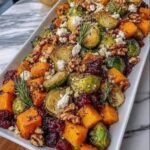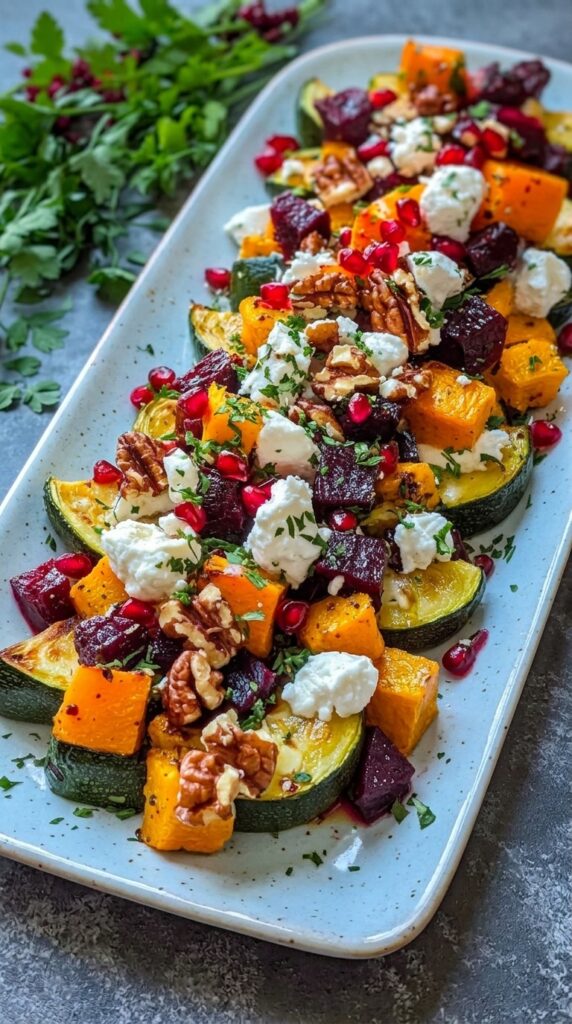

Roasted Butternut Squash, Beet & Zucchini Salad with Goat Cheese & Pomegranate
A colorful, nutritious roasted vegetable salad with creamy goat cheese, crunchy walnuts, and juicy pomegranate seeds. Perfect for fall gatherings, holiday dinners, Thanksgiving, or a healthy everyday meal.
Description
This Roasted Butternut Squash, Beet & Zucchini Salad with Goat Cheese & Pomegranate is a beautiful combination of sweet, savory, creamy, and crunchy flavors. It brings together the natural sweetness of roasted butternut squash, the earthy richness of beets, the delicate tenderness of zucchini, and the tangy creaminess of goat cheese.
Fresh pomegranate seeds add little bursts of juicy sweetness, while toasted walnuts provide a satisfying crunch. A sprinkle of fresh parsley brings brightness and freshness to every bite.
Recipe Information
Prep Time: 15 minutes
Cook Time: 35 minutes
Total Time: 50 minutes
Servings: 4–6
Course: Salad, Side Dish
Cuisine: Mediterranean-inspired, American
Cooking Method: Oven Roasting
Difficulty: Easy
Ingredients
For the Roasted Vegetables
2 cups butternut squash, peeled and cut into ¾-inch cubes
2 medium beets, peeled and cut into small cubes
2 medium zucchini, sliced into half-moons
3 tablespoons olive oil, divided
1 teaspoon salt, or to taste
½ teaspoon freshly cracked black pepper
For the Salad Toppings
½ cup walnut halves or pecans
½ cup soft goat cheese, crumbled or dolloped
⅓ cup fresh pomegranate arils
2 tablespoons fresh parsley, finely chopped
Optional Honey Balsamic Dressing
For extra flavor, you can prepare a simple dressing using:
2 tablespoons extra virgin olive oil
1 tablespoon balsamic vinegar
1 teaspoon honey or maple syrup
½ teaspoon Dijon mustard
Pinch of salt and black pepper
Whisk everything together until smooth. Drizzle lightly over the assembled salad just before serving.
Step-by-Step Instructions
Step 1: Preheat the Oven
Preheat your oven to 400°F (200°C).
Line a large baking sheet with parchment paper for easy cleanup. If possible, prepare two baking sheets to keep the beets separate from the butternut squash.
Keeping the vegetables in separate sections prevents the deep red beet juices from staining the orange squash.
Make sure the oven has reached the correct temperature before roasting. A properly heated oven helps the vegetables develop golden edges instead of becoming overly soft.
Step 2: Prepare the Butternut Squash
Peel the butternut squash using a vegetable peeler and remove the seeds.
Cut the flesh into evenly sized cubes, approximately ¾ inch thick.
Uniform pieces are important because they cook at the same rate.
Place the cubed squash in a large mixing bowl.
If you prefer a slightly sweeter flavor, you can substitute sweet potatoes for the butternut squash.
Step 3: Prepare the Beets
Wash and peel the beets, then cut them into small, evenly sized cubes.
Beets are naturally firmer than squash, so smaller cubes help them cook thoroughly.
Place the beets in a separate bowl if you want to prevent their color from spreading to the squash.
Tip: Wear disposable kitchen gloves when handling raw beets to prevent temporary staining on your hands.
Step 4: Season the Vegetables
Arrange the butternut squash and beets on the prepared baking sheet, keeping them in separate sections.
Drizzle with 2 tablespoons olive oil.
Sprinkle with salt and freshly cracked black pepper, then toss gently until the vegetables are evenly coated.
Spread everything into a single layer.
Avoid overcrowding the baking sheet. Vegetables need enough space for moisture to escape and their surfaces to caramelize.
Step 5: Roast the Root Vegetables
Place the baking sheet in the preheated oven.
Roast for approximately 20 minutes.
Halfway through, gently turn the vegetables using a spatula to encourage even browning.
The squash should begin softening, while the beets will still be slightly firm.
If your beet cubes are larger or particularly dense, they may need additional roasting time.
Step 6: Add the Zucchini
While the squash and beets are roasting, wash the zucchini and slice them into half-moons.
Aim for slices about ½ inch thick.
After the first 20 minutes of roasting, carefully remove the baking sheet.
Add the zucchini, drizzle with the remaining 1 tablespoon olive oil, and toss gently.
Spread the vegetables back into an even layer. Use a second baking sheet if necessary.
Return the vegetables to the oven and roast for approximately 15 additional minutes.
The zucchini should become tender with lightly golden edges, while the squash should be soft and caramelized.
Check the beets with a fork. Continue roasting any firm pieces until they are tender.
Step 7: Toast the Walnuts
While the vegetables finish roasting, toast the walnuts in a dry skillet over medium-low heat for approximately 3–5 minutes.
Stir frequently until the walnuts become fragrant and lightly golden.
Remove them from the heat immediately to prevent burning.
Toasting enhances their nutty flavor and gives the salad a more satisfying crunch.
Allow the nuts to cool slightly before using.
Step 8: Prepare the Dressing (Optional)
In a small bowl, combine extra virgin olive oil, balsamic vinegar, honey, Dijon mustard, salt, and black pepper.
Whisk until well combined.
Taste and adjust the sweetness or acidity according to your preference.
The dressing should be lightly sweet, tangy, and smooth.
This step is optional because the roasted vegetables already have plenty of natural flavor.
Step 9: Assemble the Salad
Remove the roasted vegetables from the oven and allow them to cool for 3–5 minutes.
Transfer the warm squash, beets, and zucchini to a large serving platter or shallow salad bowl.
Arrange the colorful vegetables so their different colors remain visible.
Scatter the toasted walnuts evenly over the vegetables.
Add small dollops or crumbles of goat cheese.
The warmth of the roasted vegetables will slightly soften the goat cheese, creating a delicious creamy contrast.
Step 10: Add the Final Garnishes
Sprinkle the fresh pomegranate arils over the salad.
Add finely chopped parsley for a fresh green finish.
If using the optional honey balsamic dressing, drizzle a small amount over the salad just before serving.
Avoid adding too much dressing, as you want the natural sweetness of the vegetables to remain the star of the dish.
Serve immediately while slightly warm, or allow the salad to reach room temperature.
Expert Tips for the Best Roasted Vegetable Salad
1. Cut vegetables evenly. Consistent sizes are essential for even cooking. Smaller beet cubes are especially helpful because beets take longer to soften than zucchini.
2. Use fresh vegetables. Choose firm zucchini, smooth-skinned butternut squash, and fresh beets for the best texture and flavor.
3. Avoid overcrowding. Spread vegetables in a single layer. If the baking sheet is too crowded, the vegetables will steam rather than roast.
4. Roast at high heat. A temperature of 400°F (200°C) helps achieve tender centers and lightly caramelized edges.
5. Add zucchini later. Zucchini cooks much faster than butternut squash and beets. Adding it during the final roasting stage prevents it from becoming mushy.
6. Toast the nuts. Lightly toasted walnuts or pecans deliver a richer flavor and better texture than raw nuts.
7. Use soft goat cheese. Creamy goat cheese creates a lovely contrast with the roasted vegetables. Feta is an excellent alternative if you prefer a firmer, saltier cheese.
8. Add pomegranate just before serving. This helps preserve its fresh taste, bright color, and juicy texture.
9. Season after tasting. Goat cheese can be naturally salty, so taste the finished salad before adding extra salt.
10. Serve warm or at room temperature. Both options are delicious, making this a great dish for entertaining.
Delicious Recipe Variations
Sweet Potato Version
Replace the butternut squash with cubed sweet potatoes. Sweet potatoes become beautifully caramelized when roasted and pair wonderfully with goat cheese and pomegranate.
Vegan Version
Replace goat cheese with a plant-based cheese or omit the cheese completely. Use maple syrup instead of honey in the optional dressing.
Mediterranean Version
Add fresh arugula, crumbled feta cheese, and a squeeze of lemon juice for a Mediterranean-inspired twist.
Extra Crunchy Version
Replace the walnuts with toasted pecans, pumpkin seeds, or sliced almonds.
Protein-Packed Version
Turn the salad into a more filling meal by adding roasted chickpeas, grilled chicken, or cooked quinoa.
Holiday Salad Version
Add a handful of baby spinach or arugula and sprinkle extra pomegranate seeds on top for a colorful Christmas or Thanksgiving presentation.
Serving Suggestions
This roasted vegetable salad pairs beautifully with many main courses.
Roast chicken: The creamy cheese and sweet roasted vegetables complement herb-seasoned chicken.
Grilled salmon: The bright pomegranate seeds and tangy goat cheese balance the richness of salmon.
Roasted turkey: An excellent side dish for Thanksgiving or Christmas dinner.
Grilled steak: Adds freshness and color to a hearty meal.
Quinoa or couscous: Makes the salad more substantial and suitable for lunch.
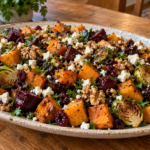
For an attractive presentation, use a wide white serving platter. Arrange the roasted vegetables across the plate and finish with scattered goat cheese, walnuts, parsley, and pomegranate seeds.
Storage and Make-Ahead Instructions
Refrigeration: Store leftover salad in an airtight container in the refrigerator for up to 3–4 days, provided it was refrigerated promptly. The zucchini will soften over time.
Make ahead: Roast the vegetables one day in advance and refrigerate them separately from the goat cheese, nuts, and pomegranate seeds.
Reheating: Warm the roasted vegetables in a 350°F (175°C) oven until heated through, then add the fresh toppings.
Freezing: Freezing the fully assembled salad is not recommended because zucchini, goat cheese, and pomegranate seeds may lose their desirable textures.
Best preparation method: Keep the ingredients separate and assemble the salad shortly before serving for the freshest results.
Nutritional Information
Approximate values per serving, based on 6 servings, using walnuts, goat cheese, and no optional dressing. Actual values vary by ingredient and portion size.
| Nutrient | Approximate Amount |
|---|---|
| Calories | 225 kcal |
| Protein | 6 g |
| Total Fat | 17 g |
| Carbohydrates | 16 g |
| Fiber | 4 g |
| Sugar | 8 g |
| Sodium | 480 mg |
Health Benefits
1. Rich in Vitamins and Minerals
Butternut squash provides beta-carotene, which the body converts into vitamin A. Vitamin A supports normal vision and immune function.
2. Contains Dietary Fiber
Beets, squash, zucchini, and walnuts contribute fiber, which supports healthy digestion and helps maintain regular bowel movements.
3. Provides Beneficial Fats
Olive oil and walnuts contain unsaturated fats that can support heart health when they replace foods high in saturated fat.
4. Contains Antioxidant Compounds
Pomegranate, beets, and colorful vegetables contain natural plant compounds that contribute to a varied, nutrient-rich diet.
5. Offers Some Protein and Calcium
Goat cheese adds protein and calcium, while also giving the salad its delicious creamy flavor.
6. Encourages Vegetable Variety
Combining several colorful vegetables in one dish is a simple way to increase the range of nutrients and plant foods in your meals.
Frequently Asked Questions (Q&A)
Q1. Can I make this salad ahead of time?
Yes. You can roast the vegetables up to one day ahead and refrigerate them. Add the goat cheese, walnuts, parsley, and pomegranate seeds just before serving.
Q2. Can I replace butternut squash with sweet potatoes?
Absolutely! Sweet potatoes are an excellent substitute. They offer a naturally sweet flavor and become tender and golden when roasted.
Q3. What can I use instead of goat cheese?
Feta, ricotta, or a mild blue cheese can work. Feta provides a saltier flavor, while ricotta offers a softer, milder finish.
Q4. Can I use pecans instead of walnuts?
Yes. Toasted pecans taste wonderful with the sweet roasted squash and juicy pomegranate seeds.
Q5. Is this salad served hot or cold?
It is best served warm or at room temperature. Serving it slightly warm helps soften the goat cheese and enhances the roasted vegetable flavors.
Q6. How do I prevent the zucchini from becoming soggy?
Cut the zucchini into thick slices, add it only during the final 15 minutes of roasting, and avoid overcrowding the baking sheet.
Q7. Is the dressing necessary?
No. The olive oil, roasted vegetables, cheese, and toppings already create a flavorful combination. The optional balsamic dressing simply adds extra sweetness and acidity.
Q8. Can I make this recipe vegan?
Yes. Omit the goat cheese or use a plant-based substitute. The salad remains delicious with toasted nuts and fresh pomegranate.
Q9. What if my beets are still hard after roasting?
Return the beets to the oven for another 10–15 minutes, checking regularly. Beet cooking times depend on the size of the cubes. Remove any vegetables that are already tender to prevent overcooking.
Q10. Is this a good Thanksgiving side dish?
Definitely! Its vibrant orange, red, green, and white colors make it especially beautiful for fall and holiday gatherings. It also pairs well with traditional roasted meats and holiday main dishes.
Q11. Can I add leafy greens?
Yes. Fresh arugula, baby spinach, or mixed salad greens make excellent additions. Allow the roasted vegetables to cool slightly before adding delicate leaves.
Q12. How can I make this salad a complete meal?
Add cooked quinoa, roasted chickpeas, lentils, or grilled chicken for additional protein and a more filling meal.
Final Thoughts
Roasted Butternut Squash, Beet & Zucchini Salad with Goat Cheese & Pomegranate is a wonderful example of how simple ingredients can become an elegant, flavorful dish.
The sweet roasted squash, earthy beets, tender zucchini, creamy goat cheese, crunchy walnuts, and juicy pomegranate seeds create an irresistible combination of flavors and textures.
Whether you’re preparing a healthy family dinner, a cozy autumn lunch, or a beautiful holiday feast, this colorful salad is sure to brighten your table.
Recipe Tip: For the most attractive presentation, arrange the vegetables first and add the creamy goat cheese, toasted walnuts, fresh parsley, and pomegranate seeds at the very end. This keeps every ingredient colorful, fresh, and delicious.