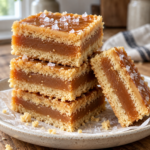

Salted Caramel Shortbread Bars
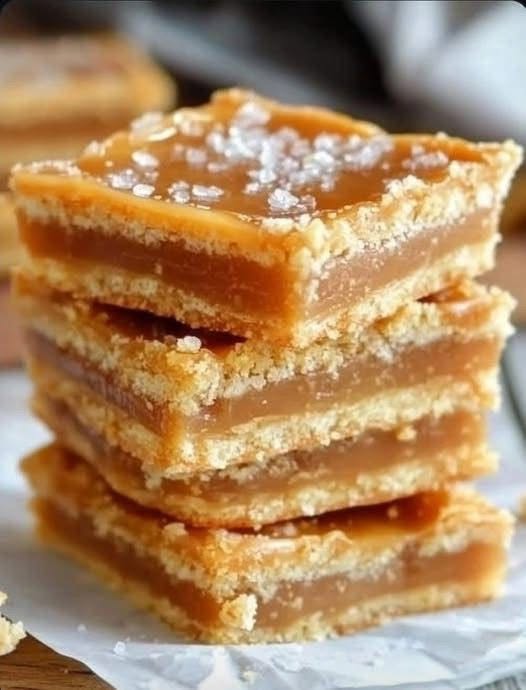
Salted Caramel Shortbread Bars Buttery Chewy combine tender, buttery shortbread with a thick, chewy caramel filling and a light sprinkle of flaky sea salt. Each bite brings together golden cookie layers, smooth caramel, and just enough salt to balance the sweetness.
This recipe uses soft caramel candies for a convenient filling that does not require making caramel from scratch. Baking the shortbread layers separately helps them cook evenly before assembly. Once cooled and chilled, the slab slices into neat bars that are easy to serve at gatherings or pack into dessert boxes.
If you enjoy richEasy Celery Juice Recipe (Blender or Juicer)
**Prep time:** 25 minutes
**Bake time:** 22–28 minutes
**Caramel preparation:** 5–10 minutes, during baking
**Cooling and chilling:** Approximately 2 hours
**Total time:** Approximately 3 hours
**Servings:** 24 small bars
**Equipment:** Two 9-inch square metal baking pans, parchment paper, mixing bowl, electric mixer, saucepan, and spatula
**Ingredients Salted Caramel Shortbread Bars – Buttery & Chewy
For the shortbread layers:
* 1½ cups unsalted butter, softened but not melted (340 grams)
* ¾ cup granulated sugar (150 grams)
* 2 teaspoons vanilla extract
* 3 cups all-purpose flour (360 grams)
* ½ teaspoon fine salt
For the caramel filling and topping:
* 14 ounces soft, individually wrapped caramel candies, unwrapped (397 grams)
* 3 tablespoons heavy cream (45 milliliters)
* ½ teaspoon vanilla extract
* ¼ teaspoon fine salt, optional
* ½ teaspoon flaky sea salt, or to taste, for finishing
Use soft caramel candies intended for melting, rather than hard caramel sweets. Their texture matters because the finished filling should be chewy and sliceable.
**How to Make Salted Caramel Shortbread Bars**
**Step 1: Prepare the oven and pans**
Preheat the oven to 350°F (175°C). Line both pans with parchment paper, leaving an overhang on two sides so you can lift out the baked layers.
Lightly grease any exposed sides. Matching pans help produce layers that fit together neatly during assembly.
**Step 2: Mix the butter and sugar**
Beat the softened butter and sugar together on medium speed for about two minutes, until smooth and creamy. Scrape down the bowl, then mix in the vanilla.
Avoid beating until extremely fluffy. Shortbread benefits from a compact, tender texture rather than the airy structure of cake.
**Step 3: Add the dry ingredients**
Whisk the flour and fine salt together in a separate bowl. Add them to the butter mixture and mix on low speed just until a soft, crumbly dough forms.
The mixture should hold together when pressed. If it looks loose, bring it together gently with a spatula. Avoid adding liquid or continuing to beat the dough unnecessarily.
**Step 4: Shape and bake the layers**
Divide the dough equally between the prepared pans. Press it into even layers, making sure the corners are filled and the centers are not thicker than the edges.
Prick each layer lightly with a fork. Bake for 22–28 minutes, until the surfaces look set and the edges are lightly golden. Rotate the pans if your oven browns unevenly.
Let the layers cool in their pans for approximately 30 minutes. They are delicate while hot.
**Step 5: Melt the caramel**
While the shortbread bakes, place the unwrapped caramels and heavy cream in a heavy-bottomed saucepan.
Warm over low heat, stirring frequently, until smooth. Remove from the heat and stir in the vanilla. Taste only after a small spoonful has cooled, then add the optional fine salt if needed.
The caramel should be thick but spreadable. If necessary, add another teaspoon of cream. Avoid adding too much, which can leave the filling too soft.
**Step 6: Assemble the bars**
If the caramel has thickened while waiting, rewarm it gently. Reserve approximately three tablespoons for the top.
Spread the remaining caramel over one shortbread layer, leaving a narrow border around the edges. Lift the second cooled layer from its pan using the parchment. Support it with a flat board or wide spatulas, remove the paper, and carefully place it over the filling.
Small cracks are fine and will be less noticeable after slicing.
**Step 7: Finish and chill**
Spread or drizzle the reserved caramel over the top. Sprinkle lightly with flaky sea salt.
Allow the assembled bars to cool, then refrigerate for 60–90 minutes, or until the caramel feels firm enough to cut cleanly. Different caramel brands may require slightly different chilling times.
**Step 8: Slice and serve**
Lift the chilled slab out of the pan. Cut into 24 bars using a sharp knife, wiping the blade between cuts.
If the caramel is too firm, let the slab stand at room temperature for 10–15 minutes before slicing. Serve slightly softened for the best balance of tender shortbread and chewy filling.
**Tips for the Best Results**
* **Weigh the flour:** Excess flour can make shortbread dry and difficult to handle.
* **Use gentle heat:** Caramel can scorch if melted too quickly.
* **Keep the layers even:** Uneven dough can produce overbaked edges and an underbaked center.
* **Choose flaky finishing salt:** Large flakes provide little bursts of saltiness. Fine salt tastes stronger when sprinkled densely.
* **Chill before cutting:** Warm caramel will squeeze out when you press down with a knife.
* **Support the top layer:** Slide it into place carefully instead of lifting it by one corner.
**Recipe Notes and Variations**
For chocolate caramel shortbread bars, drizzle the finished slab with melted dark chocolate after chilling. Let the chocolate set before cutting.
For a nutty variation, scatter a small handful of finely chopped toasted pecans over the caramel filling before adding the upper shortbread layer. Label the dessert accordingly when serving guests.
If using salted butter, omit the fine salt from the shortbread dough. Taste the cooled caramel before adding any extra salt to the filling.
For another buttery bake, visit Classic Butter Shortbread Cookies]**.
**Storage and Make-Ahead Instructions**
Store the bars in an airtight container in the refrigerator for up to five days. Separate stacked layers with parchment paper to prevent the caramel topping from sticking.
For longer storage, wrap individual bars and freeze in a sealed container for up to two months. Thaw overnight in the refrigerator.
These bars are convenient to prepare a day ahead. Chill the assembled slab overnight, then allow it to soften briefly before slicing and serving.
**Serving Ideas**
Serve small squares with coffee, tea, or unsweetened hot chocolate. For a dessert plate, add fresh berries to balance the rich caramel flavor.
They also work well on a cookie platter beside. Keep portions small because the buttery layers and caramel make a satisfying, rich dessert.
**Estimated Nutrition**
Per bar, based on 24 servings:
* Calories: Approximately 280
* Carbohydrates: 36 grams
* Fat: 14 grams
* Saturated fat: 9 grams
* Protein: 3 grams
* Sugar: 21 grams
Values are estimates and vary with the caramel brand and portion size.
**Frequently Asked Questions**
**Can I use caramel sauce?**
Thin dessert sauce is not a direct substitute. It may leak out instead of setting into a chewy filling.
**Can I make these with one pan?**
Yes. Bake the layers consecutively, letting the first cool before lifting it out. Cool the pan before pressing in the remaining dough.
**Why did my shortbread crumble?**
It may have been moved while warm, overbaked, or made with too much flour. Cool it and support the entire layer when lifting.
**Why is my filling too soft?**
It may need more chilling, or too much cream may have been added. Caramel brands also differ in firmness.
**Can I taste the raw dough?**
Avoid tasting it: the dough contains uncooked flour. https://www.kingarthurbaking.com/blog/2022/12/12/how-to-make-caramel?utm_source=chatgpt.com FDA guidance on handling flour safely]**.