
Maple Pecan Roasted Autumn Vegetables
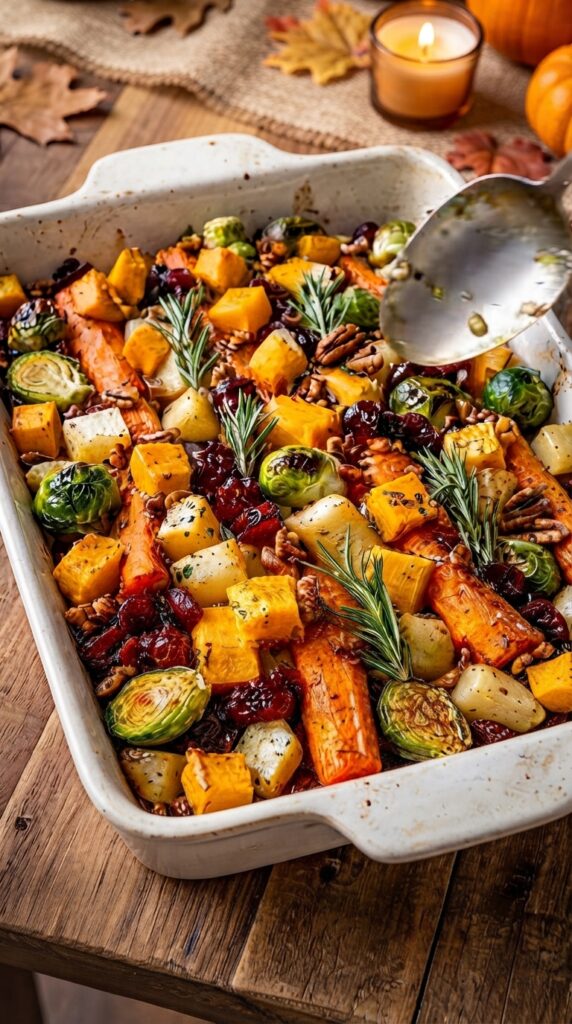
Maple Pecan Roasted Autumn Vegetables is a colorful fall-inspired side dish filled with roasted butternut squash, sweet potatoes, Brussels sprouts, carrots, baby potatoes, dried cranberries, crunchy pecans, and fragrant rosemary. Everything is roasted until caramelized and tender, then finished with a sweet and savory maple-balsamic glaze.
The combination of earthy vegetables, naturally sweet maple syrup, tart cranberries, and toasted pecans creates a dish with plenty of contrasting flavors and textures. The vegetables become golden around the edges while remaining tender inside, and the pecans provide a satisfying crunch.
This beautiful roasted vegetable medley is especially suitable for Thanksgiving, Christmas, fall gatherings, Sunday dinners, or meal prep. It pairs well with roasted chicken, turkey, beef, pork, or a vegetarian main dish.
Prep Time: 20 minutes
Cook Time: 40–45 minutes
Total Time: About 1 hour
Servings: 6–8
Ingredients
For the Roasted Vegetables
3 cups butternut squash, peeled and cut into 1-inch cubes
2 medium sweet potatoes, peeled and cubed
1 lb Brussels sprouts, trimmed and halved
4 medium carrots, peeled and cut into thick pieces
1 lb baby Yukon Gold potatoes, halved or quartered if large
1 medium red onion, cut into thick wedges
3 tablespoons olive oil
1 teaspoon salt
¾ teaspoon freshly ground black pepper
1 teaspoon garlic powder
½ teaspoon onion powder
1 teaspoon dried thyme
½ teaspoon dried rosemary
½ teaspoon smoked paprika
For the Maple Balsamic Glaze
¼ cup pure maple syrup
2 tablespoons balsamic vinegar
1 tablespoon olive oil
1 tablespoon Dijon mustard
2 garlic cloves, finely minced
½ teaspoon cinnamon, optional
¼ teaspoon salt
¼ teaspoon black pepper
For Finishing
¾ cup pecans, roughly chopped
¾ cup dried cranberries
2 tablespoons fresh rosemary leaves
2 tablespoons chopped fresh parsley
1 tablespoon maple syrup, optional for extra glazing
Instructions
1. Preheat the Oven
Preheat the oven to 425°F (220°C).
Lightly grease a large rimmed baking sheet or line it with parchment paper. If you have a very large quantity of vegetables, use two baking sheets rather than overcrowding one.
Giving the vegetables enough space allows moisture to escape and encourages caramelization.
2. Prepare the Butternut Squash
Peel the butternut squash and carefully remove the seeds.
Cut the flesh into approximately 1-inch cubes. Try to keep the pieces similar in size so they roast evenly.
You can also use pre-cut butternut squash to reduce preparation time.
3. Prepare the Sweet Potatoes
Peel the sweet potatoes and cut them into approximately 1-inch cubes.
Avoid cutting them too small because they can soften faster than the other vegetables.
4. Prepare the Brussels Sprouts
Trim the dry stem ends from the Brussels sprouts and remove any damaged outer leaves.
Cut each Brussels sprout in half from top to bottom.
Very large sprouts can be quartered.
5. Prepare the Remaining Vegetables
Peel the carrots and cut them into thick pieces.
Wash the baby potatoes thoroughly. Small potatoes can remain whole, while larger ones should be halved or quartered.
Cut the red onion into thick wedges. Keeping the onion pieces relatively large helps prevent them from burning.
6. Season the Vegetables
Place the butternut squash, sweet potatoes, Brussels sprouts, carrots, potatoes, and red onion in a large mixing bowl.
Drizzle with 3 tablespoons of olive oil.
Add salt, black pepper, garlic powder, onion powder, thyme, rosemary, and smoked paprika.
Toss thoroughly until the vegetables are lightly and evenly coated.
7. Arrange for Roasting
Spread the seasoned vegetables over the prepared baking sheet in a relatively even layer.
Place the Brussels sprouts cut-side down wherever possible. Direct contact with the hot baking sheet helps their flat surfaces become beautifully browned.
Avoid piling the vegetables on top of one another.
8. Begin Roasting
Place the vegetables in the preheated oven.
Roast for approximately 20 minutes without disturbing them too much.
After 20 minutes, carefully turn the vegetables with a large spatula.
Return them to the oven for another 10 minutes.
9. Make the Maple Balsamic Glaze
While the vegetables roast, combine the maple syrup, balsamic vinegar, olive oil, Dijon mustard, minced garlic, optional cinnamon, salt, and black pepper in a small bowl.
Whisk until smooth.
The maple syrup provides sweetness, while balsamic vinegar and Dijon prevent the finished dish from becoming overly sweet.
10. Add the Maple Glaze
After the vegetables have roasted for approximately 30 minutes, remove the baking sheet from the oven.
Drizzle the maple-balsamic mixture evenly over the vegetables.
Gently toss or turn them until lightly coated.
Return the pan to the oven.
11. Add the Pecans
After another 5 minutes, scatter the chopped pecans over the vegetables.
Return everything to the oven and continue roasting for approximately 5–10 minutes.
Adding the pecans near the end helps toast them without burning them.
The vegetables are ready when the squash and potatoes are fork-tender and the Brussels sprouts and carrots have caramelized edges.
12. Add Cranberries and Herbs
Remove the roasted vegetables from the oven.
Immediately scatter the dried cranberries over the hot vegetables.
Add fresh rosemary and chopped parsley.
Gently toss everything together.
For a slightly sweeter, glossier finish, drizzle approximately 1 tablespoon of additional maple syrup over the vegetables just before serving.
Transfer to a large serving dish and serve warm.
Description
This recipe celebrates classic autumn produce by combining vegetables with different colors, textures, and flavors.
Butternut squash develops a creamy interior and lightly caramelized exterior. Sweet potatoes provide natural sweetness, while Brussels sprouts bring an earthy flavor and crisp roasted edges.
Carrots become sweeter as they roast, and baby potatoes add a creamy, hearty element that makes the dish more substantial.
The dried cranberries add small bursts of tart sweetness, while toasted pecans provide crunch. Rosemary and thyme give the entire dish a warm herbal aroma.
The maple-balsamic glaze ties everything together. Maple syrup caramelizes beautifully under high heat, while balsamic vinegar provides enough acidity to balance the sweetness.
Recipe Notes
Pure maple syrup provides the best flavor, but honey can be substituted if necessary.
Fresh cranberries can be used instead of dried cranberries, but they are much more tart and should be roasted rather than simply added at the end.
Walnuts can replace pecans.
If you don’t have butternut squash, pumpkin or another firm winter squash can be substituted.
You don’t need to peel baby Yukon Gold potatoes because their skins are thin and edible.
Fresh rosemary provides a particularly attractive presentation, but don’t add large tough stems directly to individual servings.
If your baking sheet is small, divide the vegetables between two pans. Overcrowding causes vegetables to steam instead of roast.
For a more savory version, reduce the maple syrup to 2 tablespoons.
Tips for Perfect Roasted Vegetables
Cut vegetables into similar-sized pieces whenever possible. This encourages more consistent cooking.
Dry the vegetables after washing them. Excess surface moisture works against browning.
Use high heat. An oven temperature of 425°F gives the vegetables enough heat to develop caramelized edges while becoming tender inside.
Don’t use excessive oil. You need enough to coat the vegetables lightly, but too much can make them greasy.
Give the vegetables space. This is particularly important for Brussels sprouts.
Place Brussels sprouts cut-side down for better browning.
Add the maple glaze toward the end rather than at the beginning. Maple syrup contains sugar and can become overly dark during a long roasting time.
Add nuts during the final portion of cooking. Pecans can burn if exposed to high oven temperatures for the entire roasting period.
Add dried cranberries after roasting. They only need to become slightly warm and soft.
Taste before serving. Depending on the sweetness of your vegetables and maple syrup, you may want a tiny additional splash of balsamic vinegar or pinch of salt.
Serving Suggestions
These Maple Pecan Roasted Autumn Vegetables make an excellent side dish for roasted turkey, chicken, pork tenderloin, pot roast, steak, or baked salmon.
For Thanksgiving, serve them alongside turkey, mashed potatoes, stuffing, green beans, and cranberry sauce.
For a vegetarian dinner, serve the vegetables over quinoa, wild rice, couscous, or farro. Add chickpeas or white beans for additional protein.
You can also turn leftovers into a fall salad by serving them over spinach or mixed greens with feta or goat cheese.
Storage
Allow leftovers to cool before transferring them to an airtight container.
Refrigerate for up to 3–4 days.
For the best texture, store additional toasted pecans separately and sprinkle them over the vegetables after reheating.
Reheat the vegetables on a baking sheet at 375°F (190°C) for approximately 10–15 minutes. Oven reheating helps restore some of their roasted texture.
An air fryer can also work well for smaller portions.
Microwave reheating is convenient, although the vegetables will generally be softer.
Freezing is possible, but the texture of potatoes and Brussels sprouts may become softer after thawing. For the best quality, enjoy this dish fresh or refrigerated.
Nutritional Information
Approximate nutrition per serving, based on 8 servings:
Calories: 300–350
Protein: 5–7 g
Carbohydrates: 45–52 g
Fat: 13–16 g
Saturated Fat: 2–3 g
Fiber: 7–9 g
Sugar: 16–21 g
Sodium: 350–450 mg
Potassium: approximately 850–1,000 mg
Nutritional values are estimates. Actual values depend on vegetable sizes, ingredient brands, quantity of glaze consumed, and individual serving size.
Benefits
Rich in Vegetables
This dish combines several vegetables in one serving, making it an easy way to add greater variety to a meal.
Good Source of Fiber
Sweet potatoes, Brussels sprouts, squash, carrots, potatoes, and pecans all contribute dietary fiber. Fiber supports normal digestive function and contributes to satiety.
Provides Vitamin A
Sweet potatoes, carrots, and butternut squash are particularly rich in beta-carotene, which the body can convert into vitamin A. Vitamin A contributes to normal vision and immune function.
Provides Vitamin C
Brussels sprouts and several of the other vegetables provide vitamin C, which supports normal immune function and helps protect cells from oxidative stress.
Contains Healthy Unsaturated Fats
Pecans and olive oil provide predominantly unsaturated fats.
Provides Potassium
Potatoes, sweet potatoes, squash, and Brussels sprouts all contribute potassium, an essential mineral involved in normal muscle and nervous-system function.
Naturally Vegetarian
The recipe contains no meat and can easily be incorporated into vegetarian meals. As written, it is also dairy-free.
Frequently Asked Questions
Can I prepare the vegetables ahead of time?
Yes. Most of the vegetables can be chopped a day ahead and refrigerated in separate airtight containers. For the best results, wait until shortly before roasting to add oil and seasonings.
Can I use frozen vegetables?
Fresh vegetables are preferable because frozen vegetables release more water during roasting. Frozen Brussels sprouts or squash can be used, but the final texture may be softer.
Can I substitute honey for maple syrup?
Yes. Honey works well, although it creates a slightly different flavor and may brown somewhat faster.
Can I leave out the pecans?
Absolutely. Simply omit them for a nut-free version. Pumpkin seeds or sunflower seeds can also provide crunch if appropriate for your dietary needs.
What can I substitute for pecans?
Walnuts are the closest easy substitute. Almonds or pumpkin seeds can also work.
Why did my vegetables turn out soggy?
Overcrowding is one of the most common causes. When vegetables are packed tightly together, escaping moisture becomes trapped and effectively steams them. Use two baking sheets when necessary.
Can I add apples?
Yes. Firm apples such as Honeycrisp or Granny Smith can be cut into thick chunks and added during the final 20–25 minutes of roasting.
Can I add feta or goat cheese?
Yes. Crumbled feta or goat cheese makes an excellent finishing addition. Sprinkle it over the vegetables after they come out of the oven so the cheese softens slightly without completely melting.
Is this suitable for Thanksgiving?
Yes. The combination of squash, sweet potatoes, Brussels sprouts, cranberries, pecans, maple, and rosemary makes it particularly well suited to a Thanksgiving or fall holiday menu.
How do I achieve the glossy roasted appearance?
Roast the vegetables first so their surfaces can brown, then add the maple-balsamic glaze during the later stage of cooking. Toss gently to coat everything and return the pan to the oven. The maple syrup caramelizes lightly around the vegetables, creating the warm, glossy finish while the pecans and cranberries provide the final texture and color.