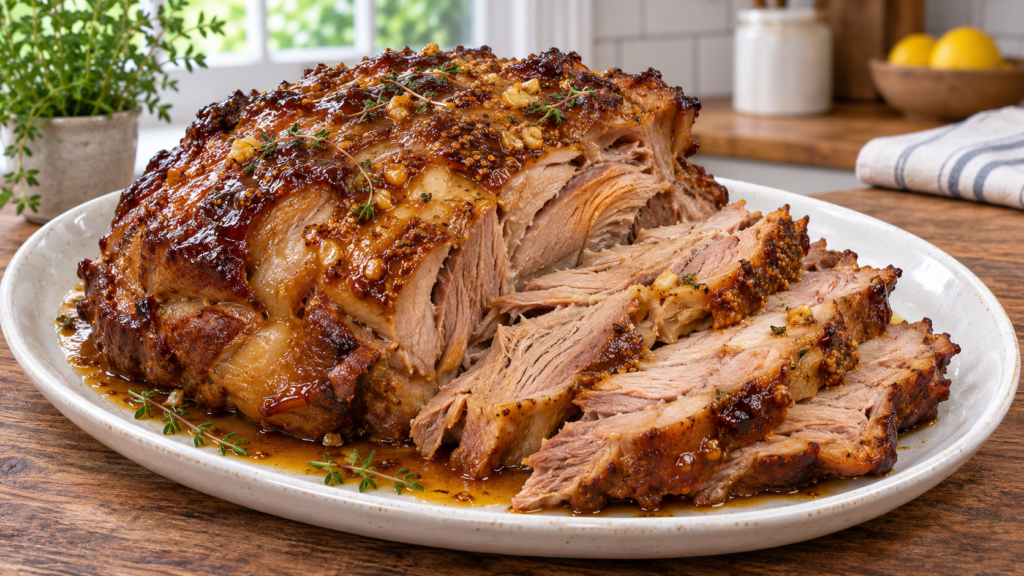

Honey Mustard Glazed Ham
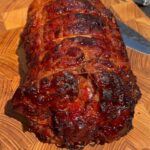
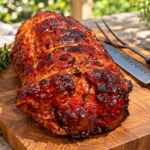
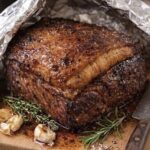
This Honey Mustard Glazed Ham has a glossy, golden coating made with honey, brown sugar, and two kinds of mustard. Dijon gives the glaze a smooth, tangy base, while whole-grain mustard adds little pops of texture. Apple cider vinegar keeps the sweetness in balance, and a pinch of ground cloves gives the ham a warm holiday flavor.
A fully cooked boneless ham makes this an easy centerpiece for Easter, Thanksgiving, Christmas, or a family Sunday dinner. Brush it with half the glaze before baking, then add the rest during the final stretch so the outside turns sticky and caramelized. Let it rest before carving and serve thick slices with creamy mashed potatoes, roasted carrots, or green beans.
Prep Time — 15 minutes
Cook Time — About 1 hour 30 minutes
Rest Time — 10 minutes
Total Time — About 1 hour 55 minutes
Servings — 8–10
Cooking Method — Oven-baked
Ingredients
- 1 fully cooked boneless ham, 3–4 pounds
- ½ cup honey
- ¼ cup packed brown sugar
- 3 tablespoons Dijon mustard
- 2 tablespoons whole-grain mustard
- 2 tablespoons apple cider vinegar
- ½ teaspoon ground black pepper
- ¼ teaspoon ground cloves
Instructions
- Preheat the oven. Set the oven to 325°F (165°C) and position a rack in the center. Choose a roasting pan large enough to hold the ham with a little space around the sides. Unwrap the ham, discard any packaging, and check the label for the recommended heating instructions.
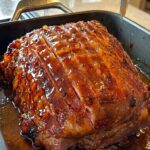
- Score the ham. Pat the surface dry with paper towels. Set the ham in the pan with the flatter side down. Use a sharp knife to make shallow diagonal lines across the rounded surface, about an inch apart. Make a second set of cuts in the opposite direction to create a diamond pattern. Keep the cuts about ⅛ inch deep so the glaze can settle into the grooves.
- Mix the honey mustard glaze. Whisk the honey, brown sugar, Dijon mustard, whole-grain mustard, apple cider vinegar, black pepper, and ground cloves in a small bowl. Scrape the bottom of the bowl as you whisk to break up any brown sugar lumps. If the honey is especially thick, warm the mixture briefly in a small saucepan over low heat until it brushes on easily. Divide the glaze between two bowls.
- Brush on the first coat. Use a pastry brush to spread half the glaze over the top and sides of the ham. Work a little into the scored lines and check the sides for any missed spots. Cover the pan loosely with foil, leaving enough room above the ham to keep the foil from sticking to the glaze.
- Bake the ham covered. Place the pan on the center rack and bake for approximately 60–75 minutes. Begin checking near the earlier end for a 3-pound ham, especially if it is wide and fairly flat. A thicker roast may need more time. Insert an instant-read thermometer into the center of the thickest part without touching the pan.
- Add the second coat and caramelize. Remove the foil and brush the ham with the remaining glaze. Return it to the oven uncovered for about 15–20 minutes, until the glaze is glossy and golden brown and the center has reached the recommended temperature. Follow the package instructions. USDA guidance calls for reheating fully cooked ham packaged in a USDA-inspected plant to 140°F (60°C), and other fully cooked ham to 165°F (74°C). If the glaze browns before the center reaches temperature, loosely cover the ham again and continue heating.
- Rest, slice, and serve. Transfer the ham to a cutting board and rest for 10 minutes. Use a sharp carving knife to cut it into slices about ¼ to ½ inch thick. Fan the slices onto a platter with the glazed edges facing up. Spoon a little of the warm pan juices over the meat just before serving, if desired.
Helpful Cooking Tips
- Keep the glaze in two bowls. Set aside the second half before the brush touches the ham. This also makes it easier to see how much glaze you have left for the final coat.
- Brush a thin, even layer. A heavy coat can run straight to the bottom of the pan. Sweep the brush across the top, then use what remains on the bristles to coat the sides.
- Watch the edges during the final bake. The corners and scored ridges brown first. Check through the oven door toward the end and use foil to protect any areas that are getting too dark.
- Check the center before carving. The outside can look ready while the middle is still warming. Insert the thermometer from the side if that makes it easier to reach the center.
- Taste the pan juices before serving. Some cured hams release salty juices as they heat. If the drippings taste strong, spoon a little over the platter or serve them on the side.
Recipe Notes
Mustard options. Dijon gives this glaze its classic sharp flavor, and whole-grain mustard adds visible seeds to the finished ham. If you only have Dijon, use it in place of the whole-grain mustard. For a milder glaze, use regular yellow mustard for part of the Dijon.
Brown sugar and cloves. Light brown sugar gives the recipe a gentle molasses flavor. Dark brown sugar makes the glaze slightly deeper in color and flavor. The ¼ teaspoon of ground cloves gives the recipe a noticeable holiday aroma. Use a small pinch or omit the cloves if you prefer a straightforward honey mustard flavor.
Pan choice. A shallow roasting pan or oven-safe baking dish works well. Pick one close to the size of the ham so the drippings collect around it. Line a metal pan with foil for easier cleanup if you like, since the honey and brown sugar can stick as they cool.
Serving Suggestions
For a classic holiday dinner, serve this glazed ham with buttery mashed potatoes, green beans, and warm dinner rolls. The potatoes catch the glaze, while the green beans add a fresh flavor alongside the sweet and salty ham. Roasted carrots, crispy baby potatoes, or Brussels sprouts also work well.
For a smaller family meal, pair a few thick slices with a simple green salad dressed with apple cider vinaigrette. If you’re making the ham for a buffet, slice half the roast first and leave the rest whole so guests can carve more as needed. The recipe serves about 10 with several sides or 8 if you’re offering larger portions.
Questions & Answers
Can I make the glaze ahead of time?
Yes. Whisk it together up to two days ahead and store it covered in the refrigerator. Stir it before using. If it has thickened in the fridge, warm it gently just until it’s easy to brush.
Can I use a spiral-sliced ham?
Yes, choose a fully cooked spiral-sliced ham of a similar weight. Skip the scoring and follow the package’s heating directions. Keep it covered for most of the baking time, then brush the glaze over the outside and lightly between a few slices during the final stage.
What if the glaze looks too thin?
The glaze thickens as it bakes, so it can be fairly fluid when you first mix it. If it runs off immediately, simmer it gently for a few minutes, stirring regularly. Let it cool slightly before brushing it on, and divide it into two portions before you start.
How can I use leftover honey mustard ham?
Layer thin slices with Swiss cheese in a toasted sandwich, fold diced ham into scrambled eggs, or add it to a potato and onion hash. It also works well in split pea soup. Taste the finished dish before adding salt, since the ham already brings plenty of seasoning.
Storage & Reheating
Refrigerate leftover ham within two hours of serving. Store slices in a shallow airtight container and use them within 3–4 days, or freeze in meal-size portions for later. To reheat, place slices in a covered baking dish with a splash of water or pan juices and warm at 325°F (165°C) until they reach 165°F (74°C).
Nutritional Information & Benefits
Estimated per serving, based on a 3½-pound ham divided into 10 portions with the glaze
- Calories — About 300–350
- Protein — About 25–32 g
- Carbohydrates — About 19–22 g
- Fat — About 9–15 g
- Sodium — Varies widely by brand. Check your ham and mustard labels for a closer estimate.
Ham supplies protein, which helps maintain muscle, and B vitamins such as thiamin and vitamin B12. The honey and brown sugar contribute most of the added sugar in the glaze. Portion size, the brand of ham, and the amount of glaze that stays on the roast will affect the final nutrition values. Pair it with green beans, Brussels sprouts, or a salad to add fiber to the meal.