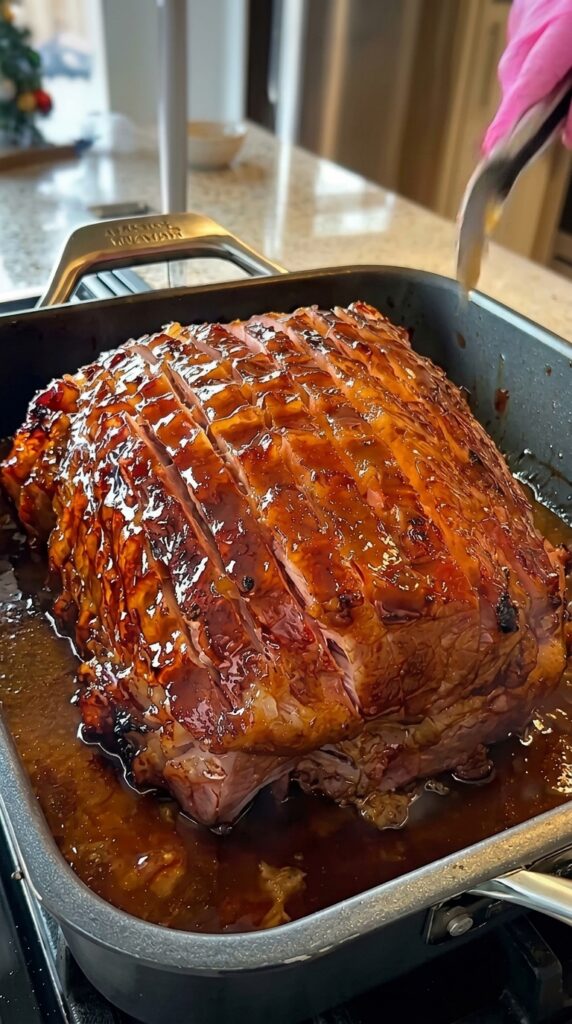

Brown Sugar Honey Glazed Ham – Easy Holiday Recipe
Prep Time: 20 minutes
Cook Time: 2–2½ hours
Total Time: Approximately 3 hours, including resting
Servings: 12–16
Cuisine: American
Course: Main Dish, Holiday Dinner
Cooking Method: Oven-Roasted
Ingredients
For the Ham
1 fully cooked bone-in spiral-cut ham (8–10 lbs)
½ cup water or apple juice
2 tablespoons unsalted butter, melted
1 teaspoon ground black pepper
½ teaspoon ground cloves (optional)
½ teaspoon ground cinnamon
For the Brown Sugar Honey Glaze
1 cup packed brown sugar
½ cup honey
¼ cup Dijon mustard
¼ cup pineapple juice
¼ cup orange juice
3 tablespoons unsalted butter
2 tablespoons apple cider vinegar
1 tablespoon Worcestershire sauce
1 teaspoon garlic powder
½ teaspoon ground cinnamon
¼ teaspoon ground cloves
¼ teaspoon ground ginger
For Garnishing
Fresh rosemary sprigs
Orange slices
Fresh parsley, optional
Extra warm honey glaze for serving
Instructions
Step 1: Preheat the Oven
Preheat your oven to 325°F (165°C). Position the oven rack in the lower-middle section so the ham has enough space to roast evenly.
Prepare a large roasting pan or deep baking dish. Choose a pan that comfortably holds the ham while leaving enough room for the juices and glaze to collect at the bottom.
Lightly grease the roasting pan with melted butter to prevent sticking.
Step 2: Prepare the Ham
Remove the fully cooked ham from its packaging and discard any included glaze packet if you prefer using the homemade version.
Pat the surface gently with paper towels to remove excess moisture.
If using a spiral-cut ham, keep the slices together so the meat retains its natural juices during baking.
For an unsliced ham, lightly score the fatty surface in a diamond pattern, approximately ¼ inch deep, without cutting deeply into the meat.
Scoring helps the glaze cling to the surface and creates a beautiful caramelized appearance.
Step 3: Season the Ham
Place the ham in the prepared roasting pan with the cut side facing downward.
Brush the exposed surface lightly with melted butter.
Sprinkle black pepper, cinnamon, and a small amount of ground cloves over the ham.
These warm seasonings complement the sweetness of the honey and brown sugar while enhancing the natural savory flavor of the meat.
Avoid adding extra salt because most fully cooked hams already contain plenty of sodium.
Step 4: Add Moisture to the Roasting Pan
Pour ½ cup of water or apple juice into the bottom of the roasting pan.
This liquid helps prevent the flavorful juices from burning during roasting and adds gentle moisture inside the covered pan.
Apple juice works particularly well because its mild sweetness complements the brown sugar glaze.
Cover the ham tightly with aluminum foil, making sure the edges are sealed to retain moisture.
Step 5: Begin Roasting the Ham
Transfer the covered ham to the preheated oven.
For an 8–10 lb fully cooked ham, plan approximately 10–15 minutes per pound, using the package directions and internal temperature as the final guide.
A previously USDA-inspected, fully cooked ham being reheated should reach 140°F (60°C). Fully cooked ham packaged elsewhere or leftovers should generally be reheated to 165°F (74°C).
Keep the ham covered during most of the roasting process to prevent the exterior from drying before the center warms.
Step 6: Prepare the Brown Sugar Honey Glaze
While the ham roasts, prepare the homemade glaze.
In a medium saucepan, combine brown sugar, honey, Dijon mustard, pineapple juice, orange juice, butter, apple cider vinegar, and Worcestershire sauce.
Add garlic powder, cinnamon, cloves, and ground ginger.
Place the saucepan over medium-low heat and stir continuously until the brown sugar dissolves and the butter melts completely.
The mixture should become smooth, glossy, and fragrant.
Step 7: Simmer the Glaze
Bring the glaze to a gentle simmer, then reduce the heat to low.
Continue cooking for approximately 5–8 minutes, stirring occasionally, until the mixture thickens slightly.
The glaze should be pourable but thick enough to coat the back of a spoon.
Avoid boiling aggressively because the sugar may burn or become overly sticky.
Remove the saucepan from the heat and allow the glaze to cool slightly.
Reserve some glaze in a separate clean bowl for serving.
Step 8: Remove the Foil
When the ham has approximately 30–40 minutes of cooking time remaining, carefully remove it from the oven.
Lift the aluminum foil slowly to avoid the hot steam.
Use a spoon or turkey baster to collect some of the warm pan juices and drizzle them over the ham.
These juices help maintain moisture and add extra savory flavor.
Step 9: Apply the First Layer of Glaze
Using a pastry brush, generously coat the surface of the ham with the prepared brown sugar honey glaze.
For spiral-cut ham, carefully brush a small amount of glaze between some of the slices without pulling them apart excessively.
Focus on covering the top and sides evenly.
The combination of honey and brown sugar will create a glossy coating as the ham continues roasting.
Step 10: Continue Roasting Uncovered
Return the glazed ham to the oven without the foil.
Continue roasting for approximately 15 minutes.
During this stage, the sugar begins to caramelize, creating a shiny, golden-brown exterior.
Watch the ham carefully because sugary glazes can darken quickly.
If the surface begins browning too rapidly, loosely cover the top with aluminum foil.
Step 11: Apply the Second Layer of Glaze
Remove the ham from the oven again and brush another generous layer of glaze over the surface.
Allow some of the warm glaze to run gently between the spiral slices.
Return the ham to the oven for another 10–15 minutes, or until it reaches the appropriate reheating temperature.
The repeated glazing creates a rich, sticky coating with beautiful caramelized edges.
Step 12: Create the Golden Caramelized Finish
For a slightly darker, caramelized exterior, increase the oven temperature to 400°F (200°C) for the final 5–8 minutes, only if the ham has not already reached its target temperature.
Watch carefully to prevent burning.
The brown sugar and honey should form a glossy coating with darker golden edges.
Avoid overcooking the ham, as additional roasting can cause the meat to become dry.
Step 13: Check the Internal Temperature
Insert a meat thermometer into the thickest part of the ham, avoiding the bone.
Check the temperature according to the type of ham you purchased.
Once the ham reaches the appropriate internal temperature, remove it from the oven.
Using a thermometer is the most reliable way to maintain both food safety and juicy results.
Step 14: Rest the Ham
Transfer the roasted ham to a large serving platter or leave it in the roasting pan.
Loosely cover with aluminum foil and let it rest for 15–20 minutes.
This resting period allows the juices to settle and makes the ham easier to slice.
The glaze will also become slightly thicker as it cools.
Step 15: Prepare the Final Glaze
While the ham rests, gently reheat the reserved glaze in a small saucepan.
If the glaze becomes too thick, stir in one or two tablespoons of warm water, apple juice, or pineapple juice.
For extra flavor, add a small amount of strained pan juices after removing excess fat.
Simmer briefly until warm and smooth.
Step 16: Slice and Serve
Transfer the ham to a large serving board or platter.
If using spiral-cut ham, gently separate the slices along the existing cuts.
For an unsliced ham, carve into even slices using a sharp carving knife.
Spoon warm honey glaze over the ham and garnish with fresh rosemary, orange slices, or parsley.
Serve immediately with your favorite holiday side dishes.
Tips for the Perfect Honey Glazed Ham
1. Choose a Fully Cooked Ham
A fully cooked bone-in ham is an excellent choice for this recipe because it is flavorful, convenient, and easy to prepare. Always check the package label to confirm whether the ham is fully cooked or requires cooking.
2. Keep the Ham Covered Initially
Covering the ham with aluminum foil during most of the roasting process helps reduce moisture loss. Remove the foil only during the final glazing stage.
3. Avoid Overheating
Because fully cooked ham only needs reheating, excessive oven time can produce dry meat. Use a reliable meat thermometer rather than depending solely on cooking time.
4. Use Real Honey
Pure honey provides a natural sweetness and helps create the beautiful glossy coating. Its flavor complements the caramel notes of brown sugar.
5. Balance Sweetness with Acidity
Apple cider vinegar, Dijon mustard, and citrus juice balance the sweetness of the glaze. This combination creates a richer flavor without making the ham overwhelmingly sweet.
6. Apply Multiple Layers of Glaze
Brushing the ham with glaze several times during the final roasting stage creates a thicker, more flavorful coating.
7. Do Not Skip Resting
Resting makes the ham easier to carve and helps the juices settle before serving.
8. Save the Pan Juices
The flavorful juices collected in the roasting pan can be strained and mixed with the reserved glaze to create a delicious finishing sauce.
Best Side Dishes to Serve with Honey Glazed Ham

Creamy Mashed Potatoes
Fluffy mashed potatoes with butter and cream pair beautifully with the sweet and savory glaze. They are ideal for soaking up any extra sauce.

Green Bean Casserole
Tender green beans with a creamy mushroom sauce and crispy onion topping create a delicious contrast to the glazed ham.

Baked Macaroni and Cheese
Rich, creamy macaroni and cheese provides a comforting addition to a holiday dinner.

Roasted Carrots
Naturally sweet carrots roasted with olive oil, thyme, and black pepper complement the honey glaze.
Storage and Reheating Instructions
Refrigerating Leftover Ham
Allow the ham to cool slightly after serving, then transfer leftovers into airtight containers.
Refrigerate within two hours of cooking and consume within 3–4 days.
Store the ham with a little of its cooking liquid to help preserve moisture.
Freezing Leftover Ham
Place sliced ham in freezer-safe containers or tightly wrapped freezer bags.
Remove excess air before sealing to prevent freezer burn.
Freeze for approximately 1–2 months for best quality.
Thaw overnight in the refrigerator before reheating.
Reheating Ham
Place leftover ham slices in a covered baking dish with a few tablespoons of water, broth, or reserved glaze.
Warm in a 300°F (150°C) oven until thoroughly heated. Reheat leftovers to 165°F (74°C).
Avoid high temperatures because they can dry out the meat.
Nutritional Information
Approximate values per serving, assuming 16 servings. Actual values depend on the ham, glaze absorption, and serving size.
| Nutrient | Approximate amount |
|---|---|
| Calories | 460 kcal |
| Protein | 39 g |
| Carbohydrates | 23 g |
| Total Fat | 23 g |
| Saturated Fat | 8 g |
| Sugar | 21 g |
| Sodium | 1,500 mg |
| Fiber | 0 g |
Nutritional Benefits
Honey glazed ham provides a substantial amount of protein, which supports muscle maintenance and contributes to feelings of fullness.
Pork also contains vitamin B12, thiamin, zinc, selenium, and other essential nutrients involved in energy metabolism and normal body function.
The citrus juice used in the glaze provides flavor and small amounts of vitamin C.
Although this recipe offers important nutrients, cured ham can contain significant amounts of sodium, while the glaze adds sugar. Moderate portions paired with vegetables and fiber-rich side dishes can help create a more balanced meal.
Frequently Asked Questions
Q1. What is the best ham for this recipe?
A fully cooked bone-in spiral-cut ham works especially well because it is flavorful, easy to serve, and allows the glaze to reach between the slices.
Q2. Can I make honey glazed ham without pineapple juice?
Yes. Replace pineapple juice with apple juice or additional orange juice. Both alternatives provide sweetness and acidity that complement the glaze.
Q3. Can I prepare the glaze ahead of time?
Absolutely. Prepare the glaze up to three days in advance and store it in an airtight container in the refrigerator. Reheat gently before brushing it onto the ham.
Q4. How do I keep baked ham juicy?
Cover the ham during most of the reheating process, add a little liquid to the roasting pan, and avoid overheating. Resting the ham before slicing also helps.
Q5. Can I use boneless ham instead?
Yes. Boneless fully cooked ham can be used, although the reheating time may differ depending on its weight and shape. Follow the package instructions and verify its temperature.
Q6. Why is my glaze not thickening?
The glaze may need additional simmering time. Cook it gently until the sugar dissolves and the mixture thickens slightly. Remember that the glaze also becomes thicker as it cools.
Q7. Can I use maple syrup instead of honey?
Yes. Pure maple syrup creates a delicious variation with a slightly deeper, caramel-like flavor. Replace honey with an equal amount of maple syrup.
Q8. What should I do if the glaze starts burning?
Reduce the oven temperature or loosely cover the ham with aluminum foil. Sugary glazes can burn quickly, especially near the end of roasting.
Q9. Can I make this ham for Christmas or Easter dinner?
Yes. Brown sugar honey glazed ham is a popular centerpiece for Christmas, Easter, Thanksgiving, and other family gatherings. Its sweet and savory flavor pairs well with traditional holiday side dishes.
Q10. What can I make with leftover honey glazed ham?
Leftover ham is excellent in breakfast casseroles, omelets, sandwiches, creamy potato soup, fried rice, and homemade macaroni and cheese. Dice or slice the leftover meat and refrigerate or freeze it for future meals.






Pingback: Classic French Beef Daube Recipe – Tender Slow-Braised Beef