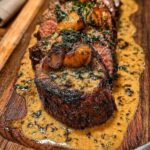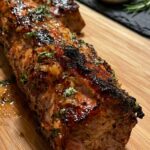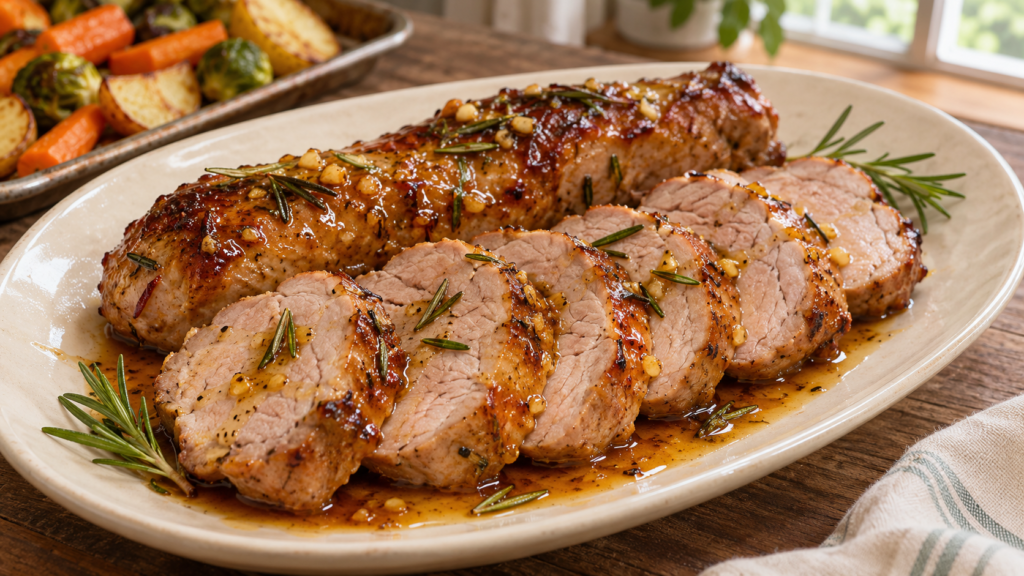

Honey Garlic Rosemary Pork Tenderloin
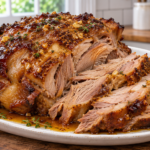
Honey Garlic Rosemary Pork Tenderloin is seared until golden, brushed with a sweet and savory glaze, and roasted until juicy in the center. Honey helps the glaze cling to the pork, soy sauce adds savory depth, and Dijon mustard gives it a little tang. Fresh rosemary and minced garlic add flavor to the browned edges of every slice.
Serve thick medallions over mashed potatoes with a spoonful of pan juices, or pair them with roasted carrots and green beans for an easy dinner. The recipe makes two tenderloins, enough for four generous portions or six servings with sides. The pork cooks in the same skillet you use to sear it, so the browned bits become part of the sauce.
Prep Time — 10 minutes
Cook Time — 25–30 minutes
Rest Time — 5 minutes
Total Time — 40–45 minutes
Servings — 4–6
Cooking Method — Skillet-seared and oven-roasted
Ingredients
- 2 pork tenderloins, about 1 pound each
- 3 tablespoons honey
- 3 tablespoons soy sauce
- 3 garlic cloves, finely minced
- 2 tablespoons olive oil
- 1 tablespoon Dijon mustard
- 1 teaspoon finely chopped fresh rosemary
- ½ teaspoon ground black pepper
- ½ teaspoon smoked paprika
- Salt, to taste
- Extra fresh rosemary for garnish, optional
Instructions
- Preheat the oven and prepare the pork. Set the oven to 400°F (200°C) with a rack in the center. Pat both tenderloins dry with paper towels. If you see a shiny, silvery strip on the surface, slip the tip of a sharp knife under it and trim it away. Season the pork all over with black pepper, smoked paprika, and a light pinch of salt. The soy sauce will add more salt as the glaze cooks.
- Mix the honey garlic glaze. Whisk the honey, soy sauce, minced garlic, Dijon mustard, and rosemary together in a small bowl. Stir until the honey blends into the soy sauce and the mustard is evenly distributed. Finely mince the garlic and rosemary so they spread easily when you brush the glaze over the meat. If you want extra glaze for serving, set some aside in a clean bowl before you start brushing.
- Sear the tenderloins. Heat the olive oil in a large oven-safe skillet over medium-high heat. When the oil shimmers, add the pork. Sear for about 2–3 minutes per side, turning with tongs until the main surfaces are golden brown. Give the meat enough space to make good contact with the pan. If both tenderloins crowd the skillet, sear them one at a time.
- Brush on the glaze. Take the skillet off the burner and brush the honey garlic mixture over the top and sides of each tenderloin. Turning off the heat before glazing gives you time to coat the pork evenly and helps keep the honey and garlic from scorching on the stovetop.
- Roast until the pork reaches 145°F. Transfer the uncovered skillet to the oven and roast for about 15–20 minutes. Start checking early if the tenderloins are slender. Insert an instant-read thermometer into the thickest part of each tenderloin. Once one reaches 145°F (63°C), transfer it to a clean cutting board and let the other finish if needed. USDA recommends cooking whole cuts of pork to 145°F before removing them from the heat and resting them for at least 3 minutes. ask.fsis.u
- Rest and slice. Let the pork rest for 5 minutes. If your cutting board has a groove, use it to catch the juices. Slice crosswise into medallions about ½ to ¾ inch thick. For a wider slice that’s easy to arrange on a platter, angle the knife slightly as you cut.
- Finish with pan juices and rosemary. Overlap the slices on a serving platter and spoon the warm skillet juices over them. If the juices are very thick, stir in a tablespoon of hot water to loosen them. For extra sauce, bring any glaze you set aside in a clean bowl to a brief simmer in a small saucepan before spooning it over the pork. Garnish with fresh rosemary, if desired.
Helpful Cooking Tips
- Buy tenderloins of similar thickness. Two pieces can weigh the same and still cook at different speeds. Check each one separately, especially if one has a thicker center.
- Dry the surface before seasoning. Blotting off moisture helps the pork brown in the skillet. Once you set it down, give it time to develop a crust before turning it.
- Tuck the thin ends under. If a tenderloin tapers to a very narrow tip, fold that end underneath and secure it with kitchen twine. Remove the twine before slicing.
- Check the glaze near the end of roasting. Look for a glossy amber coating and browned edges. If it darkens quickly while the pork still needs time, loosely tent the skillet with foil for the rest of the cook.
- Slice just before serving. Rest the tenderloins whole, then carve them when the sides are ready. Spoon the pan juices over the slices so each serving gets some of the honey garlic flavor.
Recipe Notes
Pork tenderloin. Look for two slender, boneless tenderloins weighing about 1 pound each. Some packages contain both pieces, so check the total weight before buying. A center-cut pork loin roast is wider and needs a different roasting time.
Rosemary. Strip the leaves from the woody stem before chopping. If you only have dried rosemary, use about ⅓ teaspoon and crush it between your fingers before adding it to the glaze.
Soy sauce and salt. Regular soy sauce gives the glaze a savory, salty finish. Use reduced-sodium soy sauce if you prefer a milder salt level, especially if the side dishes are already well seasoned.
Skillet alternatives. A large cast-iron or oven-safe stainless steel skillet works well. If your skillet can only go on the stovetop, transfer the seared tenderloins to a shallow baking dish, brush on the glaze, and roast uncovered.
Serving Suggestions
For a comfort-food dinner, serve the sliced pork over creamy mashed potatoes with roasted green beans or broccoli. Let a little of the honey garlic sauce run onto the potatoes. For a lighter meal, serve the pork with steamed rice and a crisp cucumber salad dressed with a splash of vinegar.
If you’re serving guests, arrange both tenderloins on one platter with the slices slightly overlapping. Add a few sprigs of rosemary and serve extra pan juices in a small bowl. Two tenderloins will comfortably serve six with a starch and a vegetable, or four if you want larger portions.
Questions & Answers
Can I make the glaze ahead of time?
Yes. Mix it up to one day ahead and refrigerate it in a covered container. Stir it before brushing it onto the pork, since the garlic and rosemary can settle at the bottom.
Can I make this recipe with one tenderloin?
Yes. Halve the glaze and seasoning ingredients and use enough oil to lightly coat the skillet. A 1-pound tenderloin will take about the same amount of roasting time if it’s similar in thickness. Start checking it near the early end of the range.
Is a faint pink center okay?
Yes. Whole cuts of pork can retain a slight pink color after cooking. Use a thermometer to confirm that the thickest part has reached 145°F (63°C), then let the pork rest for 5 minutes as directed.
Can I make the glaze less sweet?
Yes. Reduce the honey from 3 tablespoons to 2 tablespoons. The glaze will have a stronger soy and mustard flavor and a slightly thinner finish.
Storage & Reheating
Refrigerate leftover pork in a shallow airtight container within 2 hours of cooking. Store it at 40°F (4°C) or below and use it within 3–4 days. To reheat, cover the pork with a splash of water or reserved pan juices and warm it to 165°F (74°C). Leftover slices also work well in sandwiches, rice bowls, or wraps.
Nutritional Information & Benefits
Estimated per serving, based on 6 servings and all the glaze and oil being used
- Calories — About 260
- Protein — About 31 g
- Carbohydrates — About 10 g
- Fat — About 10 g
- Sodium — About 550 mg before added salt
Pork tenderloin is a lean cut that provides protein, which helps maintain and repair muscle. It also supplies B vitamins, including thiamin and vitamin B6, which help the body use energy from food. Honey contributes most of the carbohydrates in the glaze, and soy sauce contributes most of the sodium. Nutrition will vary with the brands you use and how much glaze remains in the skillet.