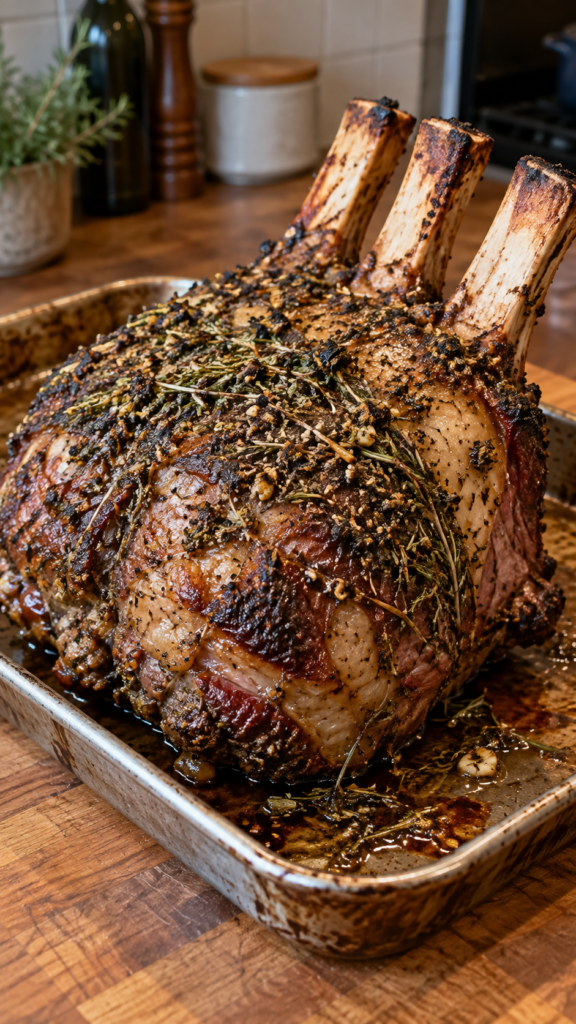

Herb-Crusted Bone-In Prime Rib Roast
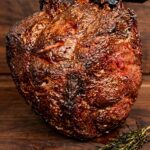
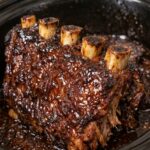
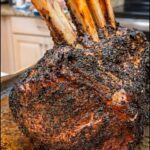
A bone-in prime rib roast makes an impressive centerpiece, with three exposed ribs and a deeply browned garlic-and-herb crust like the roast in the image. The bones help hold the meat above the pan juices, and a thermometer makes it easier to cook the center to your preferred doneness.
Prep Time: 20 minutes, plus optional overnight seasoning
Cook Time: Approximately 1½–2½ hours
Rest Time: 20–30 minutes
Servings: 8–10
Ingredients
- 1 bone-in prime rib roast, about 5–6 lb (usually 3 ribs)
- 2 tablespoons olive oil
- 4 garlic cloves, finely minced
- 2 tablespoons chopped fresh rosemary
- 1 tablespoon chopped fresh thyme
- 1 tablespoon kosher salt
- 2 teaspoons coarsely ground black pepper
- 1 teaspoon onion powder
Instructions
Step 1: Dry and season the roast. Pat the beef thoroughly dry with paper towels. For a more flavorful crust, rub it with the kosher salt and refrigerate it uncovered on a tray overnight. If you are cooking it the same day, add the salt with the other seasonings in Step 3.
Step 2: Prepare the oven and pan. Take the roast out of the refrigerator about 30 minutes before cooking. Preheat the oven to 450°F (230°C). Place the roast bone-side down in a sturdy roasting pan, with the fat-covered side facing up. The bones can serve as a natural rack.
Step 3: Make the herb coating. In a small bowl, mix the olive oil, garlic, rosemary, thyme, black pepper, and onion powder into a paste. Add the salt now if you did not season the beef overnight. Rub the mixture over the top and sides of the roast, pressing the herbs gently into the surface.
Step 4: Begin roasting at high heat. Place the pan in the oven and roast at 450°F (230°C) for 20 minutes. This starts the browning that gives the outside its dark, savory crust.
Step 5: Finish at a lower temperature. Reduce the oven to 325°F (165°C), leaving the roast in place. Continue cooking until a meat thermometer inserted into the thickest part of the beef, without touching a bone, shows your desired temperature. Start checking before you expect the roast to be ready; its shape and your oven affect the cooking time.
Step 6: Rest the meat. Move the roast to a cutting board and loosely cover it with foil. Rest for 20–30 minutes before carving. The center will continue to warm slightly during this time.
Step 7: Carve and serve. With a sharp knife, cut along the curve of the ribs to remove the bones as one section. Slice the roast across the grain into portions. Spoon a little warm pan juice over the slices and serve immediately.
Tips
- Use a thermometer rather than the clock. Two roasts of the same weight can cook at different speeds, especially if one is thicker.
- Keep the herb mixture on the meat. Press it onto the top and sides instead of leaving loose herbs in the hot pan, where they may burn.
- Watch the crust. If it becomes dark before the center is ready, loosely place foil over the top for the remainder of cooking.
- Carve at the table for presentation. You can bring the whole rested roast to the table with its bones attached, then remove the bones and slice it.
- Save the pan juices. Skim off excess fat and serve the juices with the beef. They add flavor without covering the herb crust.
Storage
Cool leftovers promptly and refrigerate sliced beef in an airtight container for up to 3–4 days. Store any pan juices separately or spoon a little over the meat to help keep it moist. Reheat slices gently with a splash of broth; prolonged heating can dry them out. Well-wrapped portions can be frozen for up to 3 months.
Serving Ideas
Serve the prime rib with roasted potatoes, green beans, or a crisp salad. Yorkshire pudding or crusty bread is excellent for soaking up the pan juices. A small bowl of horseradish sauce provides a sharp contrast to the rich beef.
Nutrition Benefits
Prime rib provides protein, iron, zinc, and vitamin B12. It is also a rich cut of beef, and the amount of fat varies from slice to slice. Nutrition per serving depends on portion size and how much visible fat is served.
Recipe Q&A
Can I prepare the roast the day before?
Yes. Salt it and refrigerate it uncovered overnight. Apply the garlic-and-herb paste shortly before roasting.
Do I need a roasting rack?
Not necessarily. When the roast sits bone-side down, the ribs lift much of the meat above the bottom of the pan.
Why does the roast need to rest?
Resting allows the juices to settle and makes the meat easier to carve into tidy slices.
Can I use dried herbs?
Yes. Use about 2 teaspoons dried rosemary and 1 teaspoon dried thyme in place of the fresh herbs.