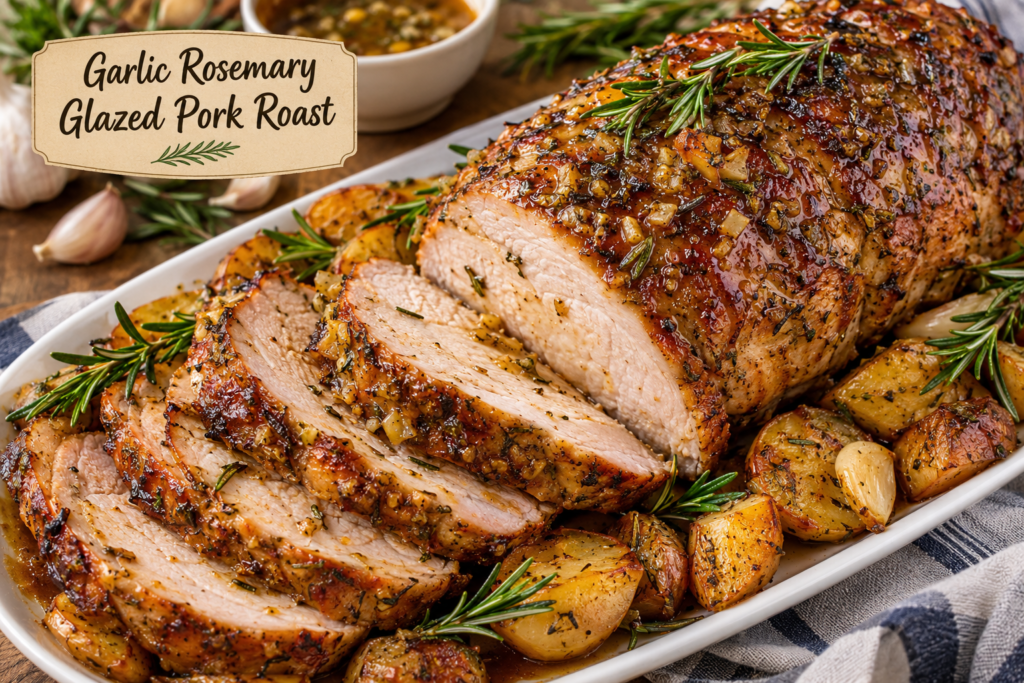

Garlic Rosemary Glazed Pork Roast
Garlic Rosemary Glazed Pork Roast is a tender, savory centerpiece with a beautifully caramelized exterior and a flavorful garlic-herb glaze. Fresh rosemary, garlic, Dijon mustard, honey, and simple seasonings come together to create a roast that tastes comforting enough for a Sunday dinner but is easy enough for a weeknight meal.
The pork is first seasoned generously, then roasted until tender and finished with a glossy garlic-rosemary glaze. As the glaze caramelizes, it creates a delicious crust while keeping the inside juicy and flavorful. Serve it with roasted potatoes, green beans, carrots, mashed potatoes, or a crisp garden salad for a complete family dinner.
Prep Time: 15 minutes
Cook Time: 60–75 minutes
Resting Time: 10–15 minutes
Total Time: About 1 hour 40 minutes
Servings: 6–8
Calories: Approximately 390 per serving
Ingredients
For the Pork Roast
- 3 lb boneless pork loin roast
- 2 tbsp olive oil
- 1½ tsp kosher salt
- 1 tsp freshly ground black pepper
- 1 tsp onion powder
- ½ tsp smoked paprika
For the Garlic Rosemary Glaze
- 5 cloves garlic, finely minced
- 2 tbsp fresh rosemary, finely chopped
- 3 tbsp honey
- 2 tbsp Dijon mustard
- 1 tbsp olive oil
- 1 tbsp apple cider vinegar
- ½ tsp black pepper
- ¼ tsp salt
Optional for the Pan
- ½ cup chicken broth
- 1 small onion, sliced
- 2–3 fresh rosemary sprigs
Instructions
1. Prepare the Pork
→ Remove the pork loin from the refrigerator about 20–30 minutes before cooking. Pat the surface thoroughly dry with paper towels. Drying the meat helps the seasoning adhere and encourages better browning.
→ Preheat the oven to 375°F (190°C).
→ In a small bowl, combine the salt, black pepper, onion powder, and smoked paprika.
→ Rub the pork all over with 2 tablespoons of olive oil, then coat it evenly with the seasoning mixture. Make sure the top, sides, and ends are seasoned.
2. Make the Garlic Rosemary Glaze
→ In another small bowl, combine the minced garlic, chopped rosemary, honey, Dijon mustard, olive oil, apple cider vinegar, black pepper, and salt.
→ Stir until the mixture becomes a smooth, thick glaze.
→ Set aside about one-third of the glaze for brushing on the pork near the end of cooking. Keeping a portion separate prevents the finished glaze from being contaminated by raw meat juices.
3. Sear the Pork
→ Heat a large oven-safe skillet over medium-high heat. Add a small amount of oil if needed.
→ Place the seasoned pork roast in the hot skillet and sear for about 2–3 minutes per side, turning carefully until several sides are nicely browned.
→ Searing is optional, but it gives the roast a deeper savory flavor and creates a beautiful browned exterior.
4. Add the Glaze
→ Remove the skillet from the heat.
→ Brush the pork generously with the garlic rosemary glaze, covering the top and sides.
→ If using, pour the chicken broth around the pork rather than directly over the top. Add sliced onion and fresh rosemary sprigs around the roast.
5. Roast
→ Transfer the skillet to the preheated oven.
→ Roast uncovered for approximately 60–75 minutes, depending on the size and thickness of the pork.
→ After about 35–40 minutes, brush the roast with another layer of glaze.
→ Continue roasting until the thickest part reaches 145°F (63°C) on an instant-read thermometer.
Important: Cooking time can vary considerably between pork roasts. Use the internal temperature rather than time alone to determine doneness.
6. Caramelize the Glaze
→ During the final 5–10 minutes, brush the pork with the reserved glaze.
→ If your oven has a broiler, you can briefly broil the roast for 1–2 minutes to deepen the caramelized finish. Watch it closely because honey can brown quickly.
7. Rest Before Slicing
→ Remove the pork from the oven and transfer it to a cutting board.
→ Loosely cover it with foil and let it rest for 10–15 minutes.
→ Resting allows the juices to redistribute throughout the meat, making the pork easier to slice and helping it remain juicy.
8. Slice and Serve
→ Slice the pork into thin or medium-thick pieces against the grain.
→ Spoon some of the flavorful pan juices over the slices before serving.
→ Garnish with fresh rosemary and a few roasted garlic pieces if desired.
Helpful Tips
Choose the right cut: Pork loin roast works particularly well because it is lean, tender, and large enough to serve a family. Avoid confusing pork loin with pork tenderloin, which is much smaller and requires a shorter cooking time.
Use fresh rosemary: Fresh rosemary gives the glaze a stronger, more aromatic flavor. If using dried rosemary, reduce the quantity to about 2 teaspoons and crush it slightly before adding.
Do not overcook the pork: Pork loin is relatively lean, so overcooking can make it dry. A thermometer is the most reliable way to check doneness.
Pat the pork dry: Removing excess moisture before seasoning helps the exterior brown properly.
Let it rest: Don’t skip the resting period. Cutting immediately after roasting can cause more juices to escape.
Watch the glaze: Honey adds wonderful caramelization, but it can burn if exposed to very high heat for too long. Keep an eye on the roast during the final stage.
Serving Suggestions
This roast pairs beautifully with classic comfort-food sides. Try serving it with:
- Creamy mashed potatoes
- Roasted baby potatoes
- Honey-glazed carrots
- Green beans with garlic
- Roasted Brussels sprouts
- Steamed broccoli
- Apple and walnut salad
- Homemade dinner rolls
- Creamy coleslaw
For a special dinner, arrange sliced pork on a serving platter and surround it with roasted carrots, potatoes, and fresh rosemary sprigs.
Variations
Maple Rosemary Pork Roast: Replace the honey with pure maple syrup for a slightly deeper, warmer sweetness.
Lemon Garlic Version: Add 1 teaspoon of fresh lemon zest and 1 tablespoon of lemon juice to the glaze for a brighter flavor.
Spicy Garlic Rosemary Pork: Add ¼–½ teaspoon of crushed red pepper flakes to give the glaze a gentle kick.
Herb-Roasted Pork: Add 1 teaspoon of fresh thyme or sage along with the rosemary.
Brown Sugar Glaze: Replace the honey with 2 tablespoons of light brown sugar dissolved into the mustard and vinegar mixture.
Storage
Allow leftover pork to cool before placing it in an airtight container. Refrigerate for up to 3–4 days.
For longer storage, freeze sliced pork in a freezer-safe container or tightly wrapped freezer bag for up to 2–3 months.
To reheat, place slices in a covered skillet with a small splash of chicken broth or water. Warm gently over low heat until heated through. This helps prevent the pork from becoming dry.
Nutrition Information
Approximate nutrition per serving, based on 8 servings:
- Calories: 390
- Protein: 47g
- Carbohydrates: 10g
- Fat: 17g
- Saturated Fat: 4g
- Fiber: 1g
- Sugar: 8g
- Sodium: 560mg
Nutrition values are estimates and can vary depending on the exact pork cut, portion size, and ingredients used.
Why You’ll Love This Recipe
Garlic Rosemary Glazed Pork Roast combines the savory flavor of roasted garlic and fresh rosemary with a lightly sweet, tangy glaze. The outside becomes beautifully browned and caramelized while the pork remains tender and juicy when cooked to the proper internal temperature.
It is also versatile enough for many occasions. Serve it as a comforting Sunday roast, prepare it for a holiday dinner, or make it ahead for easy weekday meals. Leftovers can be sliced for sandwiches, added to salads, or reheated with roasted vegetables.
Frequently Asked Questions
Can I make this with pork tenderloin?
Yes, but pork tenderloin is much smaller and cooks considerably faster. Use an instant-read thermometer and begin checking the temperature early.
Can I prepare the glaze ahead of time?
Yes. The glaze can be prepared up to a day ahead and refrigerated in a covered container. Bring it out shortly before cooking so it is easy to brush onto the pork.
Should I cover the pork while roasting?
Generally, no. Roasting uncovered helps the exterior brown and allows the glaze to caramelize. If the top becomes too dark before the pork reaches temperature, loosely cover it with foil.
How do I know when pork is done?
The thickest part of the roast should reach 145°F (63°C). Insert the thermometer into the center of the meat without touching the pan or bone.
Can I make this without searing?
Absolutely. You can place the seasoned pork directly into the roasting pan, brush it with glaze, and roast it. Searing simply adds extra browning and flavor.
What should I do with the leftovers?
Thinly slice leftover pork and use it in sandwiches, wraps, salads, grain bowls, or quick dinners with roasted vegetables.
Final Tip
For the most flavorful Garlic Rosemary Glazed Pork Roast, don’t rush the resting step. Once the pork reaches the proper temperature, give it 10–15 minutes before slicing. The combination of a fragrant rosemary-garlic glaze, caramelized exterior, and juicy slices makes this an easy centerpiece that looks and tastes special without requiring complicated preparation.