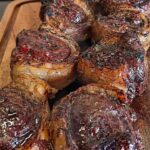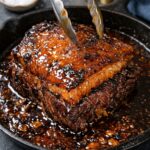

Grilled Tomahawk Ribeye Steak with Garlic Herb Butter
Prep Time: 15 minutes
Resting Before Cooking: 30–45 minutes
Cook Time: 20–30 minutes
Resting After Cooking: 10–15 minutes
Servings: 2–4
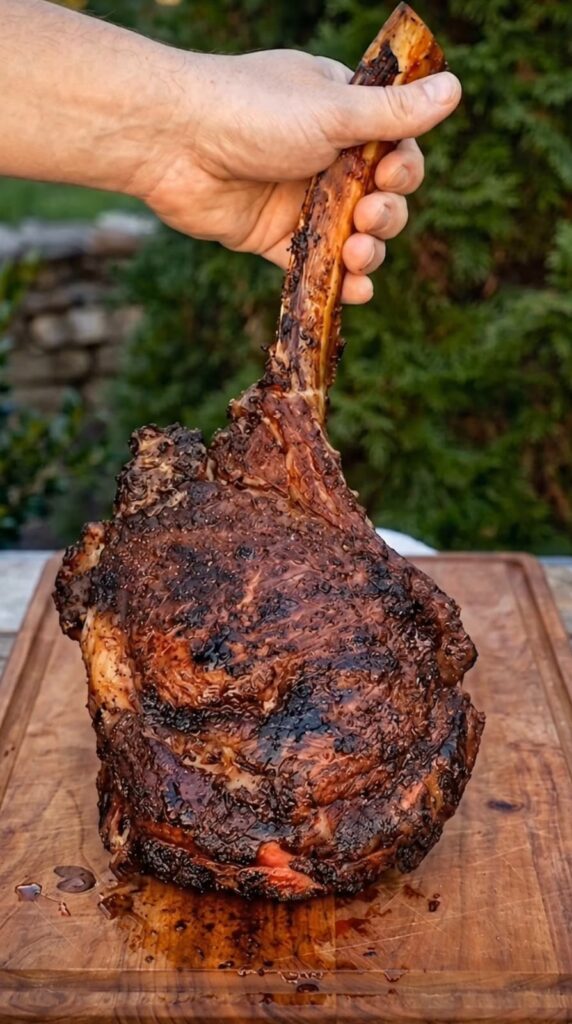
This impressive tomahawk ribeye is cooked slowly over indirect heat, finished over a blazing-hot flame, and basted with garlic-rosemary butter. Reverse-searing provides a juicy center and a deeply browned crust.
Ingredients
For the Steak
1 large tomahawk ribeye steak, approximately 2½–3 pounds and 2 inches thick
2 tablespoons olive oil
1½ tablespoons kosher salt
2 teaspoons freshly ground black pepper
1 teaspoon garlic powder
1 teaspoon onion powder
1 teaspoon smoked paprika
1 teaspoon dried rosemary
1 teaspoon dried thyme
For the Garlic Herb Butter
3 tablespoons unsalted butter
3 garlic cloves, lightly crushed
2 fresh rosemary sprigs
2 fresh thyme sprigs, optional
For Serving
Flaky sea salt, optional
Freshly ground black pepper
Chopped fresh parsley, optional
Lemon wedges, optional
Instructions
Remove the steak from the refrigerator 30–45 minutes before grilling. Unwrap it and pat every surface thoroughly dry with paper towels.
Trim only any unusually thick or loose pieces of exterior fat. Leave most of the fat intact because it adds flavor and protects the meat during cooking.
Rub the steak lightly with olive oil, including its edges.
Combine the kosher salt, black pepper, garlic powder, onion powder, smoked paprika, dried rosemary, and thyme in a small bowl.
Season the steak generously on both sides and around the thick edges. Gently press the seasoning onto the surface.
Prepare the grill for two-zone cooking. Heat one side to high direct heat and keep the opposite side at medium-low indirect heat. Aim for approximately 250–275°F on the indirect side.
Clean and lightly oil the grill grates.
Place the steak over indirect heat with the bone positioned toward the hotter side. Close the grill.
Cook the steak slowly, turning it every 5–7 minutes so it cooks evenly. Check the center with an instant-read thermometer, inserting the probe into the thickest part without touching the bone.
When the steak is approaching your desired internal temperature, transfer it temporarily to a clean platter.
Increase the direct-heat side of the grill to its highest setting. Allow the grates to become extremely hot.
Return the steak to the grill over direct heat. Sear it for 1–2 minutes per side until it develops a deeply browned, lightly charred crust.
Use sturdy tongs to hold the steak upright and sear the fatty edges for approximately 30–60 seconds.
Place a small grill-safe cast-iron skillet over the heat. Add the butter, crushed garlic, rosemary, and optional thyme.
When the butter melts and becomes fragrant, place the steak briefly in the skillet or spoon the hot garlic-herb butter repeatedly over its surface.
Check the steak’s internal temperature before removing it from the heat. USDA guidance recommends cooking whole beef steaks to at least 145°F and allowing them to rest for at least 3 minutes.
Transfer the steak to a clean cutting board. Spoon some garlic-herb butter over it and tent it loosely with foil.
Let the steak rest for 10–15 minutes. Do not slice it immediately, because resting helps retain its juices.
Hold the bone firmly and slice the meat away from it using a sharp carving knife.
Cut the ribeye against the grain into approximately ½-inch-thick slices.
Arrange the slices beside the bone for presentation. Spoon the remaining garlic-herb butter and resting juices over the meat.
Finish with flaky salt, black pepper, chopped parsley, or a squeeze of lemon, if desired. Serve immediately.
Tips
Select a well-marbled steak of even thickness.
Drying the surface thoroughly is essential for creating a dark crust.
Reverse-searing provides better control when cooking such a thick steak.
Keep the grill lid closed during indirect cooking to maintain consistent heat.
Avoid piercing the meat with a fork; use tongs to turn it.
Position the thermometer away from the bone, since the bone can affect the reading.
Watch for flare-ups when searing the fatty edges.
Let the steak rest uncovered or loosely tented. Wrapping it tightly may soften the crust.
Slice only the amount you plan to serve so the remaining steak retains more moisture.
Recommended Side Dishes
Serve the tomahawk steak with:
Garlic mashed potatoes
Grilled asparagus
Roasted mushrooms
Creamed spinach
Crispy potato wedges
Grilled corn
Fresh garden salad
Chimichurri or peppercorn sauce
Storage
Allow leftover steak to cool, then place it in an airtight container.
Refrigerator: Store for 3–4 days.
Freezer: Wrap tightly and freeze for up to 3 months.
Reheating: Place the slices in a covered skillet with a spoonful of beef broth or butter. Warm over low heat until heated through.
USDA guidance recommends reheating leftovers to 165°F.
Avoid repeatedly reheating the entire steak, as this can make it dry and tough.
Nutritional Information
Approximate amount per serving, based on four servings:
Calories: 720
Protein: 56 g
Carbohydrates: 3 g
Fat: 54 g
Fiber: 0 g
Sugar: 0 g
Sodium: 1,100 mg
Nutrition will vary depending on the steak’s fat content, serving size, and amount of butter consumed.
Benefits
Ribeye provides a substantial amount of high-quality protein.
Beef contains iron, zinc, selenium, and vitamin B12.
Reverse-searing helps cook a thick steak more evenly.
One large tomahawk can provide several generous servings.
Leftover steak works well in sandwiches, salads, tacos, and breakfast skillets.
Frequently Asked Questions
Can I cook a tomahawk steak without a grill?
Yes. Cook it slowly in a 250°F oven until it approaches the desired temperature, then sear it in a very hot cast-iron skillet.
Why should I reverse-sear a tomahawk steak?
Its thickness makes it difficult to cook evenly over direct heat alone. Slow cooking followed by intense searing provides greater control.
Can I season it overnight?
Yes. Salt the steak and refrigerate it uncovered on a rack overnight. Add the remaining seasonings before grilling.
Why did my steak develop a gray band?
The grill may have been too hot during the slow-cooking stage. Maintain moderate indirect heat and reserve intense heat for the final sear.
Can I use salted butter?
Yes, but reduce the kosher salt slightly to prevent the finished steak from becoming overly salty.
Should I wrap the exposed bone in foil?
This is optional. Foil can help keep the bone lighter for presentation, but it does not affect the steak’s flavor.