
Garlic Herb Crusted Standing Rib Roast
Prep Time: 25 minutes
Resting Time Before Cooking: 1 hour
Cook Time: 2–3 hours
Final Resting Time: 25–30 minutes
Servings: 8–10
Description
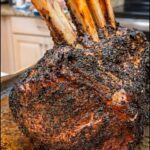
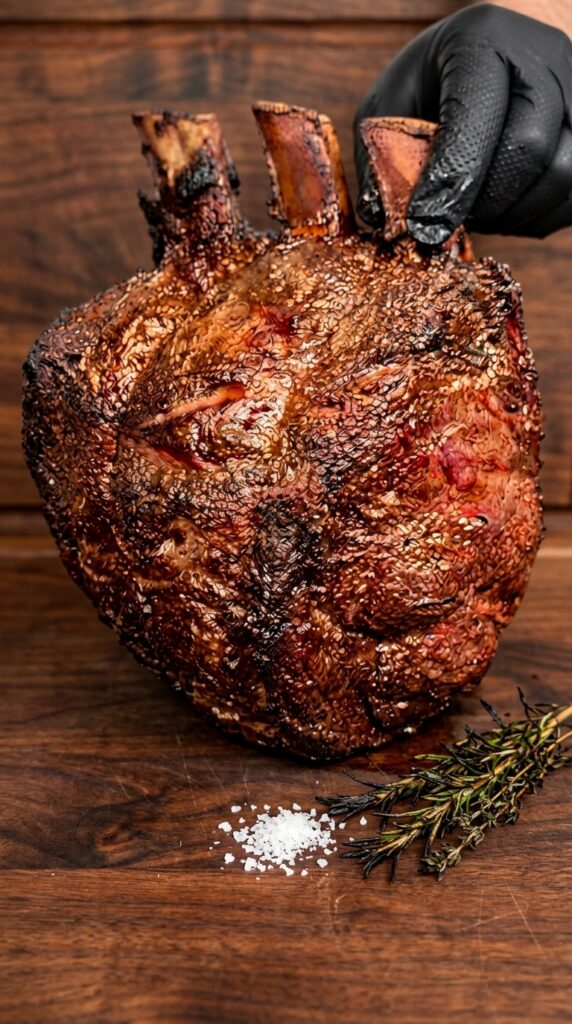
Garlic Herb Crusted Standing Rib Roast is an impressive beef centerpiece with a deeply browned exterior, juicy interior, and bold flavors of garlic, rosemary, thyme, black pepper, and butter. Inspired by the bone-in roast shown in the photo, this recipe uses a standing rib roast, also commonly called a bone-in prime rib roast.
The large beef roast is seasoned generously and coated with a simple garlic-herb butter. During roasting, the exterior develops a dark, savory crust while the bones help create a dramatic presentation. The combination of fresh rosemary, thyme, garlic, coarse black pepper, and beef is classic and doesn’t require a complicated marinade.
The most important part of preparing a rib roast is controlling its internal temperature. Because such a large roast continues cooking after it leaves the oven, removing it slightly before it reaches your desired final temperature helps prevent overcooking.
This is an excellent choice for Christmas dinner, Thanksgiving gatherings, Sunday dinner, New Year’s celebrations, or any occasion when you want a restaurant-style beef roast at home.
Ingredients
For the Rib Roast
- 1 bone-in standing rib roast, about 7–8 lb, preferably 3–4 ribs
- 2 tablespoons kosher salt
- 1½ tablespoons coarsely ground black pepper
- 1 tablespoon olive oil
For the Garlic Herb Butter
- 6 tablespoons unsalted butter, softened
- 6 garlic cloves, finely minced
- 1½ tablespoons fresh rosemary, finely chopped
- 1 tablespoon fresh thyme leaves
- 1 teaspoon garlic powder
- 1 teaspoon onion powder
- 1 teaspoon smoked paprika
- ½ teaspoon freshly ground black pepper
Optional Pan Ingredients
- 1 large onion, quartered
- 1 whole garlic bulb, halved
- 1 cup low-sodium beef broth
- 3–4 sprigs fresh rosemary
- 4–5 sprigs fresh thyme
For Simple Pan Jus, Optional
- Pan drippings from the roast
- 1–1½ cups low-sodium beef broth
- 1 teaspoon Worcestershire sauce
- Salt and black pepper, to taste
Instructions
1. Prepare the Beef
Remove the rib roast from its packaging and pat the entire surface thoroughly dry with paper towels.
If there is a very thick layer of exterior fat, trim some of it away, but leave approximately ¼ inch. This fat contributes flavor and helps protect the meat during roasting.
Season the roast generously on all sides with kosher salt and coarse black pepper.
For an even deeper crust, you can season the roast the night before and leave it uncovered on a rack in the refrigerator. This dry-brining method gives the salt time to season the meat and helps dry the exterior.
If you refrigerate it overnight, remove the roast from the refrigerator about 1 hour before cooking.
2. Prepare the Garlic Herb Butter
Place the softened butter in a small bowl.
Add minced garlic, chopped rosemary, thyme, garlic powder, onion powder, smoked paprika, and black pepper.
Mix thoroughly until everything is evenly incorporated.
The mixture should form a thick, spreadable herb butter.
3. Preheat the Oven
Preheat the oven to 450°F (230°C).
Position an oven rack low enough that the large roast will fit comfortably without touching the top of the oven.
Place the quartered onion, halved garlic bulb, rosemary, and thyme in the bottom of a roasting pan if using.
Pour about 1 cup beef broth around the vegetables. Keep the liquid below the roast rather than pouring it directly over the seasoned surface.
4. Coat the Rib Roast
Rub approximately 1 tablespoon olive oil over the roast.
Next, spread the garlic herb butter generously over the entire exposed surface, concentrating particularly on the top and sides.
Press the mixture gently against the meat so the herbs and garlic adhere.
Place the roast bone-side down in a sturdy roasting pan. The rib bones naturally act like a roasting rack and elevate much of the meat above the bottom of the pan.
5. Start at High Heat
Place the uncovered roast into the 450°F oven.
Roast for approximately 20 minutes.
This initial high-temperature roasting encourages deep surface browning and starts developing the flavorful crust.
Avoid opening the oven door unnecessarily.
6. Reduce the Temperature
After 20 minutes, reduce the oven temperature to 325°F (165°C).
Continue roasting until the center approaches your desired doneness.
Because roast size, shape, starting temperature, oven calibration, and bone structure vary, cooking time should only be treated as an estimate.
For a 7–8 lb bone-in roast, expect roughly another 1½–2½ hours, but begin checking well before you think it will be finished.
7. Check the Internal Temperature
An instant-read or leave-in meat thermometer is strongly recommended.
Insert the thermometer into the thickest part of the roast, avoiding direct contact with the bone.
For a roast that will finish around medium-rare after resting, many cooks remove it when the center is approximately 125–130°F (52–54°C).
For medium, remove it around 135°F (57°C).
Remember that the internal temperature can continue rising during the resting period.
If serving people who need meat cooked to a higher degree of doneness, follow appropriate food-safety guidance and adjust accordingly.
8. Rest the Roast
Transfer the cooked rib roast to a large cutting board.
Tent it loosely with aluminum foil.
Allow it to rest for 25–30 minutes before carving.
Do not skip the resting period. A large roast retains significant heat, and resting allows the juices to redistribute while carryover cooking finishes the center.
Cutting immediately can cause considerably more juice to run onto the cutting board.
9. Make the Optional Pan Jus
While the roast rests, carefully pour the pan drippings through a fine strainer into a saucepan.
Allow the fat to rise and spoon off as much excess fat as desired.
Add 1 cup beef broth and Worcestershire sauce.
Bring to a gentle simmer over medium heat.
Cook for 5–8 minutes, allowing the liquid to reduce slightly.
Taste before adding salt because the drippings may already be well seasoned.
Add black pepper and additional broth if needed.
This should remain relatively thin like an au jus rather than becoming a thick gravy.
10. Carve the Rib Roast
For easier carving, first cut along the curve of the rib bones to separate the main roast from the bone section.
Do not discard the ribs. They contain flavorful meat and can be served separately.
Place the boneless portion flat-side down on the cutting board.
Using a sharp carving knife, cut the beef across the grain into slices approximately ½–¾ inch thick.
For a more dramatic steakhouse-style serving, cut thicker slices.
Arrange the slices on a warm serving platter and spoon a small amount of pan jus around them rather than completely covering the crust.
Serve immediately.
Notes
Standing rib roast is naturally tender and richly flavored, so it does not require a long list of ingredients. Good-quality beef, adequate seasoning, fresh herbs, garlic, and careful temperature control are the main components of this recipe.
The dark crust is created through browning rather than by simply cooking the interior longer. This is why the recipe begins with high heat and then finishes at a lower temperature.
The exact cooking time can vary substantially. Always rely primarily on internal temperature rather than a fixed number of minutes per pound.
If using a smaller or larger roast, the same seasoning method works well. Simply adjust the quantity of herb butter and monitor the internal temperature.
Tips for the Best Rib Roast
Pat the beef completely dry before seasoning. A dry exterior browns much more effectively than a wet one.
If time permits, salt the roast and refrigerate it uncovered overnight. This is one of the easiest ways to improve seasoning and crust development.
Fresh rosemary and thyme provide excellent flavor, but finely chop them so large herb pieces don’t burn on the surface.
Use softened rather than melted butter. Soft butter adheres to the meat much more effectively.
Keep the rib bones attached while roasting for an attractive presentation and easier positioning in the roasting pan.
Invest in a reliable meat thermometer. With an expensive cut like rib roast, temperature monitoring is far more dependable than estimating doneness based on cooking time.
Remember carryover cooking. A large roast can increase several degrees while resting.
Do not cover the roast tightly with foil during resting. A loose tent keeps it warm while helping preserve the crust.
Use a very sharp carving knife and slice across the grain for maximum tenderness.
If some guests prefer more well-done beef, the end slices will naturally be more cooked than slices from the center.
Storage
Allow leftover rib roast to cool and refrigerate it within 2 hours.
Store sliced or unsliced beef in an airtight container in the refrigerator for 3–4 days.
If possible, store leftover pan jus separately. When reheating, adding a little jus helps prevent the beef from becoming dry.
For freezing, wrap individual portions tightly in freezer-safe material and place them in an airtight freezer container. Freeze for up to 2–3 months for best quality.
Thaw frozen beef overnight in the refrigerator.
To reheat without overcooking, place the sliced beef in a covered baking dish with a few tablespoons of beef broth or reserved jus. Warm in a 275°F (135°C) oven until heated through.
Avoid prolonged reheating at high temperatures because rib roast can quickly become dry.
Nutritional Information
Approximate nutrition per serving, based on 10 servings:
Calories: 560–650
Protein: 45–52 g
Carbohydrates: 2–4 g
Fat: 40–48 g
Saturated Fat: 17–21 g
Fiber: less than 1 g
Sugar: 1 g
Sodium: 650–850 mg
Iron: approximately 4–5 mg
Zinc: approximately 8–10 mg
These figures are estimates. Actual nutrition depends heavily on the specific rib roast, amount of exterior fat eaten, serving size, butter quantity, and optional sauce.
Benefits
Rib roast is particularly rich in high-quality protein. A substantial serving can provide roughly 45–50 grams of protein, depending on portion size.
Beef is also naturally rich in vitamin B12, zinc, iron, selenium, and other micronutrients.
Iron supports normal red blood cell and hemoglobin production, while vitamin B12 contributes to normal nervous-system and red blood cell function. Zinc is involved in normal immune function and numerous metabolic processes.
Because the main dish contains very few carbohydrates, you can easily customize the overall meal through your choice of sides.
For a balanced dinner, pair smaller portions of the rich beef with roasted vegetables, green beans, asparagus, Brussels sprouts, carrots, or a fresh salad.
Frequently Asked Questions
What cut of beef is shown in this style of recipe?
A large bone-in roast with several exposed rib bones is typically prepared as a standing rib roast or bone-in prime rib. The exact cut cannot be confirmed from a photo alone, but this recipe is designed to create that appearance and style.
Is prime rib the same as ribeye?
They come from the same general rib section, but the terminology usually describes different preparations. Prime rib commonly refers to a larger rib roast, while ribeye commonly refers to individual steaks cut from the rib section.
Does a rib roast have to be USDA Prime?
No. The term “prime rib” in a recipe does not necessarily mean the beef has been graded USDA Prime. Choice-grade standing rib roast can also produce an excellent result.
Should I cook the roast bone-side up or down?
Bone-side down works very well. The ribs elevate the roast from the pan and effectively create a natural roasting rack.
How can I get a dark crust without burning the beef?
Dry the surface thoroughly, season it generously, start with high heat, and then lower the oven temperature. The high-temperature stage develops browning while the lower-temperature stage cooks the center more gently.
Why is a thermometer so important?
A difference of only several degrees can noticeably change the doneness of rib roast. Cooking time alone cannot account for variations in roast shape, oven accuracy, starting temperature, and bone size.
Can I prepare the roast the night before?
Yes. In fact, seasoning it with salt and refrigerating it uncovered overnight can improve both flavor and exterior browning. Add the garlic-herb butter shortly before roasting.
Can I use dried herbs?
Yes. Use approximately one-third as much dried herb as fresh because dried herbs have a more concentrated flavor.
What sides go best with rib roast?
Mashed potatoes, roasted baby potatoes, Yorkshire pudding, green beans, creamed spinach, asparagus, Brussels sprouts, roasted carrots, mushrooms, and dinner rolls all pair beautifully with this roast.
Can I make gravy instead of au jus?
Yes. After preparing the pan liquid, thicken it with a cornstarch slurry or a butter-and-flour roux. Simmer until it reaches your desired gravy consistency.
How much rib roast should I buy?
As a general planning estimate, one bone-in rib can often serve about two adults, depending on appetite and the amount of side dishes. A 3–4 rib roast is usually appropriate for approximately 6–10 people.
What can I make with leftovers?
Thinly sliced rib roast is excellent in steak sandwiches, French dip sandwiches, beef-and-egg breakfasts, wraps, salads, quesadillas, or warm beef bowls. Keep reheating gentle so the already-cooked beef stays tender.
Final Serving Suggestion
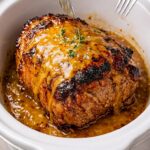
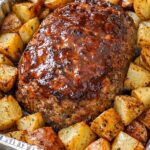
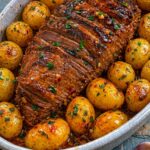
Present the whole Garlic Herb Crusted Standing Rib Roast before carving for the most impressive presentation. Surround it with roasted potatoes, rosemary sprigs, garlic, and vegetables, then carve thick slices at the table.
Serve with warm pan jus on the side so everyone can add as much as they like without softening that deeply browned garlic-herb crust.