
# Sticky Honey Garlic Glazed Pork Tenderloin
## Description
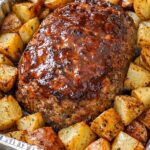
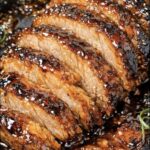
Sticky Honey Garlic Glazed Pork Tenderloin is a rich, juicy, and beautifully caramelized main dish made with tender pork coated in a sweet and savory homemade glaze. The outside develops a dark, glossy, slightly charred crust while the inside stays moist and tender. Honey and brown sugar provide sweetness and help create that sticky finish, while soy sauce adds savory depth. Fresh garlic, a touch of vinegar, and smoked paprika balance the sweetness and give the pork a deeper, more complex flavor.
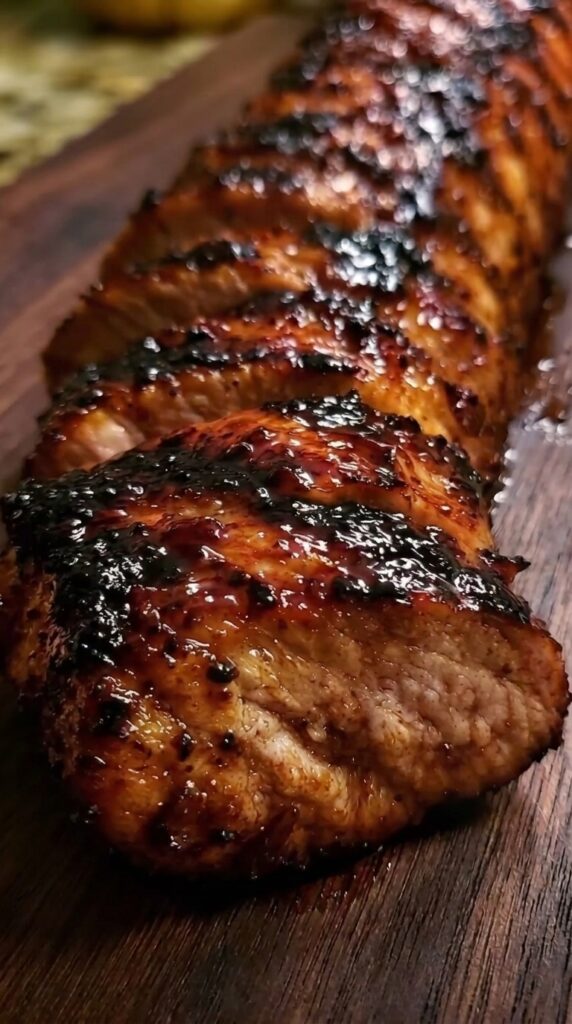
This recipe looks impressive enough for a special dinner but is simple enough for a weeknight meal. The pork tenderloin is first seasoned and seared to develop a flavorful crust, then brushed with the glaze and roasted until perfectly cooked. Extra glaze is added while cooking so every slice has that shiny, caramelized coating seen in the finished dish.
Serve it with mashed potatoes, roasted vegetables, rice, green beans, salad, or glazed carrots for a complete meal.
## Prep Time
15 minutes
## Cook Time
25–30 minutes
## Resting Time
5–10 minutes
## Total Time
45–55 minutes
## Servings
4–6 servings
## Ingredients
### For the Pork
* 1½ to 2 pounds pork tenderloin
* 1 tablespoon olive oil
* 1 teaspoon smoked paprika
* 1 teaspoon garlic powder
* ½ teaspoon onion powder
* ¾ teaspoon salt
* ½ teaspoon freshly ground black pepper
### For the Sticky Honey Garlic Glaze
* ⅓ cup honey
* 3 tablespoons soy sauce
* 2 tablespoons brown sugar
* 2 tablespoons ketchup
* 4 garlic cloves, finely minced
* 1 tablespoon apple cider vinegar
* 1 tablespoon olive oil
* 1 teaspoon Dijon mustard
* ½ teaspoon smoked paprika
* ¼ teaspoon crushed red pepper flakes, optional
* 1 teaspoon cornstarch
* 1 tablespoon water
## Instructions
### 1. Prepare the Pork
Remove the pork tenderloin from the refrigerator about 15 minutes before cooking so it can lose some of its chill.
Pat the pork completely dry with paper towels. Removing excess moisture helps the outside brown properly instead of steaming.
If the tenderloin has a thin silver membrane on the surface, carefully remove it with a sharp knife. This tough connective tissue does not soften much during cooking and can make the meat slightly chewy.
### 2. Season the Tenderloin
In a small bowl, combine smoked paprika, garlic powder, onion powder, salt, and black pepper.
Rub the pork lightly with olive oil, then season it evenly on all sides with the seasoning mixture. Press the seasoning gently into the meat so it stays attached while searing.
### 3. Make the Honey Garlic Glaze
In a small saucepan, combine honey, soy sauce, brown sugar, ketchup, minced garlic, apple cider vinegar, olive oil, Dijon mustard, smoked paprika, and red pepper flakes if using.
Place the saucepan over medium-low heat.
Cook for 3–4 minutes, stirring frequently, until the sugar dissolves and the sauce begins to gently bubble.
Mix the cornstarch and water in a separate small bowl until smooth.
Slowly stir the cornstarch mixture into the glaze. Continue cooking for another 1–2 minutes until the glaze becomes slightly thick and glossy.
Remove from the heat.
The sauce should be thick enough to coat the back of a spoon but still thin enough to brush easily over the pork.
### 4. Preheat the Oven
Preheat the oven to 400°F or 200°C.
If possible, use an oven-safe skillet because you can sear and roast the pork in the same pan.
### 5. Sear the Pork
Heat a large oven-safe skillet over medium-high heat.
Add a small amount of olive oil.
Once the skillet is hot, carefully place the pork tenderloin in the pan.
Sear it for about 2 minutes on each side, turning until most of the exterior is nicely browned.
You are not trying to cook the pork completely at this point. The goal is simply to create a flavorful browned crust.
### 6. Add the First Layer of Glaze
Reduce the heat slightly.
Brush a generous layer of honey garlic glaze over the entire pork tenderloin.
Reserve at least one-third of the glaze for later.
Turn the pork once or twice so the sauce begins coating the meat evenly.
Avoid cooking the glaze over very high heat for too long because honey and sugar can burn.
### 7. Roast the Pork
Transfer the skillet to the preheated oven.
Roast for approximately 15–20 minutes, depending on the thickness of the tenderloin.
Halfway through cooking, carefully remove the skillet from the oven and brush the pork with another layer of glaze.
Return it to the oven and continue roasting.
For the juiciest result, use an instant-read thermometer. Pork tenderloin is ready when the thickest part reaches approximately 145°F or 63°C.
### 8. Caramelize the Exterior
For the dark, sticky, caramelized appearance shown in the finished dish, brush the pork with another thin layer of glaze during the final few minutes.
You can place it under the broiler for about 1–2 minutes if desired.
Watch it continuously because the honey glaze can darken very quickly.
A few darker caramelized areas are delicious, but avoid letting the glaze burn completely.
### 9. Rest the Pork
Remove the pork from the oven.
Transfer it to a cutting board and loosely cover it with foil.
Allow it to rest for 5–10 minutes.
This step is important because resting allows the juices to redistribute throughout the meat. Cutting immediately can cause much of the moisture to run onto the cutting board.
### 10. Slice and Serve
Slice the pork tenderloin into thick pieces using a sharp knife.
Arrange the slices slightly overlapping on a wooden serving board or platter.
Warm the remaining glaze if necessary and brush or drizzle it over the sliced pork.
Serve immediately while warm.
## Recipe Notes
Pork tenderloin is naturally lean, so avoiding overcooking is one of the most important parts of this recipe.
Use pork tenderloin rather than pork loin. Pork loin is much larger and requires a different cooking time.
The glaze thickens as it cools. If it becomes too thick, stir in 1–2 teaspoons of water.
If you prefer a less sweet glaze, reduce the brown sugar to 1 tablespoon.
For a stronger garlic flavor, use 5–6 cloves of fresh garlic.
For additional heat, increase the red pepper flakes or add a teaspoon of chili garlic sauce.
Low-sodium soy sauce works particularly well because it prevents the glaze from becoming overly salty.
## Tips for the Best Pork Tenderloin
### Pat the Pork Dry
A dry surface browns much better than a wet one. This is especially important when you want a dark caramelized exterior.
### Use a Meat Thermometer
Pork tenderloin can go from juicy to dry fairly quickly. A thermometer makes it much easier to remove it from the oven at the right time.
### Don’t Skip the Sear
Searing creates deeper roasted flavors and gives the glaze something to cling to.
### Glaze in Layers
Instead of applying all the sauce at once, brush the tenderloin several times during cooking. Multiple thin layers create a better sticky coating.
### Watch the Sugar Carefully
Honey and brown sugar can burn under intense heat. Keep an eye on the pork during broiling.
### Let It Rest
Allowing the pork to rest before slicing is essential for juicy meat.
### Slice Against the Grain
Cutting against the direction of the muscle fibers gives you more tender slices.
## Serving Suggestions
This pork tenderloin pairs beautifully with creamy mashed potatoes because the potatoes absorb the extra honey garlic sauce.
Roasted baby potatoes are another excellent choice, especially when seasoned with garlic and rosemary.
For vegetables, try roasted broccoli, asparagus, Brussels sprouts, carrots, or green beans.
Steamed jasmine rice or buttery rice also works well because it balances the intense sweet-savory glaze.
For a lighter meal, serve the pork with a fresh green salad, cucumber salad, or roasted vegetables.
## Nutritional Information
Approximate nutrition per serving, based on 6 servings:
* Calories: 330–370
* Protein: 31–35 g
* Carbohydrates: 27–31 g
* Fat: 10–13 g
* Saturated Fat: 3 g
* Sugar: 22–25 g
* Fiber: less than 1 g
* Sodium: 650–800 mg
Nutritional values are estimates and will vary depending on the exact pork size, ingredients, brands, and amount of glaze consumed.
## Benefits
### Excellent Source of Protein
Pork tenderloin is rich in high-quality protein, which helps support muscle maintenance, tissue repair, and normal body functions.
### Naturally Lean Cut
Tenderloin is one of the leaner cuts of pork, particularly when visible fat and silver skin are trimmed away.
### Contains Important B Vitamins
Pork provides several B vitamins, including thiamine, niacin, vitamin B6, and vitamin B12. These nutrients contribute to normal energy metabolism and nervous system function.
### Provides Essential Minerals
Pork contains minerals including zinc, phosphorus, selenium, and iron.
### Easy to Pair With Vegetables
The rich glaze makes this pork flavorful enough that it pairs easily with simple roasted or steamed vegetables, creating a balanced meal.
## Storage
Allow leftover pork to cool before storing.
Place sliced or whole pork tenderloin in an airtight container and refrigerate for up to 3–4 days.
Keep some leftover glaze with the pork whenever possible. The sauce helps keep the meat moist during reheating.
For longer storage, freeze the cooked pork in an airtight freezer-safe container for up to 2–3 months.
Thaw overnight in the refrigerator before reheating.
## Reheating
For the best texture, place pork slices in a covered skillet over low heat with a tablespoon or two of water or leftover glaze.
Heat gently until warmed through.
You can also reheat the pork in a 325°F or 165°C oven. Cover it with foil to prevent drying.
Microwaving works for individual portions, but use short intervals and avoid overheating because lean pork can become dry.
## Frequently Asked Questions
### Can I make the glaze ahead of time?
Yes. The honey garlic glaze can be prepared 2–3 days ahead and refrigerated in an airtight container. Warm it gently before using.
### Can I marinate the pork in the sauce?
You can, but it is not necessary. The layered glaze provides plenty of flavor. If marinating, keep the pork refrigerated and avoid using marinade that touched raw pork as a finishing sauce unless it has been thoroughly boiled.
### Why did my glaze burn?
Honey and brown sugar caramelize quickly. Excessively high heat or leaving the pork under the broiler too long can burn the sauce. Broil only briefly and watch continuously.
### How do I know when pork tenderloin is cooked?
The most reliable method is checking the thickest portion with a meat thermometer. Aim for approximately 145°F or 63°C, followed by a short resting period.
### Can I cook this without an oven-safe skillet?
Yes. Sear the pork in a regular skillet, then transfer it to a baking dish before glazing and roasting.
### Can I use pork loin instead?
You can use the same flavor profile, but pork loin is considerably larger and requires a longer cooking time. Use a thermometer rather than following the tenderloin cooking time.
### Can I reduce the sweetness?
Yes. Reduce the honey slightly, omit the brown sugar, or increase the vinegar by 1–2 teaspoons for a more savory and tangy glaze.
### What gives the pork the dark caramelized color?
The combination of searing, soy sauce, honey, brown sugar, and a brief final broil creates the deep glossy caramelization.
### What side dishes work best?
Mashed potatoes, roasted potatoes, rice, carrots, green beans, asparagus, broccoli, coleslaw, and fresh salads are all excellent options.
### Can I make this spicy?
Yes. Add extra crushed red pepper flakes, cayenne pepper, chili sauce, or sriracha to the glaze.
### How can I keep the pork juicy?
Avoid overcooking it, check the internal temperature early, and allow the pork to rest before slicing. Adding warm glaze after slicing also helps keep every piece moist and flavorful.