
No-Knead Cranberry & Rosemary Bread with Lemon Butter
Prep Time — 15 minutes active
Rise Time — 12 to 18 hours, plus a 45-minute final rest
Bake Time — 40 to 45 minutes
Cooling Time — At least 1 hour
Servings — 12 slices with lemon butter
Yield — 1 round loaf and about ½ cup lemon butter
Cooking Method — Dutch oven baking
Oven Temperature — 450°F (232°C)
Description
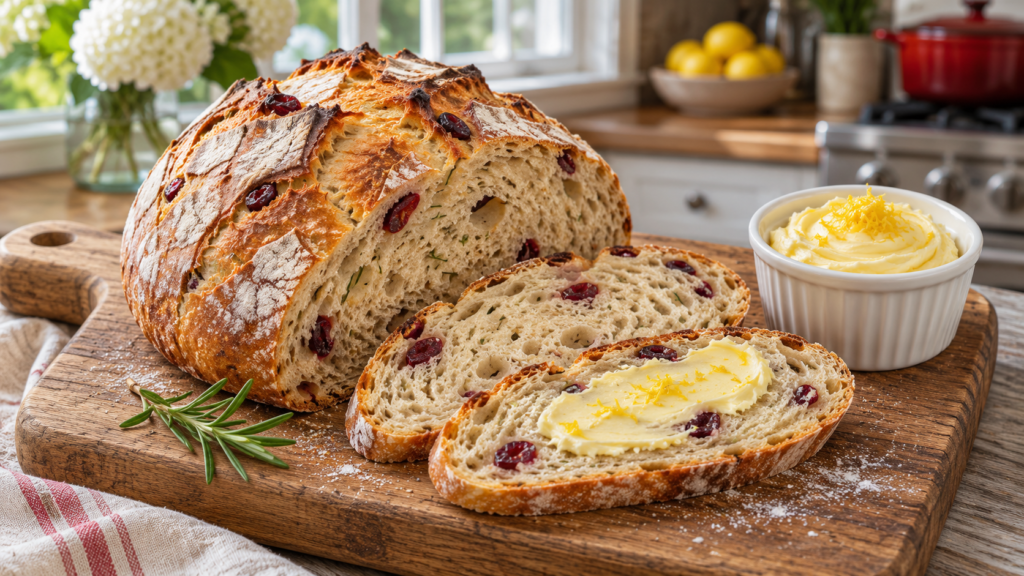
This No-Knead Cranberry & Rosemary Bread with Lemon Butter has a crisp, flour-dusted crust, a tender middle, and chewy bites of cranberry. Finely chopped rosemary gives the loaf a savory flavor that balances the sweet fruit. A spread of whipped lemon butter adds a bright citrus finish, especially when the bread is lightly toasted.
The dough comes together in one bowl with a spoon. Mix it the night before, let it rise on the counter, and bake it the next day. The long rise gives the dough time to develop structure and flavor with very little hands-on work. A covered Dutch oven traps steam early in the bake, helping the loaf expand before the crust turns deep golden.
Serve thick slices with a bowl of soup, set out the loaf with cheese and fruit for a holiday gathering, or toast a slice for breakfast. The bread is lightly sweet from the dried cranberries, so it works with both savory meals and a spoonful of jam.
Ingredients
For the cranberry rosemary bread
– 3 cups bread flour (360 g), plus a little more for shaping
– 1½ teaspoons fine sea salt (about 9 g)
– ¼ teaspoon instant yeast
– ¾ cup dried cranberries (about 100 g)
– 1 tablespoon finely chopped fresh rosemary leaves
– 1½ cups room-temperature water (360 mL)
For the whipped lemon butter
– ½ cup unsalted butter (113 g), softened
– 2 teaspoons finely grated lemon zest
– 1 teaspoon fresh lemon juice
– ⅛ teaspoon fine sea salt
Equipment — A large mixing bowl, a spoon or sturdy spatula, a 4- to 6-quart Dutch oven with an oven-safe lid, high-temperature parchment paper if using, and a wire cooling rack.
Instructions
1. Mix the dough. Stir together the bread flour, salt, and instant yeast in a large bowl. Add the dried cranberries and rosemary and toss to distribute them. Pour in the water and stir until the flour is fully moistened, scraping the bottom and sides of the bowl. The dough should look rough, soft, and sticky. If you find a dry patch at the bottom, press it into the dough with the spoon.
2. Let it rise overnight. Cover the bowl and leave it at room temperature for 12 to 18 hours. Start checking toward the earlier end if your kitchen is warm. The dough is ready to shape when it has expanded noticeably and bubbles are visible across the surface. In a cool kitchen, give it more time if it still looks dense.
3. Shape the loaf. Lightly flour your work surface and use a spatula or dough scraper to ease the dough out of the bowl. Bring the edges toward the center a few times, then turn the dough seam-side down and gently cup it into a round. Tuck any exposed cranberries into the dough so they’re less likely to scorch. Transfer the round to parchment rated for 450°F, if using.
4. Rest the dough and preheat the pot. Cover the shaped loaf loosely and let it rest for about 45 minutes. While it rests, place the covered Dutch oven on the middle rack and preheat the oven to 450°F (232°C). Let the pot heat for about 30 minutes once the oven reaches temperature. Check the manufacturer’s instructions to confirm the pot and lid can be preheated empty at that temperature.
5. Bake covered, then uncovered. Set the hot pot on a heatproof surface and remove the lid with oven mitts. If using parchment, lift the dough by the paper and lower it into the pot. Otherwise, use a floured dough scraper to transfer the round carefully. Cover and bake for 30 minutes. Remove the lid and bake for another 10 to 15 minutes, until the crust is deep golden. An instant-read thermometer inserted into the center should read about 205°F to 210°F.
6. Cool before slicing. Lift the loaf out of the pot and set it on a wire rack for at least 1 hour. This gives the inside time to set and keeps the bottom crust from softening as it cools. Use a serrated bread knife to cut clean slices.
7. Whip the lemon butter. While the bread cools, beat the softened butter with a hand mixer for 1 to 2 minutes, until smooth and fluffy. Mix in the lemon zest and salt, then beat in the lemon juice. You can also mash and stir everything with a fork for a slightly denser spread. Spoon the butter into a small bowl and serve with the sliced bread.
Helpful Baking Tips
– Weigh the flour if you can. The 360-gram measurement gives the most consistent dough. If you’re using cups, spoon the flour into the measuring cup and level the top. Scooping straight from the bag can pack in extra flour and make the loaf dense.
– Use just enough flour to shape the dough. A sticky dough is expected. Dust your hands and work surface lightly and use a dough scraper if the dough sticks. Work gently to preserve the bubbles that formed overnight.
– Use the dough as your timer. A warm room can speed up the rise, while a cool room can slow it down. Look for a puffy dough dotted with bubbles. If it has started collapsing in the middle, shape it right away and check it early during the final rest.
– Chop the rosemary finely. Strip the leaves off the woody stems and mince them before adding them. Small pieces spread evenly through the loaf and mellow the flavor in each bite.
– Zest the lemon before juicing it. A whole lemon is easier to hold while grating. Use the yellow peel for the butter and stop before you reach the bitter white layer underneath.
– Let the crust get deep golden. The loaf will still look pale when you take off the lid. The uncovered bake gives the crust time to brown and crisp. Check it after 10 minutes, especially if your oven tends to run hot.
Recipe Notes
Flour options. Bread flour gives the loaf a chewier crumb. All-purpose flour works as a substitute by weight, though the dough may feel softer during shaping. Start with a light dusting of flour on the work surface and add a little more only if needed.
Cranberry and rosemary options. Both sweetened and unsweetened dried cranberries work. Choose sweetened berries for a milder fruit flavor or unsweetened ones for a tarter bite. If you only have dried rosemary, crush 1 teaspoon between your fingers before stirring it into the flour.
Serving ideas. Pair the bread with butternut squash soup, roasted chicken, or a cheese board with sharp cheddar. For breakfast, toast a slice and spread on the lemon butter while it’s warm. The rosemary also makes the loaf a good choice for a turkey and Brie sandwich.
Questions & Answers
Can I use active dry yeast?
Yes. Dissolve ¼ teaspoon active dry yeast in a few tablespoons of slightly warm water taken from the measured recipe water. Stir it into the flour mixture with the remaining water. Give the dough more time if it needs it and shape it once it looks puffy and bubbly.
Can I use fresh cranberries?
Dried cranberries are the most predictable choice for this formula. Fresh berries bring more moisture and a sharper tartness. If you want to try them, use about ½ cup coarsely chopped fresh cranberries, pat them dry, and gently fold them in during shaping. Expect a slightly wetter crumb around the fruit.
Do I need to score the loaf?
Scoring is optional. A shallow slash across the top gives the loaf a place to open as it expands. You can also let it split naturally for a rustic crust.
Why did my bread turn out dense?
The dough may have needed a longer rise, or the flour may have been packed into the measuring cup. Next time, weigh the flour and check for bubbles and visible expansion before shaping. Gentle handling also helps keep the dough airy.
Can I make the lemon butter ahead?
Yes. Make it a day ahead and refrigerate it in a covered container. Let it soften briefly before serving so it spreads easily across the bread.
Nutritional Information
Estimated per serving, based on 12 slices and all the lemon butter divided equally
– Calories — 200
– Carbohydrates — 30 g
– Protein — 4 g
– Total fat — 8 g
– Saturated fat — 5 g
– Fiber — 1 g
– Total sugars — 6 g
– Sodium — 320 mg
The values vary with the flour, dried cranberry brand, and amount of butter served.
Nutritional Benefits
The bread provides carbohydrates for energy and a little protein from the wheat flour. Dried cranberries add some fiber and bring sweetness to the loaf without adding sugar to the dough itself. Many dried cranberries are sweetened, so check the label if you prefer a lower-sugar option. Lemon zest gives the butter a pronounced citrus flavor, and a thin spread is enough to taste it in each bite.