
Honey Mustard Glazed Pork Shoulder Roast
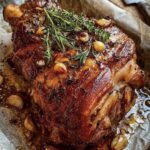
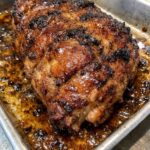
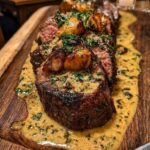
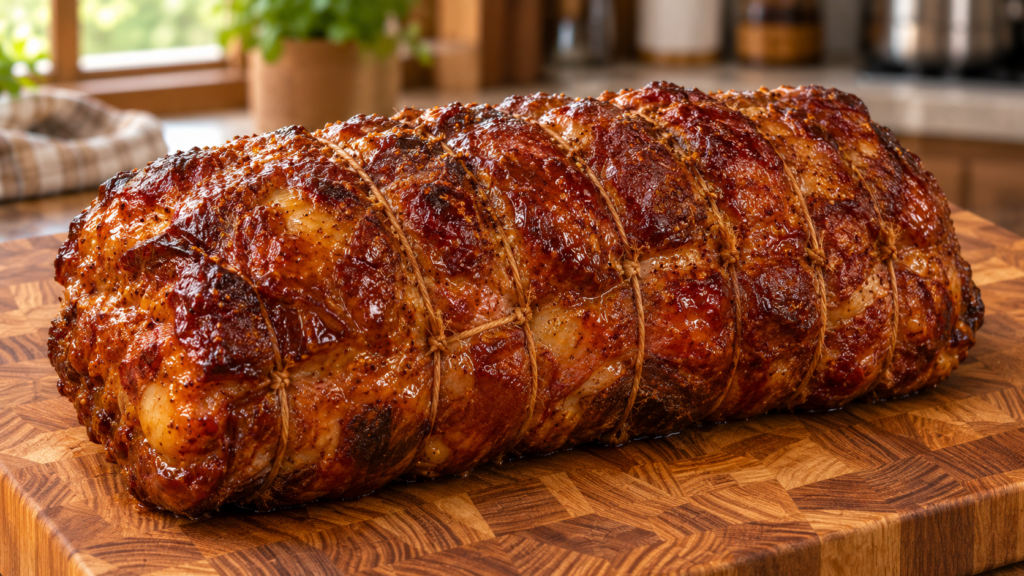
This recipe is inspired by the browned, tied roast in your photograph. The exact meat cut and glaze cannot be confirmed from the image, so this version uses boneless pork shoulder with a honey mustard coating.
Prep Time: 25 minutes
Cook Time: Approximately 4–5 hours
Resting Time: 20–30 minutes
Servings: 10
Cooking Method: Slow oven roasting
Description
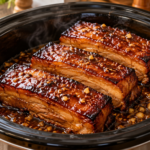
Honey mustard glazed pork shoulder roast is a comforting centerpiece with a deeply golden crust, tender meat, and a glossy finish. Garlic, rosemary, and smoked paprika give the pork a savory base, while honey, mustard, and apple cider vinegar create a balanced glaze.
Pork shoulder contains fat and connective tissue that soften during slow cooking. A gentle oven temperature gives these time to break down, producing a roast that is tender enough to enjoy in thick slices. The glaze goes on toward the end, allowing it to caramelize without burning during the long roasting period.
This recipe works well for Sunday dinner, holiday gatherings, or a family meal with leftovers. Serve it on a wooden carving board, remove the twine, and slice just before bringing it to the table. Mashed potatoes, roasted carrots, green beans, or a crisp cabbage salad make excellent accompaniments.
Ingredients
For the Pork Roast
– 4 lb (1.8 kg) boneless, skinless pork shoulder, rolled and tied
– 1 tbsp olive oil
– 6 garlic cloves, finely minced
– 2 tsp kosher salt, or approximately 1 tsp fine table salt
– 1 tsp freshly ground black pepper
– 2 tsp smoked paprika
– 2 tsp chopped fresh rosemary
– 1 tsp dried thyme
– 1 large onion, thickly sliced
– 1 cup low-sodium chicken broth
– ½ cup water, plus more if needed
For the Honey Mustard Glaze
– ⅓ cup honey
– 3 tbsp Dijon mustard
– 1 tbsp whole-grain mustard
– 2 tbsp apple cider vinegar
– 1 tbsp melted butter
For the Optional Pan Sauce
– Defatted roasting juices
– ½ cup low-sodium chicken broth, as needed
– 1 tbsp cornstarch mixed with 1 tbsp cold water
Equipment
Use a roasting pan or deep ovenproof dish, aluminum foil, a pastry brush, kitchen twine, and a meat thermometer. A sharp carving knife will help you cut neat slices without pulling the roast apart.
Choose a pan that holds the roast comfortably with a little space around it. An oversized pan allows the liquid to evaporate quickly, which can leave the drippings scorched.
Step-by-Step Instructions
1. Prepare the Oven and Pork
Preheat your oven to 325°F (165°C).
Pat the pork dry with paper towels. Keep the butcher’s twine in place so the roast holds its shape. If the pork has a very thick fat cap, trim it to approximately ¼ inch, leaving enough to protect and flavor the meat.
This recipe uses skinless pork shoulder. A skin-on roast requires a different approach if you want crisp crackling.
2. Make the Garlic Herb Rub
Combine the olive oil, minced garlic, salt, black pepper, smoked paprika, rosemary, and thyme in a small bowl.
Rub this mixture over the entire roast, including the ends and any accessible folds. Spread it evenly rather than leaving thick patches of garlic on top, which can darken during the final roasting stage.
For advance preparation, season the pork, cover it, and refrigerate overnight.
3. Arrange the Roasting Pan
Spread the sliced onion across the bottom of the pan. Place the pork on top with the fat side facing upward.
Pour the broth and water around the roast. Avoid pouring directly over the seasoned surface. The onion forms a simple bed beneath the pork, while the liquid catches the drippings and helps prevent scorching.
Cover the pan tightly with foil.
4. Roast Slowly Until Almost Tender
Roast, covered, for approximately 3–4 hours, then check the center with a thermometer and test the texture.
The meat should be approaching tenderness before you begin glazing. A skewer should enter with some remaining resistance. If the pork still feels firm, cover it again and continue cooking, checking every 20–30 minutes.
Check the pan liquid during cooking. Add a little hot water if the bottom is becoming dry.
5. Prepare the Glaze
Stir together the honey, Dijon mustard, whole-grain mustard, apple cider vinegar, and melted butter.
The mixture should be thick enough to coat the pork but easy to brush. If necessary, loosen it with a teaspoon of warm water.
Divide it between two bowls. Use one portion for brushing during roasting and keep the other separate for the final coating.
6. Glaze and Caramelize
Remove the foil and increase the oven temperature to 400°F (200°C).
Brush a thin layer of glaze over the roast. Return it to the oven for approximately 20–35 minutes, brushing once more with the reserved portion using a clean brush.
Watch the surface carefully. You want a deep golden-brown finish rather than a blackened crust. Tent any areas that darken too quickly with small pieces of foil.
For tender, sliceable shoulder, a practical target is approximately 185–190°F (85–88°C), together with a tenderness check. Temperature alone does not guarantee the texture; the thermometer probe should enter easily, while the roast should still hold together.
7. Rest Before Carving
Transfer the pork to a carving board and cover loosely with foil. Rest for 20–30 minutes.
Resting makes the roast easier to handle and helps reduce the amount of juice lost during carving. Avoid wrapping it tightly, as trapped steam can soften the glazed surface.
Remove every piece of twine before serving.
8. Make the Optional Sauce
Strain the roasting juices into a saucepan and skim off excess fat. Taste before adding salt because the juices become more concentrated during cooking.
Add a little broth if the flavor is too strong. Bring to a gentle simmer, stir in the cornstarch slurry, and cook for 1–2 minutes until lightly thickened.
Serve the sauce alongside the pork rather than pouring it over the entire glazed crust.
9. Slice and Serve
Use a sharp knife to carve the roast across the grain where possible. Rolled shoulder contains muscles running in different directions, so adjust your cutting angle as needed.
Cut moderately thick slices and support them with a serving spatula. If the meat is exceptionally tender, serve it in generous pieces instead.
Helpful Cooking Tips
– Choose shoulder rather than loin: Pork loin is leaner and needs a much shorter cooking time. It cannot be substituted using these instructions.
– Use texture as your guide: Shoulder needs enough time for its connective tissue to soften. A firm roast usually needs longer.
– Glaze near the end: Honey can burn if exposed to high heat for too long.
– Keep the pan moist: A shallow layer of liquid protects the drippings without submerging the roast.
– Avoid excessive trimming: Some exterior fat helps keep the surface rich and flavorful.
– Allow extra time: The thickness and shape of a rolled roast affect cooking time considerably.
Recipe Notes and Variations
Sweeter glaze: Add 1 tbsp brown sugar to the glaze for a richer caramel flavor. Watch closely during the final roasting stage.
Maple variation: Replace the honey with pure maple syrup. The coating may be slightly thinner but will still caramelize.
Different herbs: Fresh thyme can replace rosemary. If using dried rosemary, reduce the amount to approximately ¾ tsp and crush it finely.
Milder mustard flavor: Replace the whole-grain mustard with additional Dijon. Avoid omitting all the mustard, as it balances the sweetness.
Make-ahead option: Prepare the rub and glaze a day ahead, storing them separately in the refrigerator. Stir the glaze before using.
Serving Suggestions
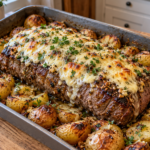
For a classic roast dinner, pair the pork with mashed potatoes and steamed green beans. The potatoes absorb the pan sauce, while the vegetables add freshness.
Roasted apples, braised cabbage, or a crunchy apple slaw also complement the honey mustard coating. For a lighter plate, serve smaller portions of pork with roasted vegetables and a simple green salad.
Leftovers work well in sandwiches with mustard and cabbage slaw. They can also be chopped into a potato skillet or added to grain bowls.
Estimated Nutritional Information
Per serving, based on 10 servings, without optional sauce or side dishes:
– Calories: Approximately 430
– Protein: 34 g
– Total Fat: 28 g
– Saturated Fat: 10 g
– Carbohydrates: 11 g
– Sugars: 10 g
– Fiber: Less than 1 g
– Sodium: Approximately 520 mg
These are estimates. The roast’s fat content, trimming, salt brand, discarded drippings, and amount of glaze eaten will change the values.
Nutritional Benefits
Pork provides protein, which supports muscle maintenance and repair. It also supplies thiamin and other B vitamins involved in normal energy metabolism, along with zinc and selenium.
Because shoulder is a richer cut, portion size matters when planning the meal. Serving it with vegetables and a fiber-containing side creates a more varied plate.
The herbs and mustard add flavor without requiring a heavy cream sauce. Honey contributes sweetness and added sugar, so the glaze is best used as a coating.
Questions and Answers
Can I use pork loin instead?
Not with the same timing or temperature target. Loin is much leaner and will dry out during this long cooking process. Use a recipe specifically written for pork loin.
Why is my shoulder roast still tough?
It probably needs more cooking time. Cover it, ensure there is liquid in the pan, and continue roasting gently until the connective tissue softens.
Can I make this without butcher’s twine?
Yes, if the shoulder holds its shape naturally. A loose, unrolled piece may cook differently and be less suitable for neat slices.
Can I skip the high-temperature finish?
Yes. Finish uncovered at the lower temperature until tender, although the glaze will be less caramelized.
Storage and Reheating
Refrigerate leftovers promptly in shallow, covered containers and use within 3–4 days. Freeze portions with a little cooking juice for 2–3 months for best quality.
Reheat covered with a splash of broth until thoroughly hot. A gentle oven helps prevent the slices from drying out.