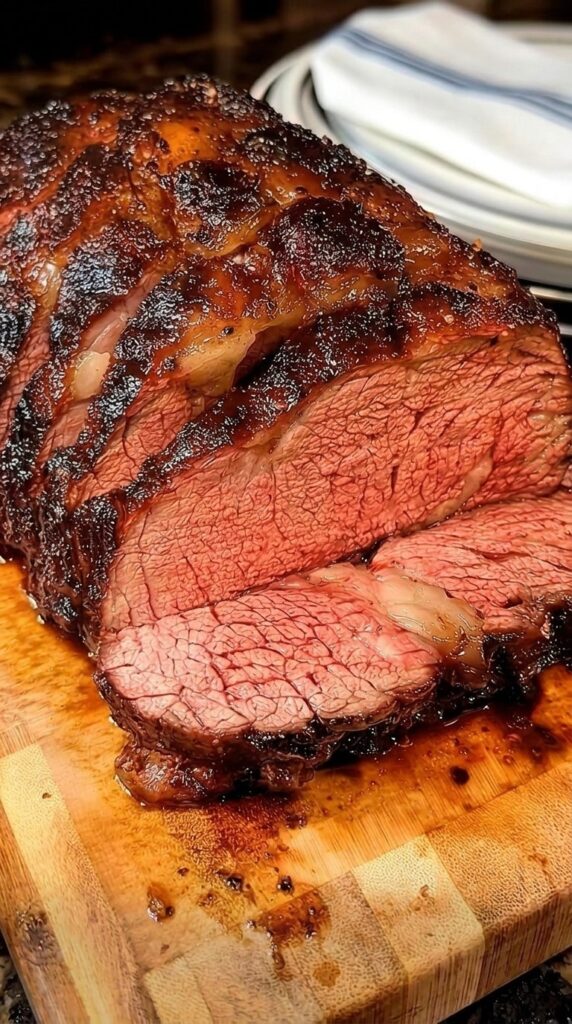

Garlic Butter Prime Rib Roast – Juicy, Tender and Perfectly Roasted
Garlic Butter Prime Rib Roast is an impressive and flavorful main course featuring beautifully tender beef, a juicy pink center, and a deeply caramelized golden-brown crust. Coated with rich garlic butter, fresh herbs, and aromatic seasonings, this classic roast delivers restaurant-quality flavor right from your home kitchen.
The secret to preparing a delicious prime rib roast is slow roasting at a low temperature, followed by a high-temperature finish that creates a beautifully browned exterior. This cooking technique allows the beef to cook evenly while retaining its natural tenderness and rich flavor.
Whether you are hosting Christmas dinner, preparing a special Sunday meal, or celebrating with family and friends, this garlic butter prime rib roast makes an unforgettable centerpiece.
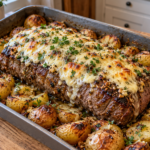
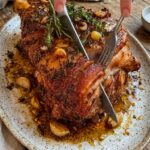
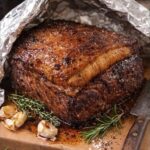
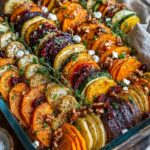
This recipe uses a boneless prime rib roast to recreate the juicy interior and caramelized exterior shown in the picture.
Prep Time: 20 minutes
Cook Time: 2½–3½ hours
Resting Time: 30 minutes
Total Time: Approximately 3–4½ hours
Servings: 6–8
Cooking Method: Oven roasting
Cuisine: American
Category: Main Course
Ingredients
5 pounds boneless prime rib roast
5 tablespoons unsalted butter, softened
6 garlic cloves, minced
2 tablespoons olive oil
1 tablespoon kosher salt
2 teaspoons freshly ground black pepper
1 teaspoon smoked paprika
1 teaspoon onion powder
1 tablespoon fresh rosemary, finely chopped
1 tablespoon fresh thyme leaves
1 tablespoon Dijon mustard
1 cup low-sodium beef broth
1 tablespoon Worcestershire sauce
Instructions
1. Prepare the Prime Rib Roast
Remove the prime rib roast from the refrigerator approximately 30–45 minutes before cooking.
Pat the entire surface of the beef dry using paper towels. Removing excess moisture helps the seasoning mixture stick to the meat and encourages better browning.
Leave approximately ¼ inch of natural fat on the top of the roast. This fat contributes additional richness and flavor during roasting.
2. Preheat the Oven
Preheat your oven to 250°F (121°C).
Prepare a roasting pan fitted with a wire rack. The rack allows hot air to circulate around the beef, encouraging more even cooking.
If you do not have a roasting rack, place the beef over a layer of thickly sliced onions.
3. Prepare the Garlic Butter Mixture
In a medium mixing bowl, combine the softened butter, minced garlic, olive oil, Dijon mustard, smoked paprika, onion powder, chopped rosemary, and thyme.
Mix thoroughly until all the ingredients are evenly combined and form a smooth, spreadable paste.
The combination of butter, garlic, mustard, and herbs creates a rich coating that complements the natural flavor of the prime rib.
4. Season the Beef
Sprinkle kosher salt and freshly ground black pepper evenly over the entire roast.
Gently massage the seasonings into the surface of the beef.
For even deeper seasoning, you can salt the roast the night before cooking and leave it uncovered in the refrigerator.
5. Apply the Garlic Butter
Spread the prepared garlic butter mixture generously over the top and sides of the prime rib roast.
Make sure the entire surface is evenly coated, including the ends.
The butter will gradually melt during cooking, allowing the garlic and herbs to flavor the exterior of the beef.
6. Prepare the Roasting Pan
Place the seasoned prime rib roast onto the roasting rack with the fat side facing upward.
Combine the beef broth and Worcestershire sauce and pour the mixture into the bottom of the roasting pan.
Avoid pouring the liquid directly over the beef because this can wash away the garlic butter coating.
The cooking liquid will collect the flavorful drippings and provide an excellent base for homemade gravy.
7. Slowly Roast the Prime Rib
Transfer the roasting pan into the preheated oven.
Roast uncovered for approximately 2½–3½ hours, depending on the thickness of the beef and your oven’s performance.
Insert a meat thermometer into the thickest part of the roast, avoiding large pockets of fat.
For food safety, cook the roast until it reaches an internal temperature of at least 145°F (63°C), followed by a minimum three-minute rest. Beef cooked to this temperature can still retain a slightly pink interior.
Begin checking the temperature early to avoid overcooking.
8. Allow the Roast to Rest
Remove the prime rib from the oven and loosely cover it with aluminum foil.
Allow the beef to rest for approximately 20–30 minutes.
Resting helps reduce moisture loss during slicing and allows the internal temperature to stabilize.
Meanwhile, increase the oven temperature to 500°F (260°C).
9. Create the Caramelized Crust
Remove the aluminum foil and return the rested roast to the hot oven.
Roast for approximately 5–10 minutes until the exterior becomes deeply browned and beautifully caramelized.
Monitor the beef carefully during this stage because the butter, garlic, and herbs can burn at high temperatures.
Remove the roast once the desired crust has developed.
10. Slice and Serve
Transfer the finished prime rib roast onto a large wooden cutting board.
Using a sharp carving knife, slice the beef against the grain into thick, generous portions.
Drizzle the flavorful pan juices over each slice and garnish with fresh rosemary or thyme.
Serve warm with creamy mashed potatoes, roasted vegetables, and homemade gravy.
Why You Will Love This Recipe
Garlic Butter Prime Rib Roast combines simple ingredients with a traditional roasting technique to create a luxurious homemade dinner.
The low-temperature cooking method helps the beef cook evenly, while the high-temperature finish creates a delicious crust without requiring complicated preparation.
Prime rib naturally contains beautiful marbling, which contributes to its rich flavor and tender texture. The garlic butter coating enhances these qualities with savory herbs and aromatic seasonings.
Another advantage of this recipe is that it requires relatively little hands-on cooking. Once the roast is seasoned and placed in the oven, you can focus on preparing side dishes and spending time with your guests.
It is an excellent choice for holiday dinners, birthdays, anniversaries, and special family celebrations.
Helpful Cooking Tips
– Choose a well-marbled roast: Look for prime rib with evenly distributed marbling for a richer flavor and more tender texture.
– Use a meat thermometer: Internal temperature is more reliable than cooking time when preparing a large beef roast.
– Pat the beef dry: A dry surface encourages better browning and helps the seasonings adhere.
– Use softened butter: Softened butter spreads more evenly over the beef than cold butter.
– Roast at a low temperature: Slow roasting promotes even cooking and reduces the risk of overcooked outer layers.
– Keep the fat side upward: This allows rendered fat to coat the exterior during cooking.
– Avoid opening the oven frequently: Opening the oven repeatedly causes temperature fluctuations and can extend cooking time.
– Do not skip resting: Resting helps preserve the juices inside the beef.
– Slice against the grain: Cutting across the muscle fibers makes each serving easier to chew.
– Save the cooking juices: The flavorful drippings are perfect for homemade gravy or beef au jus.
Recipe Notes
Boneless prime rib is particularly convenient because it is easy to season, roast, and carve. However, a bone-in standing rib roast can also be used for this recipe.
If you prefer a stronger garlic flavor, increase the amount of minced garlic or serve the finished roast with roasted garlic butter.
Fresh rosemary and thyme provide excellent flavor, but dried herbs can be substituted when necessary. Use approximately one teaspoon of each dried herb in place of one tablespoon of fresh herbs.
For a slightly smoky crust, add an extra pinch of smoked paprika. If you enjoy spicy food, incorporate a small amount of cayenne pepper into the garlic butter mixture.
Cooking times will vary depending on the size, shape, and starting temperature of the roast. Always use a reliable meat thermometer to determine when the beef is ready.
Best Side Dishes
Garlic Butter Prime Rib Roast pairs wonderfully with classic American comfort foods and fresh vegetable dishes.
Creamy garlic mashed potatoes
Crispy roasted baby potatoes
Honey-glazed carrots
Garlic butter green beans
Roasted Brussels sprouts
Creamed spinach
Yorkshire pudding
Roasted asparagus
Buttered corn
Homemade dinner rolls
Creamy mushroom gravy
Fresh garden salad
For a traditional holiday dinner, serve prime rib with mashed potatoes, roasted carrots, creamed spinach, and homemade beef au jus.
Recipe Variations
Rosemary and Garlic Prime Rib
Increase the amount of fresh rosemary and garlic for a more aromatic herb crust.
Peppercorn-Crusted Prime Rib
Add coarsely crushed black peppercorns to the butter mixture for a bold, steakhouse-style flavor.
Smoky Garlic Butter Prime Rib
Add smoked paprika and a small amount of chipotle powder for a subtle smoky finish.
Dijon Herb Prime Rib
Increase the Dijon mustard and add freshly chopped parsley for a tangy, flavorful coating.
Garlic Parmesan Prime Rib
Sprinkle a small amount of freshly grated Parmesan cheese over the roast during the final few minutes of cooking, watching carefully to prevent burning.
Questions and Answers
Q: What is the best cut of beef for this recipe?
A boneless prime rib roast, also known as a boneless ribeye roast, is an excellent choice because of its natural marbling, rich flavor, and tender texture.
Q: Should I cover prime rib while roasting?
No. Prime rib is generally roasted uncovered to encourage even browning. Cover it loosely with aluminum foil during the resting period.
Q: Can I prepare prime rib the night before?
Yes. Season the roast with salt and refrigerate it overnight. Apply the garlic butter mixture shortly before roasting for the best results.
Q: How do I prevent prime rib from drying out?
Use a low oven temperature, monitor the internal temperature carefully, avoid overcooking, and allow the roast to rest before slicing.
Q: Can I use a bone-in prime rib roast?
Yes. A bone-in roast works beautifully with this recipe. Cooking time may vary depending on its size and thickness.
Q: How do I make beef au jus?
Strain the pan drippings into a saucepan, remove excess fat, add a little beef broth, and simmer for several minutes. Adjust the seasoning before serving.
Q: Why should I roast prime rib at a low temperature?
Low-temperature roasting allows the heat to penetrate the beef more gradually, helping create a more evenly cooked interior.
Storage and Reheating Instructions
Refrigeration
Store leftover prime rib in an airtight container in the refrigerator for up to 3–4 days. Refrigerate leftovers within two hours of cooking.
Freezing
Wrap individual portions tightly and place them in freezer-safe containers or bags. Freeze for up to 2–3 months for the best quality.
Reheating
Place the leftover beef in a covered baking dish with a small amount of beef broth.
Reheat in the oven at 300°F (150°C) until the internal temperature reaches 165°F (74°C).
Leftover prime rib can also be used to prepare roast beef sandwiches, steak salads, beef wraps, quesadillas, and hearty breakfast hash.
Nutritional Information
Approximate nutritional values per serving, based on eight servings:
Calories: 720 kcal
Protein: 52 g
Total Fat: 56 g
Saturated Fat: 24 g
Carbohydrates: 3 g
Fiber: 0.5 g
Sugar: 0.5 g
Sodium: 850 mg
Cholesterol: 180 mg
Nutritional information is estimated and may vary depending on the amount of fat trimmed, portion size, and ingredients used.
Nutritional Benefits
High in Protein
Prime rib provides high-quality protein, which supports muscle maintenance, tissue repair, and normal body functions.
Rich in Iron
Beef contains heme iron, which supports healthy red blood cell production and oxygen transportation throughout the body.
Good Source of Vitamin B12
Vitamin B12 contributes to normal nervous system function, energy metabolism, and red blood cell formation.
Provides Zinc
Beef is a natural source of zinc, an essential mineral that supports normal immune function and wound healing.
Naturally Low in Carbohydrates
Garlic butter prime rib contains very few carbohydrates, making it suitable for low-carbohydrate meals when paired with non-starchy vegetables.
Prime rib is also relatively high in saturated fat and calories. Enjoy moderate portions alongside fresh vegetables as part of a balanced diet.
Final Thoughts
Garlic Butter Prime Rib Roast is a delicious and impressive main course featuring tender beef, rich garlic butter, aromatic herbs, and a beautifully caramelized crust.
With simple ingredients, slow roasting, and careful temperature monitoring, you can prepare a restaurant-style beef roast in your own kitchen.
Serve it with creamy mashed potatoes, roasted vegetables, and flavorful beef au jus for an unforgettable family dinner or holiday celebration.
https://ketosl.com/slow-roasted-garlic-butter-beef-roast-tender-and-juicy/

Pingback: Roasted Rainbow Vegetable Casserole with Feta, Walnuts & Cranberries