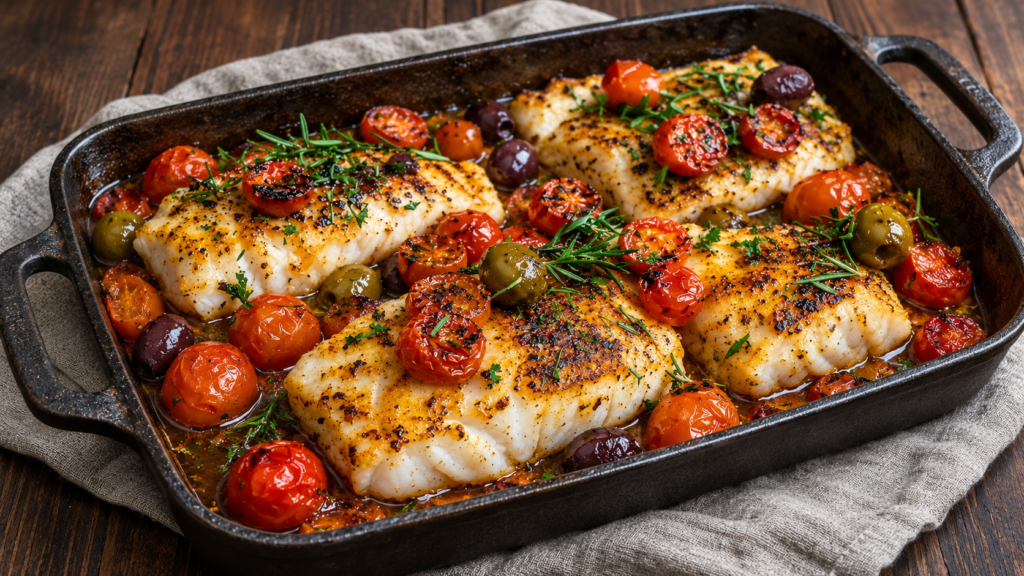
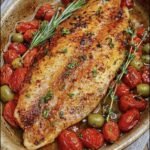
Mediterranean Baked Cod with Cherry Tomatoes and Olives is a colorful, flavorful dinner featuring tender white fish, juicy roasted tomatoes, briny olives, garlic, and fresh herbs. Everything cooks in one baking dish, where the tomatoes release their juices and combine with olive oil and lemon to create a delicious light sauce.
Inspired by your photograph, this recipe uses thick cod fillets seasoned with paprika, oregano, and black pepper. The fish becomes moist and flaky while the tomatoes soften and develop a sweet roasted flavor. Green and Kalamata olives add a savory contrast, and fresh parsley brings brightness to the finished dish.
This recipe is simple enough for a weekday dinner but attractive enough to serve when friends or family visit. Pair it with rice, roasted potatoes, or crusty bread to enjoy every spoonful of the flavorful pan juices.
For the Fish
4 thick cod fillets, approximately 6 ounces each
2 tablespoons extra-virgin olive oil
1 teaspoon sweet or smoked paprika
1 teaspoon dried oregano
½ teaspoon salt, or less to taste
½ teaspoon freshly ground black pepper
Zest of 1 lemon
For the Tomatoes and Olives
3 cups cherry tomatoes
½ cup pitted mixed green and Kalamata olives, drained
4 garlic cloves, finely minced
1 tablespoon extra-virgin olive oil
2 tablespoons fresh lemon juice
2 small rosemary sprigs
Step-by-Step Instructions for Mediterranean baked cod
1. Preheat the Oven
Preheat your oven to 400°F (200°C).
Choose a baking dish or roasting pan large enough to hold the four fish fillets in a single layer. A 9-by-13-inch dish usually works well.
A moderately snug dish helps keep the juices around the fish. An oversized pan allows the liquid to spread thinly and evaporate more quickly.
2. Prepare the Cod
Pat the cod fillets thoroughly dry with paper towels. Check for any remaining pin bones and remove them carefully.
If the fish was frozen, thaw it completely in the refrigerator before cooking. Drain away any thawing liquid.
Drying the surface helps the seasoning cling to the fish and prevents excess water from diluting the tomato sauce.
3. Mix the Seasoning
Combine 2 tablespoons olive oil, paprika, oregano, salt, black pepper, and lemon zest in a small bowl.
Stir into a loose seasoning paste. Brush or rub it over the tops and sides of the cod fillets.
Set the fish in the refrigerator while the tomatoes begin roasting. There is no need for a long marinade because cod has a mild flavor and delicate texture.
4. Prepare the Tomato Mixture
Place the cherry tomatoes, drained olives, minced garlic, remaining tablespoon of olive oil, and rosemary in the baking dish.
Halve about half the tomatoes and leave the rest whole. The cut tomatoes release juice more readily, while the whole tomatoes provide attractive bursts of texture.
Toss gently to distribute the garlic and oil. Spread everything into an even layer.
5. Roast the Tomatoes First
Place the baking dish in the oven and roast for 10–12 minutes.
The tomatoes should begin softening and releasing their juices. Some may wrinkle or split, which is exactly what you want.
Starting the vegetables first gives them time to develop flavor without keeping the fish in the oven longer than necessary.
Carefully remove the hot dish and stir the tomatoes gently.
6. Add the Fish
Make four spaces among the tomatoes and olives. Nestle the seasoned cod fillets into the dish without overlapping them.
Spoon a little of the warm tomato mixture around the fish, leaving most of the upper surfaces exposed.
Drizzle the lemon juice around the fillets. Keep the rosemary tucked into the vegetables so it flavors the juices without covering the fish.
7. Bake Until Tender
Return the dish to the oven and bake for approximately 12–18 minutes, depending on the thickness of the fillets.
Begin checking thinner pieces earlier. Thick cod loins may require a little longer.
The fish should look opaque and separate into moist flakes when gently pressed with a fork. An instant-read thermometer inserted into the thickest part should register 145°F (63°C).
8. Add Color if Desired
For a slightly more golden surface, place the cooked fish under the broiler briefly, checking every 30 seconds.
Only do this in a pan specifically rated for broiler use. Avoid placing ordinary glass baking dishes under direct broiler heat.
This step is optional. Paprika gives the fish a warm golden color even without broiling, and moist fish matters more than a deeply browned surface.
9. Finish with Fresh Herbs
Remove the dish from the oven and discard the woody rosemary stems.
Sprinkle the chopped parsley over the fish and vegetables. Spoon some tomato and olive juices over each fillet.
Taste the juices before adding more salt because olives can contribute considerable saltiness. Add a small squeeze of lemon if you prefer a brighter finish.
10. Serve Immediately
Use a wide spatula to lift each fillet carefully onto a plate.
Divide the roasted tomatoes and olives among the servings, then spoon over the remaining pan juices.
Serve while warm with your chosen side dish. Handle the fish gently because properly cooked cod separates easily into large, delicate flakes.
Tips for the Best Baked Cod
Choose similar-sized fillets. Even thickness helps all four portions finish cooking together.
Thaw completely. Partially frozen centers can cause uneven cooking.
Dry the fish well. This keeps the seasoning concentrated and the sauce flavorful.
Drain the olives. Their brine can make the dish excessively salty.
Roast the tomatoes first. This builds flavor while protecting the fish from overcooking.
Check early. Cooking time depends more on thickness than the number of fillets.
Use lemon zest for aroma. It adds fresh citrus flavor without much additional liquid.
Serve promptly. Fish continues cooking slightly in the hot dish after leaving the oven.
Recipe Notes and Substitutions for Mediterranean baked cod
Other white fish: Haddock, pollock, hake, or halibut can replace cod. Adjust the cooking time to suit the thickness of the fish.
Tomatoes: Grape tomatoes work well. You can also use chopped ripe tomatoes, although they may release more liquid.
Olives: Use all green olives or all Kalamata olives if preferred. Pitted olives are easier to serve and eat.
Herbs: Replace rosemary with a few thyme sprigs. Use either herb lightly so it does not overwhelm the delicate fish.
Extra vegetables: Thinly sliced red onion or small pieces of zucchini can roast with the tomatoes. Avoid overcrowding the dish.
Spice level: Add a small pinch of crushed red pepper for gentle heat.
Salt adjustment: Start with less salt if your olives are particularly briny, then season the finished juices to taste.
Serving Suggestions for Mediterranean baked cod
Serve Mediterranean baked cod with fluffy rice, couscous, quinoa, or boiled baby potatoes. These sides absorb the tomato, lemon, and olive oil juices beautifully.
Crusty bread is another excellent option, especially when you want a simple meal with minimal preparation.
For a lighter plate, serve the fish with steamed green beans, roasted asparagus, or a cucumber salad. Choose fresh, lightly dressed sides that complement the savory olives and sweet tomatoes.
If preparing potatoes, begin cooking them before the fish because they usually take longer.
Make-Ahead and Storage Notes Mediterranean baked cod
You can mix the dry seasonings, chop the garlic, and prepare the tomatoes several hours ahead. Refrigerate the fish separately until ready to cook.
For the best texture, bake the fish shortly before serving.
Refrigerate leftovers in a shallow, covered container within 2 hours of cooking. Use within 3–4 days.
Reheat gently in a covered baking dish, adding a spoonful of water if the juices have thickened. Heat leftovers to 165°F (74°C) in the center.
Cooked cod can be frozen, although its texture may become softer. Freeze cooled portions with their juices for up to 2 months for best quality, then thaw overnight in the refrigerator.
Estimated Nutritional Information for Mediterranean baked cod
Per serving, without bread, rice, or other sides:
Calories: Approximately 290
Protein: 32 grams
Carbohydrates: 8 grams
Total fat: 14 grams
Saturated fat: 2 grams
Fiber: 2 grams
Sodium: Approximately 650 milligrams
These values are estimates. Fish varieties, olive brands, portion sizes, and added salt will change the final nutritional content.
Nutritional Benefits for Mediterranean baked cod
Provides protein: Cod supplies protein, making this a satisfying main course without requiring cheese or a creamy sauce.
Includes vegetables: Tomatoes contribute vitamin C, potassium, and colorful plant compounds, including lycopene.
Uses olive oil: Olive oil supplies mostly unsaturated fat and carries the flavors of garlic, herbs, and paprika through the dish.
Offers flexible portions: You can pair the fish with vegetables, grains, or potatoes to suit your appetite.
Contains little added sugar: The recipe relies on the natural sweetness of roasted tomatoes.
Olives contribute sodium, so adjust their quantity and the added salt according to your preferences.
Frequently Asked Questions for Mediterranean baked cod
Can I use frozen cod?
Yes. Thaw it completely in the refrigerator, then drain and pat it dry before seasoning. This gives more predictable cooking results.
How do I stop cod from becoming dry?
Begin checking it early and remove it when the thickest part reaches 145°F (63°C). Avoid leaving it in the hot oven after it is cooked.
Why is there so much liquid in my pan?
Tomatoes and fish naturally release moisture. Thaw and dry the fish thoroughly, and roast the tomatoes first. Serve the flavorful liquid as a light sauce.
Can I leave out the olives?
Yes. The recipe will still work, although the flavor will be less briny. Taste the finished sauce and adjust the seasoning.
Other white fish: Haddock, pollock, hake, or halibut can replace cod. Adjust the cooking time to suit the thickness of the fish.
Tomatoes: Grape tomatoes work well. You can also use chopped ripe tomatoes, although they may release more liquid.
Olives: Use all green olives or all Kalamata olives if preferred. Pitted olives are easier to serve and eat.
Herbs: Replace rosemary with a few thyme sprigs. Use either herb lightly so it does not overwhelm the delicate fish.
Extra vegetables: Thinly sliced red onion or small pieces of zucchini can roast with the tomatoes. Avoid overcrowding the dish.
Spice level: Add a small pinch of crushed red pepper for gentle heat.
Salt adjustment: Start with less salt if your olives are particularly briny, then season the finished juices to taste.
Serving Suggestions for Mediterranean baked cod
Serve Mediterranean baked cod with fluffy rice, couscous, quinoa, or boiled baby potatoes. These sides absorb the tomato, lemon, and olive oil juices beautifully.
Crusty bread is another excellent option, especially when you want a simple meal with minimal preparation.
For a lighter plate, serve the fish with steamed green beans, roasted asparagus, or a cucumber salad. Choose fresh, lightly dressed sides that complement the savory olives and sweet tomatoes.
If preparing potatoes, begin cooking them before the fish because they usually take longer.
Make-Ahead and Storage Notes for Mediterranean baked cod
You can mix the dry seasonings, chop the garlic, and prepare the tomatoes several hours ahead. Refrigerate the fish separately until ready to cook.
For the best texture, bake the fish shortly before serving.
Refrigerate leftovers in a shallow, covered container within 2 hours of cooking. Use within 3–4 days.
Reheat gently in a covered baking dish, adding a spoonful of water if the juices have thickened. Heat leftovers to 165°F (74°C) in the center.
Cooked cod can be frozen, although its texture may become softer. Freeze cooled portions with their juices for up to 2 months for best quality, then thaw overnight in the refrigerator.
Make Everyday Cooking Easier
Discover 60+ high-protein, low-carb recipes with simple instructions and everyday ingredients. Explore breakfasts, lunches, dinners, salads, and snacks—plus a 30-day meal plan to help you plan ahead.
Can I use frozen cod?
Yes. Thaw it completely in the refrigerator, then drain and pat it dry before seasoning. This gives more predictable cooking results.
How do I stop cod from becoming dry?
Begin checking it early and remove it when the thickest part reaches 145°F (63°C). Avoid leaving it in the hot oven after it is cooked.
Why is there so much liquid in my pan?
Tomatoes and fish naturally release moisture. Thaw and dry the fish thoroughly, and roast the tomatoes first. Serve the flavorful liquid as a light sauce.




Pingback: Garlic Butter Herb Roasted Pork Shoulder 2026