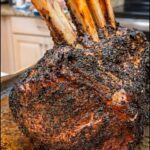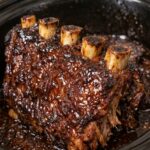

Garlic Herb Roasted Standing Rib Roast
Prep Time: 20 minutes
Cook Time: 2–2½ hours
Rest Time: 25–30 minutes
Servings: 8–10
Ingredients
- 1 bone-in standing rib roast, about 6–8 lb
- 3 tablespoons olive oil
- 3 tablespoons butter, softened
- 6 garlic cloves, finely minced
- 2 teaspoons kosher salt
- 1½ teaspoons coarsely ground black pepper
- 1 teaspoon smoked paprika
- 1 tablespoon fresh rosemary, finely chopped
- 1 tablespoon fresh thyme leaves
- 1 teaspoon onion powder
- 1 teaspoon garlic powder
- 1 tablespoon Worcestershire sauce
- 1 tablespoon Dijon mustard
Instructions
- Remove the standing rib roast from the refrigerator about 1 hour before roasting. Pat it thoroughly dry with paper towels so the seasoning adheres well and the exterior develops a beautiful crust.
- Preheat the oven to 450°F (230°C). Place the roast bone-side down in a large roasting pan. The bones naturally elevate the meat, so a separate roasting rack is optional.
- In a small bowl, mix together the olive oil, softened butter, minced garlic, kosher salt, black pepper, smoked paprika, rosemary, thyme, onion powder, garlic powder, Worcestershire sauce, and Dijon mustard until a thick herb paste forms.
- Spread the garlic-herb mixture generously over the entire surface of the roast. Use your hands to press the seasoning firmly onto the beef, especially across the top and sides.
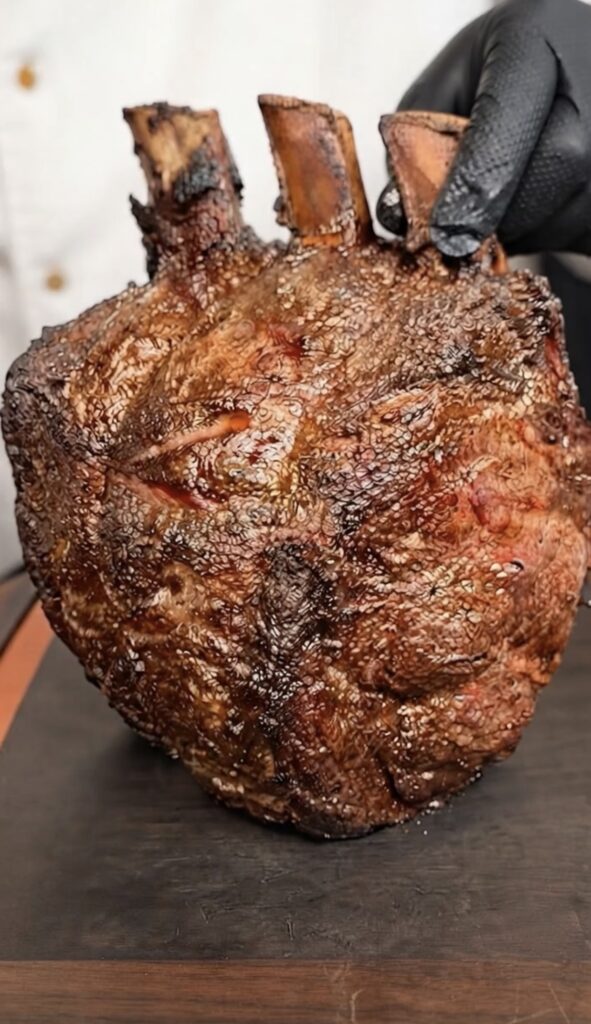
- Place the roast in the hot oven and cook at 450°F (230°C) for 20 minutes. This initial blast of high heat helps create a deeply browned, flavorful exterior.
- Without removing the roast from the oven, reduce the temperature to 325°F (165°C). Continue roasting for approximately 1½–2 hours, depending on the size and thickness of the roast.
- Begin checking the internal temperature toward the end of cooking. Insert an instant-read thermometer into the thickest part of the meat without touching the bone. Keep in mind that the internal temperature will continue to rise slightly while the roast rests.
- For an especially dark and caramelized exterior, increase the oven temperature to 475°F (245°C) during the final 5–8 minutes. Watch the roast closely so the garlic and herbs do not burn.
- Remove the roast from the oven and transfer it to a large cutting board. Loosely tent it with aluminum foil and allow it to rest for 25–30 minutes. This resting period allows the juices to redistribute throughout the meat.
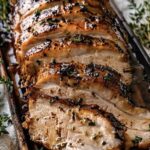
- To carve, carefully run a sharp knife alongside the rib bones to separate them from the main roast. Cut the beef across the grain into thick, juicy slices.
- Arrange the slices on a serving platter and spoon some of the warm pan juices over the top. Garnish with a little fresh rosemary or thyme if desired and serve immediately.
Tips
For a beautifully browned crust, make sure the roast is thoroughly dry before applying the garlic-herb butter.
Use a meat thermometer rather than relying entirely on cooking time. The exact roasting time can vary significantly depending on the weight, shape, and starting temperature of the beef.
For deeper seasoning and an even better crust, season the roast the night before and refrigerate it uncovered. Remove it from the refrigerator about an hour before roasting.
Leave the rib bones attached while the beef cooks. They provide additional flavor while acting as a natural roasting rack.
Allow the roast to rest before slicing. Cutting it immediately after roasting can cause more of its flavorful juices to escape onto the cutting board.
Storage
Place leftover rib roast in an airtight container and refrigerate for up to 3–4 days.
For longer storage, wrap individual slices tightly in freezer-safe packaging and freeze for up to 3 months.
To reheat, place the sliced beef in a covered baking dish with a small amount of beef broth or reserved pan juices. Warm gently at 300°F (150°C) until heated through. Avoid reheating at very high temperatures, which can make the beef dry and tough.