
Garlic Butter Herb Roasted Pork Loin
Prep Time: 15 minutes
Cook Time: 50–60 minutes
Total Time: 1 hour 5 minutes to 1 hour 15 minutes
Servings: 6
Cooking Method: Oven Roasted
Cuisine: American
Description
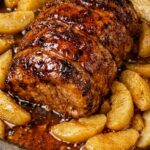
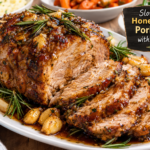
Garlic Butter Herb Roasted Pork Loin is a delicious, tender, and flavorful oven-roasted dish that is perfect for family dinners, holiday gatherings, and special occasions. This easy pork loin recipe features juicy, boneless pork coated in a rich garlic butter sauce infused with aromatic herbs, olive oil, and fresh lemon juice.
The combination of garlic, rosemary, thyme, and butter creates a savory coating that enhances the natural flavor of the pork. Searing the roast before baking develops a beautiful golden-brown crust, while oven roasting helps cook the meat evenly.
One of the best things about this garlic butter pork loin recipe is how simple it is to prepare. With just a few everyday ingredients and minimal preparation time, you can create a satisfying homemade meal that looks and tastes impressive.
Serve this tender roasted pork loin with creamy mashed potatoes, roasted carrots, steamed asparagus, or fresh vegetables for a complete dinner.
Ingredients
For the Pork Loin
- 2 lb boneless pork loin roast
- 2 tablespoons olive oil
- 1 teaspoon salt
- ½ teaspoon black pepper
- 1 teaspoon paprika
For the Garlic Herb Butter
- 3 tablespoons butter, melted
- 4 garlic cloves, minced
- 1 teaspoon dried thyme
- 1 teaspoon dried rosemary
- 1 tablespoon fresh lemon juice
- 1 tablespoon fresh parsley, chopped
Optional Garnishes
- Fresh rosemary sprigs
- Fresh thyme sprigs
- Lemon wedges
- Additional chopped parsley
- Freshly cracked black pepper
Step-by-Step Instructions
Step 1: Preheat the Oven
Preheat your oven to 375°F (190°C).
Lightly grease a medium-sized roasting dish with olive oil or nonstick cooking spray.
Choose a baking dish that comfortably holds the pork loin without leaving excessive empty space.
Preparing the oven and roasting dish in advance helps ensure even cooking once the pork is ready.
Step 2: Prepare and Season the Pork
Remove the pork loin from its packaging and pat it dry thoroughly using paper towels.
Removing excess surface moisture helps create a flavorful golden crust during searing.
Rub the pork with olive oil, then season evenly with salt, black pepper, and paprika.
Make sure the seasoning covers all sides of the roast.
If the pork loin has a thin layer of fat on top, leave it in place. This can help add flavor and moisture during roasting.
Step 3: Prepare the Garlic Herb Butter
In a small mixing bowl, combine the melted butter, minced garlic, dried thyme, dried rosemary, and fresh lemon juice.
Stir until the garlic and herbs are evenly distributed throughout the butter.
The garlic provides a rich savory flavor, while rosemary and thyme add a wonderful herbal aroma.
Lemon juice brings a subtle brightness that balances the richness of the butter.
Set the mixture aside until ready to use.
Step 4: Sear the Pork Loin
Heat a large skillet over medium-high heat.
Place the seasoned pork loin in the hot skillet and sear for approximately 2–3 minutes per side.
Turn the roast carefully until the exterior develops an attractive golden-brown crust.
Searing creates additional flavor through browning and gives the finished pork a delicious roasted appearance.
Once browned, remove the pork from the skillet and transfer it to the prepared baking dish.
Step 5: Coat with Garlic Herb Butter
Brush the garlic herb butter mixture generously over the pork loin.
Use a spoon or pastry brush to spread the mixture across the top and sides of the roast.
Make sure the minced garlic and herbs are distributed evenly.
Pour any remaining garlic butter into the roasting dish.
As the pork cooks, the butter will combine with the natural meat juices to create a delicious sauce.
Step 6: Roast Until Tender
Place the baking dish in the preheated oven.
Roast for approximately 40–55 minutes, depending on the thickness and shape of the pork loin.
Begin checking the internal temperature early, especially if the roast is relatively thin.
Insert a meat thermometer into the thickest part of the pork, avoiding any large pockets of fat.
The pork is safely cooked when the internal temperature reaches 145°F (63°C), followed by a rest of at least 3 minutes.
Avoid cooking the pork far beyond this temperature, as lean pork loin can become dry.
Step 7: Baste with Garlic Butter Juices
About halfway through roasting, carefully remove the baking dish from the oven.
Use a spoon to collect the melted butter and flavorful pan juices.
Drizzle these juices over the pork loin, coating the top and sides.
Return the baking dish to the oven and continue roasting until the pork reaches the proper internal temperature.
Basting adds flavor to the surface of the roast and helps maintain its delicious garlic herb coating.
Step 8: Rest, Slice, and Serve
Once the pork reaches 145°F (63°C), remove it from the oven.
Transfer the roast to a cutting board and loosely cover it with aluminum foil.
Allow it to rest for 5–10 minutes before slicing.
Resting gives the juices time to redistribute throughout the meat, resulting in tender, juicy slices.
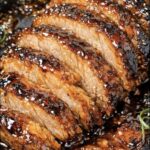
Using a sharp knife, slice the pork loin against the grain into evenly sized pieces.
Arrange the slices on a serving platter and spoon the warm garlic butter pan juices over the top.
Finish with freshly chopped parsley and optional fresh thyme or rosemary.
Serve immediately with your favorite side dishes.
Helpful Tips for Perfect Roasted Pork Loin
- Choose a boneless pork loin roast with a light layer of fat for additional flavor.
- Pat the pork dry before seasoning to encourage proper browning.
- Use freshly minced garlic whenever possible for the best aroma and flavor.
- Sear the pork before roasting to develop a delicious golden crust.
- Avoid confusing pork loin with pork tenderloin. Pork tenderloin is smaller and cooks much faster.
- Use a reliable meat thermometer rather than relying only on cooking time.
- Roast at a moderate temperature to help the pork cook evenly.
- Baste halfway through cooking to add more garlic butter flavor.
- Let the roast rest before slicing to retain its natural juices.
- Slice against the grain for the most tender texture.
Best Side Dishes for Garlic Butter Pork Loin
Garlic Butter Herb Roasted Pork Loin pairs beautifully with a variety of comforting side dishes.
Creamy mashed potatoes are an excellent choice because they absorb the flavorful garlic butter sauce.
Roasted carrots and potatoes add natural sweetness and complement the savory herbs.
Steamed asparagus or green beans provide a lighter vegetable option.
Buttered rice or seasoned wild rice creates a satisfying meal without overpowering the pork.
A fresh garden salad with lemon vinaigrette can also balance the richness of the roasted meat.
For a traditional family dinner, serve the pork with mashed potatoes, roasted vegetables, and warm dinner rolls.
Recipe Variations
Lemon Garlic Pork Loin
Increase the lemon juice slightly and add a teaspoon of fresh lemon zest to the garlic butter mixture.
This variation creates a brighter, citrus-forward flavor.
Honey Garlic Pork Loin
Add 1 tablespoon honey to the garlic herb butter for a subtle sweetness.
The honey helps create a lightly caramelized exterior during roasting. Watch carefully to prevent burning.
Spicy Garlic Butter Pork
Add ¼ teaspoon crushed red pepper flakes or cayenne pepper to the seasoning mixture.
This creates a gentle spicy kick that complements the buttery garlic flavor.
Fresh Herb Roasted Pork
Replace the dried rosemary and thyme with approximately three times the amount of chopped fresh herbs.
Fresh herbs provide a bright, aromatic flavor and a beautiful homemade finish.
Storage and Reheating
Refrigerator
Allow the cooked pork to cool slightly before placing it in an airtight container.
Refrigerate within 2 hours of cooking.
Store leftovers in the refrigerator for up to 3–4 days.
Keep some of the garlic butter pan juices with the sliced pork to help maintain moisture.
Freezer
Wrap cooled pork slices tightly or place them in freezer-safe containers.
Freeze for up to 2–3 months for best quality.
For convenient meals, divide the pork into individual portions before freezing.
Reheating
Preheat your oven to 300°F (150°C).
Place the pork slices in an oven-safe dish with a splash of broth or reserved pan juices.
Cover with aluminum foil and warm gently until heated through to 165°F (74°C).
Avoid excessive reheating because pork loin is lean and can dry out quickly.
Nutritional Information
Estimated nutrition per serving:
- Calories: 300–380 kcal
- Protein: 35–40 g
- Carbohydrates: 1–3 g
- Fat: 17–25 g
- Fiber: Less than 1 g
- Sodium: Approximately 450–600 mg
These values are estimates based on six servings and may vary depending on the fat content of the pork, the amount of butter consumed, and the specific ingredients used.
Nutritional Benefits
Garlic Butter Herb Roasted Pork Loin provides several important nutrients when enjoyed as part of a balanced diet.
Pork loin is a good source of high-quality protein, which helps support muscle maintenance and tissue repair.
It also contains vitamin B1, also known as thiamine, which helps the body convert food into energy.
Pork provides vitamin B6 and vitamin B12, both of which support normal nervous system function.
Zinc contributes to normal immune function, while selenium plays a role in protecting cells from oxidative damage.
Garlic and fresh herbs add flavor and naturally occurring plant compounds.
Olive oil contributes monounsaturated fats, while using moderate amounts of butter helps balance flavor and richness.
Pairing roasted pork loin with vegetables and whole grains can create a satisfying, well-rounded meal.
Frequently Asked Questions
1. What is the best temperature for roasting pork loin?
An oven temperature of 375°F (190°C) works well for this recipe. Cook until the thickest part of the pork reaches an internal temperature of 145°F (63°C), followed by a rest of at least 3 minutes.
2. How do I keep pork loin juicy?
Avoid overcooking, use a meat thermometer, and allow the pork to rest before slicing. Keeping a small layer of fat on the roast can also help improve flavor and moisture.
3. Can I use pork tenderloin instead of pork loin?
Yes, but the cooking time must be adjusted. Pork tenderloin is much smaller and cooks considerably faster than a traditional pork loin roast.
4. Is it necessary to sear the pork before roasting?
Searing is optional, but it creates a flavorful browned crust and improves the overall appearance of the finished roast.
5. Can I prepare this recipe ahead of time?
Yes. You can season the pork and prepare the garlic herb butter in advance. Store them separately in the refrigerator until ready to cook.
6. Can I add vegetables to the roasting dish?
Absolutely. Potatoes, carrots, onions, and Brussels sprouts are delicious additions. Cut the vegetables into suitable sizes so they cook evenly.
7. How long should pork loin rest before slicing?
Allow the pork to rest for approximately 5–10 minutes. This helps retain its juices and makes slicing easier.
8. Can I make this recipe without butter?
Yes. Replace the melted butter with additional olive oil for a dairy-free alternative.
9. Why did my pork loin turn out dry?
Pork loin usually becomes dry when cooked too long. Using a meat thermometer and removing the roast once it reaches the proper temperature helps prevent overcooking.
10. What is the best way to serve leftover pork loin?
Leftover pork loin can be sliced for sandwiches, added to rice bowls, served with roasted vegetables, or gently reheated with gravy.
Final Thoughts
Garlic Butter Herb Roasted Pork Loin is a delicious and satisfying recipe that combines tender roasted pork with rich garlic butter and fragrant herbs.
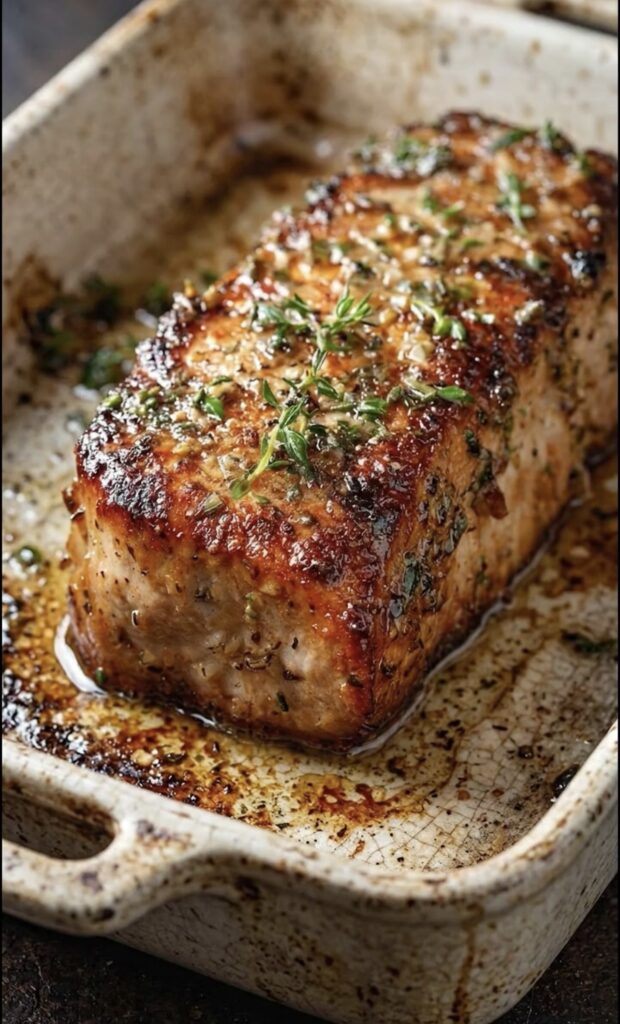
The beautifully browned exterior, juicy interior, and savory pan sauce make this dish an excellent choice for everyday dinners and special gatherings.
With simple ingredients, straightforward instructions, and plenty of serving options, this oven-roasted pork loin recipe is a wonderful addition to your collection of homemade comfort foods.
Serve it with creamy mashed potatoes, roasted vegetables, or a fresh salad for a flavorful and memorable meal.