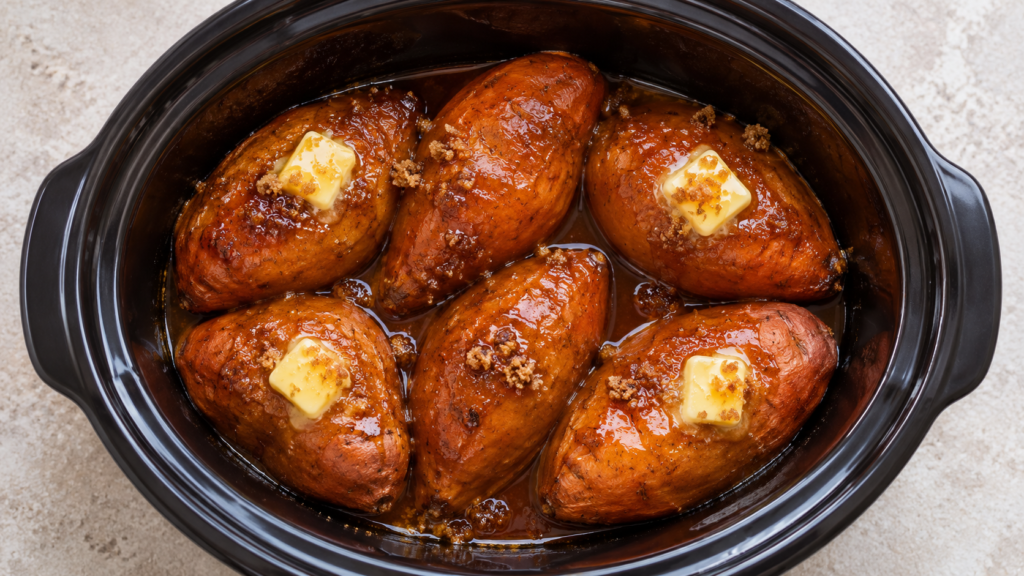

Slow Cooker Brown Sugar Butter Sweet Potatoes
Prep Time 10 minutes
Cook Time 5–7 hours on LOW or 3–4 hours on HIGH
Servings 6
Cooking Method Slow cooker
Serving Size 1 medium sweet potato with glaze
Description
These Slow Cooker Brown Sugar Butter Sweet Potatoes come out fork-tender and glossy, with a buttery brown sugar glaze you can spoon over each split potato. The sweet potatoes cook whole, so they hold their shape when you lift them out of the slow cooker. Inside, the orange flesh turns soft enough to fluff with a fork. A little cinnamon warms up the glaze, and a pinch of salt brings out the flavor of the butter.
This is a handy holiday side when the oven is already full of turkey, ham, or casseroles. It also fits a simple Sunday dinner with roast chicken and green beans. Most of the work happens in the first 10 minutes, when you scrub the potatoes, whisk together the glaze, and arrange everything in the slow cooker. When dinner is ready, each person can split a potato and spoon on as much glaze as they like.
Ingredients
- 6 medium orange-fleshed sweet potatoes, about 2 to 2½ pounds total
- 4 tablespoons unsalted butter, melted
- ¼ cup packed light brown sugar
- ¼ cup water
- ½ teaspoon ground cinnamon
- ¼ teaspoon fine salt
For serving, optional
- Small pats of butter
- Toasted chopped pecans
Instructions
- Prepare the sweet potatoes. Scrub the potatoes under cool running water to remove any grit, then pat them dry. Pierce each one a few times with a fork. Leave the skins on so the potatoes stay intact as they soften. If you have a choice at the store, pick potatoes that are similar in thickness.
- Mix the brown sugar glaze. Stir the melted butter, brown sugar, cinnamon, and salt together in a small bowl. Add the water and whisk briefly. A few grains of sugar may still be visible. They will dissolve as the mixture heats in the slow cooker.
- Arrange the potatoes. Place the sweet potatoes in a 5- to 6-quart slow cooker, preferably in a single layer. Pour the butter mixture over them, letting the excess collect at the bottom. Cover with the lid.
- Cook until fork-tender. Cook on LOW for 5–7 hours or on HIGH for 3–4 hours. Start checking at the shorter time. Slide a thin knife into the thickest part of the largest potato. If it meets resistance in the center, cover the cooker and check again in about 20–30 minutes. The potatoes are ready when the knife slides through easily.
- Finish the glaze. Lift the potatoes out with a wide serving spoon and place them on a platter. Stir the cooking liquid and spoon it over the potatoes. For a thicker glaze, pour the liquid into a small saucepan and simmer gently for 3–5 minutes, stirring occasionally, until it lightly coats a spoon. It will thicken a little more as it cools.
- Split and serve. Make a shallow slit down the top of each potato and gently press the ends to open it. Fluff the center with a fork, then spoon some warm glaze inside. Add a small pat of butter or a handful of toasted pecans to the platter if desired.
Helpful Cooking Tips
- Match the thickness. A long, slim sweet potato may finish before a shorter, thicker one. Choosing potatoes with a similar width gives you a better chance of serving all six at once. If one finishes early, lift it onto the platter and let the others keep cooking.
- Wait until the first doneness check to lift the lid. The sweet potatoes cook in the covered cooker without stirring or turning. If your cooker runs hot, check a little early the first time you make this recipe.
- Use tenderness to judge when they’re done. The skins can wrinkle before the centers soften completely. Check the thickest part with a thin knife. A potato that yields all the way through will split and fluff easily at the table.
- Reduce the glaze gently. The cooking liquid can look thin because the sweet potatoes release moisture. A short simmer in a saucepan concentrates it. Stop when it lightly coats a spoon so it stays pourable at serving time.
- Glaze the inside as well as the outside. The brown sugar mixture coats the whole potatoes as they cook. Splitting them at the table lets the glaze reach the fluffy center, where you’ll get some butter and cinnamon in every bite.
Recipe Notes
Choose the sweetness you like. The full ¼ cup of brown sugar gives the potatoes a dessert-like finish that pairs well with salty glazed ham. If you like a milder side dish, start with 2 tablespoons of brown sugar and finish each serving with a small spoonful of glaze.
Use light or dark brown sugar. Light brown sugar gives the glaze a mild caramel flavor. Dark brown sugar adds a deeper molasses flavor and makes the glaze darker. You can use either in the same amount.
Adjust the spices to your menu. Cinnamon is enough on its own. For a holiday meal, a small pinch of ground nutmeg works well with the butter and brown sugar. If the main dish already has a sweet glaze, you can leave out the cinnamon and finish the potatoes with a pinch of flaky salt.
Serve with something savory. Briny green beans, lemony Brussels sprouts, or a crisp green salad balance the sweetness. For a holiday buffet, split the potatoes in half lengthwise and serve the glaze on the side so guests can take a smaller portion alongside the other dishes.
Questions & Answers
Do I need to peel the sweet potatoes?
Leave the skins on for this whole-potato recipe. They help hold the tender flesh together when you transfer the potatoes. You can eat the skin or scoop out the flesh at the table.
Can I use very large sweet potatoes?
Yes. If they fit comfortably, cook them whole and allow extra time. You can also halve them lengthwise and arrange them cut-side up. Halves usually cook faster, so start checking before the lower end of the stated cook time.
Can I substitute maple syrup for brown sugar?
Yes. Use 3 tablespoons of pure maple syrup in place of the brown sugar and reduce the added water to 2 tablespoons. The glaze will have a maple flavor and may need a brief simmer after cooking to thicken.
Why is the glaze thinner than it looks in the photo?
Some sweet potatoes release more moisture than others. Spoon the thin glaze into the split potatoes as it is, or simmer it in a small saucepan for a few minutes for a shinier coating. Stir before serving so the butter and syrup are evenly distributed.
Can I make these dairy-free?
Yes. Use the same amount of dairy-free stick butter in the glaze and for the optional topping. If your plant-based butter is salted, add the fine salt to taste.
Storage & Reheating Instructions
Store the cooked sweet potatoes and glaze in a covered container in the refrigerator. Keeping a little glaze around the potatoes helps when reheating, because you can spoon it over the centers as they warm. If you have already split the potatoes, set them in the container cut-side up to keep the glaze from running out.
To reheat a single portion, split the sweet potato and microwave it in short intervals until hot throughout. Spoon the glaze over the center halfway through. For several portions, arrange them in a covered baking dish with the glaze and warm them in a 350°F oven until hot throughout. If the glaze has thickened in the fridge, add a small splash of water before reheating and stir once it loosens.
Nutritional Information & Benefits
Estimated nutrition per serving, based on six servings with all the glaze divided evenly and without optional toppings.
- Calories About 210
- Carbohydrates 33 g
- Protein 2 g
- Total Fat 8 g
- Saturated Fat 5 g
- Fiber 4 g
- Total Sugars 15 g
- Sodium About 160 mg
Actual values vary with potato size and how much glaze you serve. The estimate assumes each potato weighs about 170 grams before cooking.
Orange-fleshed sweet potatoes provide beta-carotene, which the body can convert to vitamin A. They also contribute dietary fiber and potassium. Keeping the edible skin on makes it easy to enjoy the whole potato, and serving the glaze separately lets everyone adjust the sweetness at the table.