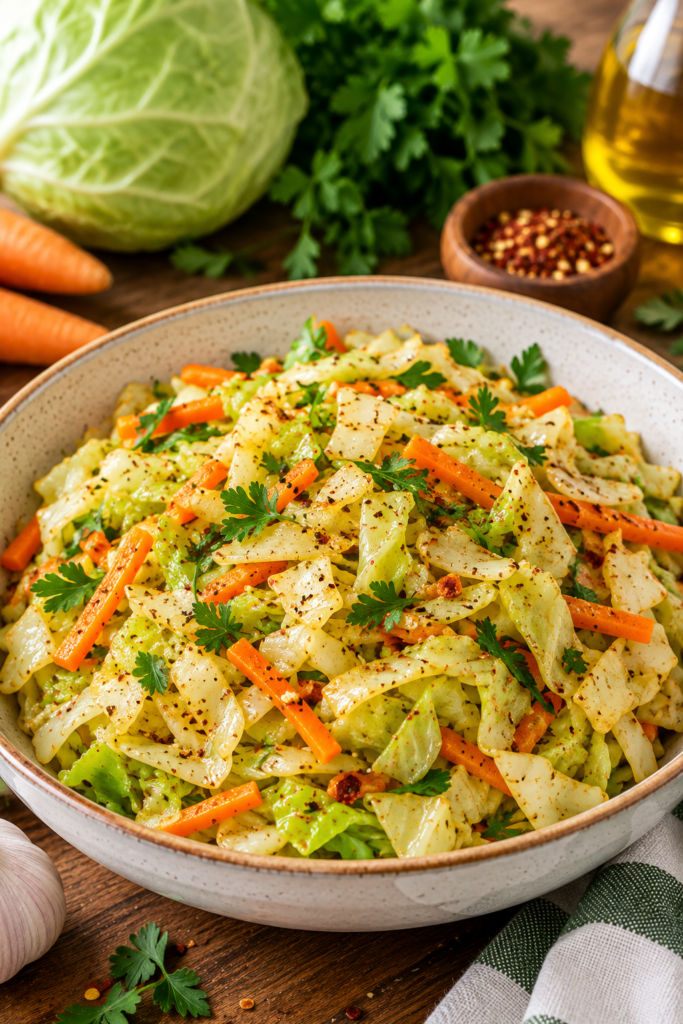

Healthy Cabbage Stir-Fry with Garlic, Carrots and Herbs
Recipe Description
This Healthy Cabbage Stir-Fry is a simple, colourful, budget-friendly vegetable dish that turns everyday ingredients into a flavourful and satisfying meal. Tender-crisp cabbage is cooked with sweet carrots, onion, and fresh garlic, then seasoned with black pepper, chilli flakes, and fresh parsley. A small amount of olive oil brings everything together without making the dish heavy or greasy.
It is naturally vegetarian, quick to prepare, and ideal as a light lunch, dinner side dish, or healthy meal-prep option. The cabbage stays slightly crisp, while the carrots add sweetness and the garlic brings a delicious savoury aroma. Fresh parsley and a touch of chilli give the finished dish freshness and a gentle kick.
This recipe is especially useful when you want something nutritious without spending a lot of money or time in the kitchen. Serve it by itself for a light meal or pair it with rice, grilled chicken, eggs, beans, lentils, or whole-grain bread for a more complete meal.
Servings
Serves: 4
Prep Time: 10 minutes
Cook Time: 15–20 minutes
Total Time: 25–30 minutes
Difficulty: Easy
Course: Side Dish or Light Main Course
Cuisine: Healthy Home Cooking
Ingredients
Main Ingredients
1 medium green cabbage, approximately 2 1/2 pounds
1 large carrot
1 small yellow onion
3 garlic cloves, minced
2 tablespoons olive oil
1/2 teaspoon salt, or to taste
1/2 teaspoon black pepper
1/2 teaspoon chilli flakes, optional
1 teaspoon paprika
2 tablespoons fresh chopped parsley
1 tablespoon lemon juice
Optional Ingredients
1/2 teaspoon cumin
1 tablespoon sesame seeds
1/2 cup sliced bell pepper
1/2 cup mushrooms
1 small zucchini, sliced
1 tablespoon soy sauce or low-sodium soy sauce
1 teaspoon grated ginger
Instructions
1. Prepare the Cabbage
Remove any damaged outer cabbage leaves.
Cut the cabbage into quarters and remove the hard central core.
Slice the cabbage into thin strips. You do not need to make every piece perfectly uniform, but keeping the slices reasonably thin helps them cook evenly.
Place the sliced cabbage in a large bowl and set aside.
2. Prepare the Other Vegetables
Peel the carrot and either grate it or cut it into thin matchsticks.
Thinly slice the onion.
Mince the garlic.
If you are using bell pepper, zucchini, mushrooms, or any other optional vegetables, prepare them now so everything is ready before cooking.
Because this recipe cooks quickly, having all the ingredients prepared ahead of time makes the process much easier.
3. Heat the Pan
Place a large skillet, sauté pan, or wok over medium-high heat.
Add the olive oil and allow it to heat for about 30 seconds.
The oil should be warm but should not be smoking.
4. Cook the Onion and Carrot
Add the sliced onion and carrot to the pan.
Cook for approximately 3–4 minutes, stirring regularly.
The onion should begin to soften and become slightly translucent, while the carrot should remain slightly crisp.
5. Add the garlic.
Add the minced garlic.
Cook for approximately 30 seconds to 1 minute, stirring constantly.
Do not allow the garlic to become dark brown because burnt garlic can make the entire dish bitter.
6. Add the Cabbage
Add the sliced cabbage to the skillet.
At first, the cabbage may seem like too much for the pan, but it will quickly reduce in volume as it cooks.
Toss the vegetables together using tongs or a large spatula.
Cook over medium-high heat for approximately 5–8 minutes, stirring every minute or so.
The goal is to soften the cabbage while keeping some texture and natural sweetness.
7. Season the Dish
Add salt, black pepper, paprika, and chilli flakes.
If you like a warmer, more savoury flavour, add cumin as well.
Continue cooking for another 2–3 minutes.
Taste the cabbage and adjust the seasoning.
For a slightly Asian-inspired variation, add a small amount of low-sodium soy sauce and fresh ginger.
8. Finish with lemon and parsley.
Turn off the heat.
Add fresh lemon juice and chopped parsley.
Toss everything gently so the lemon juice distributes throughout the cabbage.
The lemon adds brightness and helps balance the natural sweetness of the vegetables.
Sprinkle with sesame seeds if desired.
Serve immediately.
Recipe Notes
The best texture comes from avoiding overcooking the cabbage. You want it tender enough to eat comfortably but still slightly crisp.
A large skillet works better than a small saucepan because it allows excess moisture to escape. This helps the cabbage roast and sauté rather than steam.
Fresh cabbage can release quite a bit of water. If your pan becomes too wet, increase the heat slightly and continue cooking uncovered.
Green cabbage works especially well, but you can also use savoy cabbage or a combination of green and purple cabbage.
Purple cabbage creates a particularly beautiful dish and adds vibrant colour to the plate.
The amount of garlic can be adjusted according to your preference. Three cloves provide a noticeable garlic flavour without overwhelming the vegetables.
For a softer, more tender cabbage dish, cook it a few minutes longer.
For a crispier stir-fry-style texture, use higher heat and cook for a shorter period.
Helpful Tips
Cut the vegetables before turning on the stove because the cooking process moves quickly.
Don’t overcrowd the pan more than necessary. A large skillet or wok is ideal.
Use medium-high heat to encourage caramelisation and prevent the vegetables from becoming watery.
Stir occasionally rather than constantly. Allowing the cabbage to sit against the hot pan for a short time helps it develop better flavour.
Add fresh lemon juice at the end rather than during cooking so its flavour remains bright.
Fresh parsley is best added after cooking.
For meal prep, slightly undercook the cabbage because it will soften further when reheated.
If you want more protein, add cooked chicken, turkey, tofu, chickpeas, or beans.
How to Make It More Filling
Although cabbage is naturally light, this recipe can easily become a complete meal.
Add grilled or shredded chicken for a high-protein version.
Stir in cooked chickpeas or white beans for a vegetarian protein boost.
Serve the cabbage over brown rice, quinoa, or another whole grain.
Top it with a fried or poached egg for a quick breakfast or dinner.
You can also add tofu or tempeh for a plant-based option.
Variations
Spicy Garlic Cabbage
Increase the chilli flakes and add a pinch of cayenne pepper.
Asian-Inspired Cabbage Stir-Fry
Add fresh ginger, low-sodium soy sauce, sesame seeds, and a small drizzle of toasted sesame oil.
Mediterranean Cabbage
Add oregano, lemon zest, parsley, chopped tomatoes, and a few olives.
Cabbage and Mushroom Stir-Fry
Add sliced mushrooms with the carrots and onions. Cook until golden before adding the cabbage.
Cabbage with Chicken
Cook bite-sized chicken pieces first, remove them from the pan, then prepare the vegetables in the same skillet. Return the chicken before serving.
Creamy Version
Add a small spoonful of plain Greek yoghurt after cooking for a creamy variation. Allow the dish to cool slightly before mixing in the yoghurt.
Storage and Meal Prep
Allow the cooked cabbage to cool before transferring it to an airtight container.
Refrigerate for up to 3–4 days.
Reheat gently in a skillet or microwave.
For the best texture, reheat in a skillet over medium heat rather than boiling or overcooking it.
The dish can also be frozen, although the cabbage may become softer after thawing. For the best texture, fresh preparation or refrigerated meal prep is recommended.
Estimated Nutritional Information
Approximate nutrition per serving, assuming 4 servings and using the basic recipe:
Calories: 150–180 kcal
Protein: 3–4 g
Carbohydrates: 17–21 g
Fat: 7–9 g
Fibre: 5–7 g
Sugar: 8–10 g
Sodium: 300–450 mg
Vitamin C: High
Vitamin K: High
These values are estimates and will vary depending on cabbage size, amount of olive oil, seasoning, and optional ingredients.
Benefits
Cabbage is a nutrient-rich vegetable that provides fibre, vitamin C, vitamin K, and other beneficial plant compounds.
The fibre in cabbage and carrots can contribute to digestive health and help make meals more satisfying.
Carrots provide beta-carotene, which the body can convert into vitamin A.
Garlic contains naturally occurring sulphur-containing compounds and adds substantial flavour without requiring heavy sauces.
Olive oil provides unsaturated fats and makes the vegetables more satisfying while keeping the recipe relatively light.
Adding a variety of colourful vegetables increases the diversity of nutrients in the meal.
For an even more nutritionally complete dish, pair this cabbage with a quality protein source and a whole grain.
Frequently Asked Questions
Is cabbage healthy?
Cabbage is a nutrient-dense vegetable that provides fibre and several vitamins and minerals while being relatively low in calories.
Can I use purple cabbage?
Yes. Purple cabbage works very well and gives the recipe a beautiful colour. You can use it alone or combine it with green cabbage.
How do I prevent cabbage from becoming soggy?
Use a large pan, cook over medium-high heat, avoid adding too much liquid, and don’t overcook the cabbage.
Can I make this without oil?
Yes. You can sauté the vegetables with a small amount of water or vegetable broth, although olive oil provides better browning and flavour.
Can I add protein?
Absolutely. Chicken, turkey, tofu, chickpeas, lentils, shrimp, or eggs can all be added.
Can I make this recipe spicy?
Yes. Add chilli flakes, cayenne, fresh chilli peppers, or your favourite hot sauce.
Can children eat this cabbage?
Yes. For children or anyone sensitive to spice, simply leave out the chilli flakes and reduce the black pepper.
Can I prepare this ahead of time?
Yes. Prepare the entire recipe and refrigerate it in an airtight container for up to 3–4 days.
What can I serve with healthy cabbage?
It pairs well with grilled chicken, baked fish, roasted potatoes, rice, quinoa, eggs, beans, lentils, or whole-grain bread.
Why add lemon juice at the end?
Fresh lemon juice brightens the flavour and balances the sweetness and savoury notes of the cabbage without making the vegetables taste overly acidic.
Can I add cheese?
Yes. A small amount of feta, Parmesan, or crumbled goat cheese can create a delicious variation.
Is this recipe suitable for meal prep?
Yes. It is inexpensive, easy to portion, and reheats well. Store the cabbage separately from delicate toppings or fresh herbs when possible.
Serving Suggestion
For an attractive presentation, spoon the hot cabbage into a wide ceramic serving bowl or onto a large white plate. Garnish with fresh parsley, a few sesame seeds, freshly cracked black pepper, and a small lemon wedge.
For a complete meal, serve it alongside grilled chicken or a fried egg and a portion of cooked quinoa or brown rice.
The colourful combination of pale-green cabbage, orange carrots, fresh herbs, and golden garlic makes this simple dish look much more impressive than its inexpensive ingredient list suggests.
Final Note
This Healthy Cabbage Stir-Fry is proof that simple vegetables can create a delicious meal without expensive ingredients or complicated cooking techniques. The cabbage becomes tender and flavourful, while the carrots provide sweetness, the garlic adds savoury depth, and lemon and fresh parsley keep everything bright and fresh.