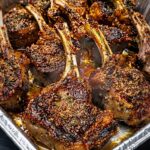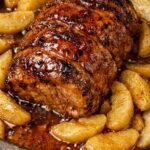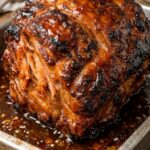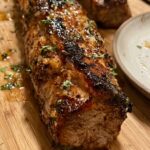

Garlic and Rosemary Roast Lamb with Golden Potatoes
Prep Time: 25 minutes
Cook Time: Approximately 1 hour 30 minutes–2 hours
Resting Time: 20 minutes
Total Time: Approximately 2 hours 15 minutes–2 hours 45 minutes
Servings: 8
Cooking Method: Oven roasting
Description for Garlic Herb Glazed Pork Roast with Roasted Potatoes
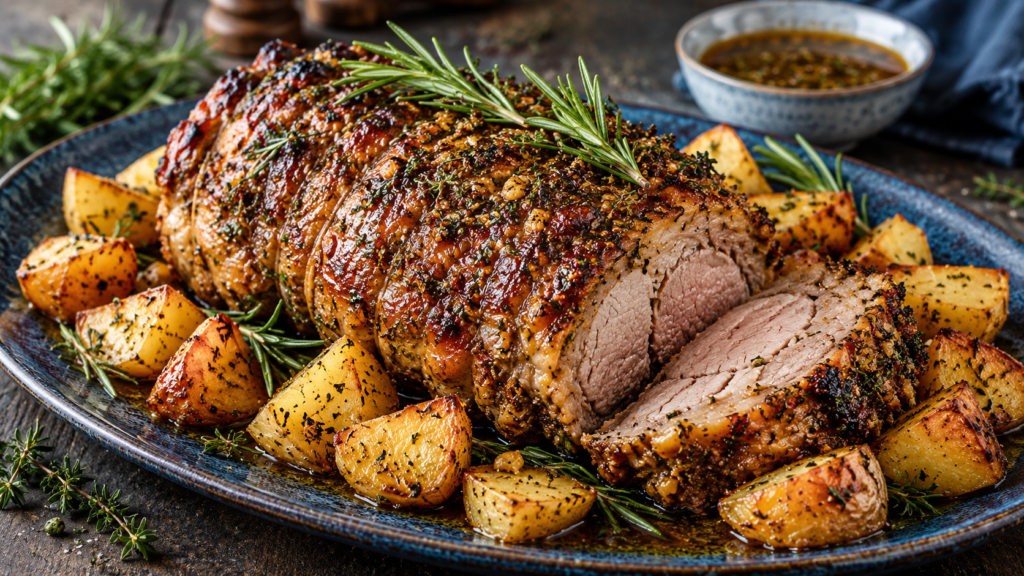
Garlic and Rosemary Roast Lamb with Golden Potatoes is a comforting centerpiece for Sunday lunch, holiday gatherings, or a special family dinner. The lamb develops a richly browned herb crust while staying juicy inside, and the potatoes roast until tender with crisp, golden edges. A simple pan sauce brings everything together without needing a separate gravy mix.
Fresh rosemary, thyme, garlic, and lemon give the roast a fragrant coating that complements the meat’s savory flavor. Dijon mustard helps the seasoning cling to the surface and adds a gentle tang rather than a strong mustard taste. The potatoes cook on a separate tray, giving them enough space to brown instead of steaming beneath the roast.
This recipe uses a boneless, rolled leg of lamb for easy carving and attractive slices. The photograph is the inspiration for this version; the exact meat and original ingredients cannot be confirmed from an image alone.
Ingredients for Garlic Herb Glazed Pork Roast with Roasted Potatoes
For the Roast Lamb
1 boneless leg of lamb, approximately 3⅓ pounds (1.5 kg), rolled and tied
2 tablespoons olive oil
6 garlic cloves, finely minced
2 tablespoons finely chopped fresh rosemary
1 tablespoon fresh thyme leaves
1 tablespoon Dijon mustard
1 tablespoon lemon juice
1 teaspoon finely grated lemon zest
1½ teaspoons fine salt, or to taste
1 teaspoon freshly ground black pepper
½ teaspoon smoked paprika, optional
1 large onion, thickly sliced
1 cup low-sodium beef or lamb stock
For the Golden Potatoes
2 pounds (900 g) potatoes, cut into approximately 1½-inch chunks
2 tablespoons olive oil
1 teaspoon chopped fresh rosemary
½ teaspoon garlic powder
½ teaspoon fine salt
¼ teaspoon black pepper
1 tablespoon chopped fresh parsley, for serving
For the Pan Sauce
Juices and softened onion from the roasting pan
½ cup low-sodium beef or lamb stock, plus more if needed
1 teaspoon Dijon mustard, optional
1 teaspoon cornstarch mixed with 1 tablespoon cold water, optional
Black pepper, to taste
Instructions for Garlic Herb Glazed Pork Roast with Roasted Potatoes
1. Prepare the Oven and Roasting Pan
Preheat the oven to 425°F (220°C), or 400°F (200°C) fan. Position the racks so the lamb can sit near the middle and the potatoes can roast on another level.
Scatter the sliced onion across a roasting pan and pour the stock around it. The onion forms a flavorful base, while the liquid helps prevent the drippings from burning. Use a pan that holds the lamb comfortably without excessive empty space.
2. Make the Garlic and Herb Coating
Combine the olive oil, minced garlic, rosemary, thyme, Dijon mustard, lemon juice, lemon zest, salt, pepper, and optional paprika in a small bowl.
Stir until you have a thick, spreadable mixture. Finely chopping the herbs helps distribute them evenly and makes the roast easier to slice later.
3. Season the Lamb
Pat the lamb thoroughly dry with paper towels. Leave the butcher’s twine in place so the roast holds its shape.
Rub the garlic and herb mixture over the entire surface, including the ends. Place the lamb on the onion bed with any fat layer facing upward. Keep the coating above the stock rather than washing it off with liquid.
For advance preparation, season the lamb, cover, and refrigerate overnight. Refrigerate the onion and stock separately until you are ready to roast.
4. Start Roasting
Roast the lamb at the initial high temperature for 20 minutes to begin developing color.
Reduce the oven to 350°F (180°C), or 320°F (160°C) fan, and continue roasting. Allow approximately 70–100 additional minutes, but start checking earlier because the roast’s thickness affects cooking time.
Use a thermometer inserted into the thickest part. For this recipe, cook to at least 145°F (63°C) before resting. Follow any higher cooking temperature stated on the packaging, particularly for stuffed or specially prepared roasts.
5. Parboil the Potatoes
While the lamb starts cooking, place the potato chunks in a saucepan and cover with cold water. Bring to a boil, then simmer for 8–10 minutes, until the outside begins to soften while the centers remain firm.
Drain thoroughly and let the potatoes steam dry for several minutes. Gently shake them in the saucepan to roughen the edges. Those uneven surfaces catch the oil and become crisp during roasting.
6. Roast the Potatoes
Toss the drained potatoes with olive oil, rosemary, garlic powder, salt, and pepper. Spread them across a large metal baking tray in a single layer.
Place them in the oven when the lamb has approximately 50–60 minutes remaining. Turn the potatoes after about 30 minutes.
At the lower roasting temperature, they will become tender but may need a final burst of heat for deeper browning. Avoid crowding the tray, which traps moisture and slows crisping.
7. Rest the Lamb and Finish the Potatoes
Once the lamb reaches the required internal temperature, transfer it to a carving board. Cover loosely with foil and rest for 20 minutes.
Increase the oven to 425°F (220°C), or 400°F (200°C) fan. Roast the potatoes for another 10–20 minutes, checking regularly, until their edges are golden and crisp.
Resting gives the meat time to settle and provides a convenient window to finish the potatoes and sauce.
8. Prepare the Pan Sauce
Spoon excess fat from the roasting pan, leaving the flavorful juices and onion. Add the extra stock and scrape up the browned bits.
If the pan is suitable for stovetop use, simmer directly in it. Otherwise, transfer the contents to a saucepan. Simmer for 5–8 minutes, then stir in the optional Dijon mustard.
For a thicker sauce, add the cornstarch slurry gradually and simmer until lightly thickened. Taste before adding salt because the roasting juices may already be well seasoned.
9. Carve and Serve
Remove every piece of twine before slicing. Carve the lamb across the grain into moderately thin slices, changing direction if the grain changes between muscles.
Arrange the meat and potatoes on a warm platter. Sprinkle with parsley and spoon a little sauce around the lamb. Serve the remaining sauce separately to preserve the potatoes’ crisp edges.
Discover 60+ high-protein, low-carb recipes with simple instructions and everyday ingredients. Find breakfast, lunch, dinner, salad, and snack ideas—plus a 30-day meal plan to help you plan ahead.
Explore the Elite Protein Kitchen Cookbook
Notes for Garlic Herb Glazed Pork Roast with Roasted Potatoes
Choose the right cut: Boneless leg of lamb suits this sliceable roast. Lamb shoulder generally needs a different, longer cooking method to become tender.
Use temperature as your guide: The suggested cooking time is an estimate. A compact, tightly rolled roast cooks differently from a flatter piece of the same weight.
Check the liquid: If the roasting pan starts drying out, add a small amount of hot water or stock around the meat.
Fresh and dried herbs: Replace the fresh rosemary with about 2 teaspoons dried rosemary and the fresh thyme with 1 teaspoon dried thyme. Crush dried rosemary before mixing.
Potato choices: Yukon Gold, Maris Piper, or another roasting variety works well. Keep the pieces similar in size for even cooking.
Tips for the Best Results for Garlic Herb Glazed Pork Roast with Roasted Potatoes
Dry the meat first. A dry surface browns more effectively and helps the seasoning adhere.
Keep the roast tied. Even shaping encourages more consistent cooking and neater slices.
Protect the garlic. If the crust becomes dark before the center is ready, loosely tent the lamb with foil.
Dry the potatoes thoroughly. Excess water creates steam and delays browning.
Use a metal tray. It generally produces crisper potatoes than a deep ceramic baking dish.
Rest before carving. Cutting immediately allows more juice to escape onto the board.
Season the sauce last. Its saltiness increases as it reduces.
Serve promptly. Potatoes are crispest shortly after leaving the oven.
Serving Suggestions
Serve this roast with steamed green beans, roasted carrots, sautéed cabbage, or a cucumber and tomato salad. A lemony green salad adds freshness alongside the rich meat and potatoes.
For a smaller carbohydrate portion, serve fewer potatoes and add extra non-starchy vegetables. The complete recipe includes potatoes and should not be described as a keto meal.
Storage and Reheating for Garlic Herb Glazed Pork Roast with Roasted Potatoes
Refrigerate leftovers in shallow, covered containers within 2 hours of cooking. Use refrigerated lamb, potatoes, and sauce within 3–4 days.
Reheat sliced lamb gently in a covered dish with a little stock or sauce to reduce drying. Reheat leftovers to 165°F (74°C) throughout. Warm potatoes separately in a hot oven or air fryer to restore some crispness.
For longer storage, freeze the lamb with a little sauce for up to 2–3 months for best quality. Thaw overnight in the refrigerator before reheating.
Nutritional Information for Garlic Herb Glazed Pork Roast with Roasted Potatoes
Approximate values per serving, based on eight servings with potatoes and sauce:
Nutrient Estimated amount
Calories 550 kcal
Protein 40 g
Total fat 30 g
Saturated fat 10 g
Carbohydrates 25 g
Fiber 3 g
Sugars 3 g
These are broad estimates. The lamb’s fat content, trimming, stock brand, serving size, and amount of drippings consumed can substantially change the final values.
Nutritional Benefits for Garlic Herb Glazed Pork Roast with Roasted Potatoes
Lamb provides protein, which supports muscle maintenance and normal tissue repair. It also supplies vitamin B12, zinc, and iron, making it a useful source of several essential nutrients.
Potatoes contribute carbohydrate for energy, along with potassium and some fiber, particularly when the skins remain on. Serving the roast with vegetables adds variety and additional fiber.
Olive oil contributes unsaturated fat, while garlic, herbs, and lemon add flavor without requiring a heavy cream sauce. Lamb also contains saturated fat, so trim excessive visible fat and choose portions that suit your overall diet.
Questions and Answers for Garlic Herb Glazed Pork Roast with Roasted Potatoes
Can I use a bone-in leg of lamb?
Yes, but the cooking time and yield will differ. Use a thermometer and avoid relying on the boneless timing alone.
Can I prepare the lamb ahead?
Yes. Apply the herb coating up to a day ahead, cover, and refrigerate. Prepare the potatoes shortly before roasting for the best texture.
Why is my lamb tough?
Possible causes include overcooking, slicing with the grain, or using a cut that needs slow cooking. A thermometer and careful carving help.
Can I skip parboiling the potatoes?
Yes, but they may take longer and develop a different texture. Parboiling creates soft edges that crisp well.
Can I replace Dijon mustard?
Simply omit it and add a little extra olive oil if the herb mixture needs loosening. The flavor will be slightly different.
Can I make the sauce without cornstarch?
Yes. Simmer it until slightly reduced and serve as a thin pan jus.https://ketosl.com/roasted-sweet-potato-bake-with-cranberries-and-feta/