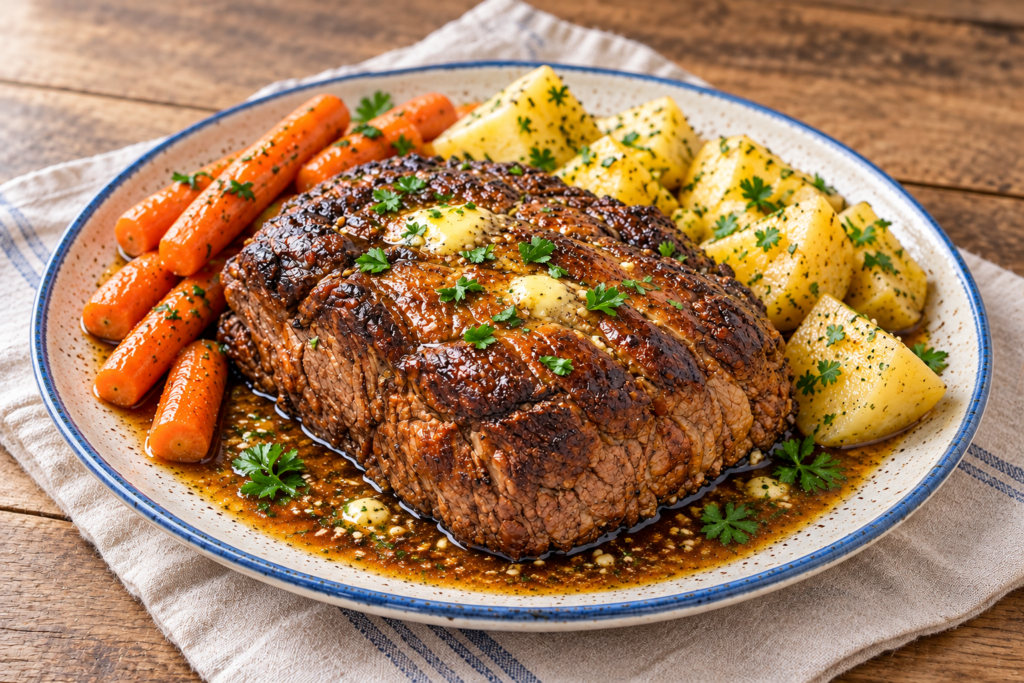

Garlic Butter Beef Roast with Potatoes and Carrots
Prep Time: 15 minutes
Cook Time: 3–4 hours
Rest Time: 15 minutes
Total Time: 3 hours 30 minutes–4 hours 30 minutes
Servings: 6–8
Course: Main Course
Cooking Method: Oven Braising
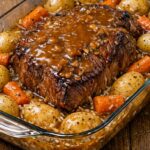
Garlic butter beef roast with potatoes and carrots is a comforting dinner that brings tender meat, hearty vegetables, and savory pan juices together in one pot. The beef develops a browned crust before gently cooking with garlic, butter, rosemary, and Italian seasoning.
This recipe uses chuck roast, which becomes tender through slow, covered cooking. Potatoes and carrots go into the pot later, giving them enough time to absorb the flavorful broth while keeping their shape. A small amount of reserved garlic butter melts over the finished roast, adding a fragrant finishing touch.
It is a satisfying choice for Sunday dinner, a family gathering, or an afternoon when you can let the oven do most of the work.
Ingredients For garlic butter beef roast
3 pounds (1.36 kg) boneless beef chuck roast
3 tablespoons unsalted butter, softened
2 tablespoons olive oil
5 garlic cloves, minced
1 teaspoon salt
1 teaspoon ground black pepper
1 teaspoon dried rosemary
1 teaspoon Italian seasoning
1 cup low-sodium beef broth, plus extra if needed
1½ pounds (680 g) potatoes, cut into large chunks
1 pound (450 g) baby carrots
2 tablespoons chopped fresh parsley
Instructions for garlic butter beef roast
Step 1: Prepare the oven and beef
Preheat the oven to 325°F (160°C). Choose a Dutch oven with a tight-fitting lid or a deep roasting pan that can be sealed securely with heavy-duty foil.
Pat the beef dry with paper towels. Trim away any large, hard pieces of exterior fat while leaving the marbling within the meat. Season all sides with the salt and black pepper.
Step 2: Mix the garlic butter
Combine the softened butter, minced garlic, rosemary, and Italian seasoning in a small bowl. Crush the dried rosemary lightly before mixing so its flavor spreads more evenly.
Transfer one tablespoon of the prepared mixture to a separate clean container and refrigerate it for serving. Keep this reserved butter away from the raw beef. The remaining mixture will flavor the roast during cooking.
Step 3: Brown the roast
Heat the olive oil in the Dutch oven over medium-high heat. Add the roast and sear for approximately 3–4 minutes on each broad side. Briefly brown the edges, using sturdy tongs to turn the meat.
Let the beef sit undisturbed while each side browns. Transfer it to a plate. If using a separate roasting pan, complete the searing in a large skillet.
Step 4: Add the broth
Reduce the heat and carefully pour the broth into the searing pan. Scrape the bottom with a wooden spoon to release the browned bits.
Return the roast to the Dutch oven, or transfer the beef and liquid into your roasting pan. Spread the cooking portion of garlic butter over the top.
The broth should create a shallow pool around the meat. It does not need to cover the roast, but the pan should remain moist throughout cooking.
Step 5: Begin the covered cooking
Cover tightly and place in the oven for approximately two hours. Avoid repeatedly lifting the lid during this stage.
When checking the roast, look at the liquid around its base. If the pan is becoming dry, add a little hot broth or water. A wide pan or loose-fitting cover may require more liquid than a snug Dutch oven.
Step 6: Add potatoes and carrots
Cut the potatoes into even chunks approximately 1½–2 inches wide. Arrange them and the carrots around the roast, then spoon some cooking liquid over them.
Cover again and bake for another 1–2 hours. Begin checking the vegetables after one hour. They should be easy to pierce with a knife while still holding their shape.
If the vegetables finish before the beef, remove them to a covered dish and continue cooking the roast.
Step 7: Check the beef for tenderness
Insert a fork or skewer into the thickest part of the meat. It should slide in with little resistance, and the beef should separate under gentle pressure.
If it remains firm, cover and continue cooking in 20–30-minute intervals. Chuck roast needs time for its connective tissue to soften, so tenderness matters more than following the timer exactly.
Step 8: Rest and finish
Transfer the roast to a serving platter and rest for 15 minutes. Arrange the potatoes and carrots alongside it.
Skim excess fat from the pan juices if desired, then spoon the juices over the meat and vegetables. Add the reserved garlic butter in small pieces over the hot roast and sprinkle with parsley.
Slice across the grain where possible, or serve the beef in tender, generous chunks.
Tips for the Best Garlic Butter Beef Roast
Choose well-marbled chuck. This cut works especially well for braising. Very lean cuts may become dry rather than developing the same succulent texture.
Dry the surface before searing. Excess moisture encourages steaming and makes browning more difficult. Patting the meat dry helps create a deeper crust.
Keep the pan tightly covered. Trapped steam supports gentle cooking and limits evaporation. If using foil, seal it firmly around the edges.
Cut vegetables evenly. Similar-sized pieces cook at a similar rate. Small potato cubes can break down before the roast is ready.
Keep an eye on the broth. One cup works as a starting amount in a snug, well-covered pot. Add more as needed rather than allowing the bottom to dry out.
Ingredient Notes and Substitutions for garlic butter beef roast
Yukon Gold potatoes become creamy while generally holding their shape. Red potatoes also work well. Russets can be used, but handle them gently because they may crumble more readily.
Regular carrots can replace baby carrots. Peel them and cut into thick pieces of similar size. Avoid thin rounds for this long cooking method.
Unsalted butter and low-sodium broth make seasoning easier to control. If you use salted butter, reduce the added salt and adjust the finished pan juices after tasting.
Fresh rosemary can replace dried rosemary. Use approximately one tablespoon finely chopped, or reduce the quantity if you prefer a milder herbal flavor.
Storage and Reheating garlic butter beef roast
Refrigerate leftovers in shallow, airtight containers within two hours of cooking. Keep some pan juices with the beef to help protect it from drying out. Use refrigerated leftovers within 3–4 days.
Freeze the beef and juices for up to three months for best quality. Potatoes may become grainier after freezing, so you can freeze the meat separately if preferred.
Thaw overnight in the refrigerator. Reheat covered at 325°F (160°C) with a splash of broth until the center reaches 165°F (74°C). Individual portions can also be warmed gently in a covered saucepan.
Discover 60+ high-protein, low-carb recipes with simple instructions and everyday ingredients. Find breakfast, lunch, dinner, salad, and snack ideas—plus a 30-day meal plan to help you plan ahead.
Explore the Elite Protein Kitchen Cookbook
Serving Ideas for garlic butter beef roast
With potatoes and carrots already included, this roast needs only a simple extra if you want one. Green beans, steamed broccoli, or a crisp salad provide a fresh contrast.
Serve crusty bread alongside the platter to soak up the garlic butter juices. Leftover beef can be shredded into sandwiches, tucked into wraps, or served over rice with reheated vegetables.
Estimated Nutritional Information for garlic butter beef roast
Per serving, based on eight portions with vegetables:
Calories: Approximately 480
Protein: 35 g
Carbohydrates: 23 g
Fat: 27 g
Fiber: Approximately 3 g
These values are estimates. Beef marbling, trimming, serving size, and the amount of cooking fat consumed can change the final totals.
Nutrition Benefits for garlic butter beef roast
Beef supplies protein, iron, zinc, and vitamin B12. Potatoes provide carbohydrates and potassium, while carrots contribute beta-carotene and fiber. Serving the vegetables with the meat creates a varied meal without requiring several separate dishes.
Frequently Asked Questions for garlic butter beef roast
Can I make this in a slow cooker?
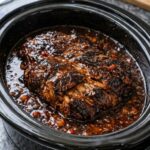
Yes. Brown the beef first, then add it to a 6-quart slow cooker with the broth and cooking portion of garlic butter. Cook on low for approximately 8–10 hours, until tender. Add the vegetables during the final 3–4 hours and check their texture before serving.
Why is my roast still tough?
It usually needs more covered cooking time. Check that liquid remains, cover tightly, and continue until a fork enters easily.
Can I skip browning?
Yes, although the roast and pan juices will have a less developed flavor. Follow the remaining braising instructions.
Can I thicken the pan juices?
Yes. Simmer them in a saucepan and whisk in a slurry of one tablespoon cornstarch mixed with one tablespoon cold water. Cook until thickened, adding only as much slurry as needed.
https://ketosl.com/loaded-stuffed-sweet-potatoes-with…/


Pingback: no-bake banana cream pie dessert 2026