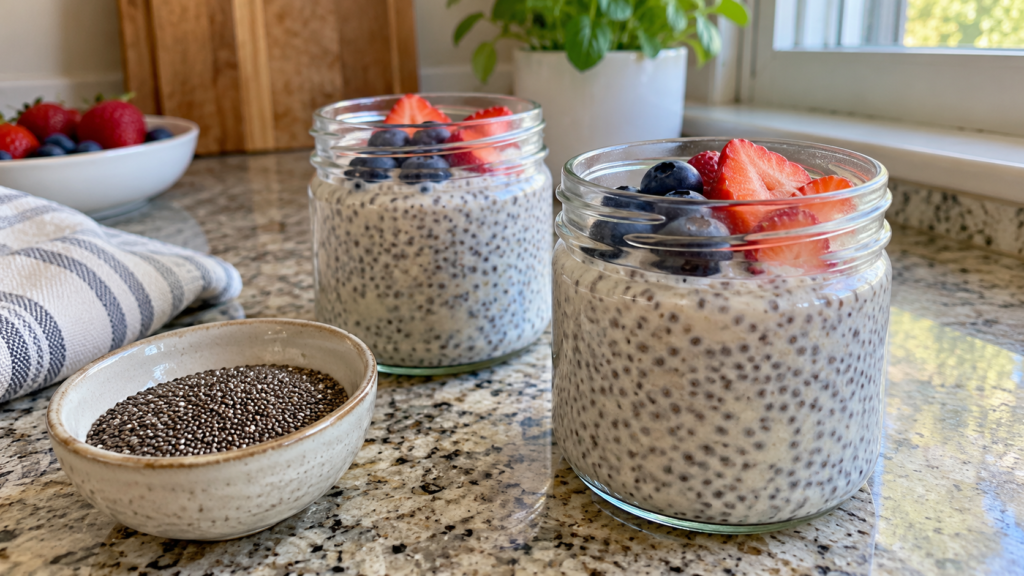

Easy Vanilla Chia Seed Pudding with Fresh Berries
Creamy vanilla chia seed pudding is a simple make-ahead breakfast made with chia seeds, milk, vanilla, and a little optional sweetener. After a few hours in the refrigerator, the seeds absorb liquid and develop a soft, gel-like coating that transforms the mixture into a spoonable pudding.
The flavor is mild and lightly nutty, making it a good base for fresh berries, sliced bananas, chopped nuts, or a spoonful of yogurt. You can keep it simple for an everyday breakfast or layer it in small glasses with fruit for an attractive snack.
This recipe requires no cooking and only a few minutes of preparation. The most important step is stirring the mixture again after it has rested briefly. That second stir helps separate the seeds before they settle into clumps.
Prep Time: 5 minutes
Cook Time: None
Chilling Time: At least 4 hours or overnight
Servings: 2
Ingredients for Easy Vanilla Chia Seed Pudding
For the chia pudding:
¼ cup chia seeds, approximately 4 tablespoons
1 cup dairy milk or unsweetened plant-based milk
½ teaspoon vanilla extract
1–2 teaspoons maple syrup or honey, optional
A small pinch of salt, optional
For the berry topping:
¼ cup fresh blueberries
¼ cup sliced fresh strawberries
Optional additions:
2 tablespoons plain Greek yogurt
1 tablespoon chopped walnuts or almonds
A light sprinkle of ground cinnamon
A little extra milk for adjusting the consistency
Instructions for Easy Vanilla Chia Seed Pudding
Choose a mixing container.
Use a medium bowl or a jar with enough room to stir comfortably. Although you can mix the pudding directly in individual serving jars, using one larger container makes it easier to break up clumps and distribute the ingredients evenly.
If you plan to take the pudding with you, prepare it in a container with a secure lid. Leave some space at the top so you can add fruit after the mixture thickens.
Combine the liquid ingredients.
Pour the milk into your container. Add the vanilla extract, optional maple syrup or honey, and a small pinch of salt if using.
Stir until everything is evenly mixed. If the honey is thick, whisk it thoroughly into the milk so it does not remain stuck to the bottom.
Begin with one teaspoon of sweetener. You can taste the finished pudding and add more later, especially if your fruit is already sweet.
Whisk in the chia seeds.
Add the chia seeds gradually while stirring. Whisk for about 30 seconds, scraping around the bottom and sides of the container.
The mixture will look thin at this stage. That is normal. The seeds need time to absorb the milk, so avoid adding extra chia immediately.
Check that there are no dry pockets or large clusters floating on the surface. Each seed should have contact with the liquid.
Let the mixture rest briefly.
Leave the pudding mixture for 5–10 minutes. During this time, the seeds will begin absorbing liquid and forming a gel-like coating.
You may notice the mixture starting to thicken around the edges while some seeds settle toward the bottom. This early resting period helps reveal clumps before the pudding fully sets.
Stir a second time.
Whisk or stir thoroughly again, paying particular attention to the bottom of the container. Break apart any clusters with the back of your spoon.
This second stir is the key to a more even texture. Skipping it can leave a firm layer of seeds underneath a thinner layer of milk.
If making individual portions, divide the mixture between two jars after this step.
Cover and refrigerate.
Cover the container and refrigerate for at least four hours. For convenient breakfast preparation, leave it overnight.
The pudding should become thick enough to eat with a spoon, with the seeds suspended throughout the mixture. It will retain a lightly textured consistency rather than becoming completely smooth like custard.
Keep the fruit separate while the pudding chills if you want the freshest topping and the cleanest presentation.
Check the consistency.
Stir the chilled pudding before serving. If it is thicker than you prefer, add milk one tablespoon at a time until it loosens.
If it is too thin, stir in one additional teaspoon of chia seeds. Refrigerate for another hour, then check again.
Add extra seeds gradually. A small amount can noticeably change the texture, and adding too much at once may make the pudding overly dense.
Prepare the berry topping.
Rinse the strawberries and blueberries, then dry them gently. Remove the strawberry stems and slice the fruit into bite-sized pieces.
Drying the berries helps prevent excess water from thinning the surface of the pudding.
If using frozen berries, thaw them in the refrigerator first. You can drain some of the released juice or stir it into the pudding for a fruitier flavor and color.
Assemble and serve.
Divide the pudding between two bowls or jars if you have not already portioned it. Top with the strawberries and blueberries.
Add Greek yogurt for extra creaminess, chopped nuts for crunch, or a little cinnamon for warmth.
Serve chilled. For a layered presentation, alternate spoonfuls of pudding and berries, finishing with a few pieces of fruit on top.
Tips for Easy Vanilla Chia Seed Pudding
Use a reliable starting ratio.
Four tablespoons of chia seeds to one cup of milk produces a fairly thick pudding. If you prefer a softer texture, use three tablespoons of seeds instead. Different brands can absorb liquid slightly differently, so treat the ratio as a starting point and adjust after chilling.
Choose milk according to flavor and texture.
Dairy milk gives the pudding a familiar creamy flavor. Unsweetened soy milk is another option when you want plant-based milk with more protein than many almond or coconut beverages. Almond milk produces a lighter result. Canned coconut milk makes a richer pudding and may need thinning with water or another milk.
Keep the sweetness flexible.
Vanilla and ripe fruit contribute flavor without requiring much added sweetener. Taste the pudding after chilling before adding more maple syrup or honey. If using sweetened milk, you may prefer to omit the extra sweetener entirely.
Blend for a smoother finish.
Chia pudding naturally has a noticeable seed texture. If you prefer something smoother, blend the fully hydrated pudding until it reaches your desired consistency. Use a blender suitable for the quantity you are preparing, and add a splash of milk if needed.
Make chocolate chia pudding.
Whisk one tablespoon of unsweetened cocoa powder into the milk before adding the seeds. Cocoa can form dry lumps, so mixing it first with a small amount of milk helps create a smooth paste. Add the remaining milk, vanilla, and chia seeds, then follow the same resting and chilling steps.
Try different fruit combinations.
Replace the berries with diced mango, sliced banana, peaches, or chopped pear. A spoonful of unsweetened applesauce and a pinch of cinnamon also work well. Add delicate fruit shortly before serving so it keeps its texture.
Add toppings just before eating.
Nuts, granola, and toasted coconut become softer when stored against the pudding. Keep crunchy toppings in a separate container and sprinkle them on at serving time. This is especially helpful when preparing breakfast several days ahead.
Store the pudding properly.
Keep the prepared pudding covered in the refrigerator and use it within three to four days. Follow the storage guidance for your milk and other ingredients, using the shortest applicable timeframe. Store fruit separately when possible, and stir each portion before eating.
Prepare a larger batch carefully.
To make four servings, double all the base ingredients. Use a container large enough for thorough mixing, and remember the second stir after the initial resting period. Portioning the pudding after mixing helps ensure each serving has a similar balance of seeds and liquid.
Make Everyday Cooking Easier
Discover 60+ high-protein, low-carb recipes with simple instructions and everyday ingredients. Explore breakfasts, lunches, dinners, salads, and snacks—plus a 30-day meal plan to help you plan ahead.
Get the Elite Protein Kitchen Cookbook
Nutritional Benefits for Easy Vanilla Chia Seed Pudding
Fiber from chia seeds and fruit
Chia seeds contribute dietary fiber, and the berry topping adds more. Fiber helps support normal digestion and contributes to a satisfying meal. The amount in each serving depends on your measurements and toppings. If you are increasing your fiber intake, smaller portions may feel more comfortable initially.
Plant-based omega-3 fats for Easy Vanilla Chia Seed Pudding
Chia seeds contain alpha-linolenic acid, commonly called ALA, a plant-based omega-3 fatty acid. This makes them a useful ingredient for adding variety to the fats in your diet. ALA differs from the EPA and DHA found in fish, so these sources are not nutritionally identical.
Protein from the full combination
The seeds provide some protein, while the milk choice influences the total amount considerably. Dairy milk and soy milk generally contribute more protein than many almond or coconut beverages. Adding plain Greek yogurt is another way to increase the protein content and make the pudding creamier.
Calcium and other nutrients for Easy Vanilla Chia Seed Pudding
Chia seeds contribute minerals, including calcium and magnesium. Dairy milk or calcium-fortified plant milk can add further calcium. Fortification varies between products, so check the label rather than assuming every plant-based milk supplies the same nutrients.
A practical way to include fruit
The strawberry and blueberry topping adds flavor, color, fiber, and a range of naturally occurring plant compounds. Strawberries also contribute vitamin C. Changing the fruit throughout the week brings variety and makes the same basic recipe feel different.
Control over added sugar Easy Vanilla Chia Seed Pudding
Making pudding at home lets you choose the milk, sweetener, and portion size. Unsweetened milk, a modest amount of maple syrup or honey, and fresh fruit create a lightly sweet version. The finished nutritional profile depends on those choices; chia pudding does not need a large amount of sweetener to taste enjoyable.
https://ketosl.com/roasted-root-vegetable-bake-with-feta-walnuts/




Pingback: Cheesy Zucchini Casserole with Eggs and Fresh Herbs 2028