
Prep Time: 25 minutes
Cook Time: 35–45 minutes
Cooling and Chill Time: 3 hours
Servings: 16 bars
Ingredients
For the shortbread layers:
1 cup (226 g) unsalted butter, softened
½ cup (100 g) granulated sugar
2 teaspoons vanilla extract
2½ cups (300 g) all-purpose flour
½ teaspoon salt
For the caramel filling:
1 cup (200 g) granulated sugar
¼ cup (60 ml) water
½ cup (120 ml) heavy cream, warmed
½ cup (113 g) unsalted butter, cut into cubes
2 tablespoons light corn syrup or golden syrup
1 teaspoon vanilla extract
½ teaspoon fine sea salt
For the topping:
¼–½ teaspoon flaky sea salt
Instructions
Prepare the pans.
Preheat the oven to 350°F (175°C). Line two 8-inch square metal baking pans with parchment paper, leaving an overhang for lifting. These will hold the bottom and top shortbread layers.
Make the shortbread dough.
Beat the softened butter and sugar together for approximately 2 minutes, until smooth and creamy. Mix in the vanilla. Add the flour and salt, then mix on low speed just until a crumbly dough forms. It should hold together when pressed.
Shape both layers.
Divide the dough equally between the prepared pans. Press firmly into even layers, reaching all four corners. Use the bottom of a flat measuring cup to smooth the surface. Prick each layer lightly with a fork.
Bake the shortbread.
Bake for 22–28 minutes, until the edges are lightly golden and the centres look set. Rotate the pans if they brown unevenly. Leave the bottom layer in its pan. Let the second layer cool completely before lifting it out; this will become the top.
Start the caramel.
Place the sugar, water, and corn syrup in a medium, heavy-bottomed saucepan. Stir gently over medium-low heat until the sugar dissolves. Once the mixture boils, stop stirring and let it cook until it turns a medium amber colour, gently swirling the pan if needed.
Add the cream and butter.
Remove the saucepan from the heat. Slowly pour in the warm cream in several additions, stirring carefully with a long-handled heatproof spatula. The caramel will bubble vigorously. Add the butter and stir until melted and combined.
Cook the filling to the correct consistency.
Return the saucepan to medium-low heat. Cook, stirring frequently, until a candy thermometer reads 240°F (116°C). Keep the thermometer tip submerged without touching the bottom of the pan. This temperature gives the cooled filling a soft, sliceable chew. Remove from the heat and stir in the vanilla and fine sea salt.
Fill the bars.
Let the caramel stand for approximately 3 minutes. Reserve 2 tablespoons for the top, then pour the remaining caramel over the shortbread base still in its pan. Spread evenly with a heatproof spatula.
Add the top shortbread layer.
Carefully slide the completely cooled second shortbread slab onto the warm caramel, using a wide spatula or flat baking sheet to support it. Press very gently to make contact with the filling. If the slab cracks, fit the pieces together neatly.
Finish with caramel and salt.
Spread the reserved caramel thinly over the top. If it has become too firm, warm it gently until spreadable. Sprinkle lightly with flaky sea salt.
Cool and chill.
Let the assembled bars cool at room temperature for about 1 hour, then refrigerate for approximately 2 hours until the caramel is firm enough to slice.
Cut and serve.
Lift the slab from the pan using the parchment overhang. If very firm, let it stand for 15–20 minutes before cutting. Use a sharp knife to divide it into 16 squares, wiping the blade between cuts. Serve slightly cool or at room temperature.
Description
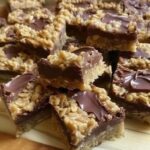
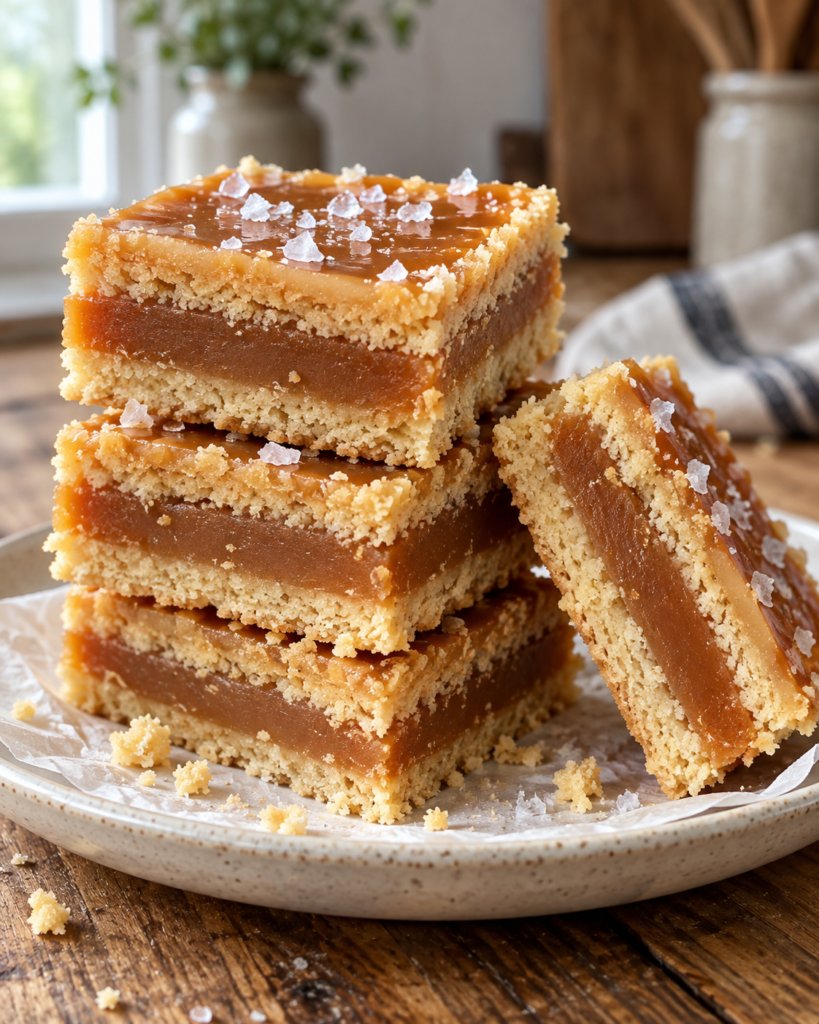
These salted caramel shortbread bars have two buttery cookie layers surrounding a thick, chewy caramel centre. A thin caramel coating and a delicate sprinkle of flaky salt create the sweet-and-salty finish shown in the image.
Baking the shortbread layers separately keeps both layers crisp and avoids having to spread raw dough over soft caramel. Once assembled and chilled, the bars hold their shape while remaining tender enough to bite through.
Notes
Use heavy cream rather than milk for the caramel. Milk changes the fat and water balance.
The corn syrup, or golden syrup, helps discourage sugar crystallisation.
A candy thermometer is strongly recommended because caramel colour alone cannot tell you whether the finished filling will set.
The salt on top should be flaky finishing salt. Coarse rock salt can be unpleasantly hard.
If you have only one pan, bake and cool the top layer first, lift it out, then line the pan again and bake the base.
Tips
Weigh the flour for a more reliable shortbread texture. Too much flour makes the layers dry and difficult to slice.
Avoid whipping excessive air into the dough; shortbread should be tender and compact.
Watch the sugar closely as it turns amber because it can darken quickly.
Have the cream and butter ready before starting the caramel.
Keep the top slab fully supported during assembly to reduce cracking.
Do not cut while the caramel is warm, or the filling may squeeze out.
For clean edges, score the top lightly before making each full cut.
Cut smaller squares for a dessert platter; these bars are rich.
Storage
Store in an airtight container in the refrigerator for up to 1 week. Separate stacked layers with parchment paper.
For the best texture, let refrigerated bars stand at room temperature for 15–20 minutes before serving.
Freeze individually wrapped bars in a freezer-safe container for up to 2 months. Thaw overnight in the refrigerator.
Nutritional Information
Approximate nutrition per bar, based on 16 servings:
Calories: 330
Carbohydrates: 40 g
Protein: 2 g
Fat: 19 g
Saturated Fat: 12 g
Fibre: ½ g
Sodium: 170 mg
Values vary with ingredient brands and the amount of finishing salt.
Benefits
Can be prepared ahead for parties or gatherings.
Cuts into convenient portions for sharing.
Uses everyday baking ingredients.
Freezes well for later serving.
Offers a homemade alternative with adjustable finishing salt.
These are a rich dessert rather than a significant source of protein or fibre.
Q&A
Why did my caramel stay runny?
It may not have reached 240°F (116°C) after adding the cream and butter, or the bars may need more chilling time.
Why is my caramel too hard?
It may have cooked beyond the target temperature. Refrigeration also firms it considerably, so let the bars soften slightly before serving.
Can I use store-bought caramel sauce?
Most pourable sauces are too thin to hold a thick filling. Use a caramel specifically intended to set in dessert bars, following its preparation instructions.
Can I leave off the caramel topping?
Yes. The bars will still have a generous caramel centre. Sprinkle a little flaky salt onto the filling before adding the top layer.
What if my top shortbread cracks?
Place the pieces over the filling like a puzzle. The caramel coating helps disguise small cracks, and chilling helps hold everything together.
Can I add chocolate?
Yes. Spread a thin layer of melted chocolate over the cooled top instead of the caramel coating, then finish with flaky salt.