
Classic Sunday Pot Roast with Mushroom Gravy
Ingredients for Classic Sunday Pot Roast with Mushroom Gravy
This Classic Sunday Pot Roast brings together tender braised beef, rich mushroom gravy, sweet carrots, and buttery potatoes in one comforting dinner. The beef cooks slowly in a covered pot until its connective tissue softens and the meat becomes easy to pull apart with a fork. The cooking liquid then becomes a savory gravy filled with browned mushrooms.
This version uses a boneless chuck roast, which has enough marbling to stay flavorful during a long braise. The vegetables go into the pot later so they become tender without falling apart. Browning the mushrooms separately gives them a deeper flavor and keeps their texture distinct in the finished gravy.
For the beef:
- 3–4 pounds (1.4–1.8 kg) boneless beef chuck roast: Choose a thick piece with visible marbling throughout. Trim away any unusually thick exterior fat, but leave the internal fat that helps keep the meat moist.
- 1½ teaspoons fine sea salt: Use this as a starting amount, then adjust the finished gravy according to the saltiness of your broth.
- 1 teaspoon freshly ground black pepper: Adds gentle heat and seasons the browned exterior.
- 2 tablespoons olive oil: For searing the beef and cooking the onion.
- 1 large yellow onion, roughly chopped: This softens into the braising liquid and adds sweetness.
- 4 garlic cloves, minced: Fresh garlic gives the gravy a warm, savory base.
- 2 tablespoons tomato paste: Adds depth and color without making the dish taste strongly of tomatoes.
- 3 cups low-sodium beef broth, plus more if needed: The exact amount depends on the size of your pot.
- 1 tablespoon Worcestershire sauce: Adds savory depth to the broth.
- 2 teaspoons balsamic vinegar: Provides a little acidity to balance the richness.
- 2 fresh rosemary sprigs
- 4 fresh thyme sprigs
- 2 bay leaves
For the vegetables:
- 1½ pounds (680 g) baby Yukon Gold potatoes: Scrub clean. Leave small potatoes whole and halve any larger ones so they cook evenly.
- 1 pound (450 g) carrots: Peel and cut into thick, approximately 2-inch pieces. Thick pieces hold their shape during braising.
For the mushroom gravy:
- 12 ounces (340 g) cremini or white mushrooms: Clean and slice approximately ¼ inch thick.
- 2 tablespoons unsalted butter: For browning the mushrooms.
- 2 tablespoons cornstarch
- 2 tablespoons cold water
- Salt and black pepper, to taste
For finishing:
- 2 tablespoons chopped fresh parsley: Sprinkle over the platter just before serving.
Instructions for Classic Sunday Pot Roast with Mushroom Gravy
1. Prepare the oven and beef.
Preheat your oven to 300°F (150°C). Choose a heavy, oven-safe Dutch oven with a tight-fitting lid, ideally around 6–7 quarts. It should hold the roast comfortably while leaving room for the vegetables.
Pat the beef thoroughly dry with paper towels. Moisture on the surface encourages steaming rather than browning. Season every side with the salt and black pepper, including the edges. Keep the vegetables refrigerated while you begin cooking the beef.
2. Sear the roast until well browned.
Heat the olive oil in the Dutch oven over medium-high heat. Once the oil is hot, carefully lower the roast into the pot. Let it cook undisturbed for approximately 4–5 minutes on the first broad side.
Turn and brown the opposite side, then briefly sear the edges. Adjust the heat if the browned bits begin to burn. Transfer the beef to a plate. This browning step gives Classic Sunday Pot Roast much of its rich, savory flavor.
3. Cook the onion and tomato paste.
Reduce the heat to medium. Add the chopped onion to the same pot and cook for 4–5 minutes, stirring occasionally, until softened. If the pot looks dry, add a small splash of broth.
Stir in the garlic and cook for about 30 seconds. Add the tomato paste and cook for another 1–2 minutes, stirring constantly. It should darken slightly and coat the onions. Avoid scorching the garlic or paste, which would make the cooking liquid bitter.
4. Build the braising liquid.
Pour in about 1 cup of the beef broth. Scrape the bottom of the pot with a wooden spoon to loosen the browned bits. These dissolve into the broth and add flavor.
Add the remaining broth, Worcestershire sauce, balsamic vinegar, rosemary, thyme, and bay leaves. Return the roast and any collected juices to the pot. The liquid should reach approximately one-third to halfway up the meat. Add a little extra broth if necessary, but do not completely submerge the roast.
5. Begin the slow braise.
Bring the liquid to a gentle simmer on the stovetop. Cover the pot tightly and transfer it to the oven. Cook for approximately 2½ hours before checking the meat.
The liquid should bubble gently rather than boil aggressively. Slow, moist cooking gradually softens the connective tissue in chuck roast. Keep the lid closed during this stage so the pot retains moisture. If your lid does not seal well, place foil underneath it to reduce evaporation.
6. Check tenderness before adding vegetables.
Carefully remove the lid, keeping your face and hands away from the escaping steam. Insert a fork into the thickest part of the roast. It should be beginning to soften, although it may still offer resistance.
If the beef remains very firm, cover and cook for another 30–45 minutes before adding the vegetables. Check the liquid level at the same time. Add hot broth if it has dropped significantly. The cooking time depends on the roast’s thickness as well as its weight.
7. Add the potatoes and carrots.
Arrange the potatoes and carrots around the beef, nestling them partly into the liquid. Spoon a little broth over any pieces sitting above the surface.
Replace the lid and continue cooking for approximately 60–90 minutes. The vegetables should become tender when pierced with a knife, and the beef should yield easily to a fork. Total braising time will usually be around 3½–4½ hours, although some roasts need longer. Tenderness is more useful than the clock alone.
8. Brown the mushrooms separately.
While the vegetables cook, melt the butter in a large skillet over medium-high heat. Add the sliced mushrooms in an even layer. Cook in batches if the pan is crowded.
Leave them undisturbed briefly so the first side browns, then stir and continue cooking for approximately 8–10 minutes. Their released liquid should mostly evaporate. Season lightly with pepper and a small pinch of salt. Set aside until you are ready to finish the gravy.
Make Everyday Cooking Easier
Discover 60+ high-protein, low-carb recipes with simple instructions and everyday ingredients. Explore breakfasts, lunches, dinners, salads, and snacks—plus a 30-day meal plan to help you plan ahead.
Get the Elite Protein Kitchen Cookbook
9. Remove the finished beef and vegetables.
When the roast is fork-tender, transfer it carefully to a serving platter. Use two broad utensils if necessary, since very tender beef may begin to separate as you lift it.
Move the potatoes and carrots to the platter with a slotted spoon. Cover loosely with foil while preparing the gravy. If the vegetables are ready before the beef, remove them first and continue braising the meat. Discard the herb stems and bay leaves from the pot.
10. Prepare the gravy base.
Let the cooking liquid settle briefly, then skim excess fat from the surface with a spoon. Leave the softened onions in the liquid for a rustic gravy, or strain it if you prefer a smoother base.
Aim for approximately 2½–3 cups of liquid. If you have much more, simmer it uncovered to reduce slightly. If you have less, add broth. Taste before reducing extensively, since the seasoning becomes more concentrated as water evaporates.
11. Thicken and add the mushrooms.
Bring the gravy base to a gentle simmer over medium heat. Mix the cornstarch and cold water in a small bowl until completely smooth.
Whisk about two-thirds of the slurry into the simmering liquid. Cook for 2–3 minutes, then check the consistency before adding the remainder. Stir in the browned mushrooms and simmer briefly. The gravy should coat a spoon while still pouring easily. Add a splash of broth if it becomes too thick, then adjust the seasoning.
12. Slice or pull apart the roast.
Allow the beef to rest for approximately 15–20 minutes total, including the time spent making the gravy. If it holds together, slice across the grain into thick portions.
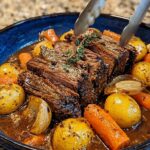
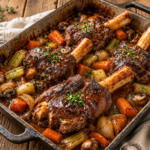
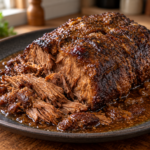
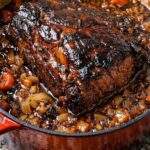
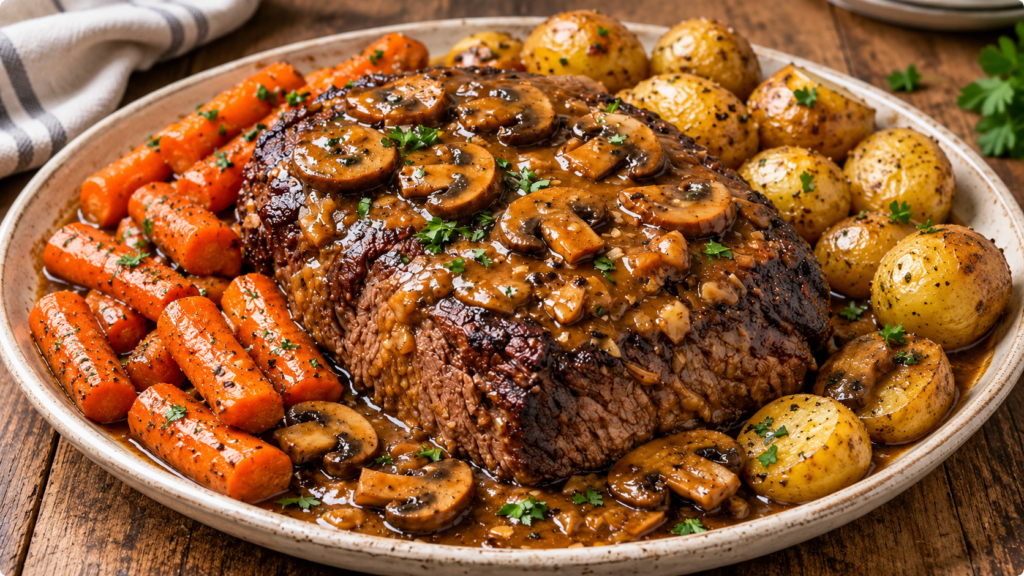
If the roast is exceptionally tender, separate it into generous pieces instead. Both presentations work well for Classic Sunday Pot Roast. Arrange the beef in the center of the platter and place the carrots and potatoes around it. Spoon some mushroom gravy over the meat, leaving extra for serving.
13. Finish and serve.
Scatter chopped parsley over the beef, vegetables, and gravy. Serve warm, making sure each plate receives a portion of roast, carrots, potatoes, and mushrooms.
The meal is substantial on its own, but steamed green beans or a simple green salad make suitable accompaniments. For the presentation shown in the image, keep several mushroom slices visible on top of the roast and spoon the gravy around the vegetables rather than completely covering them.
14. Store and reheat leftovers.
Refrigerate leftovers within two hours in shallow, covered containers. Store the beef with some gravy to help prevent it from drying out, and use refrigerated leftovers within 3–4 days.
Reheat gently in a covered saucepan or oven-safe dish with a splash of broth until the food reaches 165°F (74°C) throughout. Keep the heat moderate so the meat warms without becoming dry. Leftover Classic Sunday Pot Roast also works well shredded into sandwiches or served over freshly cooked mashed potatoes.
https://ketosl.com/spinach-and-feta-puff-pastry-squares-recipe/