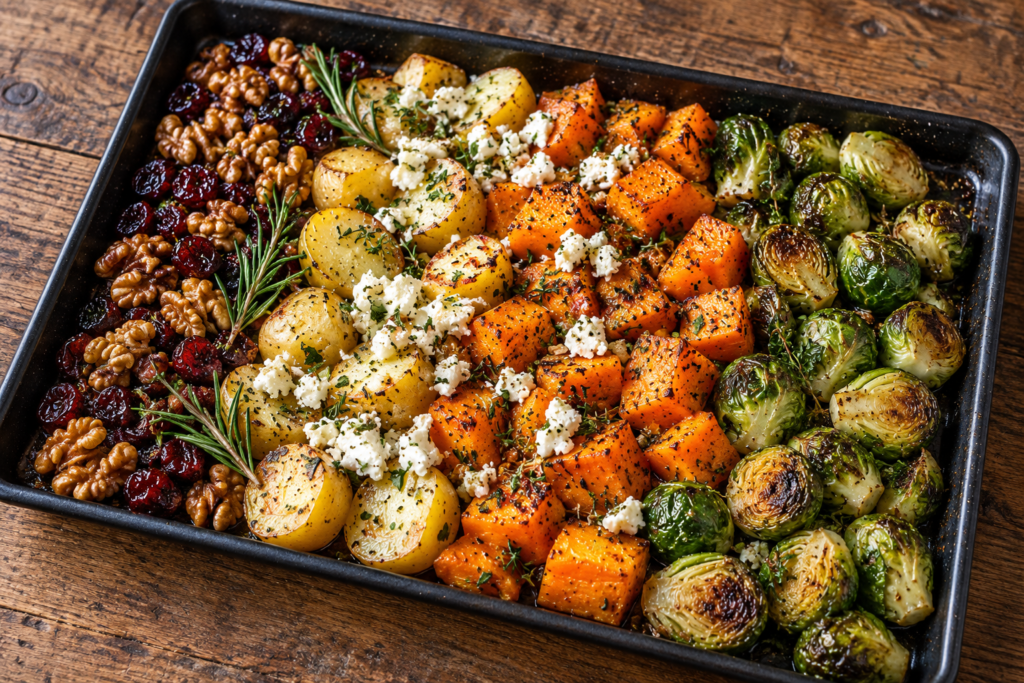

Roasted Autumn Vegetables with Feta and Walnuts
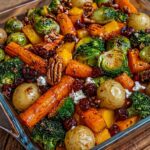
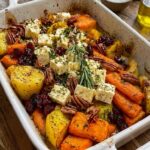
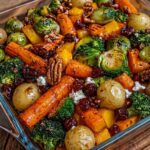
Roasted Autumn Vegetables with Feta and Walnuts, tender butternut squash, and caramelized Brussels sprouts with creamy feta, crunchy walnuts, and chewy dried cranberries. Every forkful has a balance of sweet, savory, tangy, and nutty flavors.
Olive oil, rosemary, thyme, and garlic season the vegetables without overwhelming their natural taste. A small splash of balsamic vinegar at the end adds brightness and brings the different ingredients together.
This colorful vegetable tray works beautifully for a family dinner, a seasonal gathering, or a holiday side dish. You can arrange the ingredients in sections like the photo or gently toss everything together on a serving platter.
The most important technique is giving the vegetables enough space to roast. Although they look attractive grouped closely together for serving, they need breathing room during cooking to develop golden edges.
Ingredients for Roasted Autumn Vegetables with Feta and Walnuts
1 pound baby yellow potatoes, approximately 450 g, halved
1 pound peeled and seeded butternut squash, approximately 450 g, cut into ¾-inch cubes
1 pound Brussels sprouts, approximately 450 g, trimmed and halved
3 tablespoons olive oil
1 teaspoon garlic powder
1 teaspoon dried thyme
1 teaspoon finely chopped fresh rosemary, or ½ teaspoon dried rosemary
½ teaspoon salt, plus more to taste
½ teaspoon freshly ground black pepper
For the toppings:
½ cup walnut halves or large pieces, approximately 55 g
⅓ cup dried cranberries, approximately 40 g
¾ cup crumbled feta, approximately 100 g
1 tablespoon balsamic vinegar
1 tablespoon chopped fresh parsley, optional
Instructions For Roasted Autumn Vegetables with Feta and Walnuts
Step 1: Preheat the oven
Preheat your oven to 425°F (220°C). Set out two large rimmed baking sheets.
Using two sheets keeps the vegetables from crowding together. You can transfer everything onto one attractive tray after roasting. Lightly oil the sheets or line them with parchment rated for the oven temperature.
Step 2: Prepare the vegetables
Wash the potatoes and Brussels sprouts, then dry them thoroughly. Cut the potatoes in half, quartering any unusually large ones.
Trim the tough stem ends from the Brussels sprouts and remove damaged outer leaves. Cut the sprouts in half through the stem so the layers remain connected.
Peel and seed the butternut squash, then cut it into roughly ¾-inch cubes. Keeping the pieces consistent helps them finish cooking at approximately the same time.
Step 3: Mix the seasonings
Combine the olive oil, garlic powder, thyme, rosemary, salt, and pepper in a small bowl.
Place the potatoes and squash in a large mixing bowl. Add approximately two-thirds of the seasoned oil and toss thoroughly. Reserve the remaining oil for the Brussels sprouts.
A thin, even coating encourages browning without leaving the vegetables excessively oily.
Step 4: Give the potatoes and squash a head start
Spread the potatoes and squash across the baking sheets, leaving space for the Brussels sprouts to be added later. Place the potatoes cut-side down where possible.
Roast for 10 minutes. This head start helps the denser vegetables become tender without overcooking the Brussels sprouts.
Step 5: Add the Brussels sprouts
Toss the Brussels sprouts with the reserved seasoned oil. Remove the baking sheets from the oven and carefully add the sprouts in the available spaces, placing their cut sides against the hot surface.
Return the trays to the oven and roast for another 20–25 minutes. Switch the trays between oven racks halfway through and turn the squash pieces for more even browning.
Begin checking early if your sprouts are small.
Step 6: Toast the walnuts
While the vegetables roast, place the walnuts in a dry skillet over medium-low heat.
Toast for 3–5 minutes, stirring frequently, until fragrant and lightly golden. Transfer immediately to a plate so they stop cooking.
Toasting the walnuts separately gives you better control and prevents them from burning during the longer vegetable roasting time.
Step 7: Check for doneness
The potatoes should be easily pierced with a fork, the squash should be tender with browned edges, and the Brussels sprouts should have caramelized cut surfaces.
If one vegetable finishes first, transfer it to a serving tray and continue roasting the others for a few minutes. Oven performance and vegetable sizes can change the timing.
Step 8: Add the finishing ingredients
Transfer the hot vegetables to a large serving tray or shallow platter. Drizzle with balsamic vinegar and gently toss, or leave the vegetables arranged in separate sections.
Scatter the toasted walnuts, dried cranberries, and crumbled feta over the top. The warmth softens the feta slightly while the cranberries stay pleasantly chewy.
Add parsley if using. Taste before adding more salt because feta contributes plenty of seasoning.
Step 9: Serve warm
Serve immediately, making sure each portion includes vegetables, cheese, nuts, and cranberries.
For a presentation similar to the photo, arrange the potatoes, squash, and Brussels sprouts in broad rows, then scatter the toppings across them. Add a small rosemary sprig as a garnish if desired.
Tips for Perfect Roasted Autumn Vegetables
Keep the vegetables dry. Excess water creates steam and makes it harder to achieve browned edges. Dry washed potatoes and sprouts before adding oil.
Use enough space. A crowded tray can produce soft vegetables with little color. Spread the pieces across two sheets even if you plan to serve everything together.
Cut for even cooking. Small squash cubes and halved baby potatoes roast more predictably than large, uneven chunks.
Avoid adding the toppings too soon. Cranberries can scorch, walnuts can burn, and feta can dry out during a long roast. Add them after the vegetables finish.
Adjust seasoning at the end. The saltiness of feta varies. Start with the measured salt, then taste the completed dish before adding more.
Recipe Notes and Variations For Roasted Autumn Vegetables with Feta and Walnuts
Sweet potatoes can replace the butternut squash in equal weight. Cut them into similar-sized cubes and check for tenderness during the final minutes.
Pecans are a good alternative to walnuts, while pumpkin seeds provide crunch if you need to avoid tree nuts. For a nut allergy, also check ingredient labels and prevent cross-contact.
Goat cheese can replace feta for a softer, creamier finish. To make the dish dairy-free, omit the cheese or use a suitable dairy-free alternative.
If your dried cranberries are particularly firm, soak them in warm water for five minutes, then drain and dry before adding. Sweetened and unsweetened varieties both work, although they produce different levels of sweetness.
Storage and Reheating For Roasted Autumn Vegetables with Feta and Walnuts
Refrigerate leftovers in a covered container within two hours of cooking. Use within 3–4 days.
For the best texture, store extra walnuts separately and add them after reheating. Keep any unused feta refrigerated in its own container.
Spread the vegetables on a baking sheet and reheat at 375°F (190°C) for approximately 12–18 minutes, or until hot throughout. Refrigerated leftovers should reach 165°F (74°C). Add the reserved toppings afterward.
Microwaving works for individual portions, although the vegetables will be softer. Freezing is possible, but the Brussels sprouts and potatoes may lose some texture after thawing.
Serving Ideas For Roasted Autumn Vegetables with Feta and Walnuts
Serve these roasted aorutumn vegetables with roast chicken, turkey, baked fish, or grilled tofu. They also pair well with lentils or chickpeas for a more substantial meatless meal.
For a grain bowl, spoon the vegetables over cooked quinoa, brown rice, or farro. Add a squeeze of lemon and a little extra feta if desired.
Leftovers can become a warm lunch salad. Reheat the vegetables, then spoon them over baby spinach and finish with the walnuts and cranberries.
Estimated Nutritional Information for Roasted Autumn Vegetables with Feta and Walnuts
Per serving, based on six servings:
Calories: approximately 320
Protein: approximately 8 g
Carbohydrates: approximately 36 g
Fat: approximately 18 g
Fiber: approximately 7 g
Values are estimates and depend on portion sizes, feta brand, and whether the dried cranberries contain added sugar.
Nutrition Benefits for Roasted Autumn Vegetables with Feta and Walnuts
The mix of vegetables provides fiber and a variety of nutrients. Butternut squash contributes beta-carotene, while Brussels sprouts add vitamin C and vitamin K.
Walnuts and olive oil contribute unsaturated fats. Feta adds calcium and some protein, along with sodium. Together, these ingredients create a varied vegetable side dish with several textures and flavors.
Make Everyday Cooking Easier
Discover 60+ high-protein, low-carb recipes with simple instructions and everyday ingredients. Explore breakfasts, lunches, dinners, salads, and snacks—plus a 30-day meal plan to help you plan ahead.
Get the Elite Protein Kitchen Cookbook
Frequently Asked Questions for Roasted Autumn Vegetables with Feta and Walnuts
Can I prepare this dish ahead?
Yes. Cut the squash and Brussels sprouts one day ahead and refrigerate separately. For the best texture, roast shortly before serving and add the toppings at the end.
Can I use frozen butternut squash?
Yes. Roast it directly from frozen, giving it plenty of room. It may release more moisture and become softer than fresh squash.
Why are my vegetables soft instead of browned?
They may be crowded, wet, or cooking in an oven that is not fully heated. Dry them well, preheat thoroughly, and spread them into a single layer.
Can I leave out the cranberries?
Yes. The dish remains flavorful without them. Pomegranate seeds added just before serving offer another sweet-tart option.
Is this a complete vegetarian dinner?
It works well as a side dish. For a more substantial dinner, add chickpeas, lentils, or tofu and choose feta made with vegetarian rennet.https://ketosl.com/cheesy-roasted-cauliflower-bake-with-garlic/


Pingback: Easy Moist Banana Bread Recipe 2026