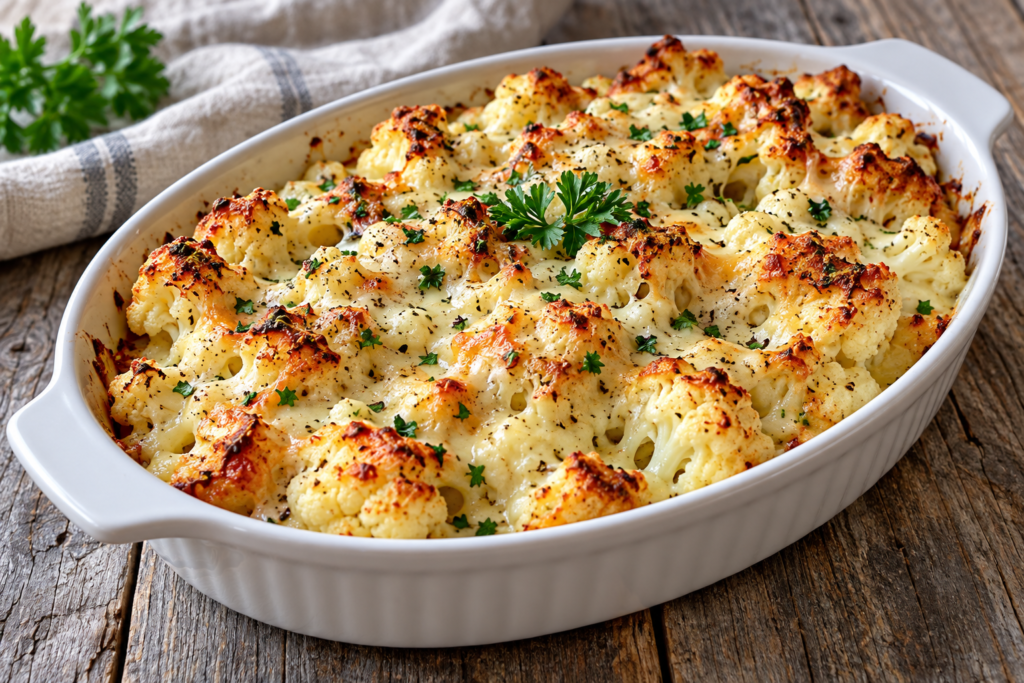

Cheesy Roasted Cauliflower Bake with Garlic
This cheesy roasted cauliflower bake combines golden, tender cauliflower with a smooth garlic cheese sauce and a bubbling mozzarella topping. Roasting the vegetables first brings out their natural sweetness and creates browned edges that add flavor to every bite.
The sauce uses butter, flour, milk, and sharp cheddar for a creamy consistency without needing heavy cream. A little Dijon mustard adds depth, while Parmesan gives the topping a savory finish. Fresh parsley provides a bright contrast to the rich cheese.
Serve this comforting cauliflower casserole alongside roast chicken, grilled fish, or your favorite family dinner. It also makes a satisfying vegetable main dish when paired with beans and a fresh salad.
Unlike a casserole made with boiled vegetables, this version starts with dry, roasted florets. That extra step helps prevent a watery sauce and keeps the cauliflower pleasantly tender rather than mushy.
Prep Time: 15 minutes
Cook Time: 40–45 minutes
Resting Time: 5 minutes
Total Time: 60–65 minutes
Servings: 6 as a side dish
Equipment: Large baking sheet, saucepan, whisk, and a 2–2½-quart baking dish
Ingredients for Cheesy Roasted Cauliflower Bake with Garlic
For the roasted cauliflower:
1 large cauliflower, approximately 900 g trimmed florets
2 tablespoons olive oil
½ teaspoon salt
½ teaspoon ground black pepper
½ teaspoon garlic powder
½ teaspoon dried Italian seasoning
For the creamy cheese sauce:
2 tablespoons unsalted butter
3 garlic cloves, finely minced
2 tablespoons all-purpose flour
1½ cups whole milk, approximately 360 ml
1 teaspoon Dijon mustard
1 cup freshly shredded sharp cheddar, approximately 115 g
¼ teaspoon black pepper
A small pinch of ground nutmeg, optional
Salt to taste, after adding the cheese
For the topping:
¾ cup shredded low-moisture mozzarella, approximately 85 g
¼ cup finely grated Parmesan, approximately 25 g
2 tablespoons chopped fresh parsley
Instructions for Cheesy Roasted Cauliflower Bake with Garlic
Step 1: Prepare the oven and dishes
Preheat your oven to 425°F (220°C). Lightly grease the baking dish and set it aside.
Prepare a large rimmed baking sheet. Choose one large enough to hold the cauliflower in a single layer. If the florets would be crowded together, use two sheets so moisture can escape during roasting.
Step 2: Cut and dry the cauliflower
Remove the leaves and tough central stem. Cut the cauliflower into evenly sized florets, approximately 1½ inches across.
Rinse if needed, then dry thoroughly with a clean kitchen towel. Water left on the surface creates steam and slows browning. Cut particularly thick stems into smaller pieces so they cook at the same rate as the florets.
Step 3: Season the florets
Place the cauliflower on the baking sheet. Drizzle with olive oil and sprinkle with salt, pepper, garlic powder, and Italian seasoning.
Toss until evenly coated, then spread into a single layer. Position some of the flat cut surfaces against the sheet to encourage golden browning.
Step 4: Roast until lightly golden
Roast for 22–25 minutes, turning once after approximately 15 minutes.
The cauliflower should have browned edges and be just tender when pierced with a fork. Avoid roasting until completely soft because it will continue cooking in the cheese sauce.
Remove the tray and reduce the oven temperature to 400°F (200°C).
Step 5: Start the garlic sauce
While the cauliflower roasts, melt the butter in a saucepan over medium-low heat.
Add the minced garlic and cook for approximately 30 seconds, stirring until fragrant. Sprinkle in the flour and whisk continuously for one minute. The mixture should become a smooth paste without turning dark brown.
Step 6: Add the milk gradually
Pour in a small splash of milk and whisk until smooth. Continue adding the milk gradually, whisking after each addition to prevent lumps.
Bring the mixture to a gentle simmer over medium-low heat. Cook for 3–5 minutes, stirring regularly, until it lightly coats the back of a spoon. Keep the heat moderate so the milk does not scorch.
Step 7: Melt in the cheddar
Remove the saucepan from the heat. Stir in the Dijon mustard, black pepper, and optional nutmeg.
Add the cheddar a handful at a time, stirring until melted before adding more. Taste the finished sauce before adding salt, since the cheeses already contribute seasoning.
The sauce should pour easily while remaining thick enough to coat the cauliflower. If necessary, loosen it with one or two tablespoons of milk.
Step 8: Assemble the cauliflower bake
Transfer the roasted cauliflower to the prepared baking dish. Pour the warm cheese sauce evenly over the florets.
Gently turn a few pieces to distribute the sauce, leaving some golden cauliflower tips exposed. Sprinkle the mozzarella and Parmesan evenly over the top.
Step 9: Bake until bubbling
Bake at 400°F (200°C) for 15–20 minutes, until the sauce bubbles around the edges and the topping is melted with light golden patches.
For additional browning, broil briefly only if your baking dish is broiler-safe. Watch continuously, as the cheese can burn quickly.
Step 10: Rest and garnish
Let the casserole rest for five minutes before serving. This allows the sauce to settle and makes portions easier to scoop.
Sprinkle with chopped parsley and a little freshly ground pepper. Serve warm while the sauce is creamy and the topping is soft and melted.
Tips for the Best Results for Cheesy Roasted Cauliflower Bake with Garlic
Dry the cauliflower carefully. Surface moisture is one of the main reasons roasted vegetables fail to brown.
Use freshly grated cheddar. It generally melts more smoothly than pre-shredded cheese coated with anti-caking ingredients.
Keep the sauce below a vigorous boil. Excessive heat after adding cheese can produce a grainy or oily texture.
Avoid overcrowding. Spread the florets out during roasting to encourage caramelized edges.
Choose sharp cheddar. Its stronger flavor stands out without requiring extra cheese.
Leave some florets exposed. The uncovered tips retain more of their roasted texture.
Rest before serving. A short pause helps the sauce cling to the vegetables.
Recipe Notes and Variations for Cheesy Roasted Cauliflower Bake with Garlic
White cheddar gives the sauce a pale appearance similar to the photo. Orange cheddar works equally well but creates a more golden sauce.
For a different flavor, replace half the cheddar with Gruyère. Add a pinch of chili flakes for gentle heat, or stir chopped chives into the finished sauce.
Broccoli can replace up to half the cauliflower. Check it during roasting because smaller broccoli florets may brown faster.
For a crunchy topping, combine ¼ cup panko breadcrumbs with one teaspoon olive oil and sprinkle over the cheese before the final bake. This addition changes the texture and nutritional values.
For a vegetarian version, choose cheeses labeled as suitable for vegetarians; traditional Parmesan may contain animal rennet.
Storage and Reheating for Cheesy Roasted Cauliflower Bake with Garlic
Refrigerate leftovers in a covered container within two hours of cooking. Store for up to 3–4 days.
Reheat in an oven-safe dish at 350°F (175°C), loosely covered, until hot throughout. Small portions may take around 15–20 minutes; larger amounts need longer. Leftovers should reach 165°F (74°C) in the center.
Add a small splash of milk before reheating if the sauce has thickened. Individual portions can also be microwaved in short intervals, stirring gently where possible.
Freezing is possible, but the cauliflower may soften and the sauce may separate slightly. For best quality, freeze for up to two months and thaw in the refrigerator before reheating.
Serving Ideas for Cheesy Roasted Cauliflower Bake with Garlic
Serve this cheesy cauliflower bake with roast chicken, baked salmon, or grilled turkey patties. Its creamy texture also pairs well with a crisp green salad dressed with lemon.
For a meatless meal, add a chickpea salad or lentils on the side. At a holiday dinner, serve smaller portions alongside roasted vegetables and your main dish.
Estimated Nutritional Information
Per serving, based on six side-dish portions:
Calories: approximately 290
Protein: approximately 15 g
Carbohydrates: approximately 15 g
Fat: approximately 20 g
Fiber: approximately 3 g
Values are estimates and vary with the cheeses, milk, and exact portion sizes used. Optional breadcrumbs are not included.
Make Everyday Cooking Easier
Discover 60+ high-protein, low-carb recipes with simple instructions and everyday ingredients. Explore breakfasts, lunches, dinners, salads, and snacks—plus a 30-day meal plan to help you plan ahead.
Get the Elite Protein Kitchen Cookbook
Nutrition Benefits for Cheesy Roasted Cauliflower Bake with Garlic
Cauliflower contributes fiber and a variety of micronutrients, while milk and cheese provide protein and calcium.
This recipe makes vegetables a substantial part of the plate, although the cheese and butter also contribute saturated fat. Pairing it with lean protein, legumes, or fresh vegetables adds variety to the meal.
Frequently Asked Questions for Cheesy Roasted Cauliflower Bake with Garlic
Can I use frozen cauliflower?
Yes. Roast it from frozen on a spacious baking sheet until the excess moisture evaporates and the edges begin browning. It may need additional time and will usually have a softer texture than fresh cauliflower.
Why is my cauliflower bake watery?
The cauliflower may have been wet, crowded during roasting, or insufficiently roasted. Dry the florets well and let moisture evaporate before combining them with the sauce.
Can I prepare it ahead?
Yes. Roast the cauliflower and prepare the sauce up to one day ahead. Cool promptly and refrigerate separately. Warm the sauce gently, assemble, and bake until bubbling and thoroughly heated.
Can I make it gluten-free?
Replace the flour with one tablespoon cornstarch mixed into two tablespoons of the cold measured milk. Add this slurry to the warmed remaining milk and garlic butter, then simmer until thickened. Check all packaged ingredients for gluten-free labeling.
Why did my cheese sauce become grainy?
The cheese may have overheated. Remove the white sauce from the heat before adding cheddar, and stir it in gradually. Avoid boiling the sauce once the cheese has melted.








Pingback: Roasted Autumn Vegetables with Feta and Walnuts 1