
# Grilled Tomahawk Ribeye Steak with Garlic Herb Butter
## Description
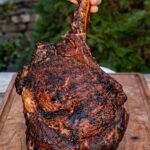
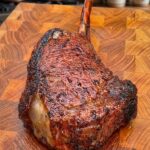
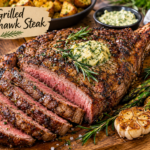
This Grilled Tomahawk Ribeye Steak with Garlic Herb Butter is a dramatic, restaurant-style steak recipe featuring a thick, bone-in ribeye with a beautifully charred crust, juicy center, and rich beef flavor. The long rib bone gives the steak its signature tomahawk appearance, while the generous marbling inside the ribeye keeps the meat tender and flavorful during cooking.
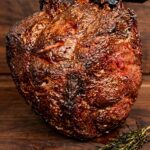
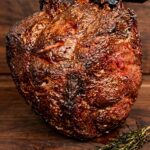
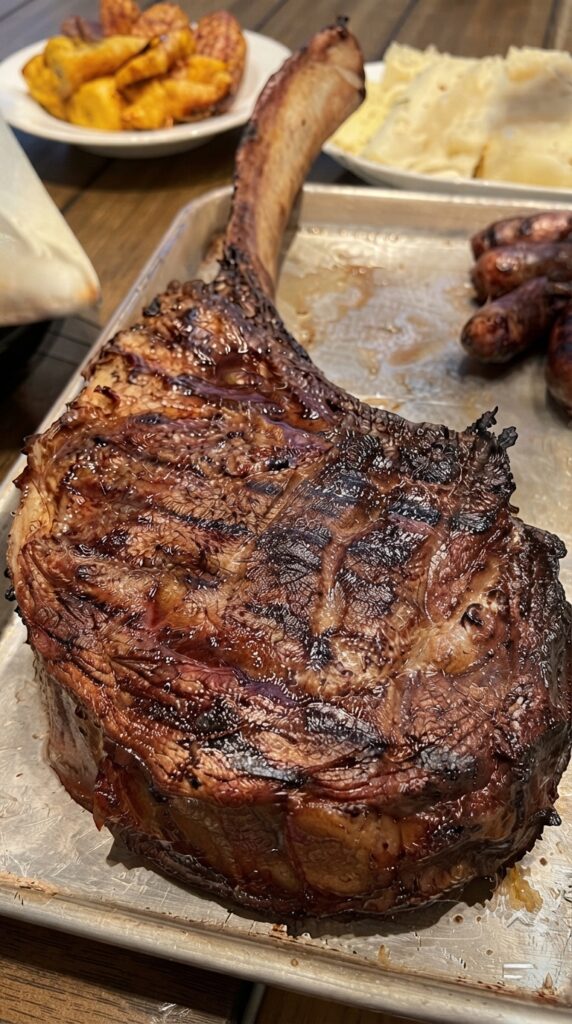
The steak shown in the picture appears to have been cooked over high heat until the outside developed deep grill marks and caramelization. A tomahawk steak is usually much thicker than an ordinary ribeye, so the best method is to cook it gently first and then finish it over very high heat. This technique allows the center to reach the desired doneness without burning the outside.
This recipe uses a simple seasoning of salt, black pepper, garlic, and rosemary because a high-quality ribeye already has tremendous natural flavor. After cooking, the steak is finished with garlic herb butter, which melts over the hot crust and makes every slice even more flavorful.
Serve it as a centerpiece with crispy roasted potato wedges, creamy mashed potatoes, grilled vegetables, mushrooms, or your favorite steakhouse sides. One large tomahawk steak can comfortably feed two to three people depending on its size and the number of side dishes.
Prep Time: 20 minutes
Resting Before Cooking: 30–45 minutes
Cook Time: 35–50 minutes
Final Resting Time: 10–15 minutes
Total Time: About 1 hour 30 minutes
Servings: 2–3
Course: Main Course
Cuisine: American Steakhouse
Cooking Method: Grill or Oven and Sear
## Ingredients
### For the Tomahawk Steak
1 tomahawk ribeye steak, approximately 2½–3 pounds and 2–3 inches thick
2 teaspoons kosher salt
1½ teaspoons freshly ground black pepper
1 teaspoon garlic powder
½ teaspoon onion powder
1 tablespoon olive oil or avocado oil
### For the Garlic Herb Butter
4 tablespoons unsalted butter, softened
3 garlic cloves, finely minced
1 tablespoon finely chopped fresh rosemary
1 tablespoon fresh thyme leaves
1 tablespoon chopped fresh parsley
½ teaspoon salt
¼ teaspoon freshly ground black pepper
1 teaspoon fresh lemon juice, optional
### Optional for Basting
2 tablespoons unsalted butter
2 garlic cloves, lightly crushed
2 sprigs fresh rosemary
3 sprigs fresh thyme
## Instructions
### Step 1: Prepare the Steak
Remove the tomahawk steak from the refrigerator approximately 30–45 minutes before cooking.
Because a tomahawk ribeye is extremely thick, allowing it to lose some of its refrigerator chill helps promote more even cooking.
Pat the entire steak completely dry with paper towels. This step is especially important because a dry surface develops a much better crust than a wet surface.
Season both sides and the edges generously with kosher salt, black pepper, garlic powder, and onion powder.
Gently rub the seasoning into the meat.
Drizzle the steak lightly with olive or avocado oil and coat both sides.
### Step 2: Make the Garlic Herb Butter
While the steak rests, prepare the finishing butter.
In a small bowl, combine softened butter, minced garlic, rosemary, thyme, parsley, salt, black pepper, and lemon juice if using.
Mix until all the ingredients are evenly distributed.
Place the butter in the refrigerator while you prepare the steak.
You can also shape it into a small log using parchment paper and slice it into rounds before serving.
### Step 3: Preheat the Grill
For the most reliable result, create two cooking zones.
Heat one side of your grill to medium-high or high heat and keep the other side at a lower temperature.
For charcoal grilling, arrange the hot coals primarily on one side.
For a gas grill, turn one section on high and keep another section on low.
The lower-temperature area will gently cook the steak, while the high-heat section will later produce the dark, flavorful crust.
### Step 4: Slowly Cook the Tomahawk
Place the steak over indirect heat rather than directly above the hottest flame.
Close the grill lid.
Cook for approximately 20–35 minutes depending on the thickness of your steak and the temperature of the grill.
Flip the steak every 5–7 minutes to encourage even cooking.
Use an instant-read meat thermometer inserted into the thickest part of the steak, avoiding contact with the bone.
For medium-rare, move to the searing stage when the internal temperature reaches approximately 115–120°F.
For medium, move to the searing stage around 125–130°F.
The temperature will continue rising during the final sear and resting period.
### Step 5: Create the Steakhouse Crust
Move the steak directly over the hottest section of the grill.
Sear for approximately 1½–2 minutes on the first side.
Rotate the steak slightly and continue searing for another 1–2 minutes to create attractive grill marks.
Flip the steak and repeat on the opposite side.
If necessary, hold the steak with sturdy tongs and briefly sear the fatty edges.
The goal is a deeply browned, lightly charred exterior without burning the meat.
### Step 6: Optional Butter Basting
For an extra-rich steakhouse finish, place a large cast-iron skillet over high heat.
Transfer the grilled steak to the skillet.
Add 2 tablespoons butter, crushed garlic, rosemary, and thyme.
Once the butter begins to foam, tilt the skillet carefully.
Using a large spoon, repeatedly spoon the hot herb butter over the surface of the steak for approximately 1 minute.
This step is optional but creates an exceptionally flavorful crust.
### Step 7: Check the Internal Temperature
Use a meat thermometer to determine doneness.
For rare steak, aim for a final temperature of approximately 125–130°F.
For medium-rare, approximately 130–135°F.
For medium, approximately 140–145°F.
For medium-well, approximately 150–155°F.
Remember that the internal temperature normally rises several degrees while the steak rests.
Medium-rare or medium is generally preferred for tomahawk ribeye because the marbled fat has time to soften while the meat remains juicy.
### Step 8: Rest the Steak
Transfer the steak to a large cutting board.
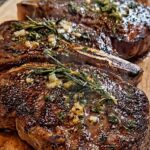
Immediately place some of the prepared garlic herb butter on top so it slowly melts across the hot surface.
Loosely tent the steak with foil.
Allow it to rest for 10–15 minutes.
Do not skip this step.
Resting allows the juices inside the meat to redistribute. Cutting into the steak immediately can cause those juices to escape onto the board instead of remaining in the meat.
### Step 9: Slice and Serve
After resting, hold the long bone and carefully cut the meat away from the bone using a sharp chef’s knife.
Slice the ribeye across the grain into thick strips.
Arrange the sliced steak next to the bone for a dramatic presentation.
Top with additional garlic herb butter.
Finish with freshly cracked black pepper and a little flaky sea salt if desired.
Serve immediately.
## Oven and Cast-Iron Method
If you do not have an outdoor grill, the tomahawk steak can also be prepared using a reverse-sear method.
Preheat the oven to 250°F or 120°C.
Place the seasoned steak on a wire rack positioned over a baking sheet.
Cook for approximately 40–60 minutes or until the internal temperature reaches about 115–120°F for medium-rare.
The exact cooking time depends on thickness.
Remove the steak and allow it to rest for approximately 5 minutes.
Meanwhile, heat a cast-iron skillet until extremely hot.
Add a small amount of high-heat oil.
Sear the steak for approximately 1–2 minutes per side.
Add butter, garlic, rosemary, and thyme during the final minute and baste the steak.
Rest again before slicing.
## Tips for the Perfect Tomahawk Steak
A meat thermometer is one of the most useful tools for cooking such a thick steak. Cooking time alone is unreliable because tomahawk steaks can vary substantially in thickness and weight.
Do not overcrowd the grill or skillet. The steak needs intense direct heat during searing.
Pat the meat dry before seasoning. Moisture prevents proper browning.
Use kosher salt rather than extremely fine table salt when generously seasoning a large steak.
Avoid repeatedly cutting into the steak to check doneness because the juices can escape.
Cook the steak slightly below your final desired temperature because it will continue cooking while resting.
Allow enough resting time. A thick tomahawk requires more resting than a small steak.
Season the edges as well as both large surfaces.
If the long bone begins becoming excessively dark on the grill, loosely wrap it in foil.
For a stronger smoky flavor, add a small amount of oak, hickory, or mesquite wood to a charcoal grill.
## Recipe Notes
Tomahawk steak is essentially a thick bone-in ribeye with the rib bone left long for presentation. If you cannot find a tomahawk steak, this recipe works equally well with a thick cowboy ribeye.
The large amount of marbling in ribeye is one reason this cut is especially flavorful.
The seasoning can be kept extremely simple. Salt and pepper alone are enough for high-quality beef.
Garlic powder provides flavor without burning as easily as fresh minced garlic during high-heat searing. Fresh garlic is therefore added to the butter instead.
Do not pour cold butter directly onto a cold steak before grilling because it may burn during high-heat cooking. Use it during basting or after cooking.
## Serving Ideas
The tomahawk steak in the picture is accompanied by hearty steakhouse-style sides, making it ideal for a large dinner.
Crispy potato wedges are one of the best accompaniments. Season potato wedges with olive oil, salt, paprika, garlic powder, and black pepper, then roast until golden and crispy.
Creamy mashed potatoes also pair beautifully with ribeye. Their mild, buttery flavor complements the deeply browned steak.
Other excellent options include grilled asparagus, sautéed mushrooms, roasted garlic potatoes, creamed spinach, roasted Brussels sprouts, grilled corn, macaroni and cheese, onion rings, or a simple green salad.
For an impressive sharing platter, place the sliced tomahawk steak in the center and surround it with potatoes, vegetables, garlic herb butter, and dipping sauces.
## Storage
Store leftover steak in an airtight container in the refrigerator for up to 3–4 days.
For best results, keep the steak unsliced until you are ready to reheat it. Larger pieces retain moisture better.
To reheat, place the steak in a covered skillet over low heat with a small amount of butter or beef broth.
You can also warm it gently in a 275°F oven until heated through.
Avoid overheating leftovers because ribeye can become tough when repeatedly cooked at high temperatures.
Leftover steak can be sliced thinly and used in sandwiches, wraps, steak salads, tacos, pasta, breakfast hash, or scrambled eggs.
## Nutritional Information
Approximate nutritional values per serving when divided into three servings:
Calories: 700–850 kcal
Protein: 55–65 g
Carbohydrates: 2–4 g
Fat: 50–60 g
Saturated Fat: 20–25 g
Fiber: Less than 1 g
Sugar: Less than 1 g
Sodium: 750–950 mg
Iron: Approximately 5 mg
Potassium: Approximately 700–850 mg
Vitamin B12: Excellent source
Zinc: Excellent source
Actual nutritional values depend heavily on the size and fat content of the tomahawk steak and the amount of herb butter consumed.
Side dishes are not included in these estimates.
## Benefits
Tomahawk ribeye provides a substantial amount of complete protein. Protein is needed for normal muscle maintenance, tissue repair, and many essential functions throughout the body.
Beef is also naturally rich in vitamin B12, which supports normal nervous system function and healthy red blood cell formation.
It contains highly absorbable heme iron. Iron plays an important role in transporting oxygen throughout the body.
Beef also provides zinc, selenium, phosphorus, and several B vitamins.
Garlic and herbs such as rosemary, thyme, and parsley provide flavor as well as naturally occurring plant compounds.
Because ribeye is a relatively high-fat cut of beef and this recipe also contains butter, it is best balanced with vegetables, salads, or other lighter side dishes.
Portion size is particularly important with tomahawk steak because one steak can be much larger than a normal individual serving.
## Frequently Asked Questions
### What exactly is a tomahawk steak?
A tomahawk steak is a thick bone-in ribeye with a long section of rib bone left attached. The long bone gives it its distinctive appearance.
### How many people does one tomahawk steak serve?
A 2½–3 pound tomahawk steak usually feeds two to three people, particularly when served with side dishes.
### What doneness is best for tomahawk ribeye?
Medium-rare to medium is generally recommended because the meat remains tender while allowing some of the marbled fat to render.
### Why should I reverse-sear such a thick steak?
Cooking it gently first gives the center time to heat evenly. A final high-temperature sear then creates the dark crust without excessively overcooking the exterior.
### Can I cook it completely over direct heat?
You can, but an extremely thick steak is more difficult to cook evenly that way. The outside may become burned before the center reaches the desired temperature.
### Should I season the steak overnight?
Yes. For even deeper seasoning, salt the steak and refrigerate it uncovered overnight. This dry-brining technique can also help produce a better crust.
### Should the long bone be wrapped in foil?
It is optional. Foil helps prevent the exposed bone from becoming excessively dark during grilling.
### Can I use regular ribeye instead?
Absolutely. The same seasoning and herb butter work beautifully with regular ribeye steaks. Cooking times will simply be much shorter.
### Why must the steak rest?
Resting helps redistribute the juices inside the meat. This means more juice stays in each slice instead of running out immediately when the steak is cut.
### What is the easiest way to slice a tomahawk steak?
First cut along the bone to separate the entire ribeye from it. Then identify the direction of the muscle fibers and slice across them into strips.
### Can I prepare garlic herb butter ahead of time?
Yes. Prepare it up to several days ahead, cover it tightly, and refrigerate. Allow it to soften slightly before placing it on the hot steak.
### What are the best side dishes?
Crispy potato wedges, mashed potatoes, mushrooms, asparagus, roasted vegetables, creamed spinach, green beans, or a simple salad are all excellent choices.
### How do I know the steak is cooked correctly?
The safest and most reliable method is using an instant-read meat thermometer. Insert it into the thickest part of the steak without touching the bone.
### Can I use this recipe for a special dinner?
Yes. A tomahawk ribeye is especially good for celebrations and dinner parties because its oversized bone and dramatic presentation make it an impressive centerpiece.